
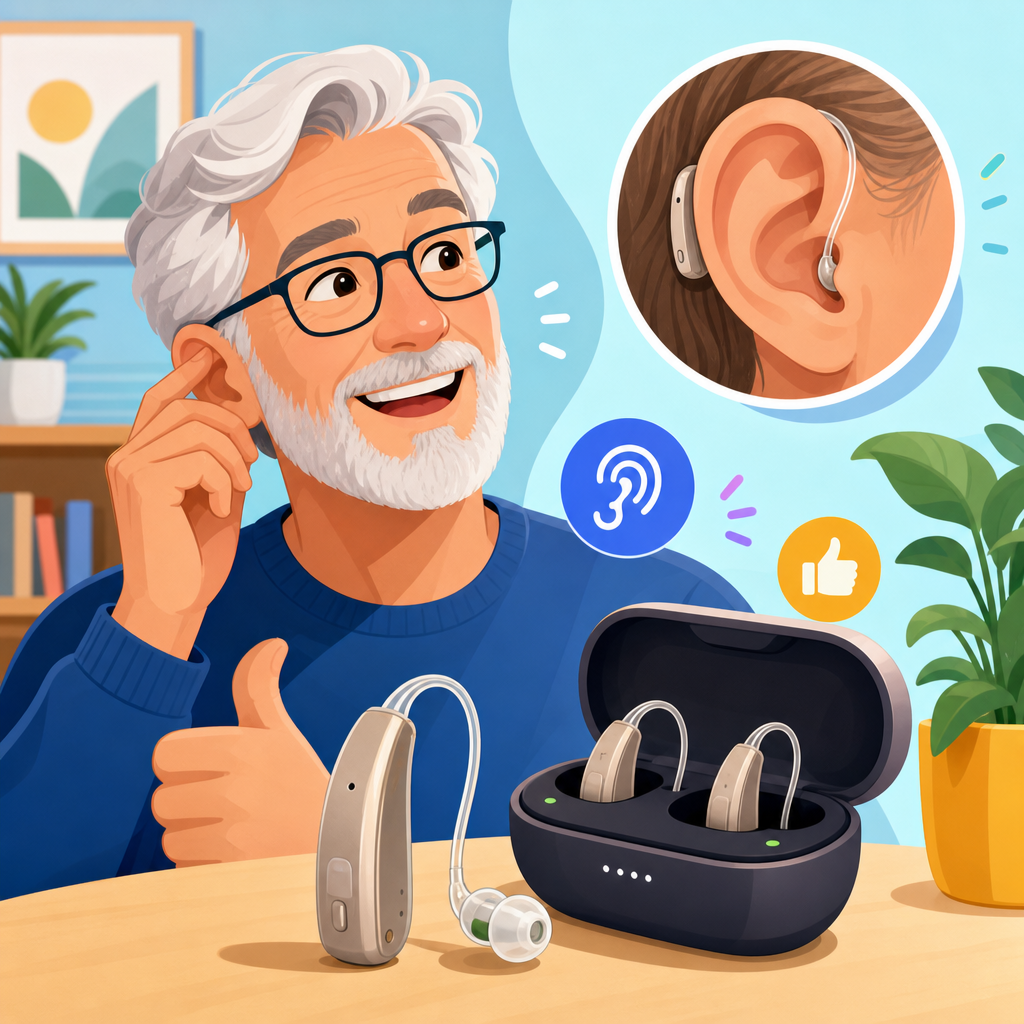
Choosing a hearing device is rarely just about volume. It is about speech clarity at dinner, confidence on work calls, reduced listening fatigue, and whether a product can fit daily life without becoming another frustrating gadget. This Oricle hearing aid review examines what Oricle offers, who it may suit, where it falls short, and how to judge it against established hearing aid options. In this article, “hearing aid” refers broadly to wearable devices that amplify sound, although some direct-to-consumer products are technically personal sound amplification products rather than prescription medical hearing aids. That distinction matters because regulations, expected performance, and aftercare can differ significantly. I have worked with people comparing online hearing devices against clinic-fitted systems, and the same questions come up every time: Is it legitimate, does it help in noise, how long does it last, and what happens if it does not work for me? Answering those questions clearly is the goal here.
Oricle is part of a growing category of hearing devices marketed online to adults seeking a lower-cost, simpler alternative to traditional clinic-based hearing care. These products appeal to shoppers who want an easy purchase, visible pricing, and no appointment barrier. For many buyers, especially those with mild perceived hearing difficulty, that convenience is attractive. At the same time, hearing loss is not one-size-fits-all. Causes range from age-related sensorineural decline to wax buildup, conductive issues, tinnitus-related listening strain, and medically significant asymmetry that needs an ear specialist, not a checkout cart. A careful review therefore must cover design, features, fitting process, pricing, support, and safety considerations. If you are researching Oricle hearing aids as part of a larger hearing aids buying decision, this hub-style guide will help you frame the right questions before you spend money.
What Oricle hearing aids are and how the brand is positioned
Oricle markets hearing devices directly to consumers, typically emphasizing affordability, ease of use, rechargeable hardware, and the ability to order online. That positioning places the brand in competition with other mail-order and over-the-counter style hearing solutions rather than with full-service audiology practices that perform diagnostic testing, real-ear measurements, and custom programming. In practical terms, Oricle is often considered by shoppers who have noticed television dialogue becoming harder to follow, family members repeating themselves, or restaurant conversations sounding muffled, but who are not ready to book a hearing clinic appointment.
The core appeal of a brand like Oricle is straightforward. Traditional hearing aids purchased through a hearing care provider can cost several thousand dollars per pair, depending on technology level, bundled services, warranty, and follow-up care. A direct-to-consumer product can cost far less upfront. That lower entry price matters for people paying out of pocket, especially because insurance coverage for hearing devices remains inconsistent. However, lower cost usually means tradeoffs. You may receive fewer customization options, less sophisticated noise management, limited verification of fitting accuracy, and variable customer support. Those differences do not automatically make the product bad, but they do affect outcomes.
When reviewing Oricle, I look at it through the lens used for any hearing solution: intended user, sound processing capability, fit and comfort, charging and battery performance, return policy, and clinical appropriateness. A buyer with mild, symmetric age-related hearing loss and realistic expectations may value simplicity over advanced fine-tuning. By contrast, a person with significant difficulty understanding speech in complex environments usually needs stronger processing, professional assessment, and ongoing adjustments. Knowing where Oricle sits on that spectrum is the starting point for an honest review.
Key features, design choices, and daily usability
Most online-first hearing devices succeed or fail on everyday practicality. Buyers want a device that is comfortable for long wear, discreet enough not to feel self-conscious, and simple enough that charging, insertion, and controls do not become barriers. Oricle hearing aids are commonly promoted as lightweight, rechargeable, and designed for straightforward operation. Those points matter because dexterity, vision, and routine all affect whether a device actually gets worn. A technically capable hearing aid that stays in a drawer helps no one.
Rechargeability is one of the biggest conveniences in this product category. Instead of changing tiny disposable batteries, users place the devices in a charging case or dock. For older adults with arthritis or reduced fine motor control, this can be a major advantage. In reviews across hearing products, I consistently see battery handling as an underappreciated reason people abandon devices. Rechargeable systems reduce that friction. The more important question is whether battery life lasts through a full day of use and whether the charger is dependable during travel.
Sound controls are another practical consideration. Some buyers prefer simple onboard volume changes, while others want app-based control for more precise adjustments. If Oricle offers preset listening modes, the usefulness depends on execution. A “restaurant mode” label sounds promising, but real benefit comes from how well the microphones, compression, and noise reduction work together in an actual noisy room. Marketing language alone does not guarantee better speech understanding. Fit options matter too. Open domes can feel more natural for mild high-frequency hearing loss, while more closed fittings can increase audibility but may create an occluded, plugged sensation. Comfort and acoustic balance must work together.
| Evaluation area | What to look for in Oricle | Why it matters |
|---|---|---|
| Sound quality | Speech clarity, low distortion, usable volume range | Clear speech matters more than raw loudness |
| Noise handling | Performance in restaurants, cars, group settings | Background noise is the main real-world complaint |
| Fit and comfort | Secure placement, multiple domes, low irritation | Uncomfortable devices are often not worn consistently |
| Battery system | True all-day use, reliable charger, fast recharge | Daily convenience drives long-term adherence |
| Support and returns | Clear trial period, responsive service, warranty terms | New users often need help and sometimes refunds |
Another usability issue is feedback, the whistling sound users sometimes hear when amplified sound leaks and is re-amplified by the microphone. Better devices manage this with feedback cancellation, but fit and ear anatomy still matter. If Oricle users report frequent squealing, especially during hugs, phone use, or chewing, that points to limitations in seal, gain handling, or software control. Daily usability is never one feature; it is the interaction of design, acoustics, and support.
Who Oricle may be best for, and who should be cautious
Oricle may be most appropriate for adults with mild to moderate, perceived hearing difficulty who want an affordable first step and are comfortable with self-directed setup. This often includes people with gradual age-related hearing changes in both ears, especially those who mainly struggle with television volume, one-on-one conversations, or hearing softer voices. For this group, a simple amplification device can be meaningfully better than doing nothing, provided expectations are realistic. Many first-time users do not need perfection on day one; they need a manageable path into consistent hearing support.
There are clear situations where caution is essential. If hearing loss is sudden, present in one ear more than the other, accompanied by ear pain, drainage, dizziness, rapidly worsening tinnitus, or a history of chronic ear disease, do not start with an online purchase alone. Those are medical red flags. The American Academy of Otolaryngology and standard audiology practice support medical evaluation when symptoms suggest an underlying condition. Likewise, if speech sounds distorted rather than simply quiet, or if family members notice significant communication breakdowns despite amplification, a full hearing test is the better move.
Buyers should also be cautious if they expect premium hearing aid performance at a budget price. Advanced features such as adaptive directional microphones, sophisticated impulse-noise suppression, machine-learning personalization, Bluetooth streaming stability, tinnitus programs, and precise frequency shaping are harder to deliver well in low-cost devices. The issue is not whether Oricle can make sounds louder; many products can. The issue is whether it can selectively improve speech understanding across varied listening environments. That is a higher bar.
In my experience, the happiest buyers in this category are the ones who match the product to a narrow problem: mild hearing difficulty, straightforward listening needs, and strong willingness to experiment with fit and settings during the trial period. The most disappointed buyers are often trying to solve moderate-to-severe hearing loss, years of untreated communication strain, or complex listening demands with an entry-level device. Oricle may help some users, but it is not a universal substitute for comprehensive hearing care.
Performance, value, and how Oricle compares with broader hearing aid options
Performance should be judged in the environments that matter most: quiet conversation, television, phone calls, outdoors, and noisy social settings. In quiet, many direct-to-consumer hearing devices perform adequately because the task is simple: raise speech into an audible range without excessive distortion. Problems typically emerge in noise, where successful hearing depends on microphone directionality, fast and accurate compression, and software that reduces unwanted sound without stripping speech cues. This is where premium prescription devices from major manufacturers such as Phonak, Oticon, ReSound, Signia, Starkey, and Widex generally maintain an advantage.
That does not mean Oricle lacks value. Value is the ratio of benefit to total cost, not a contest over who has the longest features list. If Oricle delivers enough speech support for a few hundred dollars and helps a reluctant first-time user wear amplification regularly, that can be a good purchase. It may also function as a bridge product, giving someone confidence to seek fuller hearing care later. On the other hand, a cheaper device becomes expensive if poor sound quality, discomfort, or weak support leads to nonuse. Return policies therefore matter almost as much as hardware specifications.
When comparing Oricle with other hearing aids, examine five areas closely. First, does the company provide a clear trial period with an uncomplicated refund process? Second, is there transparent information about warranty coverage and replacement terms? Third, are there enough dome sizes or fitting accessories to achieve a stable, comfortable seal? Fourth, can the device be adjusted with enough precision to avoid both under-amplification and harshness? Fifth, is customer support reachable by phone and able to troubleshoot in plain language? Those service details often determine user satisfaction more than brochure claims.
For shoppers building out research within the wider hearing aids category, Oricle should be compared not just on price, but on use case. If your top priority is simple amplification at low cost, it may warrant consideration. If your top priority is speech-in-noise performance, smartphone ecosystem integration, or clinically verified fitting, more established hearing aid pathways usually offer better long-term results. The best review outcome is not “buy” or “avoid” in the abstract. It is understanding whether Oricle fits your hearing profile, budget, and tolerance for self-service setup.
How to evaluate Oricle before buying and what questions to ask
Start with your hearing history. Write down where you struggle most: television, group dining, meetings, church, phone calls, or hearing from another room. Then ask whether Oricle’s feature set actually addresses those problems. If noise is your main complaint, ask how the device handles directional listening and background sound reduction. If comfort is your concern, ask what sizes of domes or sleeves are included. If you travel, ask about charger voltage, case durability, and full-cycle battery life. Concrete questions reveal more than broad promises.
Next, scrutinize the trial period. Count calendar days carefully and confirm whether the return window begins on the order date, shipping date, or delivery date. Check who pays return shipping, whether accessories must be unused, and how refunds are processed. I advise buyers to test any hearing device systematically during the first two weeks: morning news, family dinner, grocery store, car ride, and one noisy public space. Keep notes. If speech is louder but not clearer, that is important evidence. If one ear feels blocked, adjust fit before assuming the electronics are the problem.
Finally, keep perspective. A good Oricle hearing aid review should help you make a better decision, not push you toward a predetermined answer. For the right user, Oricle may offer a practical, lower-cost entry into hearing support. For others, it may delay more appropriate care if used as a substitute for diagnosis. The smartest next step is simple: compare Oricle against your actual hearing needs, review the return policy line by line, and get a professional hearing test if anything about your symptoms is unusual or significant.
Frequently Asked Questions
1. What should buyers look for first when reading an Oricle hearing aid review?
The first thing to look for is not the marketing headline, but how clearly the review explains real-world performance. Most people do not buy a hearing device simply to make sounds louder. They want better speech understanding in restaurants, on phone calls, during family conversations, and in everyday environments where background noise competes with voices. A useful Oricle hearing aid review should therefore focus on speech clarity, comfort, ease of adjustment, battery life, charging reliability, and how natural the sound feels over time.
It is also important to see whether the review distinguishes between mild sound amplification and more advanced hearing support. Some devices sold in this category are designed for adults with perceived mild to moderate hearing difficulty, while others may not offer the same level of personalization, feedback control, or noise handling found in traditional prescription hearing aids. A strong review should explain where Oricle appears to sit on that spectrum rather than treating all hearing devices as interchangeable.
Another key factor is transparency. Buyers should pay attention to whether the review addresses return policies, warranties, customer support, and setup requirements. A hearing device that seems affordable upfront can become frustrating if it is hard to fine-tune, uncomfortable to wear for long periods, or difficult to return if it does not meet expectations. In short, the best Oricle hearing aid reviews help readers judge not just price, but fit for daily life.
2. Who is Oricle most likely to suit, and who may need a different type of hearing solution?
Oricle may be most appropriate for adults looking for a simpler, more accessible sound amplification option, especially those who feel they struggle in certain listening situations but are not yet ready to invest in a more traditional hearing aid pathway. For example, someone who hears reasonably well in quiet settings but finds it hard to follow conversation in groups, at church, while watching television, or during casual social events may be interested in trying a device like Oricle. It can also appeal to buyers who prioritize convenience, straightforward controls, and a lower upfront cost.
That said, not every hearing problem is a good match for this kind of product. People with more significant hearing loss, rapidly changing hearing, severe difficulty understanding speech, one-sided hearing issues, persistent ringing in the ears, ear pain, dizziness, or sudden hearing decline should not rely on a generic device review alone. In those cases, a full hearing evaluation from an audiologist or licensed hearing professional is the more appropriate starting point. Those users may need custom programming, medical assessment, or advanced hearing technology that can better address complex listening needs.
The practical takeaway is that suitability depends on the user’s hearing profile, lifestyle, and expectations. If a buyer wants a basic, easy-entry option for mild day-to-day listening help, Oricle may be worth considering. If the goal is highly personalized sound processing, strong performance in noisy environments, or support for more serious hearing loss, established prescription hearing aid brands and professional fitting services are often a better long-term solution.
3. How does Oricle compare with established hearing aid brands?
The biggest difference usually comes down to customization, clinical support, and technology depth. Established hearing aid brands typically offer professionally programmed devices based on a hearing test, along with features such as more refined noise reduction, directional microphones, feedback management, app-based tuning, multiple listening programs, and ongoing follow-up care. That level of support can make a meaningful difference for people who need reliable speech understanding across many environments, especially noisy or unpredictable ones.
Oricle, by comparison, may appeal because it is simpler to buy and may cost less upfront. For some consumers, that lower barrier to entry is exactly the point. They want to try a wearable hearing device without navigating appointments, testing, and the higher prices associated with prescription products. If Oricle is easy to wear, easy to charge, and gives useful amplification in everyday situations, it may satisfy buyers who want practical help rather than a fully customized hearing care experience.
However, lower cost and easier access can involve tradeoffs. Compared with established hearing aid options, devices like Oricle may offer less individualized fitting, less sophisticated sound processing, and fewer safeguards against poor performance in challenging settings. This does not automatically make them a bad choice, but it does mean shoppers should compare more than price. They should ask whether the device improves conversation quality, reduces listening strain, stays comfortable for hours, and holds up as a daily-use product. The better comparison is not “cheap versus expensive,” but “good enough for my needs versus worth upgrading for better support.”
4. What are the most common drawbacks people should consider before buying Oricle?
One common drawback with broadly marketed hearing devices is that expectations can outrun real performance. A buyer may hope for crystal-clear hearing in every environment, only to discover that amplification alone does not fully solve speech understanding, especially in noise. Restaurants, large family gatherings, public events, and windy outdoor spaces are difficult listening environments even for advanced devices, so users should be realistic about what Oricle can and cannot do.
Comfort and usability can also be limiting factors. Even if a device sounds acceptable, it may not work well for a particular person if the earpieces feel intrusive, if the controls are too small, if charging is unreliable, or if the fit causes whistling or feedback. Ease of cleaning and maintenance matters too. A hearing device that collects wax easily or becomes inconvenient to handle may end up unused in a drawer, regardless of advertised benefits.
Another drawback may be the level of support available after purchase. With established hearing care channels, users often get adjustments, troubleshooting, and guidance from a professional. With direct-to-consumer products, buyers may be more dependent on written instructions, customer service, and self-guided trial and error. That works fine for some people, but not for everyone. Before buying Oricle, it is wise to review the return window, warranty terms, replacement policy, and any signs of responsive customer care. In hearing technology, post-purchase support is often just as important as the hardware itself.
5. Is Oricle worth trying, or is it better to go straight to a professional hearing evaluation?
That depends on the severity of the problem, the buyer’s goals, and how much uncertainty they are comfortable with. If someone has mild hearing frustration, wants to experiment with an easier-to-access device, and understands that the result may be more limited than a professionally fitted hearing aid, Oricle may be worth trying. For the right person, it can serve as a practical first step, especially if the company offers a fair trial period and straightforward returns.
But if hearing trouble is frequent, worsening, or affecting work performance, relationships, safety, or overall quality of life, a professional hearing evaluation is usually the smarter starting point. A proper assessment can identify the degree and pattern of hearing loss, rule out medical issues, and match the user with technology that fits their actual hearing needs rather than their guess about what might help. That often leads to better long-term satisfaction, even if the upfront process takes more time.
The most balanced view is this: Oricle may be worth considering as an entry-level option for select users, but it should not replace professional care when symptoms are significant or unclear. Buyers should treat it as one option in a broader decision, not as an automatic substitute for established hearing support. When expectations are realistic and the purchase is made carefully, a trial can be reasonable. When hearing difficulties are substantial, persistent, or medically concerning, expert evaluation remains the best path.