
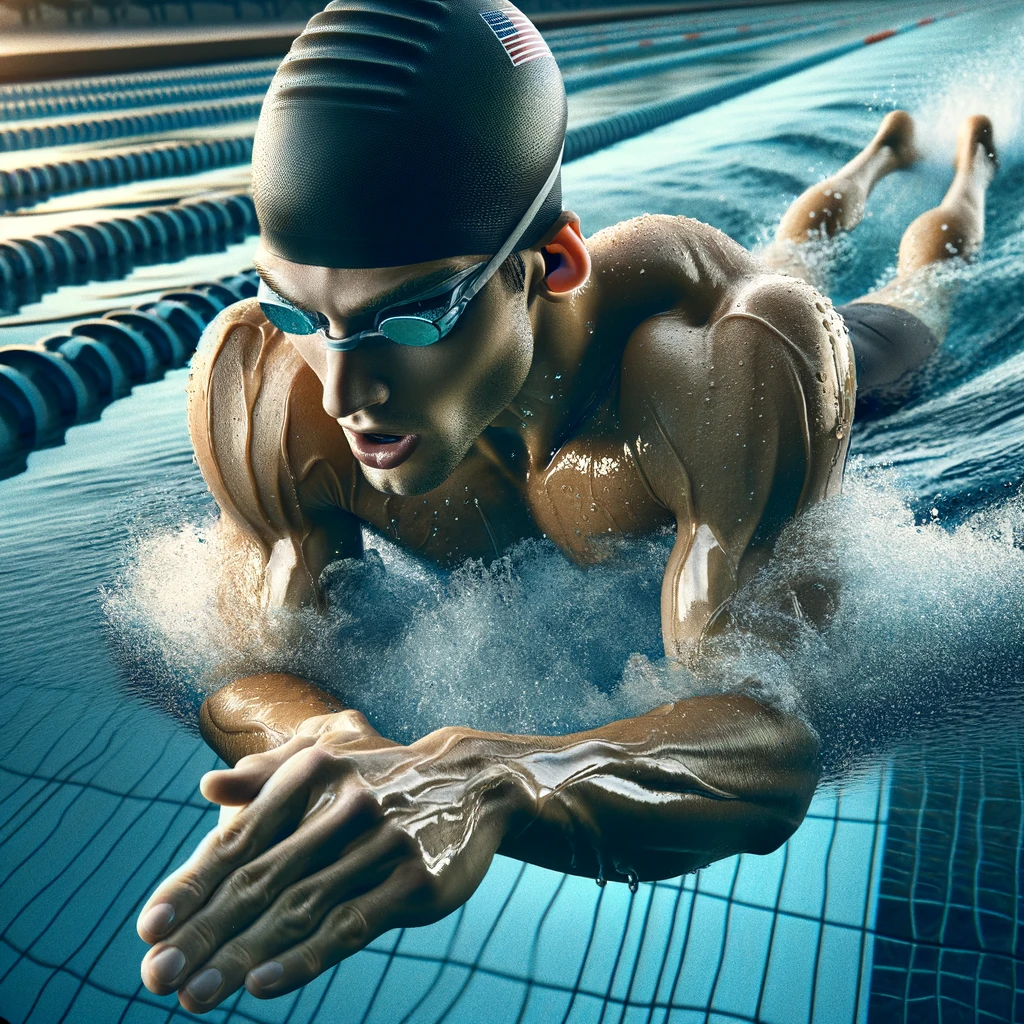
In the world of competitive swimming, Marcus Titus has not only made waves but also shattered stereotypes. His journey as a deaf swimmer is not just a tale of personal triumph but also a beacon of inspiration for athletes facing similar challenges. Titus’s story is a testament to resilience, determination, and the power of embracing one’s unique abilities.
Early Life and Discovery of Deafness
Born in Tucson, Arizona, Marcus Titus was diagnosed with profound deafness at a young age. Growing up, he faced the typical challenges that come with deafness, but he never let it define his life’s trajectory. His parents, committed to ensuring he lived a life without barriers, introduced him to various sports. However, it was the pool that became Marcus’s sanctuary.
Embracing the Water
Titus took to swimming like a fish to water. The pool was where he felt most at ease – a place where the silence of his world was an advantage rather than a hindrance. He quickly showed a natural talent for swimming, and it wasn’t long before he started competing.
Overcoming Communication Barriers
Communication in a sport that heavily relies on auditory cues posed a significant challenge for Titus. Traditional starting beeps used in races were ineffective for him. However, he adapted by relying on visual cues. Coaches and teammates also learned basic sign language to facilitate better communication.
High School and Collegiate Success
Titus attended Flowing Wells High School, where he began to make a name for himself in the swimming world. His high school achievements led him to the University of Arizona, where he swam for the Wildcats. It was here that Titus began to hone his skills further, competing against some of the best swimmers in the NCAA.
The Challenge of Professional Swimming
After college, Titus faced new challenges in the professional swimming arena. The competition was fiercer, and the stakes were higher. However, Titus’s determination and rigorous training regimen kept him in the upper echelons of competitive swimming.
Advocacy for Deaf Athletes
Titus’s success in the pool was paralleled by his advocacy off it. He became a vocal advocate for deaf athletes, pushing for more inclusive practices in sports. His efforts led to significant changes, including the introduction of light-based starting systems in swimming competitions, leveling the playing field for deaf swimmers.
International Recognition and Achievements
Marcus Titus’s talent and hard work soon garnered international attention. He represented the United States in various international competitions, including the Deaflympics and the World Deaf Swimming Championships. His medal tally in these events is a reflection of his skill and dedication.
Personal Bests and Notable Performances
Titus’s swimming career is marked by numerous personal bests and memorable performances. His specialty in breaststroke saw him breaking records and winning medals, earning him a reputation as one of the best breaststrokers in the deaf swimming community.
Challenges and Setbacks
Like any athlete, Titus faced his share of challenges and setbacks. Injuries and the intense pressure of competitive swimming tested his resolve. However, these obstacles only served to strengthen his determination to succeed.
The Role of Technology in His Career
Advancements in technology played a significant role in Titus’s career. The introduction of light-based systems in swimming not only aided his performance but also highlighted the need for more inclusive technologies in sports.
Legacy and Impact on the Deaf Community
Marcus Titus’s legacy extends beyond the pool. He has become a role model for deaf athletes worldwide, showing that with determination and the right support, any barrier can be overcome. His story continues to inspire countless individuals in the deaf community to pursue their sporting dreams.

Training Regimen and Dedication
The key to Marcus Titus’s success lies in his rigorous training regimen. His dedication to the sport is evident in the hours he spends in the pool, perfecting his technique and building his stamina. This dedication extends to the gym, where he focuses on strength training, crucial for the explosive power needed in breaststroke.
Breaking Down Communication Barriers in Competitions
Titus’s presence in competitive swimming has also brought a significant change in how competitions accommodate deaf athletes. His advocacy has led to the implementation of visual signals alongside auditory cues, ensuring that deaf swimmers are not at a disadvantage. This change is a significant step towards inclusivity in sports.
The Psychological Aspect of Competitive Swimming
Competitive swimming is not just a physical challenge but also a psychological one. Marcus Titus’s ability to maintain focus and composure under pressure is exemplary. His approach to races, viewing each as a unique challenge, has helped him stay mentally strong and resilient.
The Support System
Behind every successful athlete is a robust support system, and this holds true for Marcus Titus. His family, coaches, and teammates have played a crucial role in his journey. Their understanding and adjustments to communicate effectively with him have been vital in his success.
Participation in the Paralympics
One of Titus’s career highlights was his participation in the Paralympics. Competing at this level brought him into the global spotlight, showcasing his talents on one of the biggest stages in sports. His performance at the Paralympics was not just about winning medals but also about breaking down barriers and inspiring others.
The Role of the Deaf Community in His Journey
The deaf community has been a significant part of Marcus Titus’s journey. Their support and recognition of his achievements have been a source of motivation for him. Titus, in turn, has given back to the community, engaging in various initiatives to encourage young deaf athletes.
Challenges of Balancing Personal Life and Professional Career
Balancing a professional athletic career with personal life is a challenge that Marcus Titus has navigated skillfully. He has managed to maintain a healthy balance, ensuring that his training and competitions do not overshadow other important aspects of his life.
Future Prospects and Goals
Looking to the future, Marcus Titus has set his sights on continuing to push the boundaries of what is possible for deaf athletes. His goals extend beyond personal achievements; he is dedicated to being a driving force for change in the broader sports community, advocating for equal opportunities and access for all athletes.
The Importance of Role Models in Sports
Marcus Titus’s story highlights the importance of having role models in sports. For young athletes, especially those with disabilities, seeing someone like Titus succeed at the highest levels provides inspiration and a belief in their own potential.
Conclusion
Marcus Titus’s life as a deaf swimmer is a narrative of unyielding perseverance, remarkable talent, and the pursuit of equality. His journey transcends the realm of sports, offering valuable lessons on resilience, inclusivity, and the human spirit’s capacity to overcome challenges. As he continues to make waves, both in and out of the pool, Marcus Titus remains a symbol of hope and a source of inspiration for many.
Frequently Asked Questions
1. How did Marcus Titus discover his passion for swimming despite being deaf?
Marcus Titus discovered his passion for swimming at a young age, despite his profound deafness, which was diagnosed in his early childhood. Born and raised in Tucson, Arizona, Marcus began swimming as a form of therapy and recreation, which gradually evolved into a passion. His parents encouraged him to pursue swimming, not only because it was enjoyable for him, but also because of the benefits it offered in terms of developing coordination, fitness, and confidence. As Marcus spent more time in the water, it became clear that his talent went beyond recreation — he was a natural swimmer. Despite the initial challenges of communication and adaptation in the pool, Titus found a community and a sense of belonging in swimming that fueled his dedication and love for the sport.
2. What challenges did Marcus Titus face as a deaf competitive swimmer, and how did he overcome them?
Marcus Titus faced several challenges as a deaf swimmer in the highly competitive world of swimming, chiefly related to communication and synchronization with hearing competitors and coaches. The most significant hurdle was the traditional use of auditory cues, such as the starting buzzer or whistle, which he couldn’t hear. To overcome this, Marcus and his coaches worked together to develop visual cues, such as lights, to signal the start of a race. Additionally, Marcus had to rely heavily on visual learning and lip-reading during practices and competitions to understand coaching instructions and integrate with teammates. His unwavering determination and adaptability not only helped him overcome these difficulties but also paved the way for greater inclusion and understanding within the swimming community regarding athletes with hearing impairments.
3. What accomplishments has Marcus Titus achieved in his swimming career?
Marcus Titus has an impressive list of accomplishments that highlight his standing in the swimming world. Throughout his career, he has competed at the highest levels, including the Pan American Games and multiple USA Swimming national championships. Perhaps most notably, Titus placed exceptionally well in Olympic trials, narrowly missing a spot on the U.S. Olympic team, which brought significant attention to his talent and skill. Beyond competitions, Marcus’s advocacy has left a lasting impact, leading to changes in USA Swimming rules to allow visual starting signals for deaf swimmers. His achievements are a reflection of his skill, perseverance, and unyielding spirit.
4. How has Marcus Titus inspired other athletes and contributed to awareness about deaf athletes in sports?
Marcus Titus has been a considerable source of inspiration for both deaf and hearing athletes alike. Through his success and visibility as a professional swimmer, Titus has shattered stereotypes surrounding disabilities, demonstrating that hearing impairments are not a barrier to competition or excellence. His advocacy for equal opportunities in sports has raised awareness about the challenges and needs of deaf athletes, encouraging more inclusive practices across various athletic disciplines. Titus frequently engages in speaking engagements, mentorship, and collaborative initiatives to inspire young athletes, emphasizing the importance of resilience and the embracing of one’s unique abilities. His personal journey and accomplishments serve as a powerful narrative that continues to inspire countless individuals, both in and out of the pool.
5. What impact has Marcus Titus had on the wider community and future generations of swimmers?
Marcus Titus’s impact on the swimming community and successive generations is substantial, having paved the way for more inclusive practices and heightened awareness regarding athletes with disabilities. His career has not only opened doors for other deaf swimmers but also forced organizations like USA Swimming to reconsider and implement changes that accommodate diverse needs, such as the inclusion of visual race start signals. Additionally, through his advocacy and outreach, Titus has inspired young swimmers to pursue their dreams regardless of the obstacles they may face. By sharing his story and experiences, he has encouraged many to engage in sports and recognize that challenges are merely opportunities for growth. Marcus’s enduring legacy lies in his ability to break barriers and empower others to strive for excellence.