
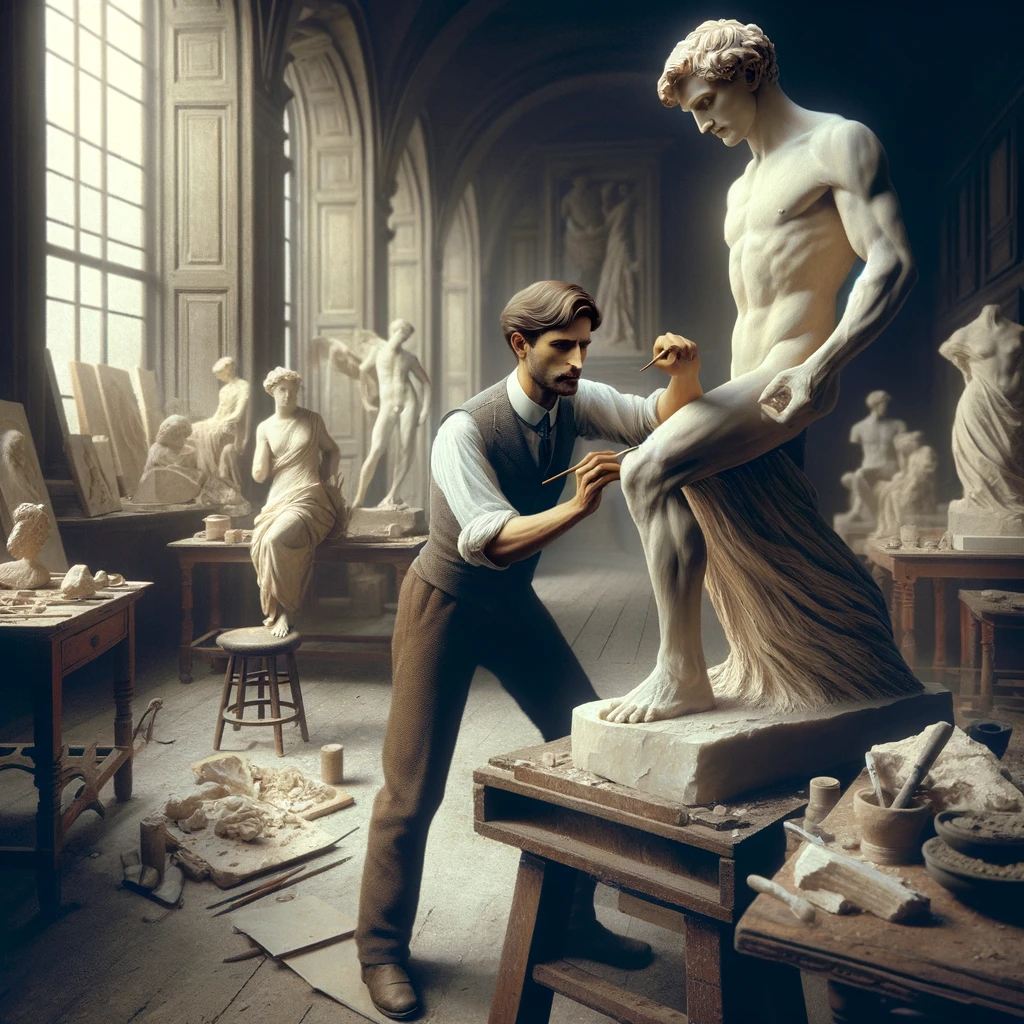
Douglas Tilden, born on May 1, 1860, in Chico, California, rose to prominence as one of the most remarkable sculptors of his time, overcoming the challenges posed by his deafness. His journey, marked by resilience, artistic genius, and an unyielding passion for sculpture, serves as a beacon of inspiration in the art world.
Early Life and Education
Tilden’s life took a dramatic turn at the age of four when he lost his hearing due to scarlet fever. This incident, however, did not deter his spirit. Showing an early interest in art, he initially communicated through drawings before learning sign language at the California School for the Deaf in Berkeley. It was here that Tilden’s artistic talents began to flourish.
Under the tutelage of Theophilus d’Estrella, Tilden honed his skills in drawing and modeling. His keen interest in sculpture was evident from the onset. The school, recognizing his potential, encouraged his pursuits, laying the foundation for his future endeavors in the world of art.
Overcoming Adversity
Tilden’s journey was not without its challenges. Being deaf in a predominantly hearing society posed significant hurdles. However, his resolve to succeed in the field of sculpture never wavered. He turned his perceived limitation into a source of strength, allowing him to immerse himself deeply in his work, undistracted by the world around him.
Artistic Training and Development
Seeking to further his education, Tilden moved to Paris in 1887 to study at the Académie Julian. There, he studied under renowned sculptors like Henri Chapu and Alexandre Falguière. This period was crucial in shaping his artistic style, which blended classical and realistic elements.
His time in Paris was transformative. He not only developed his technique but also gained exposure to a broader art community. Tilden’s unique perspective as a deaf artist brought fresh nuances to his work, earning him respect and recognition among his peers.
Return to America and Career Highlights
Tilden returned to America in the early 1890s, bringing with him a new artistic vision. He embarked on a prolific career, creating works that were both evocative and technically masterful. His sculptures often depicted dynamic, lifelike figures, capturing the essence of movement and emotion.
Among his notable works is “The Baseball Player,” a sculpture that exudes energy and realism, showcasing Tilden’s ability to portray motion. Another significant piece is “The Bear Hunt,” which reflects his skill in capturing the ferocity and intensity of a dramatic scene.
Impact and Legacy
Tilden’s impact on the art world extends far beyond his sculptures. He emerged as a symbol of perseverance and talent, shattering the stereotypes associated with deafness. His success paved the way for future generations of deaf artists, proving that art is a realm where communication transcends spoken language.
His works continue to be celebrated for their artistic merit and as historical landmarks. Many of his sculptures adorn public spaces, serving as reminders of his contribution to the cultural landscape.
Douglas Tilden’s life is a testament to the power of resilience and the pursuit of one’s passion against all odds. His legacy as a deaf sculptor remains an enduring source of inspiration, demonstrating that barriers can be transformed into gateways for creative expression.
Contributions to Deaf Culture and Community
Douglas Tilden’s achievements extended beyond his artistic contributions; he was also a pivotal figure in the deaf community. His success as a deaf sculptor at a time when opportunities for people with disabilities were limited served as a powerful example of what could be achieved despite societal barriers. Tilden was not just an artist; he was a role model and an advocate for the deaf community. His life’s work significantly impacted the perception and understanding of deafness in the broader society.
Artistic Style and Techniques
Tilden’s artistic style was a blend of realism and romanticism, marked by a strong sense of dynamism and emotional expression. His sculptures often depicted figures in motion, capturing moments of intense action or deep emotion. He had a knack for detailing, which brought his sculptures to life, making them more than just static figures. This dynamism is evident in works like “The Football Players,” which captures the raw, kinetic energy of the sport.
His technique was a combination of meticulous observation and a profound understanding of human anatomy. Tilden’s ability to convey movement and emotion through bronze and stone was extraordinary. He worked with various materials, but bronze became his preferred medium, allowing him the flexibility to express his artistic vision.
Personal Struggles and Triumphs
Tilden’s journey was marked by personal struggles, which he faced with remarkable resilience. Living in a period when deafness was often misunderstood, he encountered numerous obstacles in both his personal and professional life. However, Tilden’s persistence and dedication to his craft never wavered. He continually pushed the boundaries of his art, striving for excellence despite the challenges.
His triumphs over these struggles served as a beacon of hope and strength for many in the deaf community, showing that limitations could be overcome with determination and hard work.
Influences and Inspirations
Tilden was influenced by various factors, from his academic training in Paris to the dynamic cultural environment of the late 19th and early 20th centuries. His teachers in Paris played a significant role in shaping his artistic vision, introducing him to techniques and styles that would define his later works.
Moreover, Tilden drew inspiration from everyday life, from the people he encountered to the natural world around him. His works reflect a deep understanding of human experiences and emotions, a quality that made his sculptures profoundly relatable and impactful.
Recognition and Honors
Throughout his career, Tilden received numerous accolades and recognition for his work. His sculptures were celebrated for their artistic excellence and their ability to connect with a wide audience. He became a respected figure in the art community, not only for his artistic talents but also for his perseverance and dedication to his craft.
Final Years and Legacy
Douglas Tilden’s later years were marked by continued artistic production, though he faced increasing financial and health challenges. Despite these difficulties, he remained committed to his art, creating works that continued to inspire and impress.
Tilden passed away on August 5, 1935, leaving behind a rich legacy that transcended the art world. Today, he is remembered not just as a talented sculptor but as an individual who broke barriers and changed perceptions. His life and work continue to inspire artists and individuals in the deaf community, serving as a reminder of the boundless potential of human creativity and resilience.
Conclusion
Douglas Tilden’s life story is a narrative of triumph over adversity, artistic brilliance, and unyielding commitment to one’s passion. His legacy as a deaf sculptor and advocate for the deaf community endures, inspiring future generations to pursue their dreams regardless of the obstacles they may face. Tilden’s life and work remain a testament to the enduring power of art and the human spirit.
Frequently Asked Questions
1. Who was Douglas Tilden and why is he significant in the art world?
Douglas Tilden was an influential American sculptor, born on May 1, 1860, in Chico, California. He is celebrated for his formidable contributions to the world of sculpture during the late 19th and early 20th centuries. Tilden is particularly significant because he achieved his remarkable artistic feats despite being deaf, having lost his hearing at the tender age of four due to scarlet fever. His success story is one of extraordinary resilience and artistic genius, which has served as inspiration for both artists and individuals facing adversities worldwide. Tilden’s work is characterized by its dynamic movement and expressive forms, and his sculptures continue to be prominent fixtures in public spaces around San Francisco, where he spent much of his career. His legacy is also underscored by the fact that he advocated for the rights of the deaf and other individuals with disabilities, making him not only a pioneer in art but also a figure of social change.
2. How did Douglas Tilden’s deafness impact his life and career?
Douglas Tilden’s deafness, resulting from scarlet fever when he was just four years old, shaped both his personal life and professional career in profound ways. While being deaf presented significant communication challenges and social isolation, it also fostered a deep introspection and observation of the world around him, which he channeled into his art. Tilden’s lack of hearing did not impede his education; in fact, he attended the California School for the Deaf in Berkeley, where he first discovered his passion and talent for art. This pivotal experience set him on his path to become one of the foremost sculptors of his era. His deafness pushed him to develop keen visual skills, allowing him to perceive and express movement and emotion with unparalleled clarity in his sculptures. Furthermore, Tilden’s experiences as a deaf artist fueled his advocacy, particularly in elevating the visibility and rights of deaf individuals in society, which complemented his artistic pursuits.
3. What are some of Douglas Tilden’s most notable works?
Douglas Tilden is renowned for several iconic sculptures, many of which are located in and around San Francisco. One of his most famous works is “The Mechanics Monument,” completed in 1901, which celebrates the hardworking class and stands as a tribute to laborers and artisans. Another significant piece is “The Football Players,” which captures the dynamism and physicality of sports, reflecting Tilden’s ability to depict movement and emotion effectively. “The Bear Hunt,” located in Golden Gate Park, is another key work that embodies his skill in rendering lifelike, dynamic compositions. These pieces not only demonstrate Tilden’s superb craftsmanship and artistic vision but also reflect his passion for incorporating themes of strength, movement, and societal values. Tilden’s public sculptures have become enduring symbols of the cultural and historical landscape in the regions where they are displayed, continuing to engage and inspire viewers to this day.
4. How did Douglas Tilden contribute to the community of people with disabilities?
Douglas Tilden was a prominent advocate for the deaf and disabled communities, using his platform and influence to bring awareness and improve conditions for people with disabilities. His activism was largely driven by his personal experiences as a deaf individual in a predominantly hearing world, which instilled in him a deep commitment to fostering inclusivity and understanding. Tilden was instrumental in promoting educational and occupational opportunities for deaf individuals, and he worked tirelessly to ensure they could participate fully in society. He also sought to challenge and dismantle prevailing stereotypes and misconceptions about the capabilities of people with disabilities, emphasizing their potential and rights. By publicly demonstrating his own achievements and advocating for accessibility, Tilden not only paved the way for future artists and professionals with disabilities but also contributed significantly to the broader conversation on disability rights during his time.
5. What challenges did Douglas Tilden face throughout his career and how did he overcome them?
Throughout his career, Douglas Tilden faced numerous challenges, particularly relating to his hearing impairment and the societal perceptions of disability during his lifetime. Success in any art form requires communication and collaboration, which was initially a hurdle for Tilden due to limited accessibility and acceptance in the art world. However, through determination and remarkable talent, he overcame these obstacles by creating sculptures that spoke volumes despite his physical silence. His unwavering dedication to his craft garnered the attention and respect of both peers and patrons, allowing him to build a successful career. Tilden also faced financial challenges at times, typical of many artists, but maintained his practice through commissions and the support of the local community. Additionally, he served as a mentor to upcoming artists, sharing his expertise and passion, which further solidified his position and legacy in art history. Tilden’s story is a testament to his resilience, proving that passion and perseverance can triumph over adversity.