
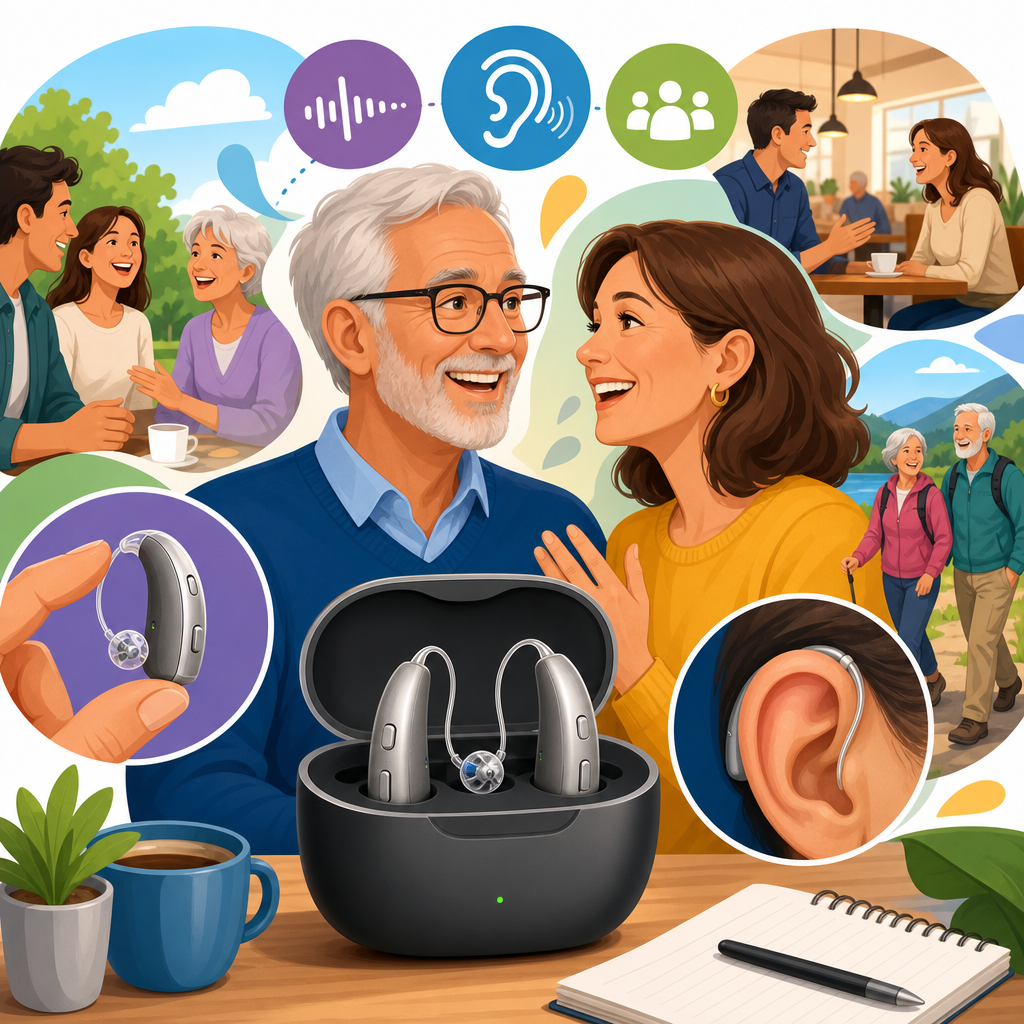
Oticon hearing aids reviews often focus on sound quality, comfort, connectivity, and value, but choosing the right model requires a broader understanding of how the brand works in everyday life. Oticon is one of the oldest and most established hearing aid manufacturers in the world, founded in Denmark in 1904, and its devices are widely prescribed by audiologists in the United States, Europe, and Asia. In practical terms, that matters because long-term support, software updates, repair networks, and accessory compatibility are just as important as the headline features printed on a brochure.
When people search for Oticon hearing aids reviews, they usually want answers to five questions: Are they good, how do they compare with other brands, what do they cost, which model is best, and what are the downsides? Those are the right questions. Hearing aids are medical devices programmed to a person’s hearing loss, ear anatomy, listening environments, and tolerance for background noise. A review that ignores fitting quality, verification, and follow-up care is incomplete, because the same device can perform brilliantly for one user and poorly for another depending on how it is set up.
In clinics, I have seen Oticon products succeed most often with users who want a natural presentation of sound rather than aggressive suppression that makes the world seem overly filtered. Oticon’s design philosophy has long centered on preserving access to a fuller sound environment, then helping the brain organize speech and background information more effectively. Terms like receiver-in-canal, behind-the-ear, rechargeable lithium-ion battery, telecoil, Bluetooth Low Energy, and real-ear measurement matter here because they directly affect fit, usability, and speech understanding. This guide explains the Oticon lineup, performance, pricing, features, strengths, limitations, and buying considerations so you can evaluate reviews with the right context.
What makes Oticon hearing aids different
Oticon is best known for premium digital hearing aids that emphasize speech clarity in complex listening environments without making sound feel thin or artificial. The company’s modern devices use advanced signal processing, directional microphones, feedback management, wind noise handling, and machine-learned sound classification. In plain terms, they constantly analyze the listening scene and adjust amplification so speech remains audible while sudden, annoying, or steady-state noise is controlled. The brand also invests heavily in connectivity, which is important for users who stream calls, music, television audio, and video meetings directly from phones and accessories.
One distinguishing feature in many Oticon reviews is the impression of openness. Some users prefer that because it can preserve environmental awareness in restaurants, family gatherings, and outdoor settings. Others may prefer a stronger front-focused directional approach from competing brands, especially if their priority is maximum speech isolation in loud places. Neither approach is universally better. The right choice depends on hearing loss pattern, cognitive listening effort, and daily routine. Oticon tends to appeal to users who want a premium, balanced listening experience and are willing to work with an audiologist to fine-tune settings over several visits.
Oticon’s current and recent families include Intent, Real, More, Zircon, Own, Play PX, Xceed, and CROS solutions for single-sided hearing challenges. Product names change over time, but the structure is consistent: premium tiers offer more automation and noise management, while lower tiers keep core amplification and connectivity with fewer advanced adjustments. Reviews can be misleading when they compare a top-tier Oticon model with a mid-tier competitor. The technology level matters as much as the brand.
Oticon hearing aid models and who they suit best
The most reviewed Oticon products are receiver-in-canal models because they fit the broadest range of mild to severe hearing loss and are cosmetically discreet. Intent and Real are positioned as advanced rechargeable devices with strong streaming support, automatic adaptation, and all-day wear comfort. More remains widely discussed because it introduced a highly regarded sound processing platform that many users found less fatiguing than older-generation aids. Zircon serves people who want the Oticon ecosystem at a lower price point, while Own and related custom in-the-ear products are for users who prioritize a nearly invisible fit or who cannot comfortably manage an external receiver wire.
Power users with severe to profound hearing loss often look at Xceed or more powerful behind-the-ear options. These devices are physically larger because they need stronger amplification, larger batteries or battery compartments, and ear molds that manage feedback and retention. Parents of children with hearing loss will also see Play PX in reviews, as pediatric fittings require robust tamper-resistant features, dependable wireless access, and frequent reprogramming as hearing and listening needs change.
| Model family | Best for | Main strengths | Potential tradeoffs |
|---|---|---|---|
| Intent | Active adults wanting top-tier automation | Advanced environmental adaptation, rechargeability, strong connectivity | Premium pricing |
| Real | Users sensitive to wind and handling noise | Natural sound, refined comfort features, good streaming | Feature differences depend on technology level |
| More | People prioritizing balanced everyday sound | Widely praised speech clarity and listening comfort | Older platform than newest releases |
| Zircon | Value-focused buyers wanting a major brand | Solid core performance and app support | Fewer premium automatic features |
| Own | Users wanting custom in-ear discretion | Cosmetic appeal, personalized shell fit | Smaller size can limit battery and wireless options |
| Xceed | Severe to profound hearing loss | High output, strong feedback control | Larger device size |
For most adults shopping generally, a rechargeable receiver-in-canal Oticon model is the default recommendation because it balances appearance, amplification flexibility, phone streaming, and serviceability. Custom styles still have a place, but they are more specialized. If you have dexterity issues, arthritis, heavy glasses use, or a history of moisture problems, those factors should influence the model choice as much as review scores.
Sound quality, speech understanding, and everyday performance
Sound quality is the area where Oticon receives the strongest positive reviews. Users frequently describe the sound as natural, less metallic than older digital aids, and easier to wear all day. That impression comes from a mix of wide input processing, fast automatic adjustments, and fitting strategies that avoid over-compressing the sound scene. In practice, many wearers say voices feel more lifelike and less trapped inside the head, especially after the acclimatization period during the first few weeks.
Speech understanding in quiet is usually excellent when the hearing aid is properly fitted. The real test is speech in noise. Oticon performs well in moderate noise, small group conversations, meetings, and car rides, especially when directional processing and custom programs are tuned correctly. In very loud restaurants or reverberant spaces, no hearing aid restores normal hearing. Reviews that promise that are not credible. What Oticon can do, especially in premium tiers, is reduce listening effort, improve access to conversational cues, and make speech more consistently available from multiple directions.
One issue I see in mixed reviews is unrealistic expectations during the first fitting. Users often expect instant perfection. In reality, hearing rehabilitation is a process. Your brain may need several weeks to re-learn high-frequency sounds like dishes clinking, paper rustling, turn signals, and consonants such as s, f, and th. Oticon aids generally handle this transition well because they are not usually tuned to sound excessively sharp, but follow-up visits remain essential. The best outcomes happen when the provider uses real-ear measurement to verify that amplification matches prescriptive targets such as NAL-NL2 or DSL where appropriate.
Connectivity, app experience, and rechargeability
Modern hearing aid buyers care as much about wireless performance as acoustic performance, and Oticon is competitive here. Many current Oticon devices support direct streaming from iPhone and selected Android phones, hands-free calling on compatible devices, remote adjustments, and accessory pairing for television audio. The Oticon Companion app, and earlier app generations for older devices, lets users change volume, switch programs, monitor battery status, and sometimes locate misplaced aids. For many wearers, especially professionals and retirees who use video calls daily, this is a major quality-of-life feature rather than a luxury.
Rechargeable options are now a core reason people choose Oticon. Lithium-ion rechargeability removes the need to handle tiny disposable batteries and makes nightly charging routine. Most users can expect all-day power under normal conditions, though heavy streaming can reduce runtime. That is true across the industry, not just with Oticon. If you stream several hours of calls, podcasts, or television every day, ask specifically about realistic battery life with your usage profile.
Connectivity reviews are generally positive, but compatibility details matter. Some Android phones work better than others, operating system updates occasionally affect pairing behavior, and hands-free features may vary by model and region. For television use, Oticon’s TV adapter is often praised for stable, low-latency sound. Accessories for remote microphones can also dramatically improve hearing in lectures, cars, worship spaces, and noisy meetings. In real use, a good accessory setup can matter more than jumping from one premium tier to another.
Cost, value, warranties, and where reviews can mislead
Oticon hearing aid prices vary widely based on model, technology level, provider bundle, included service, and geography. In the United States, a pair often falls somewhere between roughly $3,000 and $8,000 when bought through a clinic, though premium packages can exceed that and entry packages can be lower. That range usually includes fitting, programming, follow-up appointments, warranty coverage, and sometimes loss-and-damage protection. Reviews that compare online list prices with full-service clinic pricing often miss what the buyer is actually paying for.
Value is not just the lowest purchase price. A well-fitted mid-tier Oticon with proper verification and follow-up can outperform a badly fitted flagship device. This is one of the most important points any buyer should understand. When I evaluate whether a hearing aid was worth the money, I look at speech benefit in the user’s hardest environments, consistency of wear time, comfort, service responsiveness, and whether the patient stops avoiding conversations. That is measurable value.
Warranties commonly run two to three years depending on seller and region, with one-time replacement terms often available for loss or accidental damage. Ask specifically about office visit fees after the trial period, charger replacement costs, receiver wire replacement, and whether future firmware or programming updates are included. Also ask how long the provider expects manufacturer support for that platform. Hearing aids are computers worn on the ear, and long-term support matters. Reviews become much more trustworthy when you separate opinions about the hardware from opinions about the provider experience.
Pros, cons, and how Oticon compares in the broader market
The strengths of Oticon are clear: refined sound quality, strong premium features, broad style selection, reliable brand history, and a generally polished mobile ecosystem. Many users report less listening fatigue than with older or more aggressively processed devices. The company also has strong clinical credibility, and audiologists are familiar with its fitting software and accessories. For users who want a natural listening experience and strong connectivity, Oticon is consistently one of the safest recommendations in the hearing aids market.
The drawbacks are equally worth stating. Oticon is not usually the cheapest option, and lower-tier models may not offer the same standout performance that drives the best reviews. Some users who want the strongest possible directional beam in loud restaurants may prefer how another brand handles frontal speech emphasis. Custom models can involve tradeoffs in battery size, streaming features, and repair complexity. And as with any hearing aid, poor dome selection, incorrect receiver strength, or weak counseling can make a good product seem disappointing.
Compared with other major brands such as Phonak, ReSound, Signia, Starkey, and Widex, Oticon sits firmly in the premium category. Phonak is often favored for broad Bluetooth compatibility, Widex for musical sound quality, Starkey for health and sensor features, ReSound for ecosystem integration, and Signia for certain speech-in-noise strategies. Oticon competes by delivering a sophisticated balance of natural sound, speech access, and ease of wear. If your goal is one brand that performs well across most daily situations with strong clinician support, Oticon deserves serious consideration.
Oticon hearing aids earn strong reviews for good reasons: they sound natural, offer dependable modern features, and cover a wide range of hearing losses and lifestyle needs. The most important takeaway is that no review is complete unless it considers the model tier, the fitting quality, and the follow-up care. A premium device fitted poorly can underperform, while a mid-tier Oticon fitted carefully can transform daily communication. That is why buyers should judge the whole hearing care process, not just the hardware.
If you are comparing options in the hearing aids category, use this article as your starting point. Narrow your choice by hearing loss severity, preferred style, streaming needs, dexterity, budget, and the listening environments that challenge you most. Then ask for a professional evaluation, a verified fitting, and a clear explanation of warranty and service terms. Oticon is not perfect for everyone, but it remains one of the most credible and consistently recommended brands in the market.
The best next step is simple: schedule a hearing test with an audiologist or licensed hearing care professional and trial the Oticon models that match your needs. Bring real-world goals to the appointment, such as hearing speech at dinner, streaming calls clearly, or reducing fatigue at work. A hands-on trial will tell you more than any single review, and it is the fastest path to finding out whether Oticon is the right long-term solution for better hearing.
Frequently Asked Questions
Are Oticon hearing aids generally well reviewed for sound quality and everyday performance?
Yes, Oticon hearing aids are often reviewed very positively for sound quality, especially by users who want speech to sound more natural rather than overly processed or artificially amplified. A major reason is that Oticon has built much of its reputation around helping wearers access a fuller sound environment instead of focusing only on one voice directly in front of them. In real-world use, that can make conversations feel less tiring in restaurants, family gatherings, offices, and other places where several sounds compete for attention.
Many reviews also mention that Oticon devices perform well for people who move through different listening situations during the day. For example, users often appreciate that the hearing aids can transition between quiet rooms, outdoor environments, and noisier social spaces without requiring constant manual adjustments. That said, individual results still depend on the specific model, the severity of hearing loss, and how well the devices are programmed by an audiologist. A premium model fitted properly will usually deliver a better experience than a basic model that is not customized well. So while Oticon as a brand is widely respected for sound quality, the best way to judge likely performance is to look at the exact product tier, your hearing profile, and the quality of the professional fitting process.
What makes Oticon different from other hearing aid brands?
Oticon stands out because it is one of the oldest and most established hearing aid manufacturers in the world, with a history dating back to 1904 in Denmark. That long history matters more than many shoppers realize. It usually means the company has deep research experience, mature fitting software, strong relationships with audiologists, and a broad service network in major markets such as the United States, Europe, and Asia. For buyers, that often translates into easier access to follow-up care, repairs, replacement parts, and software support over time.
Another important difference is Oticon’s approach to hearing technology. The brand has often emphasized helping the brain make sense of sound, rather than simply making everything louder. In practical terms, that philosophy shows up in features designed to improve clarity, reduce listening strain, and preserve awareness of the wider listening environment. Many wearers describe the result as more balanced and less harsh than what they expected from hearing aids. Oticon is also known for offering modern connectivity features, rechargeable options in many product lines, and app-based controls that appeal to people who want their hearing aids to work more like connected everyday devices. While other brands may excel in certain niches, Oticon is frequently chosen because it combines sound quality, professional support, established reliability, and up-to-date technology in a way that feels dependable for long-term use.
Are Oticon hearing aids comfortable and easy to wear all day?
For many users, comfort is one of the strongest points in Oticon hearing aid reviews. The brand offers a range of styles, including behind-the-ear and receiver-in-canal designs that are made to sit discreetly and comfortably for extended wear. Reviews often mention that once properly fitted, Oticon devices feel light and secure enough for all-day use, which is important because hearing aids only help consistently when people are willing to wear them consistently. A device that sounds great but becomes irritating after a few hours will not deliver the same long-term benefit.
Comfort, however, is not just about the shell of the hearing aid. It also depends on dome size, earmold fit, receiver wire length, and how the device is programmed. If a hearing aid feels physically awkward, whistles, or makes the wearer’s own voice seem unnatural, the issue may often be corrected during a professional adjustment rather than requiring a different brand altogether. Oticon’s widespread use through audiology practices is helpful here, because it gives wearers access to in-person fine-tuning and support. In other words, Oticon devices are generally designed with comfort in mind, but the best experience usually comes from a careful fitting process and a short adjustment period while the user gets used to amplified sound again.
How good is Oticon connectivity with smartphones, TVs, and other devices?
Oticon hearing aids are usually considered strong performers when it comes to connectivity, especially in newer product lines. Many models support direct streaming or easy pairing with smartphones, allowing users to take calls, listen to audio, and adjust settings through a companion app. For people who want hearing aids to fit naturally into modern daily life, this can be a major advantage. Instead of treating hearing aids as isolated medical devices, Oticon has worked to make them part of a broader digital routine that includes phones, tablets, televisions, and remote accessories.
That said, connectivity performance can vary by model, phone type, and software version. Some users have excellent experiences with stable Bluetooth connections and intuitive app controls, while others may run into occasional pairing issues, battery drain concerns, or compatibility differences depending on their device ecosystem. This is one reason why reviews should be read carefully: a glowing review for one Oticon model may not fully reflect the experience of another generation or product tier. In general, Oticon scores well because the company continues to support connected features and software updates, and its global presence makes it easier for clinicians to help troubleshoot setup problems. If connectivity is a top priority for you, it is worth confirming exactly how a specific Oticon model works with your smartphone, streaming preferences, and home listening devices before making a final decision.
Are Oticon hearing aids worth the price, and how should buyers evaluate value?
For many buyers, Oticon hearing aids are worth the price if they value a combination of natural sound, brand reliability, professional support, and modern technology. Reviews often describe Oticon as a premium or near-premium option, which means the upfront cost can be significant. However, hearing aids should be evaluated as long-term health and communication tools rather than simple electronics purchases. Better hearing can affect conversations, work performance, confidence, mental fatigue, and overall quality of life, so the true value is often measured over years of daily use rather than at the point of sale alone.
When evaluating value, it helps to look beyond the device price and consider what is included. Important questions include whether the cost covers hearing tests, fittings, follow-up visits, cleanings, warranty protection, loss or damage coverage, and future programming adjustments. Oticon’s long-standing market presence is relevant here because buyers are not only paying for hardware, but also for access to a mature support ecosystem that includes audiologists, repair channels, and ongoing software refinement. In many cases, that broader infrastructure can make ownership smoother and more reassuring than choosing a lesser-known brand with fewer service options. So while Oticon may not be the cheapest choice, many wearers and clinicians consider it a strong value when matched carefully to the user’s hearing needs, lifestyle, and expectations.