
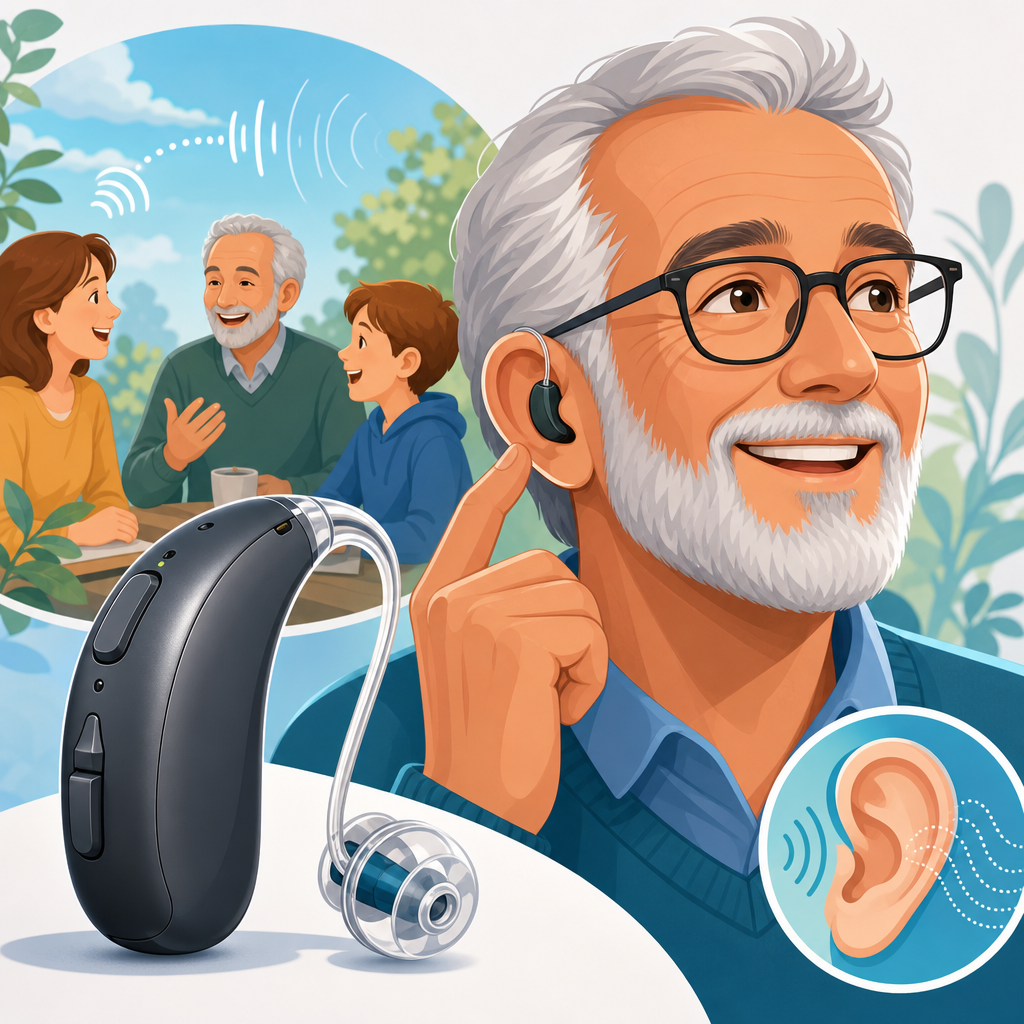
Oracle hearing aid is a broad search term people use when they want a complete, practical overview of hearing aid options, features, fitting, costs, and daily use before choosing a device. In clinics, I often see this kind of search happen at the start of the buying journey: someone has noticed speech becoming harder to follow, especially in restaurants or on calls, and they need one clear resource that explains what hearing aids do, who benefits, and how to compare models without getting lost in marketing claims. That is why a general hub page matters. It should answer the basic questions, define the technical language, and point readers toward the right next steps with confidence.
A hearing aid is a small medical device that amplifies and processes sound for a person with hearing loss. Modern models do much more than make everything louder. They use microphones, digital signal processing, feedback suppression, directional microphones, noise reduction, wireless streaming, and rechargeable batteries to improve audibility while keeping speech as natural as possible. The term Oracle hearing aid may refer to a specific product query, a retailer query, or a user looking for authoritative guidance across the category. In practical terms, the important issue is not the phrase itself but the decision behind it: finding a hearing aid that matches the user’s hearing loss, ear anatomy, dexterity, listening environments, and budget.
Hearing loss is common and highly consequential. The World Health Organization estimates that more than 1.5 billion people worldwide live with some degree of hearing loss, and hundreds of millions have loss significant enough to require rehabilitation. Untreated hearing loss is associated with communication strain, reduced participation at work, social withdrawal, listening fatigue, and increased cognitive load. In my experience fitting devices, the biggest misconception is that hearing aids simply restore normal hearing. They do not. What they do well, when properly selected and programmed, is improve access to speech and environmental cues, reduce effort, and help people stay engaged in daily life. This article explains the essentials so you can evaluate hearing aids from an informed position.
What an Oracle hearing aid search should help you understand first
The first question is whether hearing aids are the right solution for your type of hearing loss. Most hearing aids are designed for sensorineural hearing loss, which commonly results from aging, noise exposure, genetics, or certain medications. They can also help in some mixed losses, but they are not a substitute for medical treatment when hearing loss is caused by earwax, middle ear infection, eardrum problems, sudden hearing loss, or asymmetric symptoms that need physician evaluation. Red flag symptoms include sudden hearing changes, one-sided loss, ear pain, drainage, dizziness, tinnitus in one ear, or a marked difference between ears. Those findings should be assessed medically before a hearing aid purchase.
A complete hearing evaluation usually includes pure-tone air and bone conduction testing, speech reception thresholds, word recognition testing, tympanometry when needed, and a case history focused on communication needs. The audiogram shows hearing thresholds across frequencies, while speech testing reveals how clearly the brain can recognize words once they are loud enough. This distinction matters. Two people can have similar audiograms yet very different real-world experiences because speech discrimination differs. That is one reason why a successful hearing aid fitting is not just about buying hardware. It is also about professional assessment, programming, counseling, and follow-up adjustments.
Users also need realistic expectations. Hearing aids improve hearing, but they do not eliminate background noise or fully recreate effortless listening in every setting. Restaurants, group conversations, reverberant rooms, and car travel remain challenging because speech and noise overlap acoustically. Better devices use directional microphones, adaptive noise management, and scene analysis to help, but no hearing aid can perfectly separate every voice from every noise source in real time. People do best when they pair good technology with communication strategies, such as facing the speaker, choosing quieter seating, and reducing competing sound whenever possible.
Types of hearing aids and how they differ
Hearing aids are categorized mainly by style and receiver placement. Behind-the-ear models place the electronics in a case behind the ear and route sound into the ear canal through tubing or a thin wire. Receiver-in-canal designs move the receiver closer to the eardrum, which often improves high-frequency performance and reduces the occluded feeling many new users dislike. In-the-ear, in-the-canal, and completely-in-canal models place more or all components inside the ear and can be cosmetically appealing, but they may offer less battery capacity, fewer microphones, and less room for wireless components.
The best style depends on hearing loss configuration, ear canal shape, wax production, vision, finger dexterity, and user preference. I generally recommend receiver-in-canal instruments for many adults with mild to severe sensorineural loss because they are versatile, comfortable, and easy to adjust acoustically with domes, molds, and receiver power levels. Custom in-the-ear devices can work very well for users who want one-piece insertion and less behind-the-ear hardware, especially if anatomy is suitable. However, tiny devices are not always the smartest choice. If a person struggles to change small batteries, clean narrow ports, or manipulate controls, a larger rechargeable model often delivers better long-term satisfaction.
| Style | Best for | Main advantages | Common tradeoffs |
|---|---|---|---|
| Receiver-in-canal | Mild to severe loss | Comfort, strong sound quality, wireless features | Receiver needs periodic replacement |
| Behind-the-ear | Mild to profound loss | Durability, power, easier handling | More visible behind the ear |
| In-the-ear | Mild to severe loss | One-piece custom fit, easier insertion | More wind and wax exposure |
| Completely-in-canal | Mild to moderate loss | Very discreet appearance | Small battery, fewer features, harder to handle |
Another major distinction is between prescription hearing aids and over-the-counter hearing aids. Prescription devices are fitted based on a hearing evaluation and programmed to evidence-based targets using software and verification. OTC devices are intended for adults with perceived mild to moderate hearing loss and can be purchased without a clinical exam. Some OTC products are well engineered, especially those from established audio brands that include in-app hearing tests and self-fitting tools. Still, they are not ideal for every case. People with significant loss, unusual audiograms, poor word recognition, or medical red flags usually need a professionally fitted solution.
Core features that actually affect performance
When comparing hearing aids, ignore vague claims about premium sound and focus on features with measurable listening benefits. Directional microphones are among the most important. They prioritize sound from the front and reduce competing noise from other directions, especially in face-to-face conversation. Noise reduction systems then analyze the signal and reduce steady-state sounds such as fans or road noise. Feedback management prevents whistling by detecting and canceling acoustic feedback loops, which is essential when gain is high or the fit is more open. Modern feedback systems are effective, but aggressive settings can sometimes reduce high-frequency audibility, so fine tuning matters.
Frequency lowering is another key feature for people with steep high-frequency hearing loss. When sounds such as /s/, /sh/, and /f/ are too high in pitch to be audible, the aid can shift or compress that information into a lower frequency region the listener can hear. This can improve access to consonants, though settings must be carefully adjusted to preserve clarity. Remote microphones and telecoils also deserve more attention than they get. A remote microphone worn by a conversation partner can dramatically improve speech understanding in noise because it sends the talker’s voice directly to the hearing aids. Telecoils allow access to loop systems in theaters, houses of worship, and some public venues.
Connectivity has become a major purchasing factor. Bluetooth streaming allows direct audio from phones, tablets, televisions, and laptops. Some platforms support hands-free calling on both iPhone and Android, while others are more limited depending on the device ecosystem and Bluetooth protocol. App controls can adjust volume, programs, directional focus, geotagged settings, and battery status. Rechargeable lithium-ion systems have also changed daily use. Many users prefer them because they avoid tiny disposable batteries and provide all-day power. The tradeoff is that battery performance declines over time, and heavy streamers may need a portable charger for long days.
Fitting, verification, and why the process matters as much as the device
A well-fitted midrange hearing aid generally outperforms a poorly fitted premium one. The gold standard is real-ear measurement, also called probe-microphone verification. During this process, a thin probe tube is placed in the ear canal to measure the actual amplified sound reaching the eardrum while speech-like signals are presented. The audiologist then adjusts gain and output to match a validated prescription target such as NAL-NL2 or DSL. This step matters because manufacturer first-fit settings often deviate significantly from target, especially in the high frequencies. Without verification, users may leave with speech cues under-amplified or loud sounds uncomfortably sharp.
Fine tuning continues after the initial fitting. New users often need gradual adaptation because the brain has been deprived of certain sounds for years. Environmental sounds like dishes, footsteps, paper rustling, and turn signals may seem overly prominent at first. That does not mean the fitting is wrong. It means the auditory system is readjusting. Follow-up visits usually address loudness comfort, own-voice perception, background noise complaints, Bluetooth pairing, and retention issues. Data logging from the hearing aids can show how many hours they are worn, which programs are used, and what listening environments are most common, guiding more targeted adjustments.
Outcome measures should be part of the process. Good clinics use validated tools such as the Hearing Handicap Inventory, Client Oriented Scale of Improvement, Abbreviated Profile of Hearing Aid Benefit, or Speech, Spatial and Qualities of Hearing Scale. These instruments capture the user’s perceived difficulty before and after fitting and keep the discussion centered on daily function rather than vague impressions. A proper hearing aid journey also includes counseling for family members. Communication improves fastest when everyone understands turn taking, visual cues, clear speech, and the limits of amplification in noisy spaces.
Cost, value, and how to compare hearing aid options
Hearing aid cost varies widely by technology tier, service model, and region. In the United States, a pair of prescription devices with bundled professional care often ranges from roughly $2,000 to $7,000 or more. OTC devices can cost a few hundred to around $3,000 a pair. Price differences reflect more than sound processing. They also include clinic time, hearing testing, fitting, verification, follow-up care, warranty coverage, loss and damage protection, charger inclusion, and service length. Consumers frequently compare sticker prices without comparing what support is attached. That is a mistake because long-term benefit depends heavily on care quality.
Premium technology can be worthwhile for people who spend substantial time in complex listening environments, move frequently between acoustic scenes, or rely heavily on streaming and remote adjustments. Basic and midlevel devices are often enough for users whose listening life is quieter and more predictable. The key is matching features to actual need. I have seen retirees who mainly talk at home do extremely well with midrange products, while teachers, sales professionals, and frequent diners often notice meaningful gains from stronger adaptive directionality and more sophisticated scene classification. Trial periods, return policies, warranty terms, and repair turnaround times should all be reviewed before purchase.
Insurance coverage remains inconsistent. Traditional Medicare does not generally cover hearing aids, though some Medicare Advantage plans offer limited benefits. Medicaid coverage depends on the state. Veterans may qualify through the VA if eligibility criteria are met. Some employers and private plans include partial hearing aid benefits through third-party administrators. Flexible spending accounts and health savings accounts can usually be used for hearing aids and related services. If budget is the main barrier, ask about older-generation stock, manufacturer promotions, financing, university clinics, nonprofit hearing programs, and state vocational rehabilitation for work-related need.
Daily use, maintenance, and signs it is time for an upgrade
Successful hearing aid use depends on routine. Devices should be worn consistently, cleaned daily, and stored properly. Wax guards, microphone ports, and domes collect debris that can reduce output or distort sound. Moisture is another common problem, especially in humid climates and among active users. A drying cup or electronic dryer can extend device life. Rechargeable models should be seated correctly in the charger each night, and users should verify charging lights rather than assume contact is made. If one hearing aid suddenly seems weak, the first checks are wax blockage, dead battery, damaged receiver, or accidental mute before assuming internal failure.
Most hearing aids last about three to seven years, though longevity depends on moisture exposure, handling, battery health, and repair history. Signs that it may be time to upgrade include persistent difficulty despite multiple adjustments, changing hearing thresholds, outdated connectivity, repeated repairs, poor battery performance, or unmet needs in noise. Hearing aid technology has advanced meaningfully in speech enhancement, rechargeability, app control, and accessory integration over the last decade, so an upgrade can improve both convenience and communication. If you are researching an Oracle hearing aid, use this hub as your starting point, then compare styles, insist on proper fitting, and choose a provider or product path that supports your hearing for the long term.
Frequently Asked Questions
What does the term “Oracle hearing aid” usually mean, and what should I look for when researching hearing aids?
The phrase “Oracle hearing aid” is often used as a general search term by people who want one reliable, practical overview of hearing aids before they make any decisions. In most cases, they are not looking for a single magic product. They are trying to understand the full picture: what hearing aids actually do, who they help, what features matter, how fittings work, and what a realistic budget looks like. That is a smart place to start, because hearing aids are not one-size-fits-all devices. The right choice depends on your hearing test results, listening lifestyle, comfort preferences, dexterity, and goals for daily communication.
When researching hearing aids, focus on a few essentials first. Start with the type and degree of hearing loss, because that determines which styles and power levels are appropriate. Then look at speech clarity features, especially background noise reduction, directional microphones, and feedback control. If you struggle in restaurants, meetings, or family gatherings, ask how well a device supports speech understanding in noisy places, not just volume. Connectivity is another major factor. Many modern hearing aids connect to smartphones, televisions, and other audio sources, which can make calls and media much easier to follow. Battery style also matters, since some people prefer rechargeable models for convenience while others want disposable batteries for flexibility.
It also helps to research the service model, not just the product. A hearing aid performs best when it is professionally fitted, fine-tuned, and adjusted over time. That means you should ask whether the price includes hearing tests, real-ear measurements, follow-up visits, cleanings, warranty coverage, repairs, and a trial period. Two devices can look similar on paper but deliver very different results depending on programming and support. A good hearing aid is not simply bought; it is fitted, personalized, and optimized.
If you are early in the buying journey, the best mindset is to compare solutions rather than chase brand names alone. Look for clear explanations, transparent pricing, evidence-based fitting practices, and a provider who asks detailed questions about your everyday listening challenges. That usually leads to a much better outcome than choosing based only on advertisements or a long feature list.
How do hearing aids work, and who is most likely to benefit from wearing one?
Hearing aids work by picking up sound through microphones, processing that sound digitally, and delivering it into the ear in a way that makes speech and other important sounds easier to hear. They do not simply make everything louder. Modern devices are designed to emphasize useful sounds, especially speech, while reducing some unwanted background noise and controlling sudden loud sounds so listening is more comfortable. This is why current hearing aids are far more advanced than older analog devices that mainly increased overall volume.
People who benefit most are those with hearing loss that affects communication in daily life. A common early sign is hearing people speak but not clearly understanding the words, especially in restaurants, group conversations, meetings, or on the phone. Others notice they are turning up the television, asking people to repeat themselves, mishearing names, or feeling more tired after social situations because listening takes so much effort. Hearing aids are especially helpful for sensorineural hearing loss, which is the most common type and often develops gradually with age, noise exposure, genetics, or certain medical conditions.
The benefit is not limited to severe hearing loss. In fact, many people do very well when they address mild to moderate hearing loss earlier, before communication strain becomes more frustrating. The goal is not only to improve audibility but also to reduce listening fatigue, support better participation in conversations, and help the brain get more consistent access to speech sounds. Waiting too long can make the adjustment period harder, because the brain may have had less exposure to certain sounds for a long time.
That said, hearing aids are not the right solution for every hearing problem. Sudden hearing loss, one-sided hearing changes, ear pain, drainage, dizziness, or a feeling of blockage may point to a medical issue that should be evaluated by a physician or ENT specialist. A hearing test is the best first step because it shows whether hearing aids are appropriate, how much amplification is needed, and which technology level is likely to match your needs. If speech has become harder to follow and it is affecting your quality of life, there is a good chance hearing aids could help significantly when they are properly selected and fitted.
What features matter most when comparing hearing aids for everyday life, especially in noisy places and on phone calls?
The most important features are the ones that solve the specific problems you deal with every day. For many people, the top complaint is not that sounds are too quiet, but that speech is hard to understand when there is competing noise. In that situation, key features include directional microphones, background noise management, and speech enhancement. Directional microphones help the hearing aid focus more on sound coming from in front of you, such as the person you are speaking with, while reducing some noise from the sides and behind. Noise reduction can make listening more comfortable, although it cannot erase all background sound. Better premium systems often perform more effectively in complex, changing environments like busy restaurants.
For phone calls, Bluetooth connectivity is one of the most useful features to compare. Many hearing aids can stream calls directly from a smartphone to both ears, which often improves clarity and reduces the need to position the phone perfectly. Some models also offer hands-free calling, app-based controls, and compatibility with both iPhone and Android devices, though compatibility can vary. If phone conversations are a major concern, ask specifically how each model handles streaming, microphones, and background noise during calls.
Comfort and usability matter just as much as sound technology. Consider whether you want a nearly invisible style or a larger model that may be easier to handle and often offers stronger battery performance. Rechargeable devices are popular because they are simple to use and eliminate battery changes, but disposable-battery models can still be a good fit for people who prefer to carry spares or want certain size options. Tinnitus masking features may also be important if you have ringing in the ears. Some devices include programs designed to make tinnitus less noticeable.
Another feature that is often overlooked is personalization. The best hearing aids allow fine adjustments for your hearing profile and preferences across multiple listening environments. Many also include smartphone apps that let you change volume, switch programs, or sometimes even request remote adjustments from your provider. In practical terms, the “best” feature set is the one that improves your hardest listening moments without making daily use complicated. That is why a hands-on discussion about your routine, such as restaurants, work meetings, church, driving, television, and calls, is more valuable than comparing technical terms alone.
What happens during a hearing aid fitting, and how long does it take to adjust to wearing hearing aids?
A proper hearing aid fitting is a process, not a one-time transaction. It usually begins with a full hearing evaluation to measure the type and degree of hearing loss and to understand how well you hear speech. Once appropriate devices are selected, the hearing aids are programmed to match your hearing test results and your listening needs. A high-quality fitting often includes real-ear measurements, which use a tiny microphone placed in the ear canal to verify that the hearing aid is delivering the right amount of sound. This step is extremely important because it moves the fitting from estimation to verification.
At the fitting appointment, you should also learn how to insert and remove the devices, charge or replace batteries, clean the microphones and domes, change wax guards if needed, and use app controls or buttons. Your provider should explain what to expect in the first few days and weeks, because amplified sound can feel different at first. Many people notice that everyday noises such as footsteps, dishes, paper, or their own voice seem unusually sharp or prominent in the beginning. That does not mean the hearing aids are wrong. It usually means your brain is readjusting to sounds it has not heard clearly for some time.
The adjustment period varies, but most people need several weeks to a few months to feel fully comfortable and natural with hearing aids. Consistent wear is one of the biggest predictors of success. Wearing them only occasionally tends to slow adaptation. Early follow-up visits are normal and useful because small programming changes can make a major difference in comfort, clarity, and noise performance. You may need volume changes, different listening programs, physical fit adjustments, or counseling on realistic expectations in difficult environments.
It is also important to understand what hearing aids can and cannot do. They can improve access to speech and environmental sound, but they do not restore hearing to perfect normal in every situation. Very noisy environments remain challenging even with excellent technology. The goal is meaningful improvement, easier communication, and less listening effort. The most successful users are usually those who receive careful fitting, come back for follow-up adjustments, and give themselves time to adapt rather than expecting instant perfection on day one.
How much do hearing aids cost, and how can I choose the right option without overspending?
Hearing aid costs can vary widely based on technology level, style, included services, warranty coverage, and where you buy them. The total price may include much more than the devices themselves. In many clinics, you are paying for the hearing evaluation, fitting, verification, follow-up adjustments, cleanings, counseling, trial period, and aftercare support as