
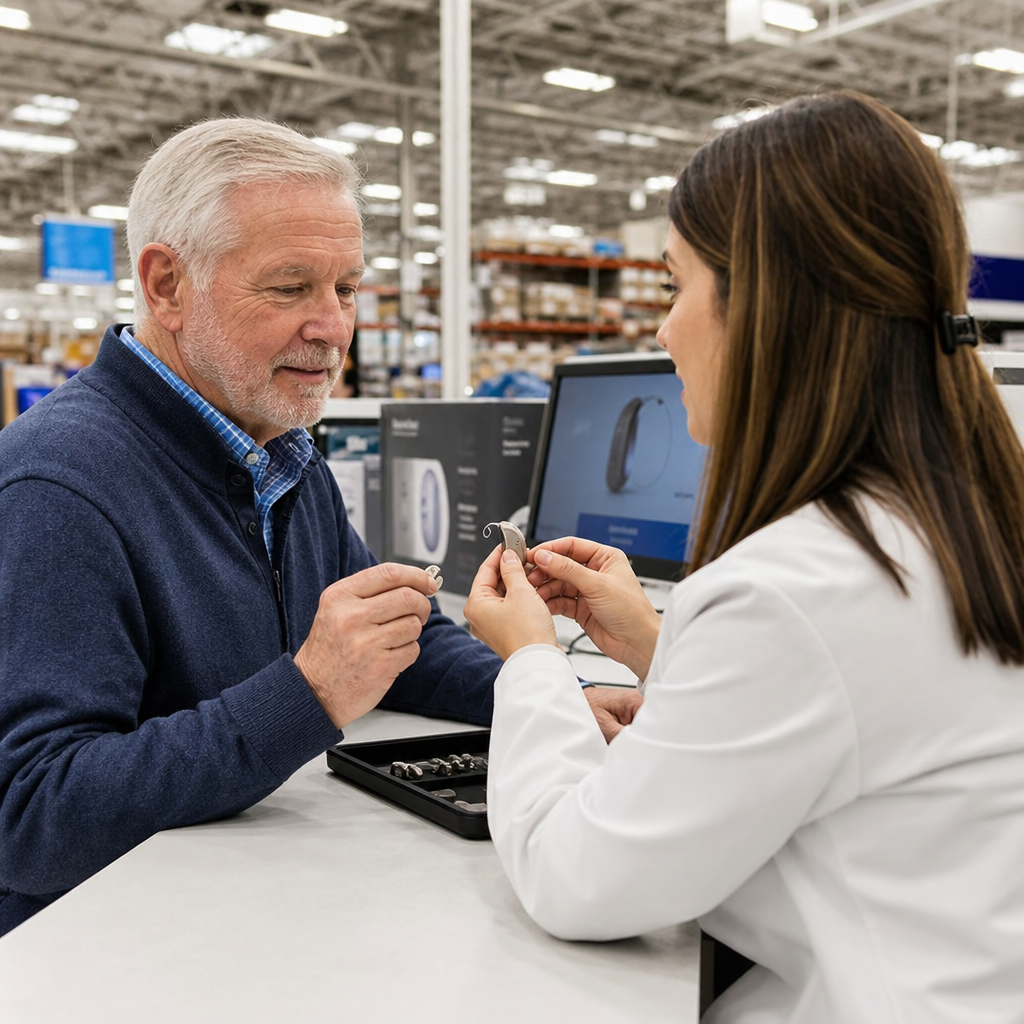
Sams Club hearing aides can be a practical starting point for shoppers who want lower prices, familiar retail locations, and straightforward access to prescription hearing technology without walking into a traditional private audiology clinic first. The topic matters because hearing loss is common, treatment is often delayed for years, and cost remains one of the biggest barriers to getting help. In this context, it is useful to clarify terms. A hearing aid is a regulated medical device that amplifies sound according to a programmed prescription. A hearing assessment measures hearing thresholds and speech understanding. Fitting is the process of selecting, programming, and adjusting devices for an individual ear and lifestyle. Follow-up care includes cleanings, real-ear verification when available, repairs, counseling, and periodic reprogramming. Many shoppers also use the phrase hearing aides, but the correct industry term is hearing aids. This guide uses the search phrase while explaining the actual products and services sold through Sams Club hearing centers.
Why does a warehouse club option deserve a full guide? Because buying hearing aids is not like buying batteries or reading glasses. Outcomes depend on product quality, hearing test accuracy, programming methods, earmold fit, return terms, and ongoing support. I have seen people save substantial money at big-box hearing centers and do very well, especially when their hearing loss is straightforward and they return for fine-tuning. I have also seen buyers choose a low price first, then discover they needed more complex counseling, tinnitus management, wax removal coordination, or advanced verification than the location routinely provided. A hub article should therefore answer the basic questions clearly: what Sams Club offers, how its hearing centers work, what brands may be available, who is a good candidate, what the limitations are, and how to compare Sams Club with Costco, private practices, ENT clinics, and over-the-counter options.
What Sams Club Hearing Centers Usually Offer
Sams Club hearing centers typically operate inside select warehouse club locations and focus on prescription hearing aids, hearing screenings or evaluations, fittings, basic maintenance, and aftercare. Availability varies by state and store, so the exact menu of services is not identical everywhere. In most cases, the model is designed around convenience and value. A member can schedule an appointment, receive a hearing test, review technology levels, and purchase devices at prices that are often lower than those in many independent clinics. Some centers also provide hearing aid cleanings, domes, wax guards, batteries for legacy devices, and troubleshooting visits. If a hearing aid stops pairing with a phone or begins to whistle, the hearing center is often the first place a member returns.
The hearing professionals you encounter may be hearing instrument specialists or audiologists, depending on the location and state licensure rules. That distinction matters. Hearing instrument specialists are trained and licensed to test hearing for hearing aid fitting and dispense devices. Audiologists have broader graduate-level training that can include diagnostic audiology, vestibular assessment, tinnitus counseling, and more complex case management. Either professional can fit hearing aids effectively when the case is appropriate, but someone with sudden hearing loss, asymmetrical hearing loss, active ear disease, chronic drainage, severe tinnitus, dizziness, or word recognition that seems unusually poor may need medical or specialty audiology evaluation beyond a standard retail setting.
Product selection at Sams Club has historically centered on major manufacturers and private-label arrangements, although lineups can change. Shoppers should ask not only which brand is available, but which platform generation, receiver power levels, earmold options, telecoil availability, rechargeability, Bluetooth protocol, app support, and warranty terms are included. Those details determine long-term usability far more than a brand name alone. A good hearing center conversation should move quickly from price to hearing profile, dexterity, phone use, background noise challenges, and realistic expectations.
How the Buying Process Works From Test to Fitting
The usual purchase path begins with an appointment for case history and hearing testing. Expect questions about noise exposure, ear surgeries, tinnitus, family history, and communication problems in places like restaurants, meetings, worship services, or while watching television. Pure-tone testing measures the softest sounds you can hear across frequencies. Speech testing checks how clearly you understand words. Otoscopy, a visual inspection of the ear canal, should happen before testing and fitting. If the canal is blocked with cerumen or the eardrum looks abnormal, the hearing center should refer you for medical care rather than proceeding as if nothing is wrong.
After testing, the provider should explain the type and degree of hearing loss in plain language. Mild high-frequency hearing loss often causes difficulty with consonants and speech clarity, especially in noise. Moderate to severe loss may affect volume, speech understanding, and fatigue throughout the day. The provider then recommends styles such as receiver-in-canal, behind-the-ear, custom in-the-ear, or in-the-canal, depending on anatomy, dexterity, power needs, and cosmetic preference. Receiver-in-canal devices are common because they are flexible, discreet, and serviceable. Custom products can work well for certain ears but may involve more manufacturing time.
Programming is where outcomes are won or lost. Best practice is to set gain according to a validated prescription formula such as NAL-NL2 or DSL, then verify the output with real-ear measurement. Real-ear measurement places a probe microphone in the ear canal and confirms that soft, average, and loud sounds are amplified to target without exceeding comfort. Not every retail hearing center performs it routinely, so ask directly. If it is not offered, the fitting may rely more heavily on first-fit software estimates and patient feedback. That can still work, but it is less precise, especially for first-time users and complex losses.
| Stage | What should happen | Why it matters |
|---|---|---|
| Hearing test | Pure tones, speech testing, otoscopy, case history | Confirms candidacy and identifies referral red flags |
| Product selection | Style, power, features, rechargeability, connectivity review | Matches technology to hearing loss and daily routine |
| Programming | Prescription-based fitting, ideally with real-ear verification | Improves audibility, comfort, and speech understanding |
| Orientation | Insertion, charging, cleaning, app use, expectations counseling | Reduces returns caused by handling or adjustment issues |
| Follow-up | Fine-tuning, physical fit changes, counseling, maintenance | Most benefit appears after several adjustments, not day one |
At the fitting visit, you should receive a hands-on orientation. That includes inserting and removing the aids, changing wax guards, cleaning microphone ports, pairing to a smartphone, and understanding what normal adaptation sounds like. Voices may seem sharper at first. Dishes, footsteps, turn signals, and refrigerator hums often become newly noticeable because the brain is relearning filtered sounds. A careful provider sets expectations early: hearing aids improve access to speech, but they do not restore natural hearing or eliminate all background noise.
Pricing, Membership, Warranties, and Return Policies
Price is one of the main reasons people look at Sams Club hearing aides. Warehouse club hearing centers usually position themselves below many private practices, sometimes by a significant margin. Exact prices vary by model, technology level, and bundled service structure, but shoppers often find pair pricing that is easier to absorb than independent clinic pricing for comparable mainstream devices. That lower price can reflect high retail volume, simplified service models, and less overhead rather than inferior hardware. In many cases, the chips, microphones, feedback systems, and wireless features come from the same global manufacturers that supply traditional clinics.
Membership requirements should be confirmed before you book. Hearing center policies can differ from optical or pharmacy policies, and state regulations can also affect how services are handled. Ask whether a membership is required for testing, purchasing, follow-up visits, and accessory purchases. Also ask what is bundled into the quoted price. Some centers include the initial hearing test, fitting, standard follow-ups, warranty repair handling, and loss-and-damage coverage. Others may charge separately for earmolds, charger replacements, custom shells, or extended service beyond a defined period.
Warranties deserve close reading. Most prescription hearing aids include a manufacturer warranty for repair over a set term and a one-time loss-and-damage replacement subject to conditions. Common details include deductibles, noncovered accessories, shipping time, and whether the replacement resets the original warranty or continues under the same expiration date. Return policies are equally important because adaptation takes time. A trial period gives you the chance to test speech in restaurants, cars, church halls, and family gatherings. Before purchasing, ask exactly how many days you have, whether there is a restocking fee, and whether follow-up adjustments during the trial are included. A low sticker price with weak trial support can become expensive if the devices are never optimized.
Brands, Technology Features, and What to Compare
When comparing hearing aids at Sams Club, ignore marketing labels first and compare functional capabilities. The most important categories are speech-in-noise processing, directional microphones, feedback suppression, frequency compression for steep high-frequency loss, tinnitus sound support if needed, rechargeable battery life, moisture resistance, app control, and Bluetooth compatibility. Modern premium devices can automatically classify listening environments and change microphone patterns in real time. Midlevel devices often deliver excellent performance for common situations at a lower cost, especially for users who spend most of their time in quiet or moderately noisy spaces.
Phone connectivity is now a deciding factor for many buyers. iPhone users generally have the smoothest direct streaming experience across many hearing aid brands because of standardized support, while Android compatibility can vary by manufacturer, phone model, and Bluetooth implementation. Ask the hearing center to pair a demo unit with your exact phone before buying. Confirm whether calls, media streaming, hands-free microphone use, and app-based remote adjustments all work on your device. A buyer who depends on Zoom, Teams, podcasts, or hands-free calling should test those functions in person, not assume they are universal.
Physical design also matters. Rechargeable devices are convenient for many older adults because they remove the challenge of handling tiny disposable batteries. However, disposable battery models can still be preferable for travelers, people with unreliable power access, or anyone who wants immediate replacement power without waiting for a recharge cycle. Receiver strength must match hearing loss progression, and earmold acoustics affect comfort, retention, and feedback control. These are not minor details; they directly affect whether the hearing aids stay in your ears and perform consistently across a full day.
Who Is a Good Candidate and When Sams Club May Not Be the Best Fit
Sams Club can be a strong option for adults with mild to moderately severe, fairly symmetrical sensorineural hearing loss who want recognized technology, lower pricing, and convenient local follow-up. It often works well for first-time users with uncomplicated hearing histories, retired shoppers who already visit the club regularly, and experienced users replacing aging devices. Someone who understands that adjustments usually take several visits can do very well in this setting, particularly if the provider is thorough and available.
It may be less ideal for medically complex or diagnostically uncertain cases. Sudden hearing loss, one-sided hearing loss, persistent ear pain, fluctuating hearing, chronic infections, drainage, significant asymmetry, or severe speech understanding problems require medical assessment and often a full diagnostic workup. Pediatric hearing care also belongs in specialty settings. People who need extensive auditory rehabilitation, cochlear implant evaluation, vestibular testing, or coordinated ENT management generally benefit from a hospital or specialty audiology practice. The issue is not that retail hearing centers are poor; it is that hearing healthcare spans a wider clinical spectrum than retail models are built to cover.
Another limitation can be continuity when staffing changes or when a member spends long periods away from the home store. Ask how records transfer, whether adjustments can be done at other locations, and how repairs are handled if you travel seasonally. Convenience is only real if support remains accessible after the sale.
How Sams Club Compares With Costco, Private Clinics, and OTC Hearing Aids
Compared with private audiology clinics, Sams Club usually competes on price and convenience. Private clinics may provide more comprehensive diagnostics, broader manufacturer choice, and more consistent use of advanced verification and rehabilitation tools, but often at higher cost. Compared with Costco, Sams Club may have fewer locations or a different brand mix depending on region, so the comparison should focus on your nearby centers, not national assumptions. Evaluate the provider, service model, and fitting standards more than the logo over the door.
Against over-the-counter hearing aids, prescription devices sold through a hearing center generally offer stronger personalization, a formal hearing assessment, and a better pathway for follow-up fine-tuning. OTC products can be appropriate for perceived mild to moderate hearing loss, especially for budget-conscious users comfortable with self-fitting apps. Still, if speech remains unclear, feedback becomes persistent, or one ear performs noticeably worse, a prescription route is safer and more effective. The smartest path is to compare total value: device quality, professional time, trial flexibility, and service access over several years.
Sams Club hearing aides make sense for many shoppers because they combine mainstream hearing technology with a retail model that often lowers the entry barrier to treatment. The key is to buy carefully, not casually. Ask who will test and fit you, whether real-ear measurement is available, what exactly is included in the price, which warranty protections apply, and how follow-up care works after the trial period. Compare product features based on your hearing loss, phone use, dexterity, and listening environments rather than choosing by brand alone.
The most important takeaway is simple: good hearing outcomes depend on both the device and the process. A well-fit midpriced hearing aid with solid follow-up usually outperforms a premium device that is poorly programmed or rarely adjusted. If Sams Club offers a qualified provider, transparent policies, and technology that matches your needs, it can be a smart place to start. Schedule a hearing evaluation, bring your daily listening questions, and judge the experience by clarity, fit, and support as much as price.
Frequently Asked Questions
What should shoppers know before buying Sams Club hearing aides?
Before buying Sams Club hearing aides, it helps to understand what you are actually shopping for. A hearing aid is a regulated medical device designed to amplify sound based on a person’s hearing profile, while hearing amplifiers and personal sound products are not the same thing. If you are comparing options at a warehouse retailer, make sure you are looking at true prescription hearing aids if your goal is treatment for diagnosed hearing loss. Sams Club can appeal to buyers because it offers a familiar retail setting, potentially lower prices than some private clinics, and a simpler first step for people who have delayed treatment because of cost or uncertainty.
It is also smart to think beyond the sticker price. Ask what is included in the purchase, such as hearing testing, fitting, programming, follow-up visits, cleanings, adjustments, warranty protection, and trial or return options. Hearing aids often need fine-tuning after the initial fitting, so the service component matters almost as much as the device itself. You should also ask about available technology levels, rechargeability, Bluetooth streaming, app controls, background noise management, and whether the devices are custom fit to your hearing loss. Going in with a clear sense of your budget, communication needs, and expectations can make the buying process much easier and help you choose a solution that works well in real life, not just on paper.
Are Sams Club hearing aides cheaper than hearing aids from a private audiology clinic?
In many cases, Sams Club hearing aides may cost less upfront than hearing aids sold through a traditional private audiology practice, which is one of the main reasons shoppers look there first. Large retailers can sometimes offer more competitive pricing because of volume purchasing, simpler retail operations, and bundled service models that are different from boutique clinics. For people who have put off treatment because of budget concerns, that lower entry point can make hearing care feel much more accessible.
That said, lower price does not automatically mean better overall value in every situation. The right comparison is not just device versus device, but total care versus total care. A private clinic may offer more diagnostic depth, more personalized counseling, complex programming for difficult hearing losses, tinnitus support, and longer-term rehabilitation services. Sams Club may still be a very reasonable option for shoppers with straightforward hearing needs, especially if the included support is solid and convenient. The best approach is to compare the full package: device brand and model, hearing test quality, fitting process, number of follow-up appointments, warranty length, loss and damage coverage, and return terms. That gives you a much clearer picture than price alone.
Do you need a hearing test to get Sams Club hearing aides?
For prescription hearing aids, a hearing evaluation is an important part of the process because the devices need to be programmed to your specific level and pattern of hearing loss. If you are getting fitted through Sams Club, ask whether testing is offered on site, what type of evaluation is performed, and how the results are used during programming. A proper hearing assessment helps determine not only whether you need amplification, but also how much support you need in different frequencies and listening environments. Without that step, even a high-quality device may underperform.
A hearing test also helps identify situations where retail hearing aid fitting may not be enough on its own. Sudden hearing loss, one-sided hearing loss, ear pain, drainage, dizziness, or a big difference between ears are examples of symptoms that may require medical evaluation by a physician or ear specialist. In other words, the test is not just about choosing a product; it is also about making sure hearing loss is being handled safely and appropriately. If Sams Club is your starting point, that can still be useful, but you should be prepared to follow up with a medical or audiology professional if the findings suggest anything outside routine age-related hearing loss.
What features should you look for in Sams Club hearing aides?
The best features depend on how and where you struggle to hear. Many shoppers focus first on price, but day-to-day usability often matters more. Useful features to ask about include directional microphones for conversations in noisy places, digital noise reduction, feedback suppression to reduce whistling, rechargeable batteries, telecoil compatibility if you use looped venues, and Bluetooth connectivity for phone calls, television audio, and media streaming. Smartphone app control can also be helpful if you want to adjust volume or listening programs without touching the devices directly.
You should also think about physical comfort and lifestyle fit. Some people prefer nearly invisible in-ear styles, while others do better with behind-the-ear models that may offer more power, longer battery life, and easier handling. If dexterity or vision is an issue, rechargeable models and simpler controls can be a major advantage. Ask whether the hearing aids can be adjusted remotely, how often in-person visits are usually needed, and whether they are appropriate for your level of hearing loss. The strongest choice is usually the one that balances hearing performance, ease of use, durability, and follow-up support rather than simply offering the longest feature list.
Is Sams Club a good place to start if you have been delaying hearing treatment?
Yes, for many people Sams Club can be a practical and less intimidating starting point. Hearing loss is often ignored for years, and cost is one of the biggest reasons people wait. A familiar retail setting can lower the emotional barrier to taking action, especially for shoppers who feel unsure about booking an appointment at a private clinic. If Sams Club makes hearing care feel more convenient, approachable, and affordable, that alone can be a meaningful advantage. Early action matters because untreated hearing loss can affect communication, relationships, work performance, and overall quality of life.
Still, it is best to think of Sams Club as a starting point for hearing care, not just a place to buy a device. The goal is better hearing, not simply owning hearing aids. That means asking good questions, getting your hearing properly evaluated, understanding what follow-up care is available, and being realistic about the adjustment period. Even well-fit hearing aids do not restore normal hearing overnight; your brain needs time to adapt to amplified sound. If the retailer offers solid testing, professional fitting, and reliable aftercare, it may be an excellent first step. If your hearing needs are more complex, you may eventually benefit from a dedicated audiology clinic. Either way, moving forward is usually far better than continuing to wait.