
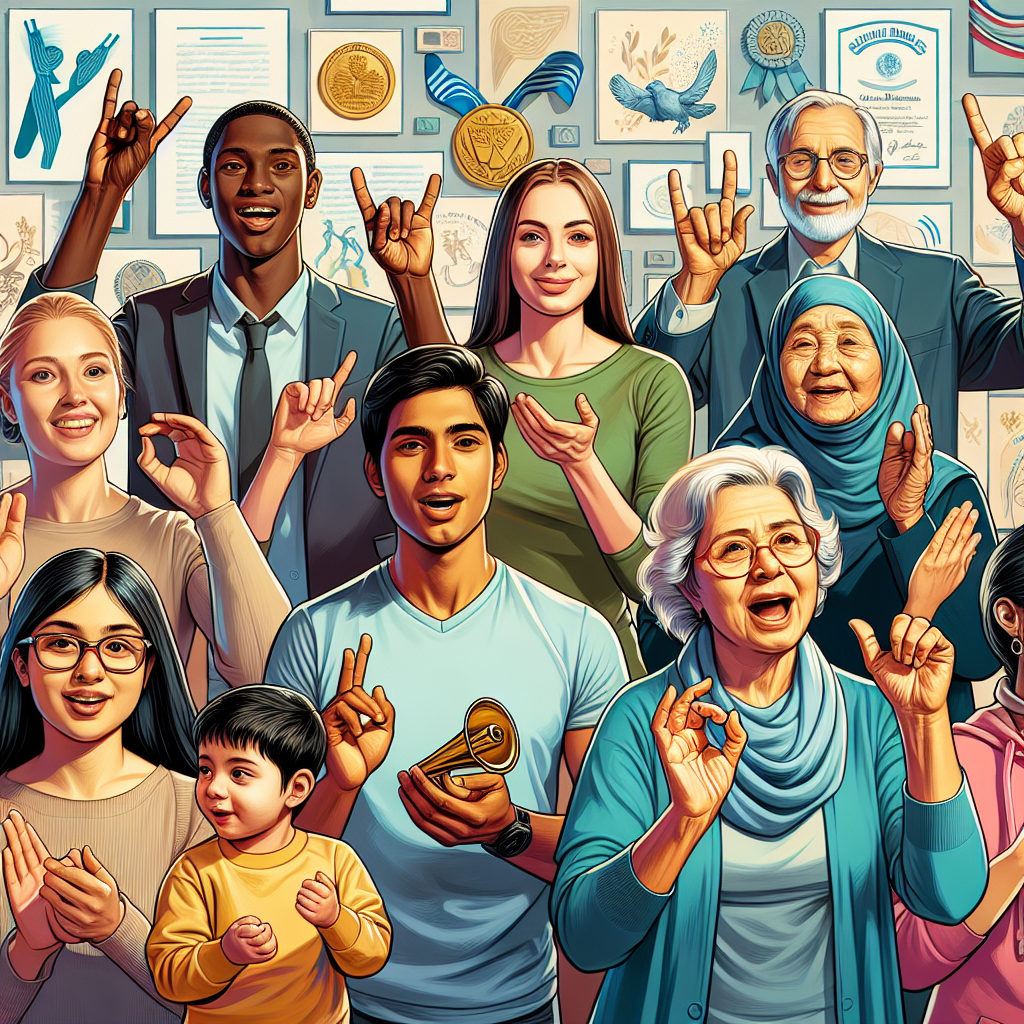
Deaf education and awareness have come a long way in shaping an inclusive society that honors the remarkable achievements within the Deaf community. This exploration delves into the rich culture, deep-seated traditions, and significant milestones that portray the journey of Deaf individuals. From languages such as American Sign Language (ASL) to impactful figures in Deaf history, the narrative celebrates the resilience and excellence of the Deaf community.
The Deaf community, distinguished by its vibrant culture, unique modes of communication, and enduring traditions, has made tremendous strides in various fields. Whether in education, science, arts, or advocacy, the achievements of Deaf individuals stand as testaments to their outstanding capabilities and resilience. This article highlights Deaf excellence by exploring the advancements made in Deaf education and the cultural milestones achieved through continuous advocacy and community efforts.
Celebrating Deaf excellence also underscores the importance of raising awareness about Deaf culture and the challenges that Deaf individuals face in their daily lives. By fostering a deeper understanding and appreciation of the Deaf community, we can work towards a more inclusive society where everyone, regardless of their hearing ability, has equal opportunities to excel. As we begin this journey, let’s shine a light on the achievements and milestones that define Deaf excellence.
The Evolution of Deaf Education
The foundation of Deaf education began with the pioneering works of educators who realized the necessity of specialized teaching methods. Institutions such as the American School for the Deaf, founded in 1817, became pivotal in propelling education forward for Deaf individuals. Through a combination of ASL and other visual learning tools, these institutions paved the way for a more inclusive educational environment.
A major milestone in Deaf education was the establishment of Gallaudet University in 1864, the first institution of higher learning for Deaf students. This university became a beacon of hope, providing an avenue where Deaf students could thrive academically and socially. Gallaudet University continues to be an epicenter of research and innovation in Deaf education.
Throughout the years, significant advancements have been made in Deaf education, with technology playing a crucial role. The advent of cochlear implants, video relay services, and advanced auditory devices have further democratized access to information and education for Deaf individuals. Modern classrooms now incorporate these technologies to enhance learning experiences, ensuring that Deaf students receive a quality education on par with their hearing peers.
Cultural Significance of American Sign Language (ASL)
American Sign Language (ASL) is more than just a means of communication for the Deaf community; it is a significant cultural symbol. ASL has its own syntax, grammar, and nuances that make it a fully developed language. Recognizing ASL as a legitimate language has been paramount in advocating for rights and services for Deaf individuals.
The recognition of ASL in educational curriculums and public domains has further enriched the cultural fabric of the Deaf community. Schools and universities now offer ASL courses that bridge communication gaps and foster inclusivity. In addition to its educational value, ASL is pivotal in preserving Deaf culture, underscoring the importance of language in identity and heritage.
The rise of Deaf media, including television shows, movies, and social media platforms, has propelled ASL into mainstream culture. Deaf actors, performers, and influencers have utilized these platforms to showcase the beauty and nuance of ASL, reaching a wider audience and promoting greater understanding and appreciation of Deaf culture.
Prominent Figures in Deaf History
History is replete with Deaf individuals who have made significant contributions across various fields. Figures such as Laurent Clerc, one of the earliest Deaf educators, and Thomas Gallaudet, a pioneer in Deaf education, have left indelible marks. Their contributions laid the foundation for the future of Deaf education and advocacy.
In the arts, individuals like Marlee Matlin, the first Deaf actress to win an Academy Award, and Sean Forbes, a renowned Deaf rapper and advocate, have shattered barriers and stereotypes. Their achievements underscore the limitless potential of Deaf individuals when given the opportunity and platform to excel.
In science and technology, Deaf innovators like Vint Cerf, one of the “fathers of the internet,” have demonstrated that Deafness is not a hindrance to achieving greatness. Their accomplishments serve as inspiring reminders of the vast talents and abilities within the Deaf community, encouraging aspiring Deaf individuals to pursue their ambitions without reservations.
Advocacy and Legal Milestones
Advocacy has been a cornerstone in achieving equality and recognition for the Deaf community. Historical movements, such as the Deaf President Now (DPN) protest at Gallaudet University in 1988, were instrumental in amplifying the voices of Deaf individuals and demanding representation and leadership from within the community.
Legislative advances, including the Americans with Disabilities Act (ADA) of 1990, have been crucial in securing rights and services for Deaf individuals. The ADA mandates reasonable accommodations in workplaces, educational institutions, and public services, ensuring that Deaf individuals can fully participate in society without facing discrimination.
Continuous advocacy efforts aim to address persisting challenges, such as access to quality education, healthcare, and employment opportunities for Deaf individuals. Organizations like the National Association of the Deaf (NAD) and the World Federation of the Deaf (WFD) tirelessly work towards advancing the rights and opportunities of Deaf individuals globally, highlighting the importance of collective efforts in achieving lasting change.
Modern Innovations and Future Directions
The rapid advancement of technology has opened new doors for the Deaf community, enhancing communication and accessibility. Innovations such as real-time captioning services, video relay services, and advanced hearing aids have transformed the way Deaf individuals interact with the world.
The development of wearable technology, such as smart glasses that provide captioning, offers promising solutions to overcome communication barriers in real-time. These innovations not only empower Deaf individuals but also foster a more inclusive society by making interactions more seamless and effective.
Research and development in the field of Deaf education continue to explore new methodologies and tools to enhance learning experiences. Virtual Reality (VR) and Augmented Reality (AR) are being explored as potential educational tools that provide immersive and interactive learning environments for Deaf students.
Celebrating Achievements and Looking Forward
Celebrating Deaf excellence is an ongoing endeavor that recognizes the accomplishments and contributions of Deaf individuals across various sectors. It is a testament to their resilience, talent, and determination in overcoming challenges and excelling in their respective fields.
By highlighting the achievements and milestones of the Deaf community, we not only honor their contributions but also inspire future generations to pursue their dreams regardless of the obstacles they may face. This celebration is a reminder of the power of inclusivity and the importance of creating an environment where everyone has the opportunity to thrive.
As we look forward, it is essential to continue advocating for the rights and opportunities of Deaf individuals. Raising awareness, promoting inclusivity, and supporting innovation are key components in fostering a society that values and celebrates the diversity of its members. By doing so, we can ensure that the achievements and milestones of the Deaf community continue to be recognized and celebrated.
Conclusion
The exploration of Deaf excellence through the lenses of education, culture, history, advocacy, and innovation highlights the remarkable journey of the Deaf community. It is a journey marked by resilience, creativity, and unwavering determination to break barriers and achieve greatness.
By understanding and appreciating the rich cultural heritage and significant contributions of Deaf individuals, we can foster a more inclusive and respectful society. It is through this recognition that we can truly celebrate Deaf excellence and ensure that the achievements and milestones of the Deaf community are honored and built upon for future generations.
The story of Deaf excellence is one of inspiration and empowerment. It is a celebration of the diverse talents and abilities within the Deaf community and a call to action for continued advocacy and support. By shining a light on the achievements and milestones of Deaf individuals, we not only honor their legacy but also pave the way for a more inclusive and equitable future for all.