
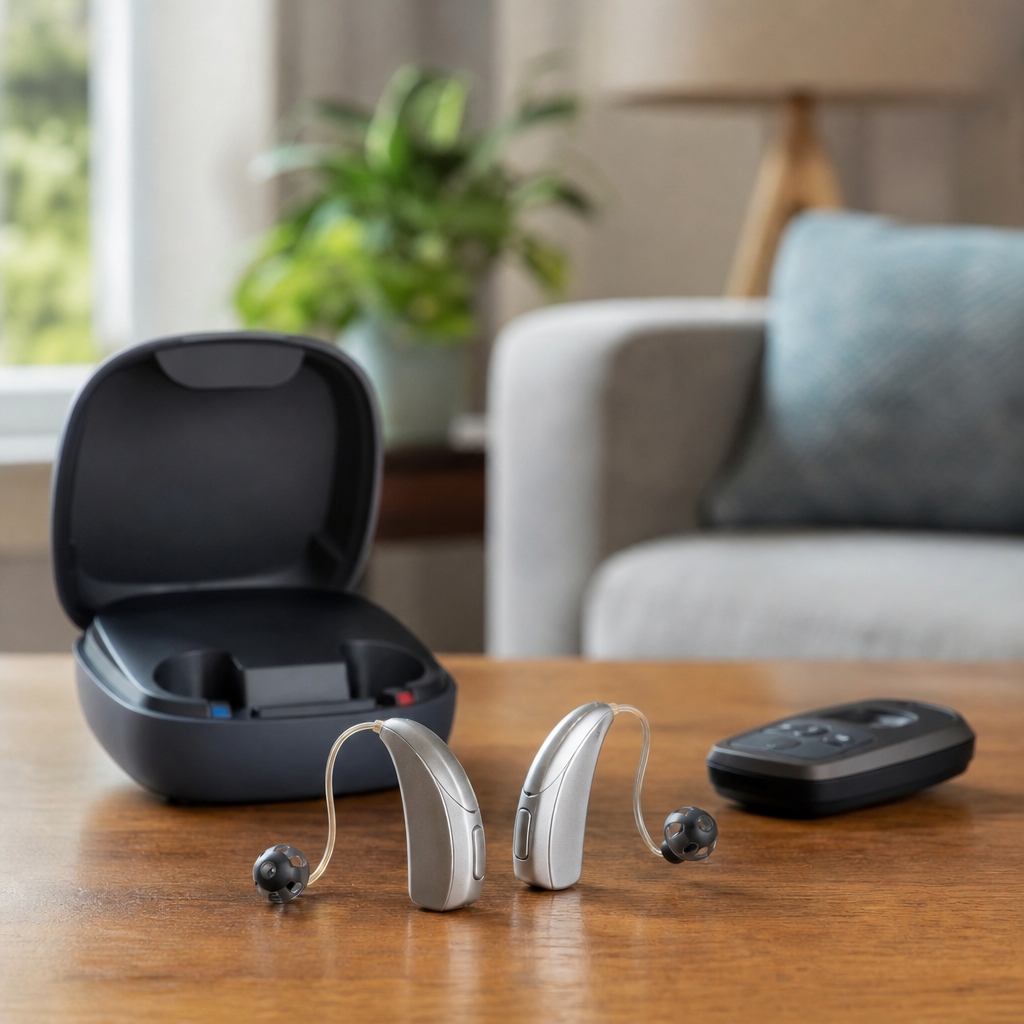
Starkey hearing aids price is one of the first questions people ask when they begin shopping for better hearing, and it should be. Price affects not only what device you can buy today, but also what service, technology, warranty coverage, and long-term support you will receive over several years of use. In practical terms, the cost of a hearing aid is never just the hardware. It usually includes the fitting appointment, hearing evaluation, programming, follow-up visits, earmolds or domes, app setup, trial periods, and repair support. I have worked with patients comparing brands, prescription channels, and over-the-counter alternatives, and the biggest mistake I see is treating hearing aid pricing like buying earbuds. Hearing aids are medical devices with software, acoustic tuning, and ongoing care requirements. Starkey is a major U.S.-based manufacturer known for custom and receiver-in-canal models, Bluetooth streaming, rechargeable options, tinnitus features, and premium sound processing. Understanding how Starkey hearing aids are priced helps you compare models fairly, avoid hidden costs, and decide whether advanced features are worth the premium for your hearing loss, lifestyle, and communication needs.
How much do Starkey hearing aids cost?
Starkey hearing aids typically range from about $1,000 to $4,000 per ear, with bundled pairs often priced between roughly $2,000 and $8,000 depending on technology level, style, clinic package, and aftercare. In premium private-practice settings, some top-tier pairs can exceed that range when they include extensive service plans or accessories. The spread is wide because Starkey sells multiple product families and because providers package services differently. A lower-priced entry model may improve speech audibility in quiet rooms, while a premium model usually adds stronger speech-in-noise processing, more environmental automation, rechargeability, advanced Bluetooth features, health tracking, and broader fitting flexibility. Consumers often search for one exact Starkey hearing aids price, but there is no single national sticker price. The real answer depends on the device level, where you buy it, and what is included beyond the aid itself.
Most Starkey products are sold through hearing care professionals rather than direct online checkout. That means the provider can set pricing based on local market conditions, expertise, and included follow-up care. In my experience, two clinics may quote the same Starkey model at very different prices, and both can be reasonable if one includes three years of service and the other charges separately for every adjustment. This is why shoppers should ask for an itemized quote. You want to know the cost of the device, fitting, verification testing, warranty duration, loss-and-damage replacement terms, clean-and-check visits, remote support, batteries if applicable, chargers, and trial return fees.
What affects Starkey hearing aids price?
Several factors drive Starkey hearing aids price, and understanding them helps you compare quotes accurately. The first is technology tier. Starkey, like other leading manufacturers, generally offers essential, mid-level, advanced, and premium processing options within the same product family. Premium tiers cost more because they include faster environmental analysis, stronger directional microphone strategies, more automatic programs, better wind management, and improved speech enhancement in noise. For someone who mostly watches television at home, entry or mid-tier may be enough. For someone who works in meetings, eats in restaurants, attends religious services, and streams calls daily, the premium can provide noticeable benefit.
The second factor is physical style. Behind-the-ear and receiver-in-canal models are common and often easier to fit across a wider range of hearing losses. Custom in-the-ear and invisible styles may cost more due to individualized manufacturing and can involve tradeoffs in battery size, directional microphones, and rechargeability. Third, accessories influence final price. A charger, TV streamer, remote microphone, or custom earmolds can add meaningful cost. Fourth, service bundles matter. Clinics that perform real-ear measurements, counseling, auditory training guidance, and routine follow-up support often charge more, but the outcomes are usually better because hearing aid success depends on fitting quality, not just the device brand.
Insurance and financing also change what you actually pay. Some private plans offer fixed hearing benefits, while many patients use health savings accounts or flexible spending accounts. Medicare generally does not cover routine hearing aids, though some Medicare Advantage plans include partial benefits through network providers. Veterans may qualify for coverage through the VA if eligibility requirements are met. Starkey hearing aids price should therefore be evaluated as gross price, out-of-pocket price, and total ownership cost over three to five years.
Starkey technology levels and what you get
When people ask whether a more expensive Starkey model is worth it, the right answer is: only if the extra features solve problems you actually have. Entry-level devices usually provide core amplification, feedback suppression, basic noise reduction, and smartphone app control on some platforms. Mid-tier models often improve comfort in moderate background noise and add more automatic adaptation. Advanced and premium tiers are designed for complex listening environments, such as crowded restaurants, moving vehicles, outdoor wind, group conversations, and rapid transitions between sound scenes.
Starkey has built a reputation around integrating hearing technology with wellness and convenience tools. Depending on generation and model, features may include rechargeable lithium-ion batteries, direct streaming for iPhone and many Android devices, telecoil on select styles, fall detection, step tracking, voice assistant access, tinnitus masking stimuli, remote programming, and AI-driven environmental optimization. These features are not equally valuable to every user. For example, a retiree with mild hearing loss who rarely uses a smartphone may care more about comfort and battery life than about streaming. By contrast, a professional taking calls all day may save time and reduce listening fatigue with a higher technology level.
| Factor | Lower-cost option | Higher-cost option | Who benefits most |
|---|---|---|---|
| Technology tier | Basic speech support in quiet | Better speech-in-noise and automation | Active users in varied environments |
| Battery type | Disposable batteries | Rechargeable lithium-ion | Users wanting convenience and less handling |
| Style | Standard RIC/BTE | Custom or nearly invisible models | Users prioritizing cosmetics or fit |
| Connectivity | Limited accessory support | Direct streaming and app control | Frequent phone, TV, and media users |
| Service package | Pay per visit | Bundled adjustments and follow-up | First-time wearers needing guidance |
Price by style: RIC, BTE, and custom Starkey models
Receiver-in-canal, often shortened to RIC, is one of the most common Starkey styles and usually offers the best balance of performance, discretion, and fitting flexibility. These devices place the main body behind the ear while the receiver sits in the ear canal, connected by a thin wire. RIC models often support rechargeability, Bluetooth, and strong directional microphone performance, so they are common across mid to premium price ranges. Behind-the-ear, or BTE, models can be a practical choice for more severe hearing loss and may be easier to handle for users with dexterity issues. Some BTE options are less cosmetic but can offer greater power and durability.
Custom models, such as in-the-ear, in-the-canal, completely-in-canal, and invisible-in-canal designs, are made from ear impressions or digital scans. Their appeal is obvious: they sit more discreetly in or near the ear canal. However, smaller custom devices can have limitations. Tiny shells leave less room for larger batteries, multiple microphones, or wireless antennas. As a result, users often pay more for miniaturization while accepting compromises in battery life or connectivity. That does not make them a bad choice. For the right person, especially someone motivated by appearance and mild to moderate hearing loss, a custom Starkey device can be the difference between consistent wear and a hearing aid left in a drawer.
Bundled versus unbundled pricing
One of the least understood parts of Starkey hearing aids price is the difference between bundled and unbundled care. In a bundled model, the quoted price includes the devices and a package of professional services over a defined period, often two to three years. Those services may include the hearing test, fitting, real-ear verification, routine adjustments, annual evaluations, wax management guidance, remote support, and manufacturer warranty handling. In an unbundled model, the devices may look cheaper upfront, but the clinic charges separately for fittings, reprogramming, repairs outside warranty, or follow-up visits.
I generally advise shoppers to compare total expected cost over at least three years, not just initial purchase price. A patient who needs several fine-tuning appointments in the first six months can easily spend more in an unbundled model than they expected. First-time wearers especially benefit from structured follow-up because the brain needs time to adapt to restored high-frequency sound. A realistic comparison asks: how many visits are included, is real-ear measurement part of the fitting, are telehealth adjustments available, what happens if hearing changes, and what are the fees after the included period ends?
Are Starkey hearing aids worth the price?
For many users, yes, but only when the fitting process matches the person. Starkey makes competitive devices with strong feature sets, and the company has a long history in hearing technology. The value proposition becomes clear when the device improves daily communication, reduces listening effort, and is supported by good clinical care. A premium hearing aid that is poorly fitted will underperform. A mid-level hearing aid fitted carefully with real-ear measurements can outperform a premium device programmed by guesswork. That is why worth is not just about the brand; it is about the combination of hardware, software, and provider skill.
Research consistently shows untreated hearing loss affects communication, social participation, and quality of life. People often wait years before seeking help, and that delay can increase frustration for both the individual and family members. If a Starkey device helps someone hear grandchildren clearly, participate in work meetings, or feel safer in traffic because environmental sounds are easier to detect, the long-term value can be substantial. Still, there are tradeoffs. Premium features do not guarantee dramatic improvement in every setting, especially in very noisy environments where all hearing aids face physical limits. Set realistic expectations and ask for a trial period so you can judge benefit in your own life.
How Starkey compares with other hearing aid brands on price
Starkey is generally priced in the same broad category as other major prescription brands such as Phonak, Oticon, ReSound, Signia, and Widex. Differences usually come down less to base brand pricing and more to platform generation, technology tier, and local provider packaging. In everyday shopping, Starkey is neither consistently the cheapest nor the most expensive. Its pricing is competitive for patients who want American manufacturing, extensive style options, tinnitus features, and wellness-focused extras on certain models.
Compared with lower-cost direct-to-consumer or over-the-counter hearing devices, Starkey prescription aids usually cost more because they are customized to an audiogram, professionally programmed, and supported over time. That higher price is justified when hearing loss is moderate to severe, asymmetrical, medically complex, or accompanied by tinnitus, dexterity needs, or difficult listening demands. OTC devices may work for some adults with perceived mild to moderate hearing difficulty, but they do not replace a diagnostic hearing evaluation when symptoms suggest ear disease, sudden loss, one-sided hearing decline, or significant word-recognition issues. For many patients, the best price is not the lowest advertised number. It is the option that delivers stable hearing benefit, reliable support, and fewer replacement decisions over time.
How to get the best value on Starkey hearing aids
The smartest way to save money is not simply to chase the lowest quote. Start with a full hearing evaluation from a qualified audiologist or hearing instrument specialist working within appropriate scope. Ask for the exact Starkey model name, style, and technology tier being recommended and why. Request an itemized quote that separates devices, accessories, charger, fitting, and future care. Confirm the trial period, return conditions, and whether the return fee is refundable. Ask if real-ear measurements will be used at fitting; this is the gold standard for verifying amplification against prescription targets such as NAL-NL2.
Next, review benefits. Check insurance, employer hearing plans, union benefits, Medicare Advantage options, and veteran eligibility if relevant. Use HSA or FSA funds when available. Ask about previous-generation models, which can offer excellent performance at lower prices once a newer platform launches. Consider whether you truly need premium features. If your routine is mostly quiet conversation at home, mid-tier technology may be the better value. If you spend hours in unpredictable listening environments, premium may be justified. Finally, judge the provider as carefully as the product. Better counseling, verification, and follow-up often matter more than a small difference in sticker price.
Starkey hearing aids price makes sense only when you look at the full picture: device technology, style, provider expertise, included care, and the daily problems you want to solve. Most buyers can expect prices from around $1,000 to $4,000 per ear, but that range becomes meaningful only after you identify what is bundled, what features matter, and what support you will need over the next several years. The best choice is rarely the cheapest or the most advanced by default. It is the hearing aid package that fits your audiogram, communication goals, dexterity, budget, and willingness to use connected features.
If you remember three things, make them these: ask for an itemized quote, insist on professional verification and a trial period, and compare total ownership cost instead of headline price. Starkey offers strong options across styles and technology levels, and for many people the brand delivers reliable performance when fitted well. Use this page as your starting point for deeper research into styles, features, financing, and provider selection under the broader Hearing Aids topic. Then book a hearing evaluation, bring your questions, and get a recommendation based on how you actually live and listen every day.
Frequently Asked Questions
How much do Starkey hearing aids usually cost?
Starkey hearing aids can vary widely in price depending on the model, technology level, style, and the provider’s service package. In many cases, you can expect prices to range from the lower thousands for more basic prescription devices to several thousand dollars per pair for premium options with advanced sound processing, rechargeability, Bluetooth connectivity, app controls, tinnitus features, and more sophisticated speech enhancement. The key point is that there is no single universal Starkey price because hearing aids are typically bundled with professional care.
That bundled price often includes more than the devices themselves. It may cover a hearing test, consultation, fitting appointment, custom programming, follow-up adjustments, routine cleanings, and warranty protection for a set period. Some providers also include supplies such as domes, wax guards, or charger support. Because of this, two quotes for “the same” Starkey model may look different if one office includes years of aftercare and another charges for each visit separately. When comparing pricing, always ask what is included so you understand the total value, not just the sticker price.
Why are Starkey hearing aids so expensive compared with basic amplifiers or over-the-counter devices?
Starkey hearing aids are medical-grade devices designed to treat diagnosed hearing loss, which is very different from simply making sounds louder. Prescription hearing aids are programmed to match your hearing test results and are adjusted for the specific pitches where your hearing is reduced. That personalization is a major reason for the higher cost. You are paying for technology that can help speech sound clearer, reduce background noise, manage feedback, and improve comfort in different listening environments.
Another major part of the price is professional service. A licensed hearing care provider evaluates your hearing, helps select the right style and power level, fits the devices properly, fine-tunes them, and supports you over time as your hearing needs or listening preferences change. Long-term care matters because hearing aids rarely work best straight out of the box. Most wearers need adjustments, coaching, maintenance, and occasional repairs. In short, the cost reflects both advanced hearing technology and the clinical expertise that helps you get real benefit from it.
What is usually included in the price of Starkey hearing aids?
In many hearing clinics, the quoted price for Starkey hearing aids includes a package of products and services rather than just the devices alone. Common inclusions are the initial hearing evaluation, consultation, hearing aid fitting, device programming, verification or adjustment visits, and a manufacturer warranty. Depending on the provider, the price may also include custom earmolds, domes, wax filters, charging accessories, app setup, clean-and-check appointments, and a trial period or return window.
This is why it is so important to ask for a detailed breakdown before making a purchase. One provider may offer a lower upfront number but charge separately for follow-up visits, repairs after the first year, or replacement parts. Another may quote a higher total but include several years of support, making it the better long-term value. Ask how long aftercare is included, whether loss-and-damage protection is part of the warranty, and what happens if your hearing changes and the devices need reprogramming. Those details can make a significant difference in your total cost of ownership.
Do Starkey hearing aids come in different price levels based on technology?
Yes, Starkey hearing aids are generally offered in multiple technology tiers, and those tiers directly affect price. Entry-level or essential models are usually more affordable and can work well for people with simpler listening needs, such as mostly quiet home environments or limited social activity. Mid-level models often add better noise management, improved speech understanding in moderate background noise, and more convenience features. Premium models typically offer the most advanced processing for challenging environments like restaurants, group conversations, or busy public places, along with higher-end connectivity and automation.
The best choice depends on your lifestyle, not just your budget. Someone who is frequently in meetings, attends family gatherings, travels often, or struggles in noisy settings may benefit from paying more for stronger performance in complex environments. On the other hand, a person with more predictable daily routines may do very well with a lower-priced option. A good provider should explain the practical difference between technology levels in plain language and help you avoid paying for features you are unlikely to use while still getting enough performance to hear comfortably and confidently.
How can I save money on Starkey hearing aids without making a bad long-term decision?
The smartest way to save money is to focus on overall value rather than the lowest upfront quote. Start by asking providers exactly what their price includes and how long follow-up care lasts. A slightly higher price may actually save you money if it includes several years of adjustments, maintenance, and warranty support. You can also ask whether there are older Starkey platforms still available at a discount, seasonal promotions, financing plans, or refurbished options through reputable channels. In some cases, insurance, flexible spending accounts, health savings accounts, veterans’ benefits, or local hearing assistance programs may help reduce out-of-pocket costs.
It is also wise to be honest about your hearing goals and daily routine. Buying the most expensive model is not always necessary, but buying too little technology can lead to disappointment and replacement sooner than expected. The goal is to choose a device that meets your hearing needs now and remains practical over time. Before you commit, ask about the trial period, return policy, repair terms, battery or rechargeability costs, and expected future service fees. That kind of careful comparison helps you make a confident decision and avoid hidden expenses later.