
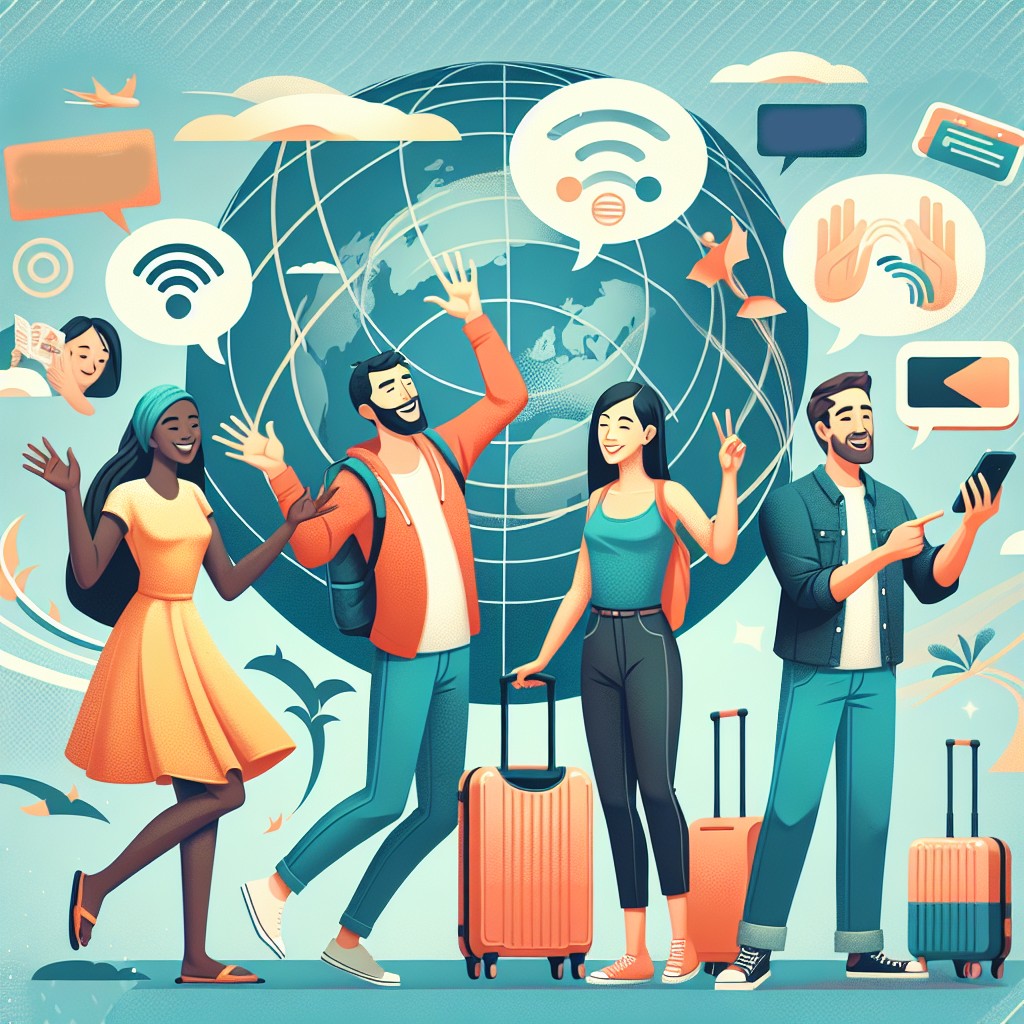
Exploring new destinations and cultures can be an exhilarating experience, filled with the promise of adventure and discovery. However, for Deaf or hard-of-hearing travelers, the excitement of traveling is often accompanied by the challenge of navigating communication barriers. Whether it’s ordering food at a bustling café or checking into a hotel in a foreign country, communication can sometimes feel like an insurmountable obstacle. Yet, with planning, resources, and technology, Deaf travelers can enjoy their journeys just as much as anyone else. This article will delve into strategies and resources to help Deaf travelers break communication barriers and explore the world with confidence and ease.
Embracing Technology for Enhanced Travel Communication
In today’s digital age, technology offers an array of tools that significantly improve travel experiences for the Deaf community. Smartphones and tablets have become essential travel companions, providing crucial communication capabilities that help bridge language gaps effortlessly. One of the most widely used tools is video relay service (VRS), allowing Deaf individuals to make phone calls via an interpreter. With this technology, travelers can communicate with tour operators, hotel staff, and other service providers, ensuring that their needs are clearly understood and met.
Beyond VRS, there is a wealth of apps specifically designed to assist with communication. For instance, apps such as Ava provide real-time captions for conversations, making face-to-face communication much smoother. Additionally, translation apps like Google Translate allow users to convert spoken or written words into different languages instantly, which can be invaluable when traveling in non-English speaking countries. Leveraging these technological tools not only enhances travel experiences but also empowers Deaf travelers to interact more fully with the world around them.
Planning and Research: Laying the Groundwork for a Seamless Trip
Preparation is key to overcoming communication challenges while traveling. Before embarking on a trip, spending some time researching your destination can pay off in dividends. This includes understanding the cultural and social norms surrounding Deafness in the destination country. In some cultures, awareness and acceptance of Deafness and sign language are more prevalent than in others; knowing what to expect can help you better prepare for your trip.
Furthermore, identifying Deaf-friendly establishments, such as restaurants, hotels, or tourist attractions, can greatly enhance your travel experience. Utilizing resources like online forums, travel blogs, or social media groups can provide valuable insights and recommendations from other Deaf travelers who have visited the area. As part of your pre-travel checklist, reach out to your accommodation to inquire about services and facilities that can support your needs, such as visual alert systems or staff trained in basic sign language.

The Power of Community: Building Connections Abroad
The global Deaf community is extensive, and leveraging this network can be incredibly advantageous while traveling. Many cities around the world have vibrant Deaf communities where local Deaf individuals are often eager to connect with visiting travelers. This not only enriches your travel experience but also provides an opportunity to learn more about Deaf culture in different parts of the world.
Social media platforms like Facebook and Instagram, as well as specialized forums like Deaf Travel or similar online communities, can help you find local Deaf individuals who might be available to meet for a coffee or offer advice about inclusivity in their city. Additionally, attending Deaf events or gatherings at your destination offers a unique chance to connect, share experiences, and gain firsthand insights into the local Deaf culture. These interactions can also help ease the sense of isolation that can sometimes accompany traveling alone.
Visual Communication: Taking Advantage of Universal Languages
Despite technological advances, sometimes the most effective communication method during travel is reverting to the basics: visual cues and body language. Visual communication remains an incredibly powerful tool, and it’s universal in its reach, transcending language barriers more effectively than one might assume.
When verbal communication proves challenging, gestures, facial expressions, and written notes can be invaluable. A simple wave, smile, or nod can go a long way in conveying friendliness and openness. Traveling with a small notebook or a smartphone with a note-taking app can also facilitate communication by allowing you to write down basic questions or requests when needed. Having a set of commonly used phrases in the local language, either printed or stored digitally, can be particularly handy.
Advocacy and Education: Raising Awareness on the Go
Every trip can be an opportunity to raise awareness and educate others about Deaf culture and communication needs. By advocating for better accessibility and inclusivity, Deaf travelers not only improve their own travel experiences but also pave the way for future travelers. This advocacy can be subtle, such as by offering suggestions to service providers on how to improve accessibility.
Providing feedback to hotels or tourist attractions on how they can better cater to Deaf guests can make a significant impact. Moreover, sharing your travel experiences and challenges on social media or blogs can highlight the importance of inclusivity to a broader audience, encouraging others to embrace and support accessibility improvements. Encouraging open dialogue fosters a more considerate and inclusive travel environment for all.
Building Confidence through Experience: A Personal Journey
Traveling as a Deaf individual is, at its core, an empowering journey that offers abundant opportunities for personal growth and confidence-building. Each trip contributes to a richer understanding of oneself and the world. As travelers gain more experience, they develop skills that enable them to handle a greater diversity of situations with ease and assurance.
Every successful interaction and every challenge overcome contribute to building a stronger sense of confidence and independence. Traveling opens up perspectives and demonstrates that communication barriers, while real, do not have to be restrictive. Embrace each journey as a learning experience, and savor the culturally enriching experiences that travel offers. Life is an incredible journey, waiting to be explored, and no communication barrier should hold you back from discovering its beauty.
Conclusion: The World Awaits – Turn Challenges into Opportunities
While traveling as a Deaf individual presents unique challenges, it also offers equally unique opportunities to explore, connect, and educate. With careful planning, the right technology, and a willingness to embrace new experiences, Deaf travelers can navigate the world effectively. By overcoming communication barriers, they not only enrich their own lives but also contribute to a more inclusive and understanding world.
Each journey taken is a testament to resilience and determination, serving as an inspiration to others. The world is rich with possibilities, and no barrier is too great to prevent exploration. Embrace the journey, advocate for inclusivity, and continue to break down barriers, one trip at a time. With the right mindset and resources, Deaf travelers can indeed journey with confidence, transforming potential challenges into extraordinary opportunities. The world awaits, ready to be explored, one sign at a time.