
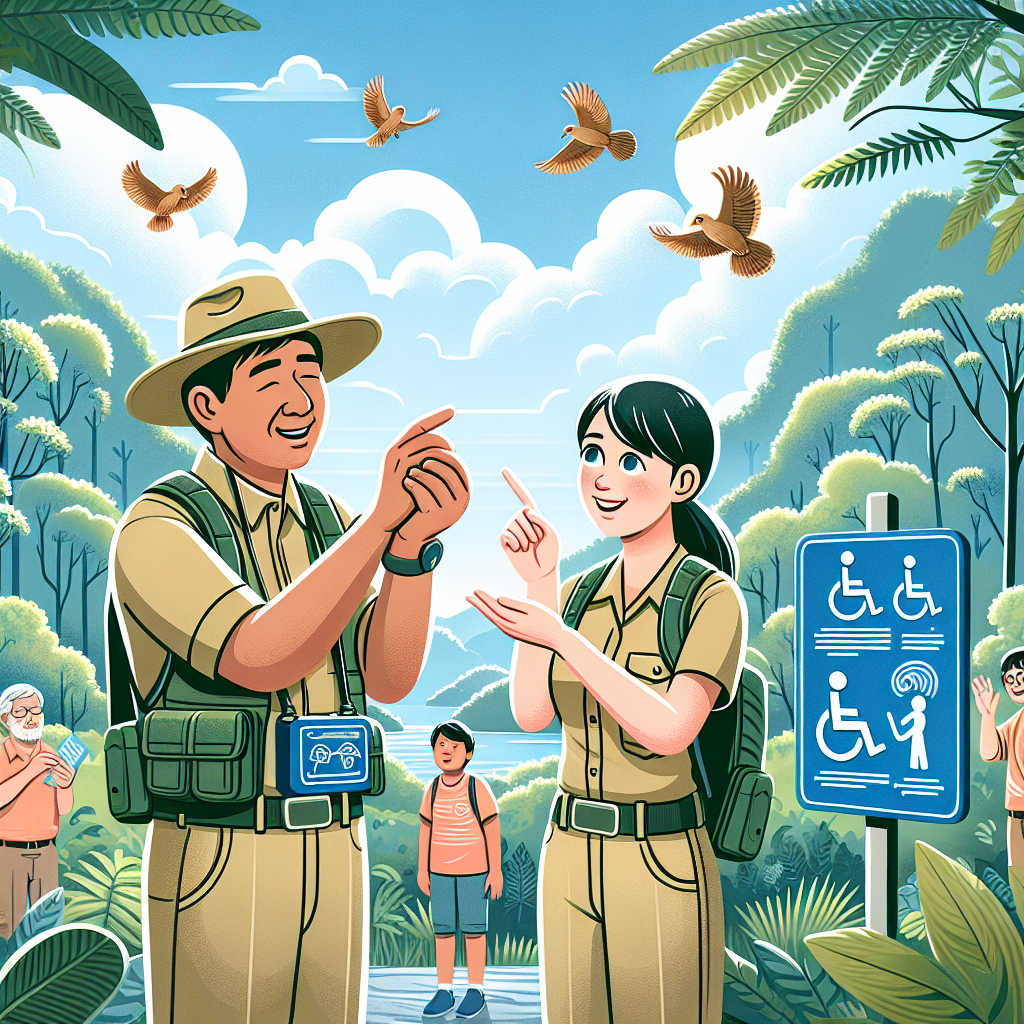
Visiting national parks can be a soul-enriching experience. These massive expanse of protected natural beauty offers visitors a plethora of opportunities to connect with nature, learn about our environmental heritage, and unwind from the hustle and bustle of everyday life. However, for Deaf individuals, a visit to these majestic lands can sometimes be riddled with challenges. Accessibility is crucial to offer a spectacular and inclusive experience for everyone who wishes to partake in the wonders of these national treasures.
As Deaf individuals make travel plans, it becomes vital to address the unique set of needs that they encounter, from interpreting services to clear visual communication. Awareness and understanding can facilitate positive changes to ensure a visit full of discovery and relaxation — without barriers. It remains essential for authorities and operators to recognize the specific requirements of the Deaf community and implement measures that promote accessibility.
National parks offer a great platform for enlightening Deaf visitors about the flora, fauna, geological features, and history of each location. By embracing technology and inclusive programming, national parks can become more accommodating. As adventurers prepare to wander through these awe-inspiring landscapes, it is worth exploring how parks are progressing in terms of accessibility.
Importance of Accessibility in National Parks
Acknowledging the significance of accessibility is the first step towards inclusivity. For Deaf visitors, accessibility means more than just physical adjustments – it is about effective communication. It is the park’s responsibility to ensure that educational programs, tours, and communications are available in formats that are accessible to all visitors, including those who are Deaf or hard of hearing.
Access services such as American Sign Language (ASL) interpretation, captioned videos, visual descriptions, and printed materials in multiple formats enable Deaf individuals to experience national parks on equal terms as others. By incorporating these elements, national parks can educate and inspire Deaf visitors through a multisensory approach that respects and acknowledges their communication needs.
Accessible parks go beyond merely complying with legislation like the Americans with Disabilities Act (ADA). They thoughtfully integrate accessibility into the core of their operations and visitor experiences, creating a culture of inclusion. As such, ensuring accessibility in national parks becomes an ongoing process involving training, feedback, and adaptation.
Highlighting Accessible Parks and Their Offerings
The National Park Service (NPS) has made strides in advancing accessibility through several initiatives and ensuring that Deaf visitors have enriching experiences. From hiking trails to visitor centers and historic sites, the NPS is dedicated to enhancing access through thoughtful infrastructure improvements and innovative technological solutions.
Parks such as Yosemite, Yellowstone, and Grand Canyon offer a range of accessible services, including informative videos with closed captioning, guided tours with ASL interpreters upon request, and wheelchairs for those with additional mobility challenges. These efforts demonstrate how parks are paving the way to a more inclusive and deaf-friendly environment.
Online resources provided by parks feature accessibility information and resources that guide Deaf and hard of hearing individuals in planning their trips. By highlighting accessible offerings, national parks aim to encourage more Deaf visitors to explore and cherish the natural wonders protected under the NPS network. These options not only improve the visit for Deaf adventurers, but also raise awareness among the hearing community about the importance of accessibility.
Embracing Technology for Enhanced Accessibility
Innovative technology has broadened accessibility options substantially, making it easier for national parks to cater to Deaf visitors. Interactive apps, augmented reality, and video guides with sign language interpretation are just a few examples of how technology can boost accessibility within these pristine spaces.
Mobile applications designed for parks can help Deaf visitors navigate trails, identify landmarks, and learn about the park’s history and geography through visual and signed information. With technological advancements, parks can offer robust multimedia experiences that respect the diverse needs of all visitors, ensuring that no one misses out on the beauty and knowledge these sites have to offer.
Using technology as a gateway to accessibility will also enhance visitor engagement and participation in ranger-led activities and educational programs, giving Deaf individuals the ability to engage fully and independently. Technology bridges communication gaps, ensuring that every park-goer has access to enriching experiences tailored to their needs.
Collaborations and Feedback for Better Accessibility
Partnerships with deaf organizations and advocacy groups play a significant role in enhancing accessibility at national parks. These collaborations provide valuable insights and expertise in developing programs and services that cater to the needs of Deaf visitors effectively.
Feedback from Deaf visitors is invaluable in understanding how services are performing and where improvements can be made. National parks that prioritize accessibility explicitly seek input from the Deaf community to identify challenges and implement practical solutions. By fostering open dialogues and engagements, parks can evolve and refine their accessibility offerings, earning their space as leaders in inclusive recreation.
Through mutual cooperation and consideration, national parks have the opportunity to impact accessibility positively. By involving the Deaf community in decision-making processes, they strengthen their commitment to equality and set a standard for excellence in accommodating all visitors.
Future Directions in Accessibility
The future of accessibility in national parks is promising, with the continued advancement of technology and increased awareness among park management. As understanding grows regarding the diverse needs of their visitors, parks will look to enhance their accessibility features across services, guided tours, and educational programs.
Investing in staff training programs focused on accessibility and Deaf awareness directly affects the visitor experience. Equipping park staff with the knowledge and skills to communicate effectively and recognize the needs of Deaf visitors ensures seamless service delivery. The momentum towards inclusive attitudes and practices within parks will only escalate as demand for accessible environments grows.
Environmental policies and strategic plans will increasingly embed accessibility as a priority, committing to serve audiences of all abilities while preserving natural and cultural treasures. National parks stand to benefit from these advancements, reinforcing their role as bastions of beauty, inspiration, and inclusivity on a national scale. As this vision becomes reality, more Deaf visitors will confidently explore these magical places, extending the reach of their natural allure.
Conclusion: Towards Inclusive National Park Experiences
As our understanding of accessibility evolves, our cherished national parks work collaboratively with Deaf visitors to craft experiences that are rewarding and inclusive. By fostering an environment that embraces accessibility, our parks empower everyone to partake in the exploration and preservation of our natural heritage.
Accessible national parks stand as inviting gateways to incredible landscapes and wildlife for visitors of all abilities. Creating an inclusive journey is a shared responsibility that depends on awareness, technology, and willingness to adapt. The endeavors and successes of these parks underscore an educational invitation for Deaf individuals to engage not just with the natural world but with countless stories and histories that make each park unique.
In conclusion, visiting a national park should be a universally thrilling adventure. By implementing and advocating for enhanced accessibility, national parks can ensure that Deaf visitors experience every memorable moment these iconic sites have to offer. Through continued progress, dialogue, and unyielding dedication to inclusion, our national parks will echo as spaces where all are welcome to learn, appreciate, and discover.