
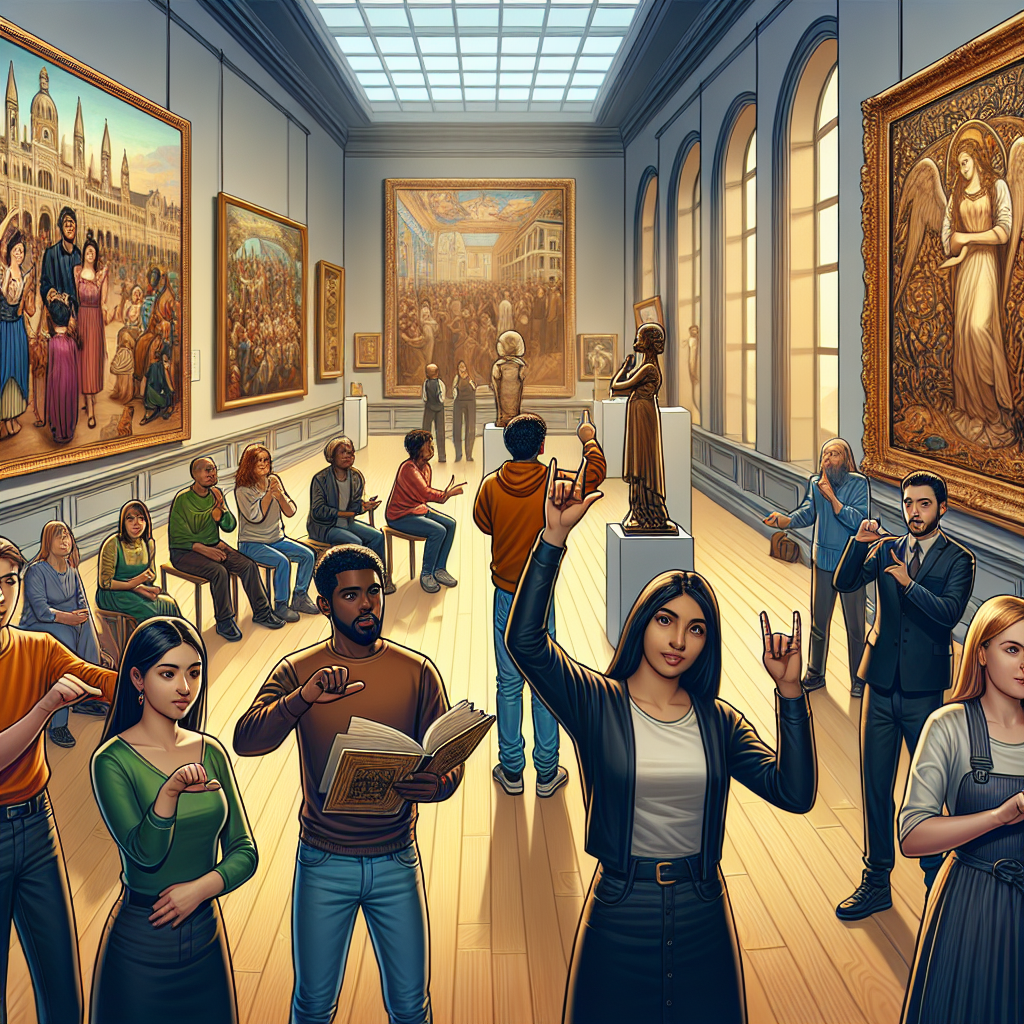
Sign language is not just a means of communication for the Deaf community; it’s a vibrant, expressive, and deeply interconnected part of Deaf culture and identity. Understanding the subtleties and nuances of sign language can be an enriching journey, especially when it overlaps with other forms of expression, such as visual arts. People who are deaf or hard of hearing have used sign language to carve out their own unique cultural identity, which is imbued with creativity and artistic expression. This intersection of sign language and visual art forms a fascinating tapestry that helps to convey complex ideas, emotions, and stories in a uniquely powerful way.
This article explores the connections between sign language and visual arts, shedding light on how these two forms of expression complement and enhance each other. We will delve into various aspects of this intersection, including the historical context, the role of sign language in artistic communities, how it influences artistic styles, and its importance in Deaf education. Whether you are a member of the Deaf community, an artist, or someone interested in learning more about different forms of communication, this comprehensive article will provide valuable insights into the world of Deaf culture and identity through the prism of sign language and visual arts.
Historical Context: The Roots of Sign Language and Visual Arts
To understand the unique connections between sign language and visual arts, one must first look at the historical context in which these forms of expression evolved. Sign language has ancient roots and has been used by various Deaf communities around the world for centuries. It is a rich, fully-fledged language with its own grammar, syntax, and dialects. Similarly, visual arts have been a fundamental part of human culture since the beginning of recorded history, shaping and reflecting societal values, beliefs, and experiences.
In many ways, the Deaf community has always been inherently connected to visual arts. Historically, Deaf individuals often resorted to drawing, painting, and other visual methods to communicate and express their feelings when linguistic barriers existed. This reliance on visual expression naturally paved the way for a symbiotic relationship between sign language and visual arts. European Renaissance art, for instance, often depicted gestures that resemble sign language, hinting at an early recognition of non-verbal communication’s power and relevance.
Over time, as Deaf education began to formalize, the visual and gestural nature of sign language became a cornerstone of Deaf pedagogy. Deaf schools not only taught academic subjects but also emphasized artistic activities, further cementing the relationship between sign language and visual arts. Understanding this historical context helps us appreciate the depth and significance of the modern connections we observe today.
Sign Language in Artistic Communities
Artistic communities within the Deaf culture have grown increasingly prominent over the years, giving rise to a variety of platforms where sign language and visual arts coexist in harmony. Deaf artists often use sign language as both inspiration and a subject in their work, creating pieces that resonate with both Deaf and hearing audiences. These artists use their unique perspective to challenge conventional norms and open up new avenues for creative expression.
One notable example is the De’VIA (Deaf View/Image Art) movement, which began in the late 20th century. De’VIA artists explicitly explore themes related to Deaf culture and experiences, using visual art as a medium to express Deaf identity, struggles, and triumphs. The use of sign language within these artworks is not merely aesthetic; it serves as a powerful language that conveys deep meanings and emotional nuances that spoken or written words might fail to capture.
Galleries, exhibitions, and digital platforms showcasing Deaf artists have become more common, providing valuable visibility to their work. This increased visibility not only challenges stereotypes but also enriches the broader art community by introducing new perspectives and techniques born out of the interplay between sign language and visual arts. The recognition and encouragement of Deaf artists benefit everyone by promoting inclusivity and diversity within the arts.
The Influence of Sign Language on Artistic Styles
The influence of sign language on artistic styles within the Deaf and broader artistic communities is profound and multifaceted. Artists who are fluent in sign language often incorporate its fluid movements and expressive qualities into their work, resulting in unique artistic styles that emphasize motion, emotion, and visual storytelling.
For instance, Deaf artists might draw inspiration from the dynamic gestures of signing to create paintings or sculptures that evoke a sense of movement and rhythm. The visual grammar of sign language, which conveys meaning through hand shapes, facial expressions, and spatial relations, can influence artistic compositions in profound ways. These elements can be translated into visual art, creating a sense of immediacy and presence that resonates strongly with audiences.
Additionally, sign language’s emphasis on visual perception translates well into various visual media, including digital art, photography, and film. Filmmakers, for example, can use the visual nature of sign language to create powerful and emotive narratives that communicate complex emotions and ideas without spoken dialogue. This blending of sign language and visual arts leads to innovative and compelling artistic expressions that push the boundaries of traditional art forms.
Moreover, the intersection of sign language and visual arts encourages collaboration between Deaf and hearing artists, fostering mutual understanding and respect. These collaborative efforts result in rich, multifaceted works that reflect diverse perspectives and experiences, further enriching the artistic landscape.
Sign Language and Deaf Education
The role of sign language in Deaf education is pivotal, providing Deaf and hard-of-hearing students with a crucial means of communication and self-expression. Incorporating visual arts into the educational framework enhances this experience, offering students additional tools to express themselves and understand the world around them.
Deaf schools and programs often emphasize the importance of visual arts as part of their curriculum, recognizing their role in developing cognitive and communication skills. Art classes provide Deaf students with an opportunity to explore their creativity while reinforcing their understanding of sign language and its expressive potential. These classes not only teach technical skills but also encourage students to delve into their own experiences and cultural identity, fostering a sense of pride and belonging.
Moreover, incorporating sign language into art education helps bridge the gap between Deaf and hearing students. Inclusive classrooms that celebrate and integrate Deaf culture and sign language can create a more equitable learning environment where all students feel valued and understood. This inclusive approach also benefits hearing students, teaching them about different communication methods and cultural perspectives.
Educational initiatives that promote the integration of sign language and visual arts empower Deaf students to become confident communicators and creatives. By nurturing their talents and providing them with the tools they need to succeed, these programs ensure that Deaf individuals can fully participate in and contribute to the broader cultural and artistic landscape.
The Importance of Promoting Deaf Culture and Identity
Promoting Deaf culture and identity is essential for fostering a more inclusive and equitable society. Understanding and appreciating the unique contributions of Deaf individuals enriches our collective cultural heritage and promotes a greater sense of empathy and understanding among diverse communities.
One way to promote Deaf culture and identity is by celebrating the intersections of sign language and visual arts. Showcasing Deaf artists and their work in mainstream galleries, museums, and online platforms helps raise awareness about Deaf culture and the challenges and triumphs of the Deaf community. These exhibitions provide a powerful platform for Deaf voices and perspectives, challenging stereotypes and promoting a deeper understanding of Deaf experiences.
Additionally, supporting educational programs that emphasize the importance of sign language and visual arts in Deaf education is crucial. These programs not only provide Deaf students with the tools they need to succeed but also promote a greater appreciation of Deaf culture among hearing students and educators.
Public awareness campaigns and advocacy efforts also play a vital role in promoting Deaf culture and identity. By highlighting the achievements and contributions of Deaf individuals in various fields, we can challenge misconceptions and foster a more inclusive society. Media representation is another powerful tool in this effort, as positive and accurate portrayals of Deaf individuals and their experiences in film, television, and literature can help shift societal perceptions and promote greater acceptance of Deaf culture.
Conclusion
In conclusion, the unique connections between sign language and visual arts provide a rich and vibrant intersection where Deaf culture and identity can flourish. By exploring these connections, we gain a deeper understanding of the complex and multifaceted nature of Deaf experiences and the profound impact that visual expression can have on communication and creativity.
The historical context of sign language and visual arts reveals a long-standing relationship that has shaped both forms of expression in meaningful ways. Artistic communities within the Deaf culture continue to use these connections to challenge norms, promote inclusivity, and inspire new generations of artists and creatives.
The influence of sign language on artistic styles highlights the power of visual communication and the ways in which artists can use signing to create evocative and emotionally resonant works. Meanwhile, the integration of sign language and visual arts in Deaf education provides students with valuable tools for self-expression and personal growth.
Promoting Deaf culture and identity through these intersections not only enriches our collective cultural heritage but also fosters empathy, understanding, and appreciation for the unique contributions of Deaf individuals. By celebrating and supporting the connections between sign language and visual arts, we can create a more inclusive society where all voices are heard and valued.