
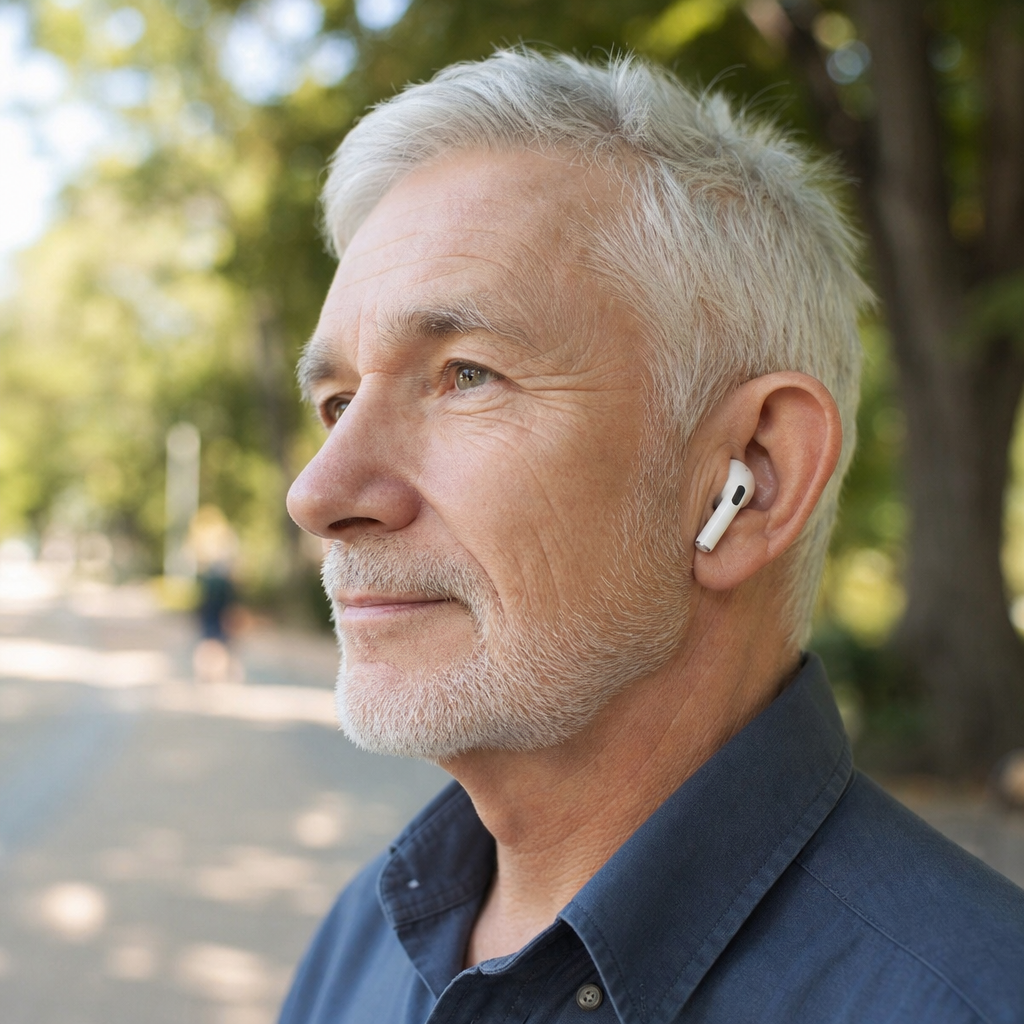
Ear buds as hearing aids have moved from a fringe workaround to a serious category of hearing support, driven by better microphones, stronger onboard processing, and new rules that widened access to over-the-counter hearing technology. In simple terms, this category includes consumer earbuds that amplify external sound, speech-enhancement earbuds, and devices that blur the line between true wireless headphones and medical-style hearing support. The idea matters because millions of adults notice mild to moderate hearing difficulty long before they visit an audiologist, and many want a lower-cost, lower-stigma, easier-to-try option. After testing hearing devices with clients and comparing them in everyday settings like restaurants, offices, and city streets, I have seen both the promise and the limitations firsthand.
A hearing aid is a regulated device intended to compensate for hearing loss by capturing sound, processing it, and delivering amplified audio to the ear according to an individual hearing profile. Earbuds, by contrast, are primarily designed for music, calls, and media. Some now include hearing features such as environmental amplification, conversation boost, adaptive equalization, and app-based hearing tests. The key distinction is purpose and precision. A dedicated hearing aid is built around audibility, speech intelligibility, feedback control, and long-term wear. Earbuds with hearing assistance may help some users hear better in selected situations, but they do not automatically match the fit, tuning, or clinical safeguards of prescription devices.
This hub article explains what earbuds can realistically do, who they suit, where they fall short, and how to evaluate them. It also sets the foundation for more detailed guides on setup, comfort, battery life, app features, listening modes, and comparisons with over-the-counter hearing aids. If you are asking whether earbuds can replace hearing aids, the short answer is sometimes for mild needs, no for many medical cases, and only after careful assessment. Understanding that nuance can save money, reduce frustration, and point you toward the right next step.
What Ear Buds as Hearing Aids Actually Means
When people search for ear buds as hearing aids, they usually mean one of three things. First, they may mean standard wireless earbuds with transparency or ambient mode, where microphones pass outside sound into the ear so the wearer can hear surroundings while listening to audio. Second, they may mean advanced earbuds with speech-focused amplification features, often marketed for conversation clarity. Third, they may mean self-fitting over-the-counter hearing devices that resemble earbuds and use a smartphone app rather than a traditional audiology appointment. These categories overlap, but the differences matter because they affect performance, safety, comfort, and legal classification.
In practice, the user experience depends on the signal chain. Microphones capture sound, digital signal processing boosts selected frequencies, algorithms reduce noise, and speakers deliver the result. Better products also manage latency, because delayed sound creates an echo-like effect that makes conversation unnatural. They control acoustic feedback, the whistling caused when amplified sound leaks back into the microphone. They also provide customizable gain by frequency band, since most age-related hearing loss affects high frequencies more than low ones. If a device cannot adjust high-frequency amplification with enough precision, speech may still sound muffled even when overall volume is louder.
Real-world performance often surprises buyers. An earbud may make a quiet living room conversation easier yet perform poorly in a restaurant because broad amplification raises clatter along with voices. Another may sound sharp and fatiguing after an hour because the fit seals the ear canal too tightly, changing how the wearer perceives their own voice. I often tell users to think less about the label and more about the hearing task. Do you need help with television, one-to-one conversation, meetings, phone calls, or all-day hearing support? Earbuds can be useful tools, but they are task-specific tools unless designed with hearing correction as the primary goal.
Who Can Benefit and Who Should Not Rely on Them
Earbuds with hearing assistance work best for adults with situational difficulty, very early hearing decline, or mild to sometimes moderate perceived loss who mainly need support in selected listening environments. They can also appeal to people reluctant to wear visible hearing aids, those who want one device for calls and hearing help, or buyers testing whether amplification improves communication before investing in specialized devices. For example, a 58-year-old office worker who hears reasonably well in quiet but struggles in meetings may benefit from speech enhancement during work hours. A traveler may use transparency features to hear announcements without removing earbuds. A remote worker may value amplified environmental sound while staying connected to a laptop.
They are a poor substitute when hearing loss is asymmetric, sudden, severe, fluctuating, accompanied by tinnitus changes, dizziness, ear pain, drainage, or a history suggesting a medical issue. In those cases, an ear, nose, and throat evaluation or audiology assessment should come first. The U.S. Food and Drug Administration allows over-the-counter hearing aids for adults with perceived mild to moderate hearing loss, but that does not mean every earbud with amplification is appropriate for hearing loss management. Children should not be self-fit with consumer earbuds for hearing concerns. People with dexterity limitations may also struggle with tiny charging cases and touch controls, making conventional hearing aids with simpler physical controls more practical.
The strongest candidates are users with clear expectations. Earbuds can improve access to speech in some environments, but they rarely match custom-programmed prescription hearing aids for directional microphones, feedback suppression, low listening fatigue, and all-day wear. If your goal is occasional support during commuting, social events, or television viewing, earbuds may be enough. If your goal is consistent correction across twelve waking hours, they usually are not.
Key Features That Separate Good Options From Gimmicks
The most important features are not flashy marketing terms but measurable hearing functions. Look for an in-app hearing assessment or, better, the ability to import an audiogram. Frequency-specific amplification matters more than simple volume boost. Low latency matters because excessive delay disrupts lip-reading and conversational timing. Directional microphones help prioritize speech from in front of the user. Adjustable noise reduction matters, but aggressive noise suppression can make speech sound watery or cut off consonants. Feedback management is essential if you need meaningful gain. Fit options such as open and closed eartips influence both comfort and hearing performance. Open tips preserve natural environmental hearing, while closed tips can provide stronger controlled amplification but may increase occlusion, the plugged-ear sensation.
Battery behavior also deserves attention. Consumer earbuds often advertise six to eight hours per charge for music, but hearing-assistance modes can shorten runtime because microphones and processing stay active continuously. Bluetooth streaming drains batteries faster still. Connection stability matters too. Some earbuds lose settings when switching devices or entering a low-power state. Better platforms save hearing profiles on the device and in the companion app. Accessibility features, including large-font controls, independent left-right adjustment, and simple mode switching, make a bigger difference than most buyers expect.
| Feature | Why It Matters | What To Look For |
|---|---|---|
| Frequency-specific tuning | Targets the frequencies where speech is hardest to hear | Multi-band adjustments or audiogram-based fitting |
| Low latency | Prevents echo sensation and improves conversation comfort | Natural real-time transparency with minimal delay |
| Directional microphones | Improves speech focus in front-facing conversations | Conversation or speech mode with front emphasis |
| Feedback control | Reduces whistling at useful amplification levels | Stable gain without squeal during jaw movement |
| Battery endurance | Determines whether the device works through real daily use | All-day support or quick-charge options for hearing modes |
| Comfort and fit | Affects sound quality, own-voice perception, and wear time | Multiple tip styles, secure seal, low pressure |
When I compare products, I always test call quality and transparency separately. Some earbuds excel at phone microphones yet deliver mediocre environmental amplification. Others sound good for hearing support but become unstable during streaming. A strong product handles both without forcing constant app adjustments.
How Ear Buds Compare With OTC and Prescription Hearing Aids
Over-the-counter hearing aids sit between consumer earbuds and prescription hearing aids. They are intended for adults with perceived mild to moderate hearing loss and must meet defined regulatory requirements in markets where they are formally recognized. Many self-fitting OTC devices use in-app hearing tests and offer clinically oriented tuning. Compared with earbuds, they usually prioritize audibility, speech clarity, and wearability over entertainment features. Compared with prescription hearing aids, they typically offer less individualized verification and fewer advanced fitting options, though the gap is narrowing.
Prescription hearing aids remain the benchmark for people with complex hearing needs. They can be programmed using real-ear measurement, a best-practice process where a probe microphone in the ear canal verifies that amplified sound matches target levels based on hearing thresholds. This step matters because perceived loudness alone does not tell you whether speech cues are reaching the eardrum accurately. Prescription models also offer broader fitting ranges, better support for asymmetry, stronger receiver options, telecoil or Auracast-ready connectivity in some models, and clinician follow-up for fine-tuning. In my experience, users moving from earbuds to properly fit hearing aids often report not just louder sound, but less exhaustion at the end of the day.
Cost is the main reason many shoppers start with earbuds. Good earbuds with hearing features may range from roughly $150 to $350, while OTC hearing aids often run several hundred to over a thousand dollars, and prescription pairs can cost substantially more depending on service bundles. Still, price alone can mislead. If earbuds fail to solve the problem and end up unused in a drawer, the cheaper purchase becomes expensive. The better question is total value for your hearing profile and daily demands.
Setup, Testing, and Everyday Use
Successful setup starts with a hearing baseline. If you already have a recent audiogram, use it when the app allows. If not, a self-test can be useful, but take it in a quiet room with a secure fit and repeat it if results seem inconsistent. Then test the earbuds in a progression of real environments: a quiet room, television at normal volume, a one-to-one conversation, a group setting, and a noisy public place. Change one variable at a time. Raise high-frequency gain before increasing overall volume if speech lacks clarity. If your own voice sounds boomy, try a more open tip or lower low-frequency amplification.
Users often skip the adaptation period. Even accurate amplification can sound unusual for the first several days because the brain is re-learning access to soft consonants, room sounds, and rustling noises it has not heard clearly in a while. Wear the devices in short sessions, then extend use. Take notes on specific problems such as hiss, sharp dishes, weak speech in cars, or poor wind handling. Those observations are far more useful than saying the sound is bad. Good apps let you save presets for restaurant, outdoor, and television use. Build those presets early so you are not constantly reconfiguring controls in public.
Maintenance is simple but important. Keep microphone ports clear of wax and skin oil. Replace tips when they harden or loosen. Update firmware, because manufacturers often improve noise management and connection stability after launch. If one side drains faster, check whether voice assistant wake features or persistent streaming settings are active. These details routinely determine whether people stick with the device or abandon it.
Limits, Risks, and When to Seek Professional Help
The biggest risk is delay. People may normalize hearing difficulty, try earbuds for months, and postpone evaluation even when warning signs suggest a medical condition or a level of loss that needs more than casual amplification. Seek professional help promptly for sudden hearing loss, one-sided decline, persistent unilateral tinnitus, dizziness, ear fullness, pain, drainage, recurrent ear infections, or speech understanding that remains poor even when sound is louder. Those patterns can indicate problems that should not be managed with consumer technology alone.
There are also practical limits. Earbuds are easier to lose, easier to run flat, and often less comfortable for all-day wear than hearing aids designed around open acoustics and prolonged use. Wind noise can overwhelm transparency systems. Touch controls may trigger accidentally when adjusting fit. Some products collect hearing and usage data through companion apps, so review privacy settings carefully. Finally, amplification cannot fully solve poor listening environments. Hard surfaces, distance from the speaker, and competing talkers reduce speech intelligibility for everyone, especially for people with hearing loss. Sometimes the best improvement comes from better seating, captions, and communication habits alongside technology.
Ear buds as hearing aids can be a practical starting point, a useful situational tool, or a bridge to more specialized hearing care, but they are not a universal replacement for hearing aids. The most accurate way to think about them is as a spectrum: basic transparency for awareness, enhanced earbuds for occasional conversation support, regulated self-fitting devices for mild to moderate loss, and prescription hearing aids for more complex or persistent needs. Matching the device to the hearing task is what determines success.
If you remember three points, make them these. First, prioritize frequency-specific speech clarity over simple loudness. Second, judge performance in your actual daily environments, not just in a quiet room. Third, do not use earbuds to self-manage red-flag symptoms or significant hearing difficulty without professional assessment. Buyers who follow those rules make better decisions and waste less money.
As the hub for this topic, this guide gives you the framework for evaluating features, comparing categories, and deciding when expert help is necessary. The next step is straightforward: assess your hearing needs honestly, test devices against real listening situations, and if results fall short, book a hearing evaluation so you can move from guesswork to a solution that truly improves communication.
Frequently Asked Questions
Can earbuds really work like hearing aids?
In some situations, yes. Modern earbuds can do more than play music: many now use external microphones, real-time sound processing, directional pickup, noise reduction, and speech enhancement to make nearby voices easier to hear. That means certain earbuds can function as a form of hearing support, especially for adults with mild to moderate perceived hearing difficulty who want help in specific environments such as restaurants, meetings, stores, family gatherings, or while watching TV. They are especially appealing to people who are not ready for traditional hearing aids, want a lower-cost option, or prefer a device that looks familiar and non-medical.
That said, earbuds are not automatically equal to prescription hearing aids. Traditional hearing aids are purpose-built medical devices designed to match amplification to an individual hearing profile, often based on a hearing test and professional fitting. They typically offer more precise tuning, better all-day wearability, stronger feedback control, and features tailored to long-term hearing management. Earbuds, by contrast, often rely on generalized enhancement settings or app-based hearing checks that may help but may not be as individualized. The bottom line is that earbuds can absolutely be useful hearing tools, but whether they are a good substitute depends on the degree of hearing loss, the listening environments involved, and how much customization the user needs.
Who is a good candidate for using earbuds as hearing support?
Earbuds as hearing support tend to be best for adults who notice early or situational hearing challenges rather than severe, complex, or rapidly changing hearing loss. A strong candidate is someone who can hear reasonably well in quiet settings but struggles to follow speech in background noise, misses parts of conversations at restaurants or social events, or finds television dialogue harder to understand than it used to be. These users often benefit from speech-focused listening modes, environmental amplification, and directional microphones that boost voices in front of them.
They may also be a practical choice for people who want occasional support instead of all-day amplification. For example, someone might use them during work meetings, lectures, travel, or social gatherings but not need them continuously throughout the day. Earbuds can also appeal to users who value discretion, Bluetooth streaming, and a device that combines entertainment and hearing assistance in one familiar form factor.
However, they are usually not the ideal first choice for people with severe hearing loss, significant asymmetry between ears, frequent ear infections, pronounced tinnitus concerns requiring clinical management, or symptoms such as sudden hearing changes, ear pain, dizziness, or one-sided hearing decline. In those cases, a hearing evaluation is important. Earbuds can be a useful entry point into better hearing, but they should not replace proper medical assessment when symptoms suggest something more serious than routine age-related or mild hearing difficulty.
What features should I look for when comparing earbuds that claim to help with hearing?
The most important feature is the quality of the microphones and sound processing. Earbuds that are meant to help with hearing should be able to pick up external sound clearly and process it with low delay, because noticeable lag can make conversations feel unnatural. Look for speech enhancement modes, adaptive environmental amplification, directional microphones that focus on the person in front of you, and noise management tools that reduce steady background sounds without crushing speech clarity. A transparency or ambient mode by itself is not always enough; the better products actively improve intelligibility rather than simply letting outside sound in.
Customization matters just as much. The strongest options offer app controls that let you adjust amplification, tone balance, left-right ear settings, and listening presets for different environments. Some include built-in hearing tests or hearing profiles that tailor amplification to your needs. Others support over-the-counter hearing aid style features, which can be especially helpful for users looking for more than casual sound passthrough. Comfort and fit are also critical, because a secure seal affects both audio quality and how well the microphones and processing perform. If earbuds are uncomfortable after an hour, they are less likely to be used consistently.
Battery life, call quality, and ease of switching between hearing support and regular audio use are also worth comparing. If you expect to use the earbuds throughout the day for both conversations and media streaming, battery endurance can make a major difference. Finally, check whether the device is marketed as a wellness or audio product, an over-the-counter hearing aid, or something in between. That label often tells you a lot about the intended use, level of regulation, and how realistic the hearing-support claims are.
Are over-the-counter hearing devices and hearing-enhancement earbuds the same thing?
No, and that distinction matters. Over-the-counter hearing aids are a defined category intended for adults with perceived mild to moderate hearing loss. They are regulated differently than general consumer audio products and are specifically marketed to help compensate for hearing difficulty. Hearing-enhancement earbuds, on the other hand, may offer some of the same practical functions such as amplification, transparency modes, or speech boosting, but they are often sold primarily as consumer electronics rather than hearing aids. Some products blur the line, but the categories are not automatically interchangeable.
In practical terms, an OTC hearing aid is usually more likely to include hearing-focused setup tools, gain controls designed around hearing support, and instructions intended for users addressing hearing loss. A standard pair of earbuds with ambient sound mode may help in some situations, but it may not offer enough amplification precision, personalization, or consistency to serve as a true hearing aid alternative. This is why shoppers should look beyond marketing language and examine the actual feature set: Does the device support hearing personalization? Is it intended for speech understanding? Can it address different listening environments? Is it specifically meant for adults with mild to moderate hearing difficulty?
For many people, hearing-enhancement earbuds can be a useful stepping stone, especially if they are exploring whether amplification helps them. But if the goal is sustained, reliable assistance for daily hearing needs, OTC hearing devices may provide a more appropriate and structured solution than general-purpose earbuds alone.
When should someone choose traditional hearing aids instead of earbuds?
Traditional hearing aids are the better choice when hearing difficulty is frequent, significant, or affecting quality of life across most daily situations. If someone regularly struggles to understand family members, misses important details at work, avoids social situations, or needs constant repetition even in relatively quiet settings, a dedicated hearing aid is usually more appropriate than relying on consumer earbuds. The same is true when hearing loss has been diagnosed as moderate to severe, when each ear needs different support, or when fine-tuned amplification is necessary for comfort and clarity.
There are also practical reasons to choose hearing aids. They are designed for extended wear, often fit more securely for all-day use, and generally provide more consistent amplification without the stop-start habits common with earbuds. Many include advanced feedback suppression, better speech mapping, more flexible programming, and service support from hearing care professionals. That level of precision can make a meaningful difference in real-world communication, especially in challenging listening environments.
Most importantly, traditional hearing aids should be prioritized when there are warning signs that need professional attention. Sudden hearing loss, ringing in one ear, dizziness, ear drainage, pain, or a noticeable difference between ears should not be self-managed with earbuds. A hearing test or medical evaluation can identify whether the issue is routine age-related decline, wax buildup, infection, noise damage, or something that requires treatment. Earbuds can be a smart and accessible tool, but they are best viewed as part of the hearing-support landscape rather than a universal replacement for professional hearing care.