
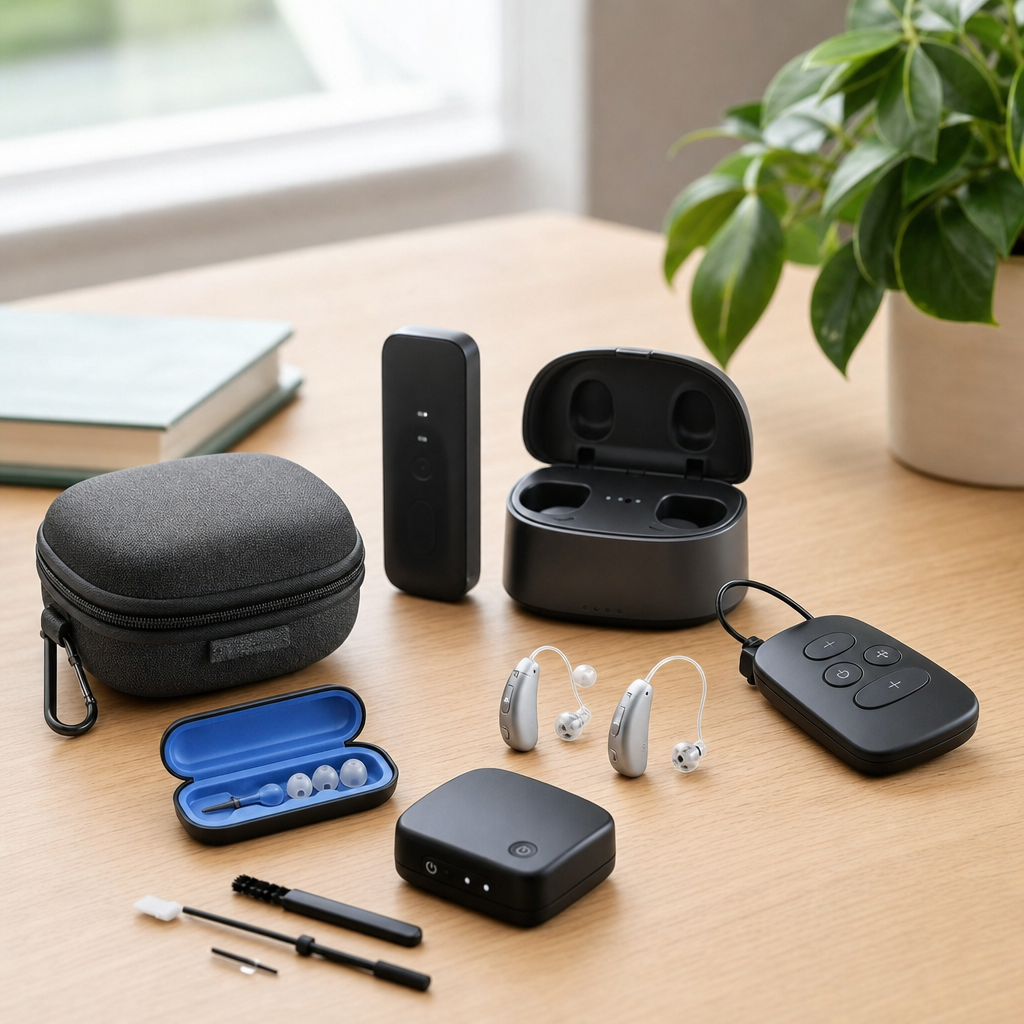
Hearing aids accessories can make the difference between a device that merely amplifies sound and a hearing solution that works reliably, comfortably, and safely in daily life. The term covers every add-on, replacement part, and support tool used with hearing aids, including domes, wax guards, receivers, charging docks, batteries, cleaning kits, dehumidifiers, retention locks, Bluetooth streamers, remote microphones, TV connectors, and carrying cases. As someone who has helped patients troubleshoot everything from intermittent sound to poor phone streaming, I have seen that accessories are not optional extras in the practical sense. They affect fit, hygiene, battery life, sound quality, speech understanding, and the lifespan of the instruments. For any buyer comparing models, understanding accessories is part of understanding the true cost and long-term usability of hearing aids.
Why does this matter so much? Modern hearing aids are compact computers that sit in a humid, wax-prone, high-motion environment for ten to sixteen hours a day. Tiny components clog, soften, corrode, or wear out. A missing wax filter can destroy a receiver. The wrong dome size can cause feedback, weak bass, or sore ears. A poor charging routine can leave a rechargeable pair dead by evening. Meanwhile, the right accessory setup can solve common complaints quickly: a remote microphone improves speech in noise, a TV transmitter prevents volume battles at home, and a drying cup can reduce moisture-related repairs. This article explains the full accessory landscape in plain language, so readers can identify what they need now, what they may need later, and how each category supports better hearing outcomes.
Essential hearing aid accessories and what each one does
The most important hearing aid accessories are the consumable and fit-related parts used every week or month. For receiver-in-canal devices, that usually means domes, wax guards, and sometimes retention tails. Domes are the soft silicone tips that sit in the ear canal. Open domes let more natural low-frequency sound enter, which can feel more comfortable for mild high-frequency loss. Closed or power domes seal more of the canal, helping the aid deliver stronger amplification and reduce feedback. The size matters. If a dome is too small, it can slip, whistle, or sound thin. If it is too large, it may create pressure or irritation. A hearing care professional normally verifies the fit during the initial fitting, but replacement domes must match the prescribed style and size.
Wax guards are equally critical. These small filters protect the receiver from cerumen and debris, and they need regular replacement. In my experience, many “broken” hearing aids simply have blocked wax filters. Sound becomes weak, distorted, or absent, especially in one ear. Most manufacturers, including Phonak, Oticon, ReSound, Signia, Starkey, and Widex, use proprietary wax guard systems, so users should order the correct type rather than assuming they are interchangeable. Behind-the-ear models with earmolds may also use tubing, hooks, and tone hooks that harden or discolor over time. For custom devices, accessories include vent cleaners, insertion tools, and replacement microphone covers, depending on design. These everyday items are the backbone of maintenance because they preserve acoustic performance before larger problems appear.
Power, charging, and battery management accessories
Power accessories determine whether hearing aids are dependable through a full day. The market now splits between disposable zinc-air batteries and built-in rechargeable lithium-ion systems. For battery-powered models, common accessories include battery caddies, magnetic battery tools, and travel packs. Sizes 10, 312, 13, and 675 are standardized, but run time varies by hearing aid power draw, streaming use, and environmental conditions. Zinc-air cells activate when the seal tab is removed, so it helps to wait one to five minutes before inserting a fresh battery to allow full oxygen activation. Users who open the battery door at night often gain a little extra life because moisture can dissipate and the cell stops draining as quickly.
Rechargeable hearing aids use desktop chargers, portable charging cases, cleaning-charger hybrids, and in some cases charging lids with onboard power banks. These accessories are convenient, but they are still wear items. Contacts must stay clean, and users should confirm that left and right aids seat properly, especially on travel chargers where a small misalignment can prevent charging. Some manufacturers offer dry-and-charge units that combine low heat or airflow with charging to manage moisture. This is especially useful in humid climates, for active users, and for anyone with a history of intermittent performance after exercise. A charging case should also match the user’s routine. Someone frequently away from home benefits from a case with multiple additional charges, while a person with dexterity limits may need larger insertion wells and strong status lights.
| Accessory type | Main purpose | Best for | Common limitation |
|---|---|---|---|
| Disposable batteries | Replaceable daily power | Users wanting instant swaps and long trips | Ongoing replacement cost |
| Desktop charger | Nightly charging at home | Stable home routine | No backup power when traveling |
| Portable charging case | Charging on the go | Travelers and commuters | Higher upfront cost |
| Dry-and-charge system | Charge plus moisture control | Humid climates and active users | Larger footprint |
Cleaning, drying, and storage accessories that extend device life
Hearing aids fail most often because of moisture, earwax, skin oils, drops, and improper storage. Good cleaning accessories directly reduce these risks. The basic kit usually includes a soft dry cloth, a wax loop, a vent cleaner, and a small brush. For custom aids and earmolds, an air blower can push moisture out of tubing or vents after cleaning. Alcohol wipes are sometimes used on earmolds, but they should not be applied indiscriminately to microphones, receivers, or plastic housings unless the manufacturer allows it. Hearing aid microphones are especially vulnerable. Brushing debris away from ports is safer than pushing it deeper.
Drying accessories deserve more attention than they usually get. Even if a user never sees visible moisture, sweat and humidity accumulate in battery compartments, receiver ports, and charging contacts. Electronic drying jars, desiccant cups, and active drying boxes help remove that moisture overnight. In clinics, I have seen dehumidification rescue devices that were fading in and out after workouts or after use in coastal weather. While a dryer is not a substitute for a repair when corrosion has already progressed, it can significantly reduce recurring issues. Storage also matters. Hearing aids should be kept in a protective case away from direct sunlight, heaters, and bathrooms where steam builds up. Pets are a frequent hazard; dogs often chew hearing aids because of the scent and texture, making a hard storage case a practical accessory rather than a cosmetic one.
Connectivity accessories for phones, TVs, meetings, and public spaces
Connectivity hearing aid accessories help users hear better beyond the one-to-one quiet conversation. The most common are Bluetooth-compatible streamers, TV transmitters, remote microphones, companion remotes, and telephone accessories. Many current hearing aids support direct streaming from iPhone and a growing range of Android phones using ASHA or Bluetooth LE Audio, but compatibility still depends on model, operating system, and firmware. A dedicated streamer can bridge older hearing aids or provide more stable neck-worn audio pickup for phone calls. TV connectors send television sound directly to the hearing aids, often with low latency, which lets one person watch comfortably without forcing everyone else to accept the same room volume.
Remote microphones are among the most effective accessories for real-world speech understanding. Instead of relying solely on the hearing aid microphones several feet away from the talker, a remote mic places the microphone close to the speaker’s mouth and transmits the signal directly. This improves the signal-to-noise ratio, the single biggest factor in hearing speech in noise. In classrooms, conference rooms, places of worship, and moving cars, this can outperform simply turning up hearing aid volume. Public space support also matters. Telecoil accessories, neckloops, and hearing loop compatibility remain highly relevant in theaters, ticket counters, and worship venues. Even as wireless standards evolve, users should ask whether a hearing aid includes a telecoil or supports loop-ready accessories, because access in public environments still depends heavily on that long-established system.
Comfort, retention, and personalization accessories
Comfort accessories are often underestimated because they seem minor compared with the hearing aids themselves. In practice, comfort determines wear time, and wear time determines benefit. Common items include sport locks, retention cords, different dome materials, earmold lubricants, sleeves, and custom molds. Sport locks or retention tails help keep receiver-in-canal devices stable in active users or in ears with challenging anatomy. They can stop a hearing aid from backing out during talking, chewing, or exercise. For glasses wearers, tubing length and wire routing can reduce pressure behind the ear, and slim tube guides may improve placement.
Custom earmolds are an accessory category with major acoustic effects. Soft silicone molds can improve comfort and retention, while acrylic molds may offer easier insertion for some users and more precise venting. Vent diameter influences the balance between natural sound, occlusion, and feedback control. This is not guesswork. A change in venting can alter low-frequency output, user own-voice perception, and maximum stable gain. Pediatric users may need frequent earmold replacements as ears grow, and adults with significant hearing loss often benefit from custom solutions when domes no longer provide enough seal or stability. Color sleeves, labeled cases, and app-controlled remotes may seem cosmetic, but they also improve handling, reduce left-right confusion, and support independent use for people with vision or dexterity challenges.
How to choose the right hearing aid accessories
The best way to choose hearing aid accessories is to match them to hearing loss, device style, lifestyle, dexterity, and maintenance habits. Start with the essentials recommended by the manufacturer and dispenser: the correct domes or molds, wax guards, and a cleaning routine. Then identify pain points. If speech in restaurants is the main complaint, a remote microphone may add more value than changing hearing aid settings alone. If devices fail after exercise, a dryer or dry-and-charge unit should move higher on the list. If battery changes are difficult because of arthritis, rechargeable models with an easy-drop charger can be more usable than disposable cells.
Compatibility should always be verified by brand and model. Hearing aid accessories are not universally interchangeable, especially for receivers, chargers, firmware-dependent wireless devices, and proprietary filters. Buyers should also ask what is included in the bundled package, what requires periodic repurchase, and what the expected replacement cycle looks like. Domes and wax filters may be changed monthly or as needed, while chargers can last years if cared for. Finally, buy with support in mind. The most sophisticated accessory is not useful if the user cannot pair it, clean it, or troubleshoot it. Work with a hearing care professional, request a hands-on demonstration, and keep spare maintenance items at home and when traveling. That simple preparation prevents avoidable downtime and keeps hearing aids performing the way they were fitted to perform.
Hearing aids accessories are the practical system around the hearing aids, and understanding them helps people get better sound, fewer breakdowns, and more confidence in daily use. The core categories are straightforward: fit accessories such as domes and molds, protection accessories such as wax guards and drying tools, power accessories such as batteries and chargers, and communication accessories such as TV transmitters and remote microphones. Each category solves a specific real-world problem, from weak sound caused by clogged filters to missed conversation in noisy rooms. When users learn how these parts work together, hearing aids become easier to manage and more effective over time.
The main benefit is simple: the right accessories protect your investment and improve hearing performance in the situations that matter most. Start by reviewing the accessories you already have, replacing any worn consumables, and asking your hearing care provider which additions would make the biggest difference for your lifestyle. If this page is your hub for the broader hearing aids topic, use it as your checklist, then explore related guides on batteries, cleaning, Bluetooth streaming, earmolds, and troubleshooting so you can build a hearing setup that stays reliable every day.
Frequently Asked Questions
What are hearing aid accessories, and which ones are most important for everyday use?
Hearing aid accessories are the add-ons, replacement parts, and maintenance tools that help hearing aids perform properly, stay comfortable, and last longer. They include both essential items and optional convenience features. The most common everyday accessories are domes or earmolds, wax guards, receivers, batteries or charging docks, cleaning brushes and cloths, dehumidifiers, retention locks, and storage or carrying cases. For many users, these are not just extras. They are part of what keeps the hearing aid working safely and consistently in real-world situations.
Some accessories directly affect sound quality. For example, domes and earmolds help the aid fit correctly in the ear, which influences comfort, feedback control, and how well sound is delivered. Wax guards protect the speaker area from earwax and debris, which is one of the most common causes of reduced volume or distorted sound. Receivers, especially in receiver-in-canal models, are the component that sends amplified sound into the ear and may need replacement over time due to wear or moisture exposure.
Other accessories support power and reliability. Rechargeable users depend on charging docks and power adapters, while traditional battery users need the correct battery size and safe storage practices. Cleaning kits and drying systems are especially important because moisture, skin oils, and wax buildup can shorten the life of a device or lead to preventable repairs. Even a simple case matters because it protects hearing aids from dust, pets, accidental drops, and humidity when they are not being worn.
Then there are lifestyle accessories, such as Bluetooth streamers, TV connectors, and remote microphones. These can greatly improve hearing performance in challenging listening environments like meetings, restaurants, phone calls, and television viewing. In practice, the “most important” accessories depend on the person, their hearing aid style, and how they use their devices each day. For nearly everyone, though, the basic must-haves are fit components, wax protection, charging or battery support, and cleaning tools.
How often should hearing aid accessories like domes, wax guards, receivers, and batteries be replaced?
Replacement schedules vary by accessory, device type, earwax production, climate, and daily wear habits, but some general timelines are helpful. Domes often need to be replaced every few weeks to every couple of months, depending on how quickly they become stiff, discolored, loose, or clogged. If a dome no longer feels secure or comfortable, it should be changed sooner. Wax guards may need replacement every few weeks, or anytime sound becomes weak, muffled, or intermittent. Heavy wax producers may need to change them more often.
Receivers typically last much longer than consumable parts, but they are still wearable components and may need replacement if sound cuts in and out, becomes distorted, or stops altogether despite fresh wax guards and cleaning. In many cases, a failing receiver is mistaken for a dead hearing aid, so troubleshooting should begin with the simplest replaceable parts first. If the hearing aid still performs poorly after changing the wax guard, dome, and power source, the receiver may be the issue and should be checked by a hearing care professional.
Battery replacement depends on battery size, streaming use, hearing aid power level, and how many hours the device is worn each day. Disposable hearing aid batteries can last anywhere from a few days to a couple of weeks. If your hearing aid battery life suddenly becomes much shorter than usual, it may indicate a device problem, excessive moisture, or a battery storage issue. Rechargeable hearing aids do not use disposable batteries, but their charging contacts, charger condition, and long-term battery health should still be monitored. Over time, rechargeable cells naturally lose capacity and may eventually need professional replacement.
The safest approach is not to rely only on the calendar. Watch for signs such as reduced volume, weak clarity, feedback, poor retention, discomfort, intermittent performance, or visible buildup. Those symptoms often signal that an accessory needs attention. Regular check-ins with a hearing care provider can also help establish a replacement routine tailored to your specific hearing aid model and lifestyle.
How do I clean and maintain hearing aid accessories to keep my devices working properly?
Proper cleaning and maintenance are among the most important parts of hearing aid care because small amounts of wax, moisture, or debris can affect performance much faster than many people expect. Start with the basics: wipe the hearing aids daily with a soft, dry cloth, and inspect the microphone openings, dome or earmold, and receiver area for visible buildup. Use manufacturer-approved cleaning tools, such as a wax loop, small brush, or vent cleaner, rather than household items that can damage delicate components.
Wax guards should be changed instead of aggressively cleaned if they are blocked. Domes can often be removed and replaced when they become dirty or worn, but follow the device instructions carefully so you do not damage the receiver underneath. If your hearing aids use custom earmolds, those may require separate cleaning routines depending on the tubing and style. Cleaning should always be done gently and with the hearing aid powered off. For battery-powered devices, remove the battery before deep cleaning and leave the battery door open afterward if recommended. For rechargeable models, keep charging contacts clean and dry so the charger can connect reliably.
Moisture control is just as important as wax control. Hearing aids are exposed to perspiration, humid air, and temperature changes every day. Using a dehumidifier or hearing aid drying cup overnight can help reduce moisture-related issues, especially for active users or those living in warm, damp climates. Never use a hair dryer, microwave, or direct heat source to dry a hearing aid. Excess heat can warp parts and damage electronics.
Storage matters too. When not in use, hearing aids should be kept in a clean, dry case away from bathrooms, kitchen steam, direct sunlight, and curious pets or children. A surprising number of hearing aids are damaged by being left on a nightstand, dropped into sinks, or chewed by dogs. If you are unsure about a cleaning step, ask your hearing care provider to demonstrate the correct routine in person. A few minutes of daily care can prevent many common service issues and help accessories last as long as they should.
Which hearing aid accessories can improve hearing in difficult situations like phone calls, TV watching, and noisy places?
Several accessories are designed specifically to help hearing aid users hear more clearly when everyday listening becomes challenging. Bluetooth streamers and direct streaming systems can send phone calls, music, podcasts, and other audio straight from a smartphone or tablet to compatible hearing aids. This often improves clarity because the signal goes directly to the devices instead of competing with room noise. For users who struggle with mobile phone conversations, this can make a major difference.
TV connectors are another valuable accessory. They transmit television audio directly to hearing aids at a personalized volume, allowing the user to hear speech more clearly without turning the TV up for everyone else in the room. This is especially helpful when television dialogue sounds muddy or gets lost under background music and sound effects. Many families find that a TV streamer reduces frustration and improves shared viewing experiences significantly.
Remote microphones are one of the most useful tools for noisy environments, meetings, classrooms, cars, and restaurants. A remote mic can be worn by a conversation partner or placed on a table, sending the speaker’s voice directly to the hearing aids. This reduces the effect of distance and background noise, which are two of the biggest barriers to speech understanding, even with excellent hearing aids. In many cases, users are surprised by how much easier communication becomes when the microphone is positioned closer to the person speaking.
Some users also benefit from remote controls or companion apps that make it easier to change programs, adjust volume, and switch listening modes without touching the hearing aids themselves. The right accessory depends on the listening problem you are trying to solve. If the issue is television, a TV connector may be best. If it is one-on-one conversation in noise, a remote microphone is often the strongest option. If it is phone and media use, Bluetooth streaming may offer the greatest benefit. A hearing care professional can match the accessory to your specific hearing aid compatibility and listening needs.
How do I choose the right hearing aid accessories, and can I use third-party products?
Choosing the right hearing aid accessories starts with compatibility, safety, and real-life need. Not every accessory fits every brand or model, and even parts that look similar can differ in size, connection style, acoustic tuning, or power requirements. Domes, wax guards, receivers, and chargers should generally be selected according to the hearing aid manufacturer’s specifications. Using the wrong part can lead to poor sound quality, discomfort, weak retention, charging failures, or even damage to the device.
It also helps to think in categories. First are essential replacement items: domes, wax guards, batteries, and possibly receivers. Second are care items: cleaning kits, drying systems, and storage cases. Third are performance enhancers: TV connectors, Bluetooth accessories, remote microphones, and retention supports. If your hearing aids are comfortable and functioning well but you struggle mainly in specific listening environments, performance accessories may offer the biggest improvement. If you are having ongoing sound problems, start with the basic maintenance and replacement items first.
Third-party accessories can sometimes be appropriate, but caution is important. Generic cleaning cloths, dehumidifier containers,