
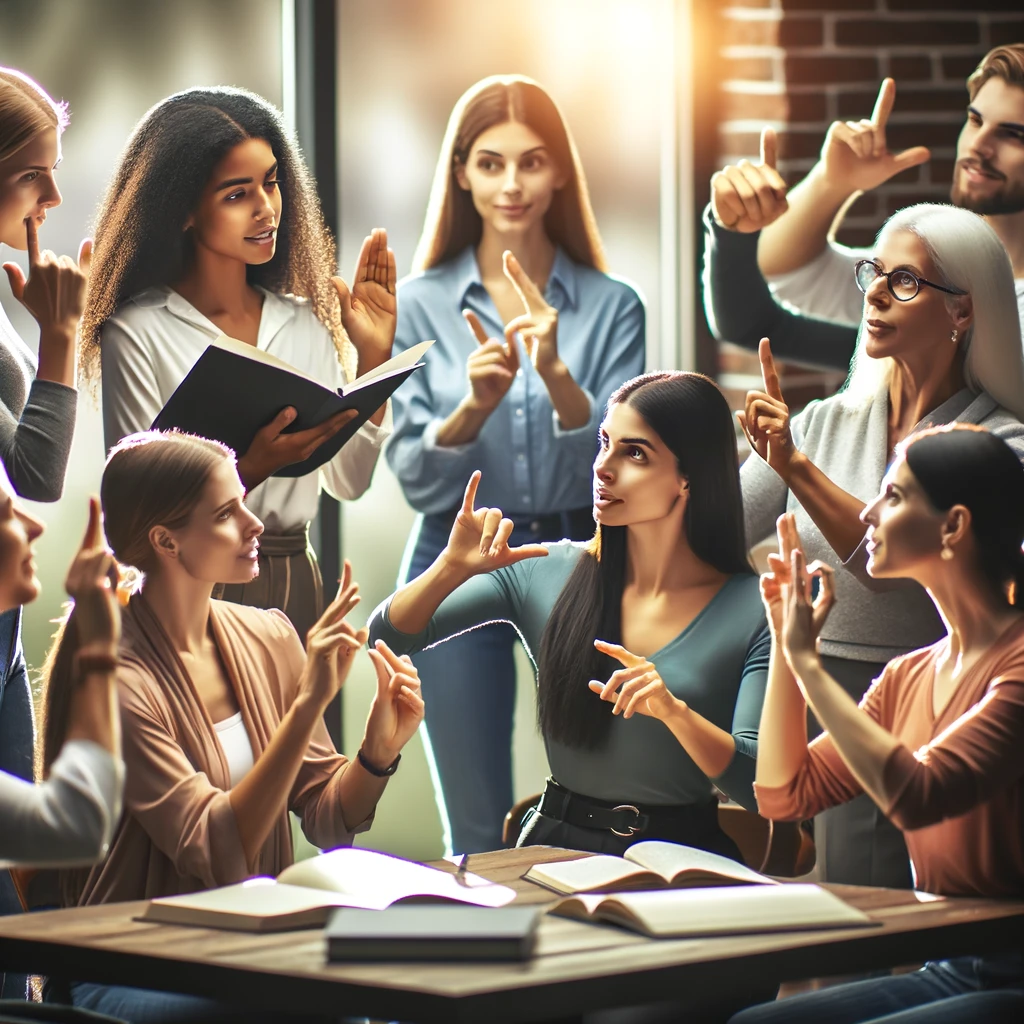
#EachForEqual: How ASL Can Break Down Communication Barriers for Women
Introduction
As we celebrate International Women’s Day, the global theme of #EachForEqual resonates profoundly in various aspects of society. A significant area where equality can be championed is in the realm of communication, especially for women who are deaf or hard of hearing. American Sign Language (ASL) plays a pivotal role in this domain, not just as a tool for communication but as a bridge connecting women across different backgrounds and experiences.
The Power of ASL in Women’s Lives
Breaking Down Communication Barriers
The core strength of ASL lies in its ability to break down communication barriers. For deaf or hard-of-hearing women, it provides a means of expression and connection with the world. ASL goes beyond mere words; it encompasses facial expressions and body language, offering a rich, multidimensional way of communication. This expressiveness can be empowering for women who often find themselves marginalized or misunderstood in predominantly hearing environments.
Enhancing Education and Career Opportunities
Educationally, ASL offers a pathway for deaf women to access information and knowledge on an equal footing. Schools and universities increasingly recognize the importance of ASL interpreters and resources in ensuring that deaf students are not left behind. In the workplace, ASL fluency can open doors to opportunities, facilitating careers in various fields, from education and counseling to tech and arts.
Building Communities and Support Networks
ASL also plays a crucial role in community building. Deaf women can find a sense of belonging and support in the ASL community. This solidarity is vital in empowering women, providing a space where they can share experiences, challenges, and triumphs. Supportive networks like these are essential in fostering confidence and resilience.
Promoting Cultural Diversity and Inclusion
ASL is not just a language; it’s a culture. Embracing ASL means embracing a rich tapestry of experiences and perspectives that add to the cultural diversity of our society. For women, this diversity can be a source of strength and empowerment, highlighting the unique contributions they can make in various cultural contexts.
Challenges and Solutions
Despite these benefits, challenges persist in the widespread adoption and recognition of ASL. Addressing these challenges is crucial in ensuring that deaf women have equal opportunities and are not left behind.
Accessibility in Public Spaces and Media
One significant challenge is the lack of ASL accessibility in public spaces and media. More effort is needed to provide ASL interpretation in public events, broadcasts, and online content. This not only aids deaf women but also raises awareness and understanding of ASL among the hearing population.
Advocacy and Legal Support
Advocacy plays a crucial role in promoting the rights of deaf women. Legal frameworks like the Americans with Disabilities Act (ADA) provide a basis for this advocacy, but more proactive measures are needed to enforce these rights effectively. This includes ensuring equal access to services, employment, and education.
Education and Training
To promote ASL, there needs to be a focus on education and training. This includes training more ASL interpreters, especially in specialized fields like medicine and law. Moreover, incorporating ASL into educational curricula can foster early exposure and appreciation among hearing individuals.
Technology as an Enabler
Technology can be a powerful tool in bridging communication gaps. Innovations like video relay services (VRS) and ASL apps enhance accessibility for deaf individuals. Continued investment and innovation in this area can significantly improve communication and access to information.
Personal Stories of Empowerment
The impact of ASL is best understood through personal stories. Many deaf women have shared how ASL has transformed their lives, offering them a voice and an identity. These stories highlight the resilience of deaf women and the critical role of ASL in their empowerment.
As we observe International Women’s Day under the theme of #EachForEqual, it’s crucial to recognize the role of ASL in empowering women, particularly those who are deaf or hard of hearing. ASL is more than a language; it is a tool for education, a bridge for communication, and a symbol of culture and identity. By promoting and supporting ASL, we contribute to a more inclusive and equal society where every woman has the opportunity to express herself, pursue her dreams, and connect with others. Let’s continue to break down barriers and build a world where every voice is heard and valued, and where equality is not just an aspiration but a reality.

The Global Perspective
International Advocacy for Deaf Women
Internationally, the promotion of ASL and other sign languages is crucial in the global movement for gender equality. Organizations like the World Federation of the Deaf and the United Nations work towards ensuring that deaf women’s rights are included in global gender equality and disability discussions. International Women’s Day serves as a platform to highlight these efforts, advocating for policies and practices that support deaf women worldwide.
Cross-Cultural Exchange through ASL
ASL, while primarily used in the United States and parts of Canada, also facilitates cross-cultural exchanges. This is particularly evident in international events such as the Deaflympics, where deaf athletes from around the globe come together. These events showcase not just sporting prowess but also the unifying power of sign language, fostering a sense of global community among deaf women.
Education and ASL
The Role of Educational Institutions
Educational institutions play a pivotal role in promoting ASL and supporting deaf women. Schools for the deaf provide a tailored educational environment, but it’s also essential for mainstream schools to be inclusive. This includes offering ASL classes, providing resources for deaf students, and educating hearing students about deaf culture and sign language.
Lifelong Learning and ASL
ASL isn’t just for the young; it’s a tool for lifelong learning. Adult education classes in ASL can open new avenues for personal and professional development. For women who become deaf later in life, learning ASL can be a transformative experience, providing a new means of communication and connection with others.
The Impact on Mental Health
Overcoming Isolation
Deaf women often face a higher risk of isolation, which can impact mental health. ASL provides a way to combat this isolation, offering a means to communicate and connect with others. Support groups and community organizations play a critical role in providing these connections, using ASL as a foundation for building supportive networks.
Mental Health Services in ASL
There is a growing recognition of the need for mental health services accessible in ASL. Deaf women face unique challenges and experiences, and it’s crucial for mental health professionals to be proficient in ASL or work closely with interpreters. This ensures that deaf women receive the support they need in a language and modality that is most effective for them.
The Role of Media and Technology
Representation in Media
Media representation is vital in shaping perceptions and attitudes. More deaf women need to be represented in film, television, and online media, not just as characters but also as creators and storytellers. This visibility can challenge stereotypes and promote a deeper understanding of the deaf experience.
Technological Advances
Technological advances have significantly improved communication for deaf individuals. Video calling, texting, and specialized apps have made it easier for deaf women to connect with others. Continued innovation in this field, particularly in improving accessibility of existing platforms, is vital.
Looking Forward
Building a More Inclusive Future
As we look towards the future, the goal should be a more inclusive society where deaf women are not just accommodated but actively included and celebrated. This includes continued advocacy, increased awareness, and a commitment to equality in all areas of life.
Celebrating Achievements
International Women’s Day is not just a time to recognize challenges; it’s also a moment to celebrate achievements. Deaf women around the world are making significant contributions in various fields. Their stories are not just inspiring; they are a testament to the power of ASL and the resilience of the human spirit.
Final Thoughts
On International Women’s Day, we embrace the theme of #EachForEqual by recognizing the vital role of ASL in empowering deaf women. ASL is more than a language; it is a key to unlocking potential, overcoming barriers, and building a more inclusive and equal world. Let’s continue to advocate for and support ASL and deaf women, not just today but every day.