
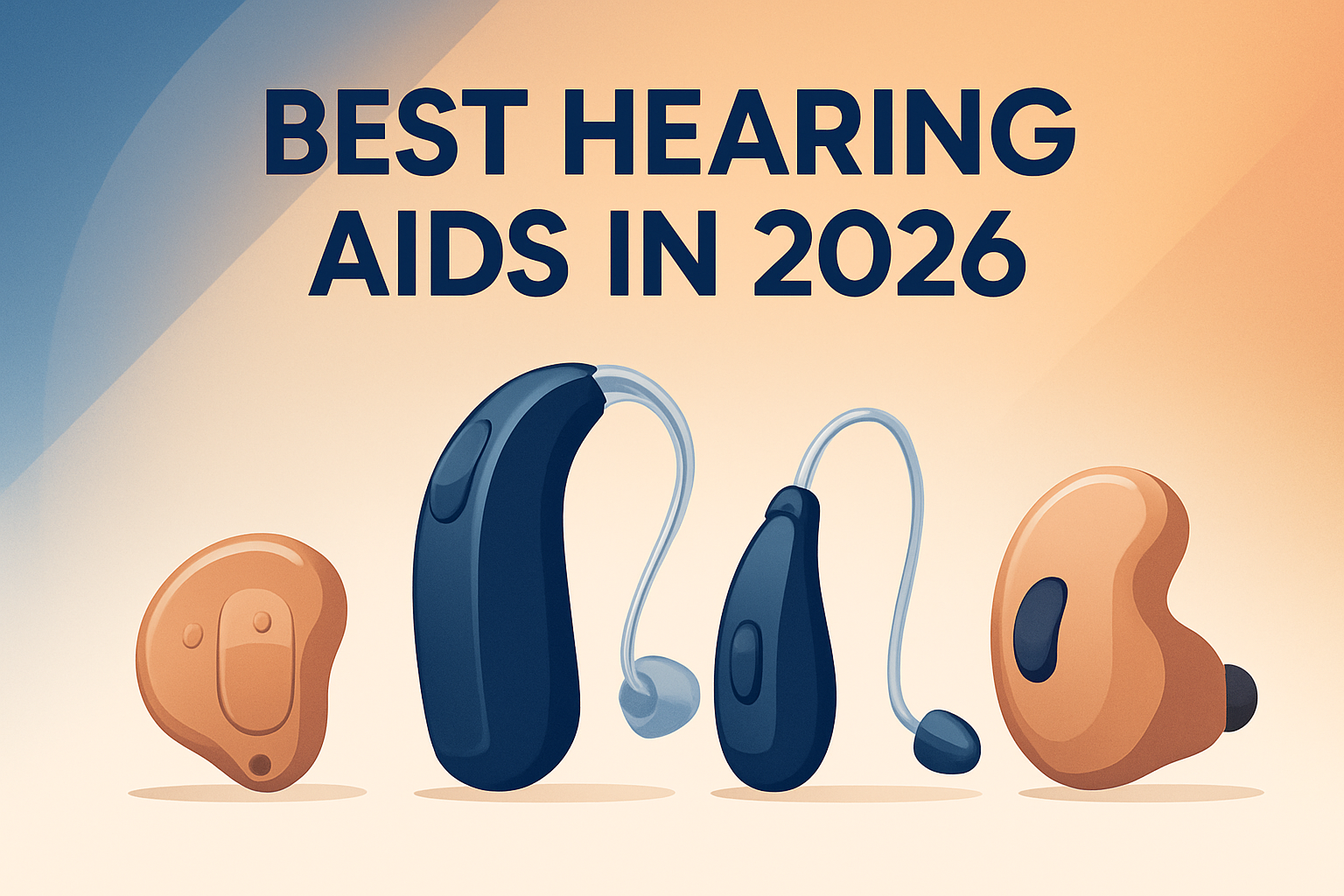
Choosing the best hearing aids in 2026 means balancing sound quality, speech clarity, comfort, battery life, app control, and professional support rather than chasing a single “top” device. Hearing aids are medical-grade devices designed to amplify and process sound for people with hearing loss, while over-the-counter hearing aids serve adults with perceived mild to moderate hearing loss and prescription models can address a wider range of needs. After years of evaluating hearing technology, fitting users with different hearing profiles, and comparing app ecosystems, I have found that the best option depends on how well a device matches your hearing pattern, daily environments, and willingness to use features consistently.
The topic matters because untreated hearing loss affects far more than volume. It can reduce speech understanding, increase listening fatigue, strain relationships, and make work meetings, restaurants, and phone calls exhausting. Hearing care has also changed quickly. In 2026, buyers are comparing traditional audiology clinics, teleaudiology providers, and direct-to-consumer brands. They are also asking whether artificial intelligence features, Bluetooth LE Audio, Auracast broadcasts, tinnitus masking, rechargeability, and self-fitting tools are worth paying for. Those are smart questions, because the right hearing aid can make conversation easier immediately, while the wrong fit can sit in a drawer after a week.
When people search for the best hearing aids in 2026, they usually want direct answers to three questions: which brands perform best, which model suits my level of hearing loss, and how much should I spend. The best-performing major brands this year are Phonak, Oticon, ReSound, Signia, Starkey, Widex, and leading OTC entrants including Jabra Enhance and Sony. They lead because they combine advanced signal processing, strong mobile apps, broad style options, and established service networks. However, no brand wins every category. Phonak remains a leader for difficult hearing environments and universal Bluetooth compatibility. Oticon excels at natural sound staging. ReSound and Signia are strong for connectivity. Starkey pushes health and fall-related features. Widex remains respected for sound quality, especially for music listeners.
Understanding a few terms makes comparison easier. Receiver-in-canal, or RIC, hearing aids place the speaker in the ear canal and are the most common premium style because they are discreet and flexible. Behind-the-ear, or BTE, devices are larger and often better for severe or profound hearing loss. In-the-ear, in-the-canal, and custom invisible styles trade some battery size and feature room for cosmetics. Key performance terms include feedback management, directional microphones, noise reduction, frequency lowering, telecoil, real-ear measurement, and speech-in-noise performance. Real-ear measurement deserves special attention. It is the gold-standard verification method recommended by audiology best practice because it measures how the device performs in your actual ear, not just in software.
Price matters, but value matters more. In my experience, the biggest differences in outcomes rarely come from tiny specification gaps. They come from proper fitting, realistic counseling, and follow-up adjustments after real-world use. A mid-priced device fitted well often beats a premium device fitted poorly. At the same time, premium tiers can justify their cost for people who spend hours in noisy settings, stream audio daily, or need advanced microphones and automation. This guide explains what the best hearing aids in 2026 actually are, who they suit, what features matter, and how to choose without wasting money.
Top hearing aid brands and models worth considering in 2026
If you want a concise shortlist, the best hearing aids in 2026 include Phonak Audéo Infinio Sphere, Oticon Intent, ReSound Nexia, Signia Pure Charge&Go IX, Starkey Genesis AI, Widex SmartRIC, Jabra Enhance Select 500, and Sony CRE line options for eligible OTC users. I would start most prescription buyers with one of those families because they represent the most complete combinations of speech processing, rechargeability, app maturity, and long-term support. They are not interchangeable, though, and each has a distinct sound philosophy.
Phonak Audéo Infinio Sphere stands out for speech understanding in complex background noise. Phonak has long been reliable for people who move between meetings, cars, busy restaurants, and outdoor settings. Its Bluetooth implementation has historically been among the most universal, which matters if you use Android, iPhone, laptops, and work phones interchangeably. Phonak devices also tend to be a safe recommendation for first-time users who prioritize speech clarity over maximum battery life, though some users notice the devices are slightly larger than the smallest competitors.
Oticon Intent remains one of the strongest choices for users who dislike overly processed sound. Oticon’s approach emphasizes access to a broad sound scene rather than narrowing everything aggressively to a front-facing voice. In practice, I have seen this work especially well for socially active users who want conversation support without feeling cut off from their surroundings. People who listen to music frequently often appreciate Oticon and Widex for this reason, although precise preference is highly individual and should be tested.
ReSound Nexia and Signia Pure Charge&Go IX both deserve attention for excellent connectivity and polished mobile control. ReSound has performed well for users who need direct streaming and clear app-based personalization. Signia has improved speech targeting and own-voice comfort, a common complaint among new wearers. Starkey Genesis AI is compelling for buyers who want wellness-oriented features, such as activity tracking and practical extras integrated into the app. Widex SmartRIC is one of the better options for listeners who care deeply about sound naturalness and a refined design.
| Brand/model family | Best for | Main strength | Potential tradeoff |
|---|---|---|---|
| Phonak Audéo Infinio Sphere | Noisy environments | Strong speech-in-noise performance and broad Bluetooth compatibility | Size and battery demands can be higher |
| Oticon Intent | Natural listening | Open sound presentation with strong environmental awareness | Some users prefer more aggressive noise control |
| ReSound Nexia | Connectivity | Reliable streaming and solid app personalization | Performance depends on fitting precision |
| Signia Pure Charge&Go IX | Conversation tracking | Good speech focus and own-voice handling | Sound signature is not universal |
| Starkey Genesis AI | Tech-forward users | Health features, app tools, rechargeable options | Extra features matter only if you use them |
| Widex SmartRIC | Music and sound quality | Natural sound character and attractive form factor | Not every clinic stocks Widex broadly |
| Jabra Enhance Select 500 | OTC convenience | Remote support and easier purchase process | Suitable only for mild to moderate loss |
How to choose the right hearing aid for your hearing loss and lifestyle
The best hearing aid is the one that matches your audiogram, ear anatomy, dexterity, visual needs, listening environments, and budget. Start with the degree and configuration of your hearing loss. Mild high-frequency loss may do very well in a discreet RIC device or qualified OTC option, especially if your main complaint is understanding speech in groups. Moderate to severe loss often benefits from prescription devices with more headroom, better feedback control, and professional verification. Severe or profound loss usually points toward powerful BTE styles, custom earmolds, or even cochlear implant evaluation if traditional amplification no longer provides enough clarity.
Lifestyle is equally important. I ask users where they struggle most: restaurants, family gatherings, worship spaces, classrooms, television, or phone calls. Someone who works in an office, uses videoconferencing daily, and streams podcasts for hours should put more weight on Bluetooth stability and microphone performance. A retiree who gardens, attends church, and wants easy handling may prioritize simple controls, long battery life, and dependable automatic programs. A musician or avid concertgoer should discuss dynamic range, music programs, and realistic expectations clearly, because hearing aids are optimized primarily for speech, not high-fidelity concert listening.
Physical handling should never be treated as a minor issue. Tiny custom devices look appealing, but they can be frustrating for people with arthritis, numb fingertips, or low vision. Rechargeable RIC models are often easier to insert and maintain than miniature disposable-battery styles. Earwax production, narrow canals, and chronic moisture also influence the best choice. In clinic, I have seen many buyers insist on the smallest possible device, only to switch later because comfort, retention, or maintenance became more important than invisibility.
Finally, think beyond the hardware. Ask whether your provider includes follow-up visits, cleanings, firmware updates, app coaching, and trial-period exchanges. Good hearing care is a process, not a one-time purchase. If a provider does not mention real-ear measurement, validation questionnaires such as APHAB or COSI, and a clear adaptation plan, that is a warning sign. The best hearing aids in 2026 deliver their value only when selection, fitting, and aftercare are handled properly.
Prescription versus OTC hearing aids: which is better in 2026?
Prescription hearing aids are better for people with moderate to severe hearing loss, complex audiograms, asymmetrical hearing, significant tinnitus, poor speech clarity, or medical red flags. OTC hearing aids are best for adults with perceived mild to moderate hearing loss who want lower upfront cost and are comfortable with self-fitting or remote support. That distinction matters because the devices are regulated differently and designed for different use cases.
The big advantage of prescription care is precision. An audiologist or hearing instrument specialist can test hearing thresholds, speech understanding, middle-ear status, and uncomfortable loudness levels, then fit the device to prescriptive targets such as NAL-NL2 or DSL. They can also rule out conditions that need medical attention, including sudden hearing loss, conductive loss, chronic drainage, or large asymmetries between ears. Those issues can be missed when someone buys online without a formal evaluation.
OTC hearing aids have improved substantially and now fill an important gap. Brands such as Jabra Enhance and Sony have made hearing help more accessible for people who would otherwise delay treatment. For the right user, an OTC device can provide real benefit, especially when paired with remote hearing tests, smartphone adjustments, and clear return policies. The limitation is that self-fitting works best when hearing loss is straightforward and the user is comfortable troubleshooting comfort, domes, and app settings.
If you are unsure, start with a diagnostic hearing test even if you later choose OTC. That gives you objective data and protects you from guessing. It also helps answer one of the most common search questions: are cheap hearing aids worth it? Sometimes, yes, if your hearing loss is mild and your expectations are realistic. Often, no, if the issue is speech discrimination, severe loss, or inconsistent wear caused by poor comfort and setup.
Features that actually matter: sound processing, batteries, apps, and connectivity
Marketing can make every hearing aid sound revolutionary, but only a handful of features consistently change outcomes. First is speech-in-noise processing. This includes directional microphones, noise reduction, wind suppression, and scene analysis that adjusts settings automatically. People usually seek hearing aids because they can hear sound but cannot understand words clearly in noise. Devices that improve signal-to-noise ratio in realistic settings are worth prioritizing above cosmetic extras.
Second is fitting flexibility. More channels, stronger feedback cancellation, frequency lowering for high-frequency dead regions, and robust custom programming give providers better tools to match the device to your hearing loss. Third is battery and charging design. Rechargeable hearing aids dominate 2026 because they are easier to manage and more environmentally practical than changing tiny disposable batteries every few days. Still, replaceable batteries remain useful for travelers, people without reliable charging routines, and users in areas with frequent power interruptions.
Fourth is app usability. A good hearing aid app should make volume changes, program switching, directional focus, find-my-hearing-aid features, telecare requests, and streaming control straightforward. The best apps do not overwhelm users with unnecessary options. They also preserve battery and reconnect smoothly after phone calls. Connectivity now matters more than ever because hearing aids increasingly function as everyday audio devices for calls, navigation prompts, podcasts, and television accessories. Bluetooth LE Audio and Auracast support are particularly important developments, enabling lower-power streaming and public broadcast audio in compatible venues.
Finally, consider tinnitus support and accessory ecosystem. Many users need integrated masking sounds, especially during the adjustment period. TV streamers, remote microphones, and partner microphones can also produce bigger real-world gains than moving up one premium technology tier. I often tell buyers to spend less on the fanciest chipset and more on a remote microphone if they struggle in meetings or lecture settings. That is a practical upgrade, not a speculative one.
Cost, value, and how to buy without making an expensive mistake
The best hearing aids in 2026 generally cost more through full-service clinics than through online channels because the package includes professional testing, fitting, follow-up care, and warranty support. Typical bundled prescription pricing still ranges from roughly $4,000 to $8,000 per pair, while premium products can exceed that depending on market and service model. OTC devices often range from around $800 to $2,500 per pair. Those numbers vary widely, so ask what is included before comparing prices.
Bundled versus unbundled pricing matters. In a bundled model, the device price includes appointments, adjustments, cleanings, and often a trial period and warranty. In an unbundled model, hardware and services are itemized separately. Neither is inherently better. Bundled pricing can simplify budgeting, while unbundled pricing gives transparency if you need fewer in-person visits. I advise buyers to compare total three-year ownership cost, not just sticker price.
Return policies are critical. You need enough time to test hearing aids in restaurants, cars, family gatherings, and work meetings, not just in a quiet office. Ask about trial length, restocking fees, loss-and-damage coverage, and charger warranty terms. Also confirm whether software adjustments are unlimited during the adaptation period. New users almost always need several rounds of fine-tuning, especially for own-voice loudness, sharp dish sounds, wind annoyance, and comfort.
To avoid expensive mistakes, do three things. First, get a proper hearing evaluation with speech testing. Second, insist on real-ear measurement. Third, judge success after at least a few weeks of consistent wear, not one afternoon. Hearing aid adaptation is real. The brain needs time to relearn sounds it has been missing, and many complaints diminish after structured adjustment. For more decision support, readers often pair this guide with articles on hearing test basics, tinnitus management, and earwax care because those topics directly affect results.
Best hearing aids in 2026 for common user profiles
For first-time users, I usually recommend a rechargeable RIC from Phonak, Oticon, ReSound, or Signia because these styles balance comfort, easy handling, and broad fitting range. For active professionals on calls all day, Phonak and ReSound are strong picks because cross-device connectivity tends to matter as much as pure amplification. For older adults who want straightforward use, Signia and Oticon often work well when paired with simple charger routines and conservative app setup.
For frequent restaurant-goers or anyone whose main complaint is background noise, Phonak Audéo Infinio Sphere and premium directional systems from major brands deserve serious consideration. Pairing hearing aids with a remote microphone can improve results even further. For music lovers, Widex and Oticon often merit audition because many users describe them as more natural and less fatiguing for complex sound. For tinnitus, Starkey, ReSound, and Widex each offer useful sound therapy tools, but the best result depends on whether tinnitus relief comes from amplification alone or from dedicated masking programs.
For budget-conscious adults with mild to moderate hearing loss, Jabra Enhance Select remains one of the more credible OTC pathways because support and setup are better than many no-name alternatives. For people with severe hearing loss, look beyond sleek marketing and focus on power, custom molds, and verification. In those cases, a robust BTE can outperform a fashionable mini device by a wide margin. And for anyone with one-sided deafness, sudden change, chronic ear disease, or poor benefit from previous hearing aids, seek a full audiology or ENT evaluation rather than shopping by brand list.
The central takeaway is simple: the best hearing aids in 2026 are not defined by advertising claims or one review headline. They are defined by fit, verification, comfort, and whether they solve the listening problems that matter in your real life. Start with a hearing test, compare leading brands based on your environments, and work with a provider who measures outcomes instead of guessing. If you are ready to hear conversations with less strain, book an evaluation and test the right options side by side.
Frequently Asked Questions
What should I look for when choosing the best hearing aids in 2026?
The best hearing aids in 2026 are not defined by one brand or one premium feature. The right choice depends on how well a device matches your hearing loss, daily listening environments, comfort preferences, and support needs. Sound quality and speech clarity should be at the top of the list, especially if you spend time in restaurants, family gatherings, meetings, or other places with background noise. Modern hearing aids use advanced processing to help separate speech from noise, but performance still varies by model and by the user’s hearing profile.
Comfort and fit are just as important as sound performance. A hearing aid that sounds excellent but feels uncomfortable may end up sitting in a drawer. In 2026, many top devices are smaller, lighter, and more customizable than earlier generations, with options such as behind-the-ear, receiver-in-canal, and in-ear styles. Battery life also matters. Some people prefer rechargeable hearing aids for convenience, while others still value replaceable batteries for travel or backup use.
App control has become a major decision factor as well. Many current devices allow users to adjust volume, switch listening modes, stream audio, check battery status, and even receive remote fine-tuning from a hearing care professional. For many buyers, this level of control improves day-to-day satisfaction. Finally, do not overlook professional support. Follow-up adjustments, hearing tests, real-ear verification, troubleshooting, and long-term care often make a bigger difference than marketing claims. In most cases, the best hearing aid is the one that fits your hearing needs accurately and receives proper setup and support.
What is the difference between over-the-counter and prescription hearing aids?
Over-the-counter hearing aids and prescription hearing aids are both medical-grade devices, but they are designed for different users and levels of support. OTC hearing aids are intended for adults with perceived mild to moderate hearing loss. They are sold directly to consumers without requiring a hearing exam, fitting appointment, or prescription. For some adults, this can be a more affordable and convenient entry point, especially if their hearing difficulties are relatively mild and they are comfortable using smartphone apps or self-guided setup tools.
Prescription hearing aids, on the other hand, are fitted through a licensed hearing care professional and can address a broader range of hearing loss, including more complex or severe cases. These devices usually come with a more personalized fitting process, which may include diagnostic testing, programming based on your hearing thresholds, real-ear measurements, and follow-up adjustments over time. That professional involvement can be especially valuable if you have uneven hearing loss, tinnitus, significant speech understanding problems, dexterity issues, or trouble knowing whether you are choosing the right settings on your own.
In practical terms, the decision often comes down to complexity, customization, and support. OTC hearing aids may work well for adults with straightforward mild to moderate hearing loss who want lower upfront costs and more direct control. Prescription models are typically the better option when hearing needs are more advanced, when you want maximum personalization, or when you benefit from ongoing expert care. Neither category is automatically better for everyone. The best choice is the one that matches your hearing profile, budget, lifestyle, and comfort level with self-management.
Are more expensive hearing aids always better?
Not necessarily. Higher-priced hearing aids often include more advanced features, but the most expensive model is not automatically the best hearing aid for every person. Premium devices may offer stronger background noise reduction, more refined speech processing, better wind management, broader app controls, automatic environmental adjustments, and improved connectivity with phones, TVs, and other accessories. Those upgrades can be worthwhile for people who spend a lot of time in difficult listening environments or who want top-tier convenience and automation.
However, many people do very well with mid-range devices, especially if their listening needs are more predictable. If you mostly have one-on-one conversations, watch television at home, and do not spend much time in crowded or noisy places, you may not need every premium feature. The quality of the fitting, the comfort of the device, and the consistency of follow-up care often have a greater impact on satisfaction than paying for the highest technology level. A properly fitted mid-level hearing aid can outperform a premium model that is poorly adjusted.
Price also reflects more than just the hardware. In some cases, bundled professional services such as evaluations, fittings, cleanings, repairs, warranties, and follow-up visits are included in the cost. That means two hearing aids with similar technical ability may be priced very differently depending on what support comes with them. When comparing options in 2026, it is smart to ask what you are paying for, what features truly match your lifestyle, and whether trial periods or return policies are available. Value matters more than sticker price alone.
How long do hearing aid batteries last, and should I choose rechargeable models?
Battery life depends on the hearing aid style, power demands, streaming habits, and whether the device uses disposable or rechargeable batteries. In 2026, rechargeable hearing aids are extremely common and often provide a full day of use on a single charge, even for many users who stream calls, music, or TV audio. For most people, the convenience is the biggest advantage. Instead of changing tiny batteries, you place the hearing aids in a charger overnight and start the next day with a fresh charge.
Rechargeable models can be especially helpful for people with arthritis, reduced finger dexterity, or vision challenges, since handling small disposable batteries can be frustrating. Many chargers are compact and travel-friendly, and some include built-in backup power for use away from home. That said, rechargeable hearing aids are not perfect for every situation. Heavy streamers or users with very long waking hours may need to pay closer attention to run time. Travelers, campers, and people who spend extended periods away from reliable electricity may prefer the flexibility of disposable batteries.
Traditional replaceable batteries still have practical advantages. They can be swapped instantly, which is useful if power runs low at an inconvenient time. Some users like knowing they can carry spares in a pocket or bag. The right choice comes down to your routine and preferences. If you want simplicity and easy daily use, rechargeable hearing aids are often the best fit. If you prioritize flexibility, quick battery replacement, or independence from charging equipment, disposable battery models may still make sense. Either way, battery performance should be evaluated alongside comfort, sound quality, and support.
Do I really need a hearing test and professional fitting before buying hearing aids?
In many cases, yes. Even though some adults can legally buy over-the-counter hearing aids without a formal exam, a hearing test and professional guidance remain extremely valuable. Hearing loss is not always simple, symmetrical, or limited to volume reduction. Some people hear sound but struggle mainly with speech clarity, especially in noise. Others may have one ear that is significantly worse than the other, underlying medical issues, or symptoms such as tinnitus, dizziness, sudden hearing changes, or ear fullness that should be evaluated before choosing any device.
A professional fitting can also improve results dramatically. Hearing aids are not like standard headphones that work the same for everyone. They need to be adjusted based on your hearing profile, your comfort level, and the types of environments you encounter every day. Hearing care professionals can fine-tune amplification, verify how the devices perform in your ears, and make ongoing changes as you adapt. That process often helps reduce common frustrations such as sounds seeming too sharp, your own voice sounding strange, or speech still not being clear enough.
For adults with perceived mild to moderate hearing loss, OTC devices may still be a reasonable starting point, especially if budget and convenience are major priorities. But even then, getting a baseline hearing evaluation can help you choose more confidently and identify whether your hearing loss falls outside the range those devices are designed to treat. In short, professional care is not just about buying a product. It is about improving the chances that your hearing aids will actually work well, feel comfortable, and support better communication over the long term.