
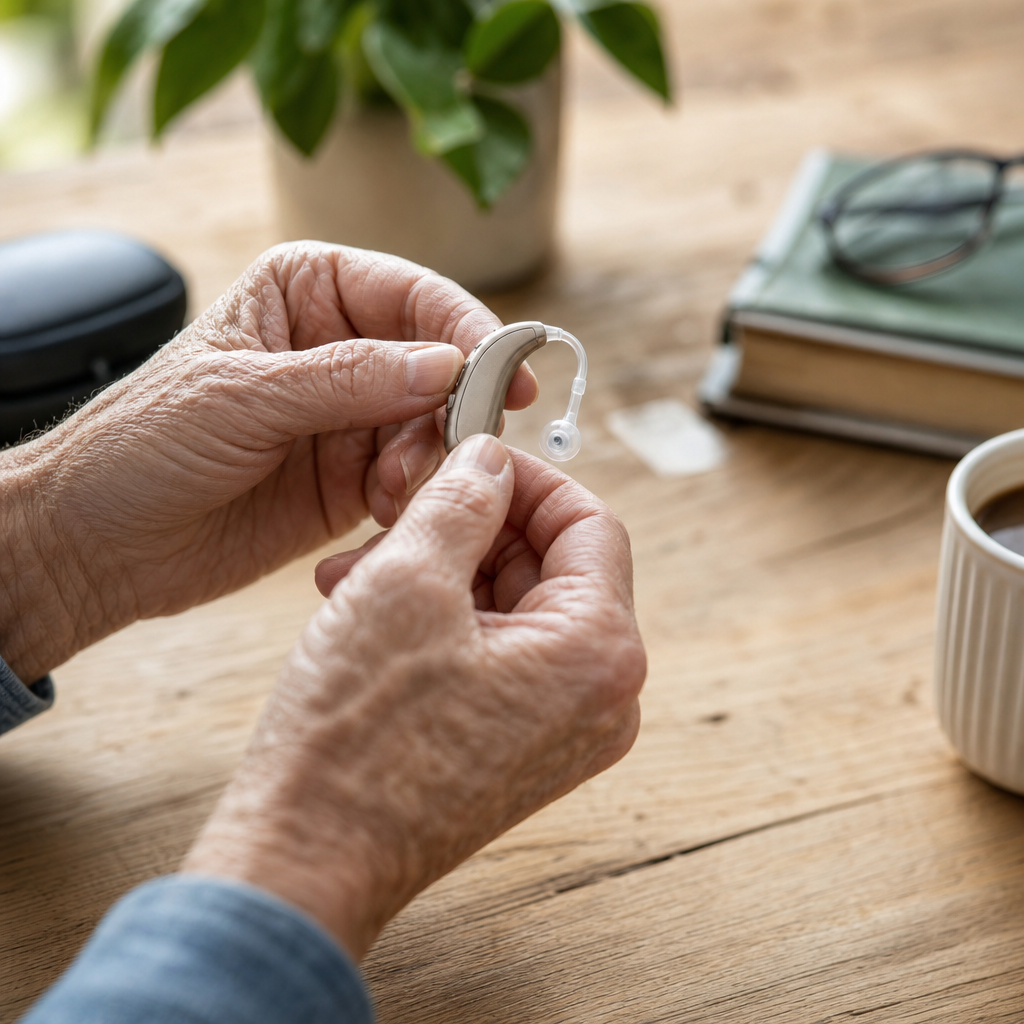
Hearing aids typically last three to seven years, but that range only makes sense when you understand what “last” actually means in daily use. In practice, a device can keep powering on for longer than seven years and still no longer serve a wearer well because the microphones have drifted, moisture has damaged contacts, batteries no longer hold charge, or the wearer’s hearing prescription has changed enough that the original fitting is outdated. When patients ask me how long hearing aids last, I explain that lifespan has three parts: physical durability, electronic reliability, and clinical usefulness. All three matter, because a hearing aid is not just a gadget. It is a medical device worn for long hours in heat, sweat, wax, humidity, and constant handling.
That is why this question matters so much for anyone researching hearing aids. Cost, maintenance, performance, warranty terms, and upgrade timing all depend on expected lifespan. A behind-the-ear model worn carefully by an adult in a mild climate may perform well for years, while a receiver-in-canal device exposed to daily sweat, frequent drops, and inconsistent cleaning may need repair much sooner. Rechargeable models introduce another variable: battery aging. Traditional disposable-battery models avoid charge-cycle wear, but they still face corrosion risks and door contact problems. The most useful answer, then, is not one number. It is an explanation of what determines longevity, how to recognize decline, and what users can do to extend value from day one.
Across the hearing aids category, “General” guidance should help readers make sense of the whole ownership cycle. That includes common styles such as behind-the-ear, receiver-in-canal, in-the-ear, in-the-canal, and completely-in-canal devices; major maintenance tasks; repair expectations; and replacement planning. It also means understanding the difference between a device that technically still works and one that still delivers clear speech understanding in real environments. Modern hearing aids are miniature digital signal processors with microphones, receivers, wireless radios, telecoils in some models, firmware, seals, and software settings tuned to an audiogram. Their lifespan depends on both engineering and care. If you want the short answer, most hearing aids are replaced around the five-year mark. If you want the right answer, the rest of this guide explains why.
What determines how long hearing aids last
The biggest factors are build quality, device style, environment, maintenance habits, and changes in hearing needs. Hearing aids live in one of the harshest consumer environments possible: the human ear. Cerumen blocks sound ports, skin oils coat surfaces, perspiration introduces salt and moisture, and temperature shifts create condensation. In my experience, people are often surprised that the smallest devices are not always the longest lasting. In-the-canal and completely-in-canal models are cosmetically appealing, but because they sit deeper in the ear canal, they are exposed to more wax and humidity than many behind-the-ear designs. Receiver-in-canal models often provide an excellent balance of comfort and sound quality, but the external receiver and wire can be failure points over time.
Manufacturing standards matter too. Reputable brands such as Phonak, Oticon, ReSound, Signia, Starkey, and Widex design hearing aids to survive normal wear, and many models include protective nano-coatings, IP-rated moisture resistance, and replaceable wax guards. Even so, no hearing aid is maintenance-free. Daily wiping, regular dehumidification, routine microphone cleaning, and scheduled professional service extend useful life in measurable ways. Clinical use patterns also matter. A device worn sixteen hours a day by an active user experiences more stress than one worn only for television or church. That is not a reason to wear them less; consistent use usually improves adaptation and communication. It simply means heavier use can bring forward maintenance and repair needs.
Another important factor is whether the hearing aid still matches the wearer’s current hearing loss and lifestyle. Hearing changes gradually for many adults, and the aid that worked well four years ago may now underperform in meetings, restaurants, or group conversations even if the electronics are intact. Software advances also affect practical lifespan. Newer devices may offer significantly better speech-in-noise processing, feedback management, Bluetooth LE Audio support, tinnitus features, directional microphone systems, and app controls. For some users, replacement happens because the old aids failed. For many others, replacement happens because the old aids no longer deliver enough benefit relative to current needs.
Average lifespan by style, battery type, and use pattern
Most hearing aids fall into a three-to-seven-year lifespan window, with five years being a realistic planning benchmark. Behind-the-ear models often last toward the longer end because the main housing sits behind the ear rather than deep in the canal. Receiver-in-canal devices are also common and can last well, but receiver replacements are routine in some cases. Custom in-the-ear styles may have good durability when cared for, yet canal placement increases exposure to wax and moisture. Rechargeable hearing aids add convenience and reduce battery handling, which many older adults appreciate, but lithium-ion cells gradually lose capacity. After several years, all-day runtime may shrink enough to affect practical use, even if the rest of the device still works.
| Factor | Typical impact on lifespan | Practical example |
|---|---|---|
| Behind-the-ear design | Often longer physical durability | Main electronics stay farther from wax and canal humidity |
| Receiver-in-canal design | Good average lifespan, but receiver may need replacement | Sound cuts out because the receiver wire or speaker degrades |
| Custom canal styles | More exposure to wax and moisture | Frequent wax guard changes and microphone cleaning are needed |
| Rechargeable battery | Convenient, but runtime declines with age | Four-year-old aids no longer last from breakfast to bedtime |
| Heavy sweat or humidity | Shortens component life without drying care | Golfers and exercisers see more corrosion-related repairs |
| Consistent maintenance | Extends reliable use | Daily wipe-downs and drying systems reduce moisture failures |
Use pattern is often more predictive than purchase price alone. I have seen premium devices fail early because they were stored in a bathroom, cleaned inconsistently, and worn during strenuous workouts without drying support. I have also seen mid-range aids remain dependable for years because the wearer used a dehumidifier every night, replaced domes and wax guards on schedule, and came in for preventive checks. Children’s hearing aids may need more frequent replacement for additional reasons, including growth, earmold changes, rougher handling, and educational listening demands. Adults with stable hearing and good routines generally get the longest useful life from their devices.
Warranty coverage usually reflects expected ownership realities. Many hearing aids include one to three years of manufacturer warranty, sometimes bundled with office service plans, loss-and-damage coverage, or repair allowances. The existence of a two- or three-year warranty does not mean the devices are expected to fail immediately after that period. It means repairs become more financially significant once coverage ends. If a four- or five-year-old aid needs a costly repair and no longer supports the wearer’s communication needs, replacement often makes more sense than repeated service.
Signs your hearing aids are wearing out or no longer enough
The clearest signs of age are inconsistent sound, reduced loudness, shorter battery life, charging problems, intermittent Bluetooth, cracked tubing or shells, persistent feedback, and increasing repair frequency. Some failures are obvious. A microphone can clog, a receiver can weaken, or a battery door can corrode. Other signs are subtle and easy to misread as “my hearing got worse.” If speech sounds muffled despite a clean wax guard and fresh programming, if one side sounds softer than the other, or if you keep turning volume up without getting clearer speech, the device may be declining. Professional verification with listening checks, real-ear measurement, and electroacoustic testing can separate hearing changes from hardware issues.
Clinical usefulness can fade before hardware failure. This is common when users move into more complex listening environments or when their hearing loss progresses. A five-year-old hearing aid might still amplify sound, but newer directional processing, noise reduction, and wind management can make a substantial difference in restaurants, cars, and social gatherings. Wireless performance is another clue. Older devices may connect unreliably to smartphones, lack direct streaming for certain platforms, or miss newer accessibility features. If daily friction keeps you from wearing the aids consistently, that is a quality-of-life problem, not just a technical detail.
Repairs also tell a story. One receiver replacement over several years is normal. Multiple repairs within a short period suggest the device is entering the expensive end of its service life. I usually tell patients to think in terms of total value: if the aids are out of warranty, need repeated service, and still leave them struggling in ordinary conversation, replacement deserves serious consideration. On the other hand, if the fit is good, the hearing is stable, and a single repair restores solid performance, keeping the current pair may be the smarter move.
How to make hearing aids last longer
The best way to extend hearing aid lifespan is boring but effective: clean them daily, dry them consistently, store them safely, and schedule preventive care before problems become failures. Wipe the exterior with a dry, soft cloth each night. Clear wax from domes, sound outlets, and vents using the tools recommended by your audiologist or hearing instrument specialist. Replace wax guards, filters, and domes on the schedule suggested for your model. If your devices use earmolds and tubing, inspect tubing for stiffness, yellowing, or cracks. Never use alcohol, hair spray, or household cleaners directly on the aids unless the manufacturer specifically approves it.
Moisture control is especially important. A hearing aid drying cup helps, but for users in humid climates, athletes, and anyone who sweats heavily, an electronic hearing aid dehumidifier is often worth the cost. Remove devices before showering, swimming, or using a sauna. Do not leave them on a windowsill, in a hot car, or on a bathroom counter where steam accumulates. For rechargeable aids, follow the manufacturer’s charging guidance rather than improvising with off-brand accessories. Keep charging contacts clean, and make sure the charger sits on a stable surface. Battery health improves when charging is routine and the device is not repeatedly allowed to die unexpectedly.
Professional maintenance matters just as much as home care. During follow-up visits, clinicians can vacuum microphone ports, replace worn receivers, update firmware, verify gain with real-ear measures, and spot shell or casing issues before they become complete failures. These visits are also the time to reassess hearing thresholds and communication goals. Good hearing aid care is not just about making hardware survive longer. It is about preserving speech understanding and comfort over the full life of the device.
When to repair, reprogram, or replace
Repair is usually the right choice when the device is relatively new, the problem is isolated, and the wearer is otherwise hearing well. Common repair-worthy issues include a damaged receiver, blocked microphone, broken battery door, charger fault, or shell crack. Reprogramming makes sense when hearing has changed but the device platform is still capable of meeting those needs. A new audiogram, fresh real-ear verification, and counseling on programs or accessories can restore benefit without replacing the aids. This is often the best path in the middle years of ownership, especially around years two to four.
Replacement becomes more compelling when three conditions overlap: the aids are older, support needs have increased, and repair costs are rising. For many users, year five is the evaluation point. Ask direct questions: Do these aids still let me follow speech in noise? Do they last a full day? Are repairs becoming routine? Do they connect well with my phone and television setup? Has my hearing changed enough that a stronger receiver, a different style, or updated processing would help? If the honest answer is no to several of those questions, newer hearing aids may deliver more than a repair ever could.
There is also a practical insurance and budgeting angle. Some health plans, third-party administrators, vocational programs, or veterans’ benefits have replacement cycles that align with common device lifespan. Even when insurance is limited, planning around a five-year horizon reduces surprises. The smartest approach is to treat hearing aids like long-use medical technology: protect them daily, service them regularly, and review performance before failure forces a rushed decision.
Hearing aids can last a long time, but their real value lies in how consistently they help you hear clearly and participate fully. For most adults, three to seven years is the realistic range, and about five years is the sensible benchmark for reassessment. Lifespan depends on design, moisture exposure, battery type, maintenance, repair history, and changes in hearing. Behind-the-ear models often endure better physically, canal styles face more wax and humidity, and rechargeable devices trade battery convenience for eventual runtime decline. None of those factors alone decides the outcome. Daily care and timely professional support have a major effect.
The most important takeaway is that “still turns on” is not the same as “still works well.” If speech is muffled, battery life is dropping, Bluetooth is unreliable, or repairs are stacking up, it is time for a hearing test and a device check. Sometimes a simple cleaning, receiver replacement, or reprogramming restores performance. Sometimes the better answer is replacement because your hearing, lifestyle, or technology needs have moved on. Making that distinction early saves frustration and often saves money.
If you are comparing hearing aids, maintaining a current pair, or wondering whether an older device is worth repairing, use this page as your starting point for the broader Hearing Aids topic. Review your warranty, schedule a professional hearing aid check, and ask for objective verification of performance. A well-fitted, well-maintained hearing aid should support conversation, confidence, and daily independence for years. The sooner you evaluate how your current devices are performing, the easier it is to protect both your hearing investment and your quality of life.
Frequently Asked Questions
How long do hearing aids usually last?
Most hearing aids last between three and seven years, but that range needs a little context. A hearing aid can technically still turn on after seven years and yet no longer be performing well enough to meet a person’s daily communication needs. In real life, “lasting” does not just mean the device has power. It means the microphones are still picking up sound accurately, the internal components have not been compromised by moisture or earwax, the battery system is still reliable, and the programming still matches the wearer’s current hearing levels.
That is why two people can own the same model for the same number of years and have very different experiences. Someone who wears their devices all day in a humid climate, exercises often, or has a physically demanding routine may put much more strain on them than someone who uses them in a more controlled environment. Changes in hearing can also shorten the practical lifespan. Even if the device still functions, it may not provide enough amplification or speech clarity if the original fitting is no longer appropriate. So while three to seven years is a good rule of thumb, the more accurate answer is that hearing aids last until performance, reliability, or fit with your prescription starts to fall behind your real-world needs.
What causes hearing aids to wear out over time?
Hearing aids are small, sophisticated electronic devices that live in one of the harshest environments possible: the human ear. They are exposed daily to moisture, body oils, earwax, temperature changes, dust, and repeated handling. Over time, that constant exposure can affect microphones, receivers, battery contacts, charging systems, switches, and internal circuitry. Even tiny amounts of corrosion or debris can reduce sound quality, create intermittent performance, or cause complete failure.
Normal use also creates simple wear and tear. Microphones can become less accurate, tubing or domes can harden or crack, rechargeable batteries can lose their ability to hold a full charge, and casing components can loosen with repeated insertion and removal. On top of that, technology itself changes. Older hearing aids may still work, but they may not process speech in noise as effectively as newer models, connect as smoothly to phones, or offer the same feedback control and customization options. In many cases, hearing aids do not fail all at once. They gradually become less dependable, less comfortable, or less effective, which is often why people start asking whether repair, reprogramming, or replacement makes the most sense.
How can I tell if my hearing aids need to be replaced instead of repaired?
A repair is often worthwhile when the issue is isolated and the hearing aids are otherwise serving you well. For example, a blocked receiver, damaged wire, weak battery door, or worn earmold can often be fixed without replacing the entire device. But replacement becomes the smarter option when problems are recurring, repair costs are starting to add up, or the hearing aids are no longer meeting your hearing needs even after professional cleaning and reprogramming.
Common signs it may be time to replace hearing aids include frequent breakdowns, reduced sound clarity, weak or distorted amplification, shorter battery life, unreliable charging, persistent feedback, and difficulty hearing in places where you used to do reasonably well. Another major reason for replacement is a change in your hearing prescription. If your hearing has shifted enough that your current devices can no longer be adjusted appropriately, an older set may simply not have the power, flexibility, or processing capacity to keep up. Age of the device matters too. Once hearing aids are several years old, manufacturer support, parts availability, and repair options may become limited. In those cases, replacing them is often more cost-effective and gives you better long-term performance.
Can hearing aids last longer with proper care?
Yes, good daily care can absolutely help hearing aids last longer and perform better throughout their usable life. The most important habits are keeping them clean, dry, and professionally maintained. Wiping them down each day, removing visible earwax, storing them in a safe dry place, and using a drying kit or dehumidifier when recommended can all help reduce moisture-related damage. If you use rechargeable hearing aids, following proper charging habits and keeping charging contacts clean can also protect battery performance over time.
Regular follow-up care matters just as much as home care. Routine appointments allow a hearing professional to clean components more thoroughly, check microphone and receiver performance, replace small worn parts, and make programming adjustments as your hearing changes. That kind of maintenance can prevent small issues from turning into major failures. Still, care has limits. Even with excellent habits, hearing aids are not designed to last forever. The goal of good care is not to make them permanent; it is to help you get the best possible function, comfort, and reliability for as many years as practical before replacement becomes the better option.
Do hearing aids become outdated even if they still work?
Yes, and this is one of the most overlooked parts of the question. A hearing aid can still be operational and yet be outdated in ways that affect everyday hearing success. If the microphones have drifted, if internal wear has reduced sound accuracy, or if the programming no longer reflects your current hearing loss, the device may technically function without truly helping you hear as well as you should. For many wearers, this difference shows up first in challenging situations such as restaurants, group conversations, meetings, and phone calls.
Outdated hearing aids may also lack features that have become genuinely useful rather than just optional. Newer devices often provide better speech understanding in background noise, more natural sound processing, improved feedback control, stronger Bluetooth connectivity, smarter automatic adjustments, and more convenient rechargeability. If your current hearing aids are several years old, comparing them with newer technology can be surprisingly revealing. The key question is not simply, “Do they still turn on?” It is, “Are they still helping me hear comfortably, clearly, and consistently in the situations that matter most?” If the answer is no, then outdated performance may be a stronger reason to upgrade than outright device failure.