
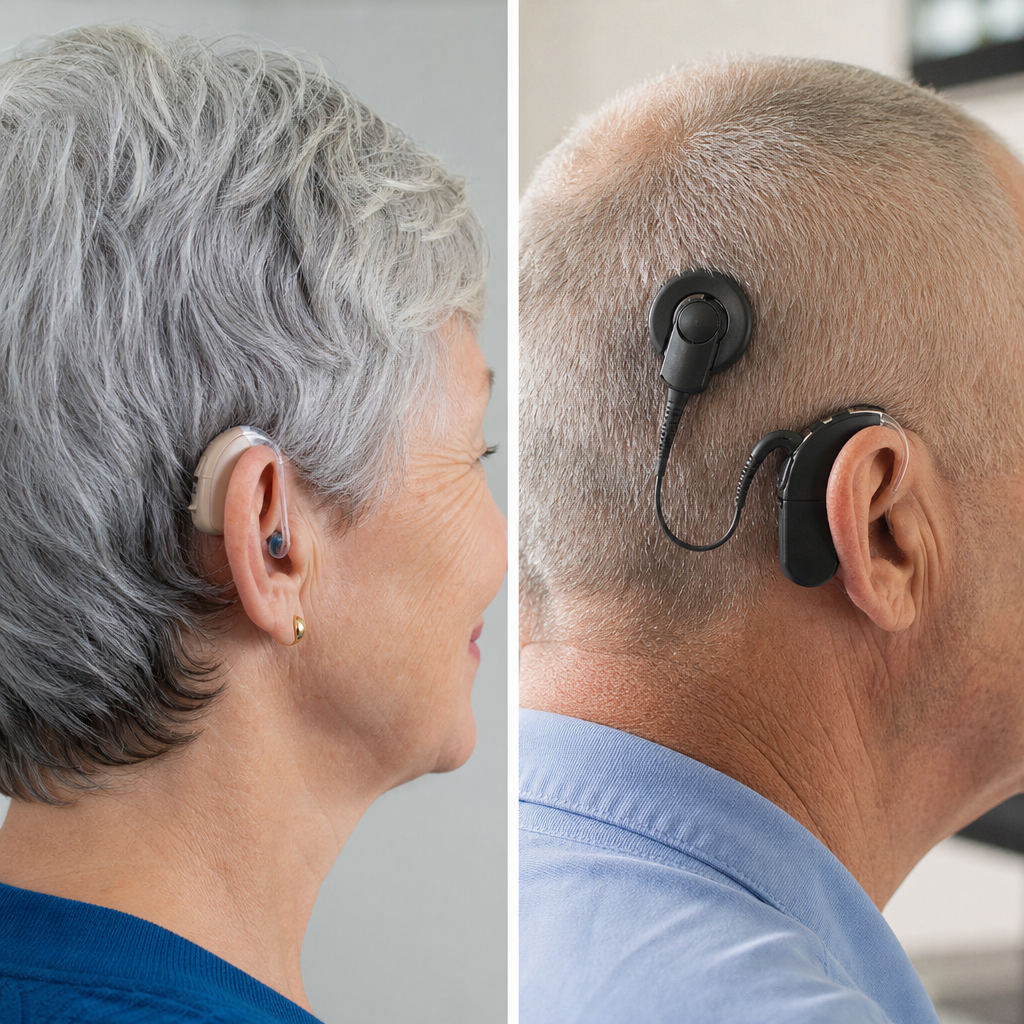
Choosing between hearing aids and cochlear implants depends on the type of hearing loss, the amount of residual hearing, speech understanding, anatomy, lifestyle, and medical goals. Both technologies improve access to sound, but they work in fundamentally different ways. Hearing aids amplify acoustic sound that the ear can still process. Cochlear implants bypass damaged inner-ear structures and send electrical signals directly to the auditory nerve. For adults, parents, and caregivers trying to decide which is better, the most accurate answer is not “one is superior,” but “the right device matches the hearing profile.”
I have worked with patients comparing these options after years of struggling in restaurants, missing phone calls, and turning television captions on full-time. The pattern is consistent: people often wait too long because they assume all hearing devices are interchangeable. They are not. A person with mild to moderate sensorineural hearing loss may do very well with modern hearing aids. A person with severe to profound hearing loss and poor word recognition may continue to struggle even with premium amplification and become a stronger cochlear implant candidate. Understanding that difference matters because untreated hearing loss is associated with social isolation, greater listening fatigue, depression, falls, and faster cognitive decline in older adults.
Key terms are worth defining clearly. Sensorineural hearing loss usually involves damage to the cochlea’s hair cells. Conductive hearing loss involves blockage or mechanical problems in the outer or middle ear. Mixed hearing loss combines both. Audiologists measure hearing thresholds in decibels hearing level across frequencies and evaluate speech recognition with word tests in quiet and noise. Those results, along with ear anatomy and health history, shape treatment decisions. This hub article explains how hearing aids and cochlear implants work, who typically benefits from each, what outcomes to expect, what surgery and rehabilitation involve, and how cost, maintenance, and everyday use compare in practical terms.
How hearing aids and cochlear implants work
Hearing aids are external devices worn behind the ear, in the ear, or in the canal. Their core job is to make incoming sound audible and more usable. A microphone captures sound, a digital processor applies gain and compression by frequency, and a receiver delivers the amplified sound into the ear canal. Today’s devices also use directional microphones, feedback suppression, telecoils, Bluetooth streaming, wind management, and noise reduction algorithms. Proper fitting follows evidence-based verification, ideally with real-ear measurement, which confirms that amplified speech reaches target levels in the ear rather than relying on guesswork.
Cochlear implants have both external and internal components. Externally, the user wears a sound processor with microphones and a transmitting coil. Internally, a surgeon places a receiver under the skin and threads an electrode array into the cochlea. Instead of making sound louder for damaged hair cells, the processor converts sound into coded electrical information that stimulates the auditory nerve directly. This is why cochlear implants are not “stronger hearing aids.” They are a different sensory interface. The brain must learn to interpret the new signal, which is why outcomes improve over months with programming and auditory rehabilitation.
The practical distinction is simple. Hearing aids help when the ear still has enough usable function to benefit from amplified sound. Cochlear implants help when amplification no longer provides enough clarity, especially for speech. Someone may hear that a speaker is talking with hearing aids yet still not understand the words. That gap between audibility and clarity is often the turning point in implant evaluation.
Who is a good candidate for each option
Hearing aids are usually the first-line treatment for mild, moderate, and many moderately severe losses, including age-related hearing loss. They are also used for some conductive and mixed losses, depending on medical management. Good candidates generally have measurable residual hearing and enough speech discrimination that amplification improves communication. In my experience, patients do best when expectations are realistic: hearing aids reduce communication barriers, but they do not restore normal hearing, and difficult listening environments still require strategy.
Cochlear implant candidacy is based on more than the audiogram. Modern criteria typically consider severe to profound sensorineural hearing loss, limited benefit from appropriately fitted hearing aids, and poor aided sentence or word recognition. The exact thresholds and test materials vary by country, clinic, and manufacturer, and candidacy has expanded over time. Many adults who assume they are “not deaf enough” actually qualify because their speech understanding remains poor despite strong hearing aid fittings. Pediatric candidacy also depends on developmental timing because earlier auditory access supports language acquisition during critical learning periods.
Medical suitability matters. Implant candidates need imaging to evaluate cochlear anatomy and the auditory nerve. Active middle ear disease, surgical risks, and general health must be considered. There are also cases where one ear receives a cochlear implant while the other continues with a hearing aid, called bimodal hearing. That combination can improve sound quality, speech in noise, and music appreciation because acoustic low-frequency cues from the hearing aid complement electrical stimulation from the implant.
| Factor | Hearing Aids | Cochlear Implants |
|---|---|---|
| Best suited for | Mild to severe losses with usable speech benefit | Severe to profound sensorineural loss with limited hearing aid benefit |
| How it works | Amplifies sound acoustically | Stimulates auditory nerve electrically |
| Procedure | Non-surgical fitting | Surgical implantation plus activation |
| Time to adaptation | Days to weeks for most users | Months of mapping and listening practice |
| Residual hearing required | Usually yes | Not necessarily, though preserved hearing can help |
| Maintenance | Batteries or charging, cleaning, domes or molds | Processor care, charging, mapping appointments, external parts |
Sound quality, speech understanding, and daily performance
When people ask which is better, they usually mean which option helps them understand speech more reliably in real life. For many hearing aid users, benefit is excellent in one-to-one conversation and acceptable in small groups, especially when devices are fitted well and paired with accessories such as remote microphones. The challenge grows in noise because hearing aids amplify both speech and competing sounds, even with advanced directional processing. Premium technology can improve comfort and signal management, but no hearing aid fully solves the cocktail party problem.
Cochlear implants often provide better speech understanding than hearing aids for people whose cochleas no longer transmit enough detail. Adults with very poor aided scores can make substantial gains after implantation, particularly for face-to-face speech and telephone use. However, the listening experience is different from acoustic hearing. Early after activation, speech may sound mechanical, thin, or unfamiliar. With repeated mapping and daily exposure, the brain adapts. Outcomes vary by duration of deafness, age at implantation, nerve health, cognitive load, consistency of device use, and whether hearing loss occurred before or after language development.
Music is a nuanced area. Hearing aids often preserve music more naturally when residual hearing is usable, though fitting still needs care to avoid distortion. Cochlear implants can support rhythm and melody recognition, but pitch and timbre may be less precise because of the limited number of effective spectral channels compared with the normal cochlea. This tradeoff matters for musicians and avid listeners. It does not cancel implant benefit for speech, but it should be discussed honestly during counseling.
Evaluation, surgery, fitting, and rehabilitation
The hearing aid pathway is straightforward but should not be casual. A full audiologic evaluation identifies the hearing loss type and degree, and medical referral is appropriate when asymmetry, sudden loss, ear pain, drainage, or unilateral tinnitus appears. The fitting process should include device selection, earmold or dome choice, real-ear verification, comfort fine-tuning, and counseling on communication strategy. Follow-up matters because gain, compression, and noise settings often need adjustment after real-world use. People who give up on hearing aids after an underspecified first fit often were poorly fitted, not poor candidates.
The cochlear implant pathway is more involved. It includes aided audiologic testing, hearing aid optimization, speech recognition measures, imaging such as CT or MRI, otologic consultation, vaccination guidance because of meningitis risk considerations, and insurance authorization. Surgery is typically outpatient or involves a short hospital stay. Most adults recover within days to weeks, but activation occurs after healing, not on the day of surgery. Then comes mapping, where the audiologist programs electrical stimulation levels across the electrode array. Several appointments are usually needed in the first months, followed by structured listening practice.
Rehabilitation is one of the biggest differences between the two options. Hearing aids require adaptation, but cochlear implants require training at a deeper level because the auditory signal itself is different. Adults benefit from deliberate exercises using audiobooks, streamed speech, telephone practice, and auditory training apps. Children need coordinated speech-language and educational support. The people who do best usually wear the device consistently and practice in a graded way rather than waiting for effortless listening to happen automatically.
Costs, risks, maintenance, and long-term value
Cost is a decisive issue for many families. Hearing aids usually involve out-of-pocket spending, though coverage varies by private insurance, veterans’ programs, state mandates, or national health systems. Prices differ by technology tier, bundled service model, and warranty. Ongoing costs include batteries or chargers, wax guards, domes, earmolds, and eventual replacement. Over-the-counter hearing aids have expanded access for adults with perceived mild to moderate loss, but they are not appropriate for everyone, and they do not replace a diagnostic evaluation when symptoms suggest medical disease.
Cochlear implants are expensive devices, but they are frequently covered when candidacy criteria are met because they are classified as medically necessary treatment. Costs include surgery, hospital fees, the implant system, processor upgrades over time, and rehabilitation. Risks include anesthesia concerns, infection, dizziness, taste disturbance, facial nerve injury, device failure, and the possibility of losing residual hearing in the implanted ear. Those risks are real, but in experienced surgical centers serious complications are uncommon, and satisfaction rates are generally high among properly selected recipients.
Long-term value depends on outcomes, not sticker price alone. If hearing aids provide strong speech understanding, they remain the less invasive and more natural first choice. If a person spends years buying stronger hearing aids while speech clarity remains poor, that delay can reduce quality of life and, in some cases, make auditory deprivation harder to reverse. The best financial and clinical decision is usually the one based on objective aided testing rather than brand marketing or assumptions about age.
Which is better for adults, children, and older listeners
For adults with mild to moderate hearing loss, hearing aids are usually better because they preserve natural acoustic hearing, avoid surgery, and can deliver excellent communication when fitted correctly. For adults with severe to profound loss and poor aided speech understanding, cochlear implants are often better because they address clarity rather than simply loudness. For children born with profound hearing loss, early cochlear implantation can be life changing when families want access to spoken-language development, though communication goals, Deaf culture, and educational setting all deserve respectful discussion.
Older age alone should not block implantation. I have seen adults in their seventies and eighties regain conversation access, return to group activities, and reduce the exhaustion that comes from constant guessing. What matters more than chronological age is overall health, motivation, cognitive status, support, and realistic expectations. Likewise, hearing aids remain valuable for older listeners when residual hearing supports good benefit. The correct question is not which technology sounds more impressive. It is which one gives the individual the best speech access, safety, and daily participation with the least avoidable burden.
Hearing aids and cochlear implants solve different hearing problems, and the better choice is the one that matches the ear’s remaining ability to process sound. Hearing aids are best when amplification can still deliver useful clarity. Cochlear implants are best when hearing aids no longer provide enough speech understanding, even if sounds are loud enough. The decision should be guided by a comprehensive hearing evaluation, aided speech testing, medical review, and an honest conversation about work demands, family communication, music, phone use, and long-term goals.
For most people, the path starts with a diagnostic hearing exam and professionally fitted hearing aids if they are appropriate. If performance remains poor, especially in speech recognition, a cochlear implant evaluation is the next logical step, not a last resort to fear. Earlier action usually leads to better adaptation and less frustration. Use this hub as your foundation, then compare device styles, learn how hearing tests are interpreted, and review candidacy details with an audiologist and ear surgeon. The most important step is simple: get tested and base the choice on measured benefit, not guesswork.
Frequently Asked Questions
Are hearing aids or cochlear implants better?
Neither option is universally “better” for everyone. The right choice depends on how severe the hearing loss is, how well a person understands speech even with amplification, the health of the inner ear and hearing nerve, and overall communication goals. Hearing aids are typically the first-line option for people who still have enough usable hearing that louder, clearer sound can help the brain make sense of speech. They work by amplifying acoustic sound, which means they rely on the ear’s remaining natural hearing ability.
Cochlear implants are designed for people who receive limited benefit from hearing aids, often because the sensory cells in the inner ear are too damaged to process sound clearly, even when that sound is made louder. Instead of simply amplifying sound, a cochlear implant converts sound into electrical signals and stimulates the auditory nerve directly. In many cases, this can provide far better speech access than hearing aids alone for someone with severe to profound sensorineural hearing loss. So the question is less about which is better in general and more about which is better for a specific hearing profile, anatomy, and daily listening needs.
How do hearing aids and cochlear implants work differently?
Hearing aids and cochlear implants both aim to improve access to sound, but they do so in fundamentally different ways. A hearing aid picks up sound through microphones, processes it, and makes it louder and clearer before delivering that amplified sound through the ear canal. If the inner ear can still convert that louder sound into signals the brain can understand, hearing aids can be very effective. Modern hearing aids also include features such as directional microphones, noise reduction, feedback management, and wireless connectivity, which can help users hear better in real-world environments.
A cochlear implant works more like a neural prosthetic than a traditional amplification device. It has an external sound processor and an internal implanted component. The processor captures sound and turns it into coded electrical information, which is sent to the internal implant. Electrodes inside the cochlea then stimulate the auditory nerve directly, bypassing the damaged hair cells that would normally perform this job. Because of this, cochlear implants are often recommended when amplification alone no longer provides enough speech understanding. The listening experience is different from natural hearing and usually requires a period of adjustment, mapping, and auditory rehabilitation, but for the right candidate it can significantly improve communication.
Who is a good candidate for a cochlear implant instead of hearing aids?
A person may be a strong cochlear implant candidate if they have moderate-to-profound or severe-to-profound sensorineural hearing loss and receive limited benefit from well-fitted hearing aids. One of the biggest factors is speech understanding. Some people can hear that sound is present with hearing aids but still cannot clearly understand words or conversation, especially in noise. When speech remains unclear despite appropriate hearing aid use, that is often a key sign that amplification may no longer be enough.
Candidacy is determined through a full medical and audiologic evaluation, not by hearing thresholds alone. Specialists look at hearing test results, aided speech recognition scores, the duration and cause of hearing loss, imaging of the inner ear, the condition of the auditory nerve, and the person’s communication needs. For children, the evaluation also considers speech and language development. For adults, work demands, safety needs, social engagement, and quality of life all matter. A cochlear implant team may include an audiologist, ENT physician, surgeon, and speech-language or auditory rehabilitation professionals. The goal is to determine whether the person is likely to hear and understand better with electrical stimulation than with stronger amplification.
Can someone use hearing aids first and then get a cochlear implant later?
Yes, and that is very common. In fact, most people who receive cochlear implants have used hearing aids first. Hearing aids are usually the appropriate starting point because they are non-surgical and can provide excellent benefit when there is enough residual hearing to work with. If hearing aids no longer provide meaningful improvement in speech understanding, the next step may be a cochlear implant evaluation. This progression is especially common when hearing loss worsens over time or when a person realizes they can hear sounds but still miss too much spoken language to communicate comfortably.
That said, waiting too long is not always ideal. If someone meets cochlear implant criteria and continues struggling for years with inadequate hearing aid benefit, delayed treatment can affect communication, listening effort, social participation, and in some cases auditory performance after implantation. Earlier intervention may support better outcomes because the auditory system and brain may adapt more readily when sound access is restored sooner. In some situations, a person may continue using a hearing aid in one ear and a cochlear implant in the other, depending on the amount of usable hearing in each ear. This is why regular follow-up with an audiologist is so important: the best treatment plan can change over time.
What should adults, parents, and caregivers consider when choosing between hearing aids and cochlear implants?
The decision should go beyond the device itself and focus on real-life hearing function. Important considerations include the type and degree of hearing loss, how much residual hearing remains, whether speech is understandable with hearing aids, the results of formal speech testing, and any medical or anatomical factors that may affect implantation. Lifestyle also matters. Someone who needs to follow conversation at work, hear in noisy family settings, communicate by phone, or stay aware of environmental sounds may have very different priorities than someone with fewer daily listening demands.
It is also important to think about the commitment involved. Hearing aids require fitting, adjustment, and consistent use, but cochlear implants involve surgery, device activation, multiple programming visits, and a rehabilitation period as the brain learns to interpret the new signal. For children, parents and caregivers should also consider developmental timelines, access to spoken language, school support, and the family’s ability to participate in follow-up care. For adults, expectations are essential: both technologies can improve access to sound, but neither restores normal hearing in a perfect way. The most informed decision usually comes from a team-based evaluation and a candid discussion about what the person can hear now, what they hope to hear better, and which technology is most likely to help them meet those goals safely and effectively.