
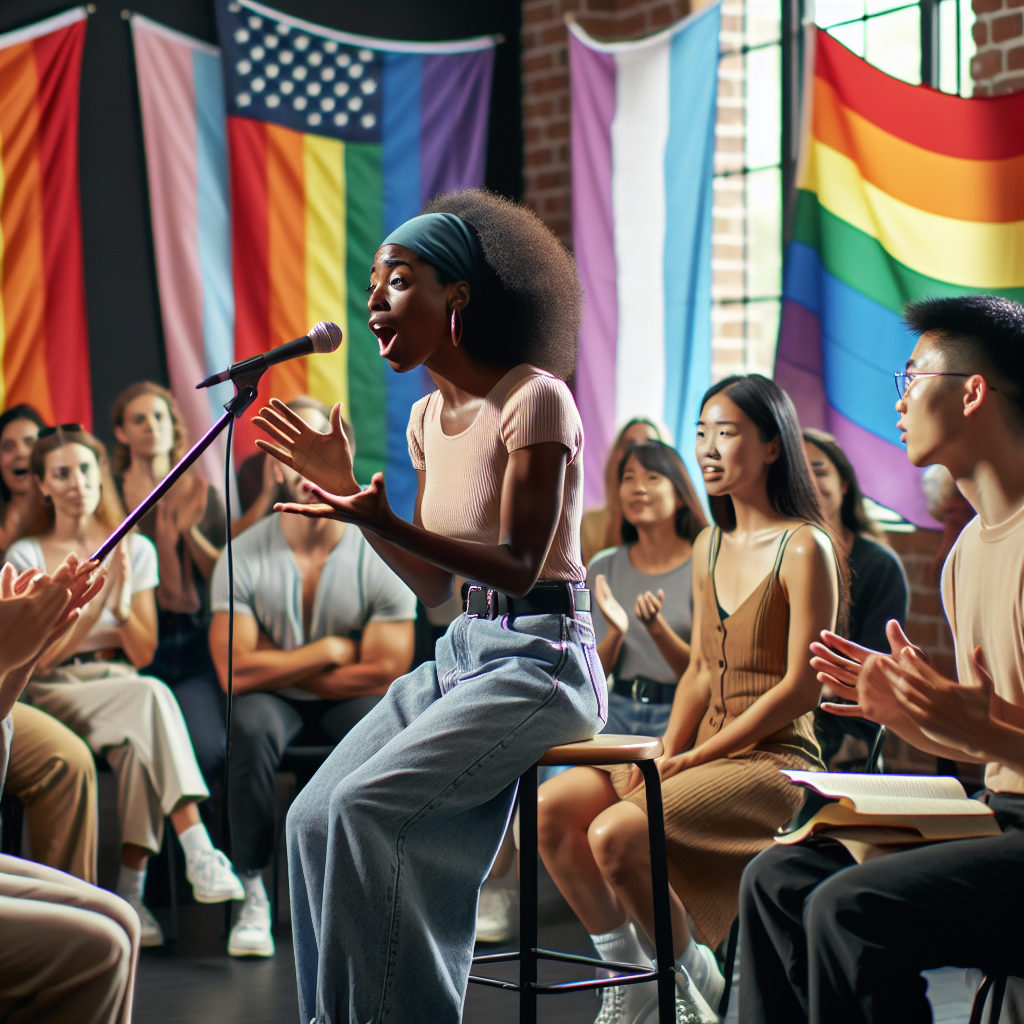
There’s a resurgence of interest in sign language across the globe, spurred on not just by its utility for the Deaf community but also as a vibrant medium of creative expression. American Sign Language (ASL) poetry, in particular, has emerged as a unique art form, captivating diverse audiences. But the ASL poetry scene isn’t just about aesthetics and communication; it’s also a powerful vessel for sharing intimate stories and experiences. One notable iteration of this phenomenon is the ASL Poetry Slam, which has grown to be a significant platform for the LGBTQ+ community.
At first glance, the Deaf community might appear to be an unlikely focal point for an art form like poetry, so often anchored in the spoken word. But sign language offers a visual beauty and expressiveness that spoken languages can’t emulate. For LGBTQ+ individuals within the Deaf community, ASL poetry offers an unprecedented avenue for expressing pride, communicating struggles, and sharing personal experiences in a way that aligns with their lived reality.
The fusion of ASL and LGBTQ+ themes within the format of a poetry slam creates an empowering environment where experiences that often remain marginalized can be brought to light. This article delves into the essence of the ASL Poetry Slam, highlighting both its role in raising Deaf education and awareness and its significance in the lives of LGBTQ+ participants.
The Evolution of ASL Poetry
ASL poetry has its roots in the storytelling traditions of the Deaf community. Unlike traditional poetry, which relies on phonetic components such as rhyme and meter, ASL poetry emphasizes the visual and spatial elements inherent to sign language. Handshapes, movements, facial expressions, and use of space all contribute to the rhythmic and emotive resonance of the performance.
The transition from storytelling to formalized ASL poetry was gradual but transformative. It became a means of artistic expression, breaking beyond the bounds of mere communication. For many in the Deaf community, it is a form of art that validates their experiences and identity in a hearing-centric world.
Over the years, with increased visibility and platforms such as YouTube and social media, ASL poetry has gained a broader audience. Performance pieces have covered a wide array of themes, from personal struggles and triumphs to social justice and advocacy work. The emergence of ASL Poetry Slams provides a structured yet creative platform where these narratives can be chronicled and celebrated collectively.
The Intersection of Deaf and LGBTQ+ Identities
Navigating dual identities can be challenging, and this is particularly true for individuals who are both Deaf and LGBTQ+. Both communities have struggled with societal exclusion and marginalization, and coming out within the Deaf community presents its own set of unique challenges.
ASL poetry slams serve as a crucial platform where these dual identities can intersect, offering a space for individuals to share personal stories and experiences that reflect both their Deafness and their sexual or gender identity. This platform fosters a sense of community and offers mutual support, validating the lived experiences of those in attendance or watching from afar.
By integrating aspects of Deaf culture and LGBTQ+ themes, these events serve to build bridges between communities, fostering greater understanding and solidarity. This confluence also plays a critical role in raising awareness and educating those outside these communities about their unique challenges and contributions.
Creative Expression Through ASL Poetry
ASL is far more than a mere communication tool; it is a rich, expressive medium that infuses poetry with a unique vibrancy. From the precision of hand movements to the emotive power of facial expressions, ASL poetry’s strength lies in its ability to convey complex emotions and narratives without uttering a single sound.
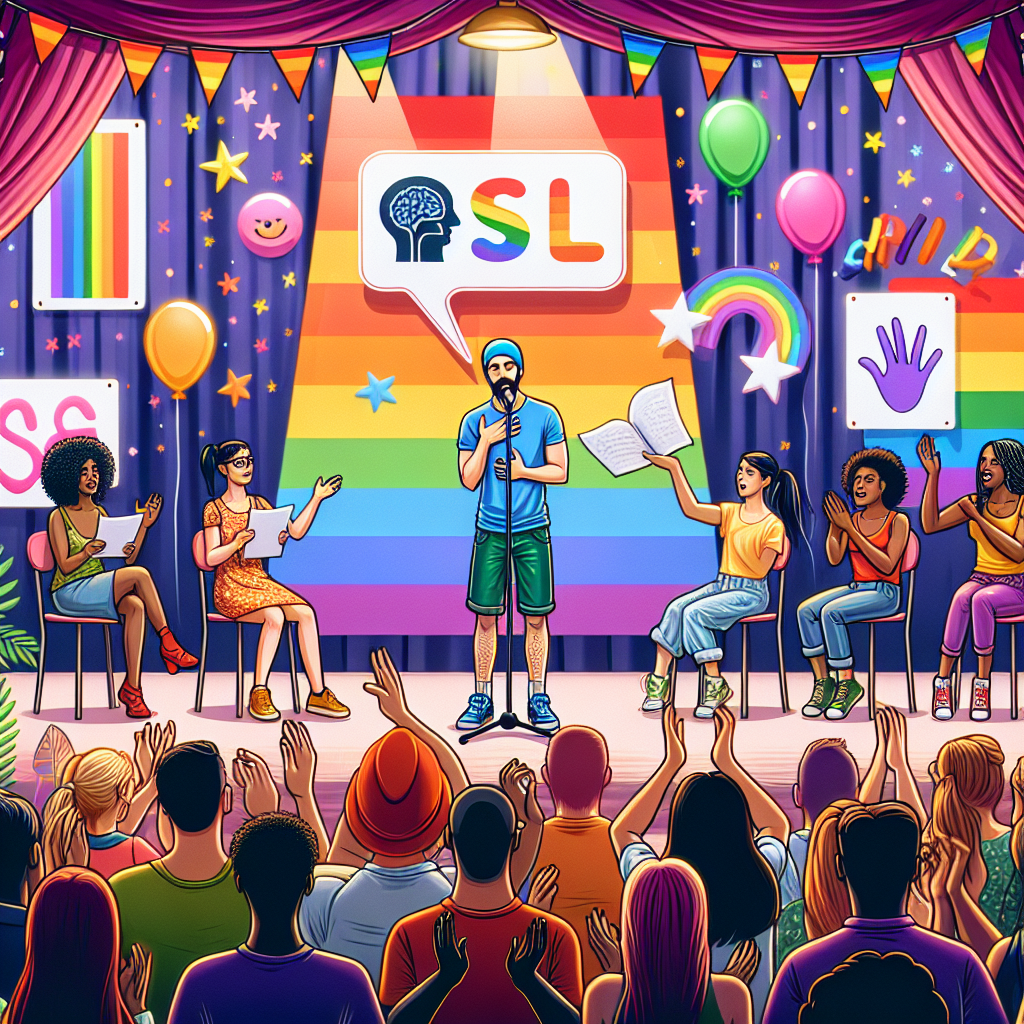
In an ASL poetry slam, these elements are amplified by the performative aspects of slam poetry. Authority and autonomy reside with the signer, who crafts their narrative using the extensive expressive potential of ASL. The impact of these performances often transcends language barriers, as the visual and emotive power of sign language resonates on a fundamental human level.
Furthermore, the incorporation of LGBTQ+ themes enriches the cultural and emotional fabric of these performances, offering insights into the nuanced realities of these dual-identity individuals. The power of creative expression becomes a tool for education, advocacy, and personal catharsis.
Events and Communities Supporting ASL Poetry Slams
Across the United States and beyond, various organizations and communities have championed ASL poetry slams, creating spaces where Deaf and LGBTQ+ individuals can showcase their talents and stories. These events, organized usually by both Deaf and LGBTQ+ advocacy groups, provide much-needed platforms for marginalized voices.
Notable events include regional and national ASL poetry slams, inclusive community meet-ups, and specialized workshops focused on both sign language and slam poetry. These events often embrace a collaborative ethos, drawing in participants from diverse backgrounds to create an inclusive and supportive environment.
Additionally, online platforms have facilitated broader participation. Virtual events and social media channels dedicated to ASL poetry offer accessible spaces for performance and interaction, transcending geographical barriers and fostering a global sense of community. The rising visibility of these events continues to inspire and engage new audiences, expanding the reach and impact of ASL poetry slams.
Future Prospects and Transformation
The future of ASL poetry slams suggests a promising trajectory for both Deaf education and LGBTQ+ awareness. As the movement continues to grow, the potential for these slams to serve as instruments of change becomes increasingly apparent. They not only offer a stage for individual empowerment but also play a crucial role in advocacy and social justice.
Educational institutions are beginning to recognize the value of incorporating ASL poetry and poetry slams into their curriculum. This inclusion supports the development of creative skills while fostering greater empathy and understanding among students of different backgrounds. Moreover, partnerships with organizations dedicated to LGBTQ+ and Deaf advocacy ensure that these efforts are both comprehensive and impactful.
As technology advances, the potential for ASL poetry slams to reach wider audiences and inspire broader societal change will only increase. From virtual reality experiences of ASL performances to AI-driven language translation tools, the future holds exciting possibilities for the continued evolution and impact of this compelling art form.
Conclusion
The ASL Poetry Slam for Pride represents a unique confluence of creative expression, cultural celebration, and social advocacy. By providing a platform where Deaf and LGBTQ+ individuals can share their stories, these slams empower participants while fostering greater awareness and understanding in the wider community.
Through the compelling medium of ASL poetry, narratives that might otherwise remain unheard find an audience, resonating on both emotional and intellectual levels. The intersectionality of Deaf and LGBTQ+ identities enriches these performances, offering a multi-layered exploration of personal and collective experiences.
The continued growth and evolution of ASL poetry slams promise not only to sustain but to expand their transformative impact. As more people engage with and appreciate this unique art form, the potential for broader societal change becomes ever more tangible. The mutual support and understanding that these events nurture hold the power to build stronger, more inclusive communities, fostering a world where every voice can be heard and celebrated.
In this vibrant arena of expression, the ASL Poetry Slam for Pride stands as a beacon of creativity, resilience, and inclusion – a testament to the power of art to change lives and expand horizons.