

Water safety is an essential aspect of both child care and education, ensuring that young ones are equipped with the knowledge and skills to navigate water environments safely. However, teaching water safety to deaf children can present unique challenges that need specialized approaches. Educators, caregivers, and parents must understand and address these challenges to provide comprehensive water safety education that caters to the needs of deaf children. This article explores effective methods for teaching water safety to deaf children, encompasses vital skills for safe water interaction, and emphasizes the importance of such teachings for preventing water-related accidents.
Deaf children, like all others, are naturally curious about water and are often drawn to its allure. Be it swimming pools, lakes, or seaside areas, water can be both a source of great joy and a significant hazard without proper education. Water safety education involves more than just teaching children how to swim; it includes helping them recognize dangerous scenarios, understand the importance of supervision, and fostering respectful water interaction behaviors. Unfortunately, standard water safety programs often do not adequately account for the communication barriers faced by deaf children.
It’s crucial to tailor water safety education to suit the specific learning needs of deaf children, employing visual aids, sign language, and other adaptive methods. Additionally, the approach must be holistic, involving parents, educators, and the wider community, to create a support system that reinforces these essential safety lessons and ensures they are consistently applied in various water-related contexts.
Challenges in Water Safety Education for Deaf Children
One of the primary challenges in teaching water safety to deaf children lies in communication. Traditional verbal instructions and cues used in swimming lessons and safety talks don’t effectively reach deaf children, necessitating the use of sign language and visual tools. Sign language can convey critical safety messages, but it requires instructors who are either fluent or proficient in its use.
Furthermore, deaf children may have difficulty hearing alarms, whistles, or verbal warnings, which are often used to signal danger or to get attention during emergencies. This makes it crucial for deaf children to receive training that not only improves their swimming skills but also teaches them to be highly observant and aware of visual cues and signals. For example, they can be trained to recognize the sight of a lifeguard’s signaling or specific light cues designed to indicate danger.
Another key issue is that many swimming facilities and water safety programs may not have the necessary aids or resources to provide adequate education for deaf children. This includes a lack of visual instruction materials, insufficiently trained staff, and environments that are not optimized for accommodating children with hearing impairments. These limitations can hinder the learning process and pose additional risks.
Despite these challenges, it is possible to adapt existing programs and develop new strategies tailored specifically for deaf children. By integrating technology, enhancing instructor training, and fostering an inclusive learning environment, the barriers to effective water safety education can be significantly reduced.
Effective Teaching Methods and Strategies
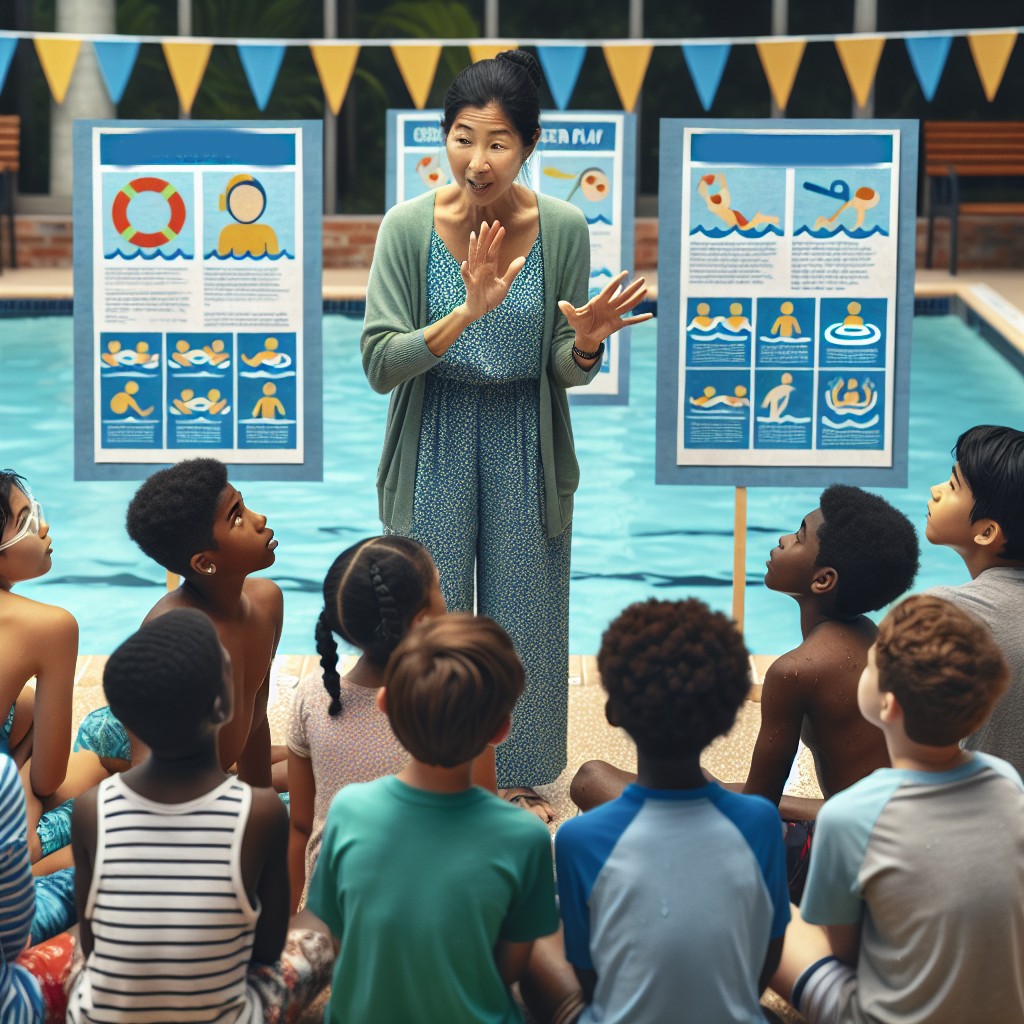
To effectively teach water safety to deaf children, it’s essential to modify traditional methods and incorporate visual and kinesthetic learning strategies. Utilizing visual aids such as diagrams, videos, and demonstration sessions can be incredibly beneficial. Sign language should be the primary mode of communication, and using clear and consistent signals can create a more accessible and understandable learning experience.
One effective strategy is to use multi-sensory learning approaches. For instance, tactile learning methods, such as using objects and hands-on activities, can help reinforce safety concepts. Additionally, incorporating technology, such as waterproof tablets with instructional videos, can provide visual learners with clearer instructions and demonstrations.
Instructors should undergo specialized training to become proficient in sign language and learn about the specific needs and abilities of deaf children in aquatic environments. By understanding these nuances, instructors can communicate more effectively and create an inclusive and supportive learning atmosphere.
Moreover, creating a buddy system where deaf children are paired with hearing peers can be beneficial. This approach not only offers safety through mutual assistance but also promotes social integration and fosters an environment where children can learn from each other.
Key Water Safety Skills for Deaf Children
Just like any other child, deaf children need to acquire a set of fundamental skills to ensure their safety around water. These skills include basic swimming proficiency, understanding and identifying potential water hazards, and knowing emergency response techniques.
Firstly, swimming lessons should be adapted to accommodate communication barriers. Using visual demonstration and physical guidance can help deaf children grasp swimming strokes and buoyancy techniques effectively. Ensuring that these lessons are consistent and repetitive will reinforce the learning experience and build confidence in water.
Secondly, understanding water hazards is crucial. Deaf children should be taught to recognize the dangers of deep water, strong currents, and sudden water temperature changes. Visual warning signs and color-coded signals can help in distinguishing safe areas from dangerous ones. Familiarizing children with these visual cues can prepare them to stay alert and make safer decisions.
Finally, teaching emergency response skills is essential. Deaf children should know how to signal for help using visual distress signals and basic sign language that others around them can understand. They should also practice self-rescue techniques, such as floating and treading water, to remain safe until help arrives.
Collaborative Role of Families, Schools, and Communities
The responsibility of teaching water safety to deaf children doesn’t rest solely on the instructors; it requires a collaborative effort involving families, schools, and communities. Parents and caregivers play a crucial role in reinforcing the safety lessons taught during formal training sessions.
Parents should actively participate in their children’s water safety education by learning sign language themselves, if they don’t already know it, and practicing water safety drills at home or during family outings. Being involved in swimming lessons and reinforcing the principles learned will help create consistency and a more profound understanding of water safety.
Schools can integrate water safety education into their regular curriculum, ensuring that all children, including those who are deaf, receive comprehensive instruction on this vital topic. Schools can also collaborate with local aquatic centers to organize tailored swimming programs that cater explicitly to the needs of deaf students.
Communities play an essential role as well. Local swimming clubs, recreational centers, and lifeguard associations should be made aware of the specific needs of deaf children and should receive training on how to cater to these requirements. Community events focusing on water safety awareness can promote inclusive participation and cultivate a culture of safety and responsibility around water bodies.
Incorporating Technology in Water Safety Education
Technology can be a powerful tool in enhancing water safety education for deaf children. Advances in technology have paved the way for innovative teaching aids and methods that can significantly improve the learning experience. Interactive apps, waterproof devices, and virtual reality can all be utilized to create an engaging and effective curriculum.
Interactive apps designed for water safety can include animated videos, games, and quizzes that reinforce learning through entertainment. These apps can be customized to feature sign language instructions and visual prompts, making them more accessible for deaf children. Children can use these apps at home, in school, or during swimming lessons, creating a multidimensional learning experience.
Additionally, waterproof tablets can be particularly useful during swimming lessons. Instructors can use these devices to show instructional videos, access teaching materials, and provide real-time feedback using sign language or visual demonstration. These tablets can also help in recording sessions, enabling children to review and analyze their performance later.
Virtual reality (VR) can provide simulated water environments where deaf children can practice their skills in a controlled setting. VR can immerse children in various water scenarios, from swimming pools to open water, teaching them how to navigate these environments safely. This cutting-edge approach can enhance preparedness and confidence before they engage in real-life water activities.
Conclusion
Water safety education for deaf children is a vital component of their overall safety and well-being. By addressing the unique communication barriers and employing tailored teaching methods, caregivers, educators, and communities can ensure that deaf children are well-equipped to handle water environments responsibly.
The integration of visual aids, sign language, and technology can significantly enhance the effectiveness of water safety lessons, making them more engaging and comprehensible for deaf children. Collaborative efforts from families, schools, and communities are essential in creating a supportive and inclusive environment where these critical life skills can be learned and reinforced.
Ultimately, promoting water safety education for deaf children not only helps in preventing water-related accidents but also empowers them with the confidence and knowledge to enjoy water activities safely and responsibly. By prioritizing and investing in specialized education, we can make a significant difference in the lives of deaf children, ensuring they have the same opportunities and protections as their hearing peers.