
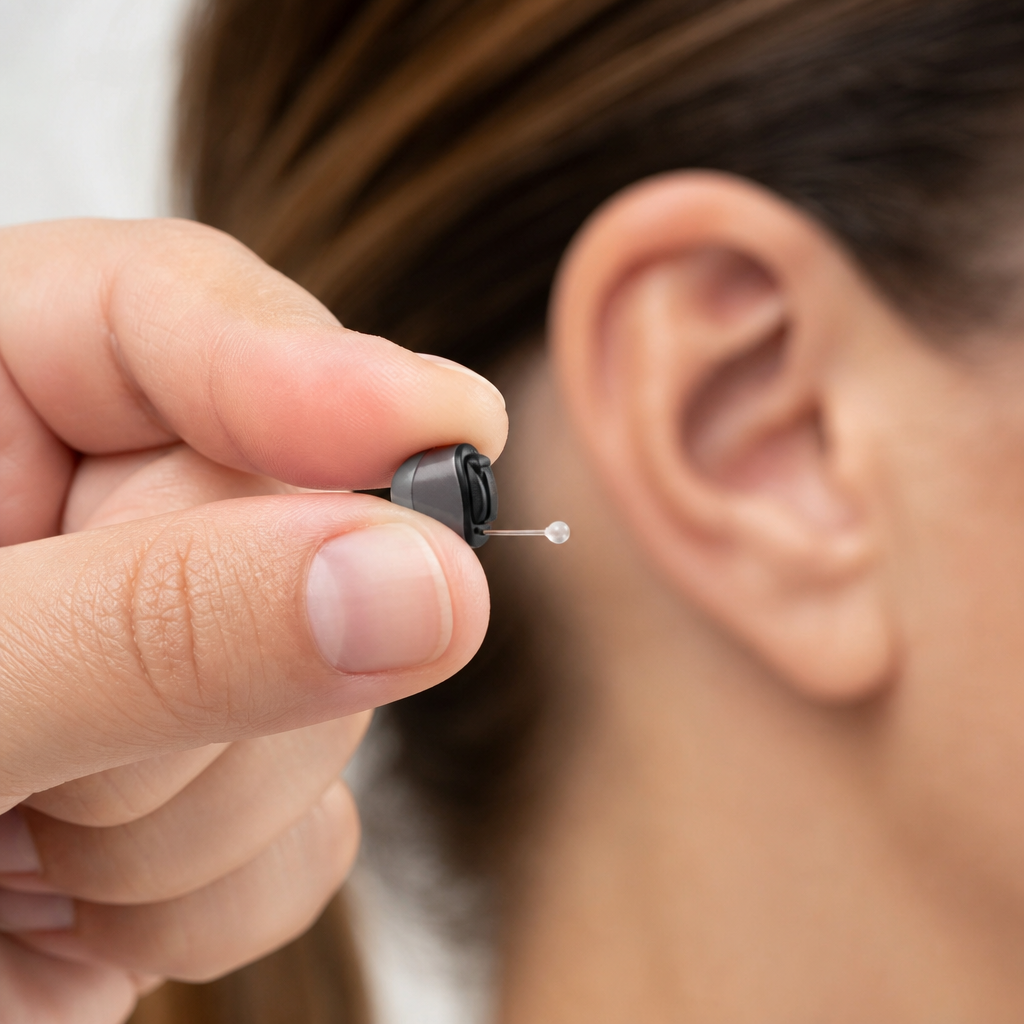
The smallest hearing aid attracts attention because it promises two things many people want at once: better hearing and less visibility. In practice, the phrase usually refers to custom devices that sit deep in the ear canal, including invisible-in-canal and completely-in-canal models, though some very small receiver-in-canal designs also enter the conversation. Size matters for comfort, cosmetics, and fit, but it is only one variable in hearing aid performance. After fitting patients and evaluating devices across major brands, I have seen that the best small hearing aid is not automatically the best hearing aid for every ear, lifestyle, or hearing loss pattern.
A hearing aid is a medical device that amplifies and processes sound to improve speech understanding and environmental awareness. Modern devices use microphones, digital signal processing, feedback management, directional systems, wireless connectivity, and rechargeable or disposable power sources. The smallest hearing aid category emphasizes discretion by reducing shell size and placing the instrument deeper in the canal. That design can preserve natural outer-ear acoustics and hide the device well, but it also limits battery capacity, onboard controls, and room for certain advanced features.
This topic matters because untreated hearing loss is associated with communication strain, listening fatigue, social withdrawal, and reduced quality of life. The World Health Organization has repeatedly highlighted hearing loss as a major global health issue, and clinical guidance from the American Academy of Audiology and similar professional bodies supports early evaluation rather than waiting until difficulties become severe. People often start their research by asking a simple question: what is the smallest hearing aid available? The useful answer is more nuanced. You need to know the major styles, who qualifies, what tradeoffs come with miniaturization, and how professional fitting affects results.
As a hub topic within hearing aids, this guide covers the general landscape so readers can move into deeper articles on invisible hearing aids, in-the-ear models, Bluetooth hearing aids, prescription versus over-the-counter devices, hearing aid costs, batteries, maintenance, and audiologist-led fittings. If you understand the basics here, you can compare products more intelligently and avoid a common mistake I see in clinic: choosing the tiniest device first, then discovering it does not match dexterity needs, ear anatomy, or the degree of hearing support required.
What counts as the smallest hearing aid
The smallest hearing aids are usually invisible-in-canal, often abbreviated IIC, followed by completely-in-canal, or CIC, models. These are custom-made from impressions or digital scans of your ear canal and concha. An IIC sits deepest and is typically the least visible from the outside. A CIC sits slightly more outward but still remains discreet. Very small in-the-canal devices may also be considered by shoppers looking for a compact solution, but once a faceplate becomes more visible, it generally moves out of the “smallest hearing aid” category.
Small receiver-in-canal devices can also appear tiny because the main body hides behind the ear and only a thin wire enters the canal. However, they are not the smallest hearing aid in the strict sense because part of the instrument remains outside the ear. Still, they deserve consideration because they often deliver more power, Bluetooth connectivity, rechargeable batteries, telecoil options, and easier handling than deep custom devices.
Terminology matters. “Invisible” does not mean impossible to see in every ear. Visibility depends on ear canal shape, the width of the first bend, skin tone, wax, insertion depth, and the angle from which someone looks. In fittings, I have seen one person’s CIC disappear almost completely while another person’s supposedly smaller IIC remained visible because their canal anatomy prevented deeper placement. That is why ear anatomy, not marketing language alone, determines whether the smallest hearing aid is achievable.
Styles, features, and tradeoffs at a glance
Miniaturization creates real benefits, but it also forces compromises. The more space a manufacturer has, the easier it is to include larger batteries, stronger receivers, multiple microphones, onboard buttons, and wireless antennas. Deep-canal devices use the ear’s natural shape to improve telephone use and wind resistance, yet their tiny shells can limit feature sets. The right decision depends on your hearing profile, vision, finger dexterity, earwax production, and day-to-day listening demands.
| Style | Visibility | Typical strengths | Main limitations | Best fit |
|---|---|---|---|---|
| IIC | Lowest | Very discreet, natural pinna cues, less wind noise | Small battery, limited features, not for every canal | Mild to moderate loss with strong cosmetic preference |
| CIC | Very low | Discreet, custom fit, easier insertion than IIC | May still lack Bluetooth or rechargeability | Mild to moderately severe loss in suitable ears |
| ITC/ITE | Moderate | More controls, more power, possible wireless features | More visible | Users needing easier handling and extra features |
| RIC | Low | Excellent sound, connectivity, rechargeability, broader fitting range | Visible behind ear, wire maintenance | Most adults, including first-time wearers |
Across brands such as Phonak, Signia, Starkey, Oticon, Widex, and ReSound, the smallest models often prioritize discretion over universal compatibility. Some offer app-based adjustments if Bluetooth hardware fits the shell design, while others omit direct streaming entirely. If hands-free calling, TV accessories, tinnitus programs, or rechargeable convenience are priorities, a slightly larger style may produce a better long-term outcome.
Who can wear the smallest hearing aid
Not everyone is a candidate for the smallest hearing aid. The first requirement is ear anatomy. A narrow canal, a pronounced bend, unusual curvature, or a very short canal can make deep placement impossible or uncomfortable. The second requirement is hearing loss configuration. People with mild to moderate hearing loss are generally the strongest candidates, while severe or profound losses often need more amplification and output than tiny custom shells can provide reliably.
Manual dexterity also matters more than many buyers expect. I routinely caution patients that a small aid can be harder to insert, remove, clean, and battery-change than a larger device. If you have arthritis, tremor, neuropathy, reduced grip strength, or low vision, the smallest hearing aid may become frustrating in daily use. This is not a trivial issue. A hearing aid only helps if it can be managed consistently, and abandoned devices often fail for handling reasons rather than sound quality alone.
Ear health is another filter. Heavy cerumen production, chronic otitis externa, narrow canals prone to irritation, or moisture exposure from intense exercise can make deep-canal devices less suitable. Because the microphones and receiver sit close to wax and humidity, maintenance demands are higher. Some users do well with wax guards and strict cleaning routines; others are better served by a receiver-in-canal model with domes or earmolds that are simpler to maintain.
Children are rarely fit with the smallest custom hearing aids because growing ear canals require frequent remakes, and safety, retention, and flexibility usually outweigh cosmetic concerns. Adults with stable ear anatomy remain the primary audience for this category.
Sound quality, speech clarity, and daily performance
A common question is whether the smallest hearing aid sounds worse than a larger one. The honest answer is: sometimes, depending on the listening goal. For quiet conversations and many everyday settings, premium small custom devices can sound excellent when fit correctly with real-ear verification. Deep insertion can reduce occlusion, preserve some natural directionality from the outer ear, and place amplified sound near the eardrum efficiently.
Where differences appear is in feature depth and flexibility. Larger devices often have two microphones that support stronger directional processing in noise. They may include more advanced noise reduction, better connectivity to phones and microphones, and larger batteries that sustain demanding processing all day. In a restaurant, classroom, conference room, or car, those extra capabilities can materially improve speech understanding. Cosmetic invisibility does not overcome the basic physics of microphone spacing, battery size, and antenna placement.
Feedback management is another practical concern. Deep-canal designs can reduce feedback because the receiver sits farther inward, but fit precision is critical. A poor impression, jaw movement, weight changes, or ear canal shape changes over time can alter the seal. That is why follow-up visits matter. In clinic, small shell adjustments often make the difference between a hearing aid that whistles and one that disappears acoustically and visually.
Telephone use can be excellent with tiny in-ear styles because the phone lines up naturally with the ear canal. However, if you rely on direct audio streaming for calls, podcasts, or video meetings, many small custom devices will lag behind modern rechargeable RIC models. Daily performance should be judged by your own routine, not by size alone.
Fitting process, cost, and maintenance
The smallest hearing aid should always begin with a comprehensive hearing evaluation. Best practice includes pure-tone audiometry, speech testing in quiet and often in noise, otoscopy, and a discussion of listening goals. Prescription fitting is especially important for deep custom devices because candidacy depends on exact ear canal dimensions and hearing thresholds. After testing, impressions or 3D ear scans are taken, the shell is manufactured, and the fitting is verified with probe microphone measures whenever possible. Real-ear verification remains the gold standard because it confirms that amplification matches prescriptive targets such as NAL-NL2 or DSL, rather than relying on software estimates.
Cost varies widely by technology level, professional service model, warranty terms, and region. In the United States, professionally fit custom devices commonly run from the mid-thousands to several thousand dollars per pair, often including follow-up care, cleanings, programming, and loss or damage coverage for a defined period. Less expensive options exist, but very small custom devices usually sit in the prescription market, not the lower-cost self-fit segment. Buyers should ask what is included: trial period, number of adjustments, charger or batteries, repair fees, and remake policy.
Maintenance is nonnegotiable. The smallest hearing aids sit where wax, skin oils, and moisture concentrate. Daily wiping, regular wax guard replacement, and periodic professional cleaning are standard. Batteries in tiny devices tend to be small, often size 10, which means shorter runtime than larger styles. Rechargeable options are improving across the industry, but miniaturization still limits what can fit inside the shell. If convenience is your top priority, ask whether battery handling will become an annoyance after the novelty of invisibility fades.
How to choose the right small hearing aid
Start with your hearing test, not with product photos. Match the device to your hearing loss, ear anatomy, and communication goals. If discretion is your top priority and your hearing loss is mild to moderate, ask an audiologist about IIC and CIC candidacy. If you need streaming, rechargeable power, stronger performance in noise, or easier handling, compare those options against compact RIC models before deciding.
Next, evaluate lifestyle. Someone who works in meetings, uses a smartphone constantly, and wants remote fine-tuning may be happier with a slightly larger device that supports more features. Someone who values visual discretion above all and mostly listens in one-on-one settings may prefer a deep custom style. Consider manual dexterity honestly. In my experience, this single factor predicts satisfaction more often than shoppers expect.
Finally, choose a provider who verifies the fitting, explains maintenance clearly, and schedules follow-up care. The smallest hearing aid is successful when it disappears into your routine, not just into your ear. If you are comparing hearing aids across this broader topic, use this guide as your starting point, then move into focused pages on style comparisons, cost, connectivity, cleaning, and prescription versus over-the-counter options. Better hearing begins with the right fit, the right expectations, and a decision based on function as much as size.
Frequently Asked Questions
What is considered the smallest hearing aid, and how is it different from other styles?
The smallest hearing aid usually refers to a custom device designed to fit deep inside the ear canal. In most cases, that means an invisible-in-canal (IIC) or completely-in-canal (CIC) model. These styles are made from impressions or digital scans of the ear and are built to sit farther inside the canal than larger in-the-ear or behind-the-ear devices. Because of that placement, they are often much less noticeable during everyday conversation, which is one of the main reasons people ask for them.
That said, “smallest” can mean slightly different things depending on the brand, the ear anatomy, and the type of hearing loss being treated. Some very small receiver-in-canal (RIC) hearing aids are also discussed in this category because they have tiny components and can be discreet when worn. However, they are still different from true deep-canal custom devices because part of the system sits behind the ear rather than entirely inside it.
The key difference is not just size, but design trade-offs. Very small hearing aids can offer excellent cosmetic appeal and a more natural feel for some users, but they usually have less room for larger batteries, stronger amplification, directional microphones, rechargeable systems, and advanced controls. In other words, the smallest hearing aid can be an excellent option for the right person, but it is not automatically the best option for everyone. A proper evaluation looks at hearing needs, ear canal shape, dexterity, lifestyle, and long-term comfort—not just how invisible the device appears.
Are the smallest hearing aids effective, or do you give up performance for invisibility?
Small hearing aids can be very effective, but there are real limits that come with miniaturization. For many people with mild to moderate hearing loss, especially those who prioritize discretion, a well-fitted small custom device can provide meaningful improvement in speech understanding, awareness of environmental sounds, and day-to-day communication. Modern processing has improved significantly, so even compact instruments can include high-quality sound processing and useful hearing support.
At the same time, smaller devices have less physical space for hardware. That can affect battery life, ease of handling, maximum power output, and the number or size of microphones. In deep-canal devices, features such as onboard volume controls, Bluetooth streaming, or large rechargeable batteries may be reduced or unavailable compared with bigger hearing aids. This does not mean the sound quality is poor; it means the feature set and fitting range can be narrower.
Performance also depends on the person’s ear anatomy and hearing profile. A very small hearing aid may work beautifully for one patient and be the wrong choice for another. If someone has significant hearing loss, frequent earwax buildup, chronic moisture issues, or needs more advanced directional support in noisy settings, a larger style may deliver better overall results. The most accurate way to think about it is this: invisibility is valuable, but hearing success depends on matching the device to the ear and the listening demands. The smallest option is effective when it fits both the hearing loss and the real-world situations the wearer faces.
Who is a good candidate for an invisible-in-canal or completely-in-canal hearing aid?
A good candidate is someone whose hearing loss falls within a range the device can appropriately amplify and whose ear canal can physically accommodate the style. Many adults with mild to moderate hearing loss are potential candidates, particularly if they want a discreet solution and are comfortable with a custom fit. People who value cosmetics, wear glasses regularly, or simply dislike the idea of a visible device often find these models appealing.
Ear anatomy matters more than many people realize. Even if someone wants the smallest hearing aid available, the shape, width, bend, and depth of the ear canal may determine whether an IIC or CIC model is feasible. If the canal is too narrow or has a shape that limits stable placement, another style may be more practical and more comfortable. This is why a professional fitting is so important: not every ear can support every tiny device safely and effectively.
Manual dexterity and vision are also major factors. Because these hearing aids are so small, inserting them, removing them, and changing tiny batteries can be challenging for people with arthritis, tremors, reduced fingertip sensitivity, or low vision. Some patients do better with a slightly larger style simply because it is easier to manage independently. A strong candidate is not just someone who wants the smallest hearing aid, but someone whose hearing needs, ear structure, and daily handling ability all align with what that style can realistically offer.
What are the pros and cons of choosing the smallest hearing aid?
The most obvious advantage is discretion. Small custom hearing aids are often difficult for others to notice, which can help many first-time users feel more confident about wearing hearing support consistently. Their deep placement can also reduce wind noise in some situations and allow the outer ear to continue collecting sound in a natural way. For some wearers, this contributes to a more natural listening experience and less awareness of the device during the day.
Another benefit is comfort for the right ear. Because these devices are custom-made, they are shaped specifically for the individual ear canal. When the fit is accurate, they can feel secure and unobtrusive. They also avoid the behind-the-ear portion that some people find inconvenient with glasses, masks, or active lifestyles.
The drawbacks are just as important to understand. Small hearing aids often have shorter battery life because the batteries themselves are tiny. They can be more susceptible to wax and moisture simply because they sit deeper in the canal. Handling can be difficult, especially for older adults with dexterity concerns. Depending on the model, they may offer fewer user controls and less connectivity than larger hearing aids. They also may not be powerful enough for more severe hearing loss.
In practical terms, the pros are strongest for people who prioritize invisibility and have the right anatomy and hearing profile. The cons become more important when someone needs easier handling, more robust features, stronger amplification, rechargeability, or frequent adjustments for changing listening environments. Choosing the smallest hearing aid is often a balance between cosmetic preference and functional needs, and the best decision usually comes from weighing both honestly.
How do you choose the best smallest hearing aid for your needs?
The best way to choose is to start with a comprehensive hearing evaluation rather than with a product search alone. The term “smallest hearing aid” is popular, but the right recommendation depends on several clinical and practical details: the degree and shape of hearing loss, ear canal anatomy, listening goals, dexterity, history of earwax or drainage, and whether you want features like smartphone control or streaming. A hearing aid that is technically the smallest may not be the best one for speech clarity, comfort, or ease of use.
It helps to think about daily life in specific terms. Do you struggle most in restaurants, meetings, family gatherings, the car, or on the phone? Do you want the device to be as hidden as possible, or would you accept a slightly more visible style in exchange for rechargeability, easier maintenance, and stronger performance in noise? These questions matter because hearing aid success is tied to how well the device supports your actual routine, not just how it looks in the mirror.
You should also ask about fit verification, trial periods, warranty coverage, repair support, and follow-up care. Small custom devices can work very well, but they need precise fitting and sometimes adjustment after real-world use. A provider who explains the trade-offs clearly and verifies performance is often more important than any marketing claim about size. In the end, the best smallest hearing aid is the one that gives you reliable hearing improvement, consistent comfort, and realistic usability—not simply the one that disappears the most.