
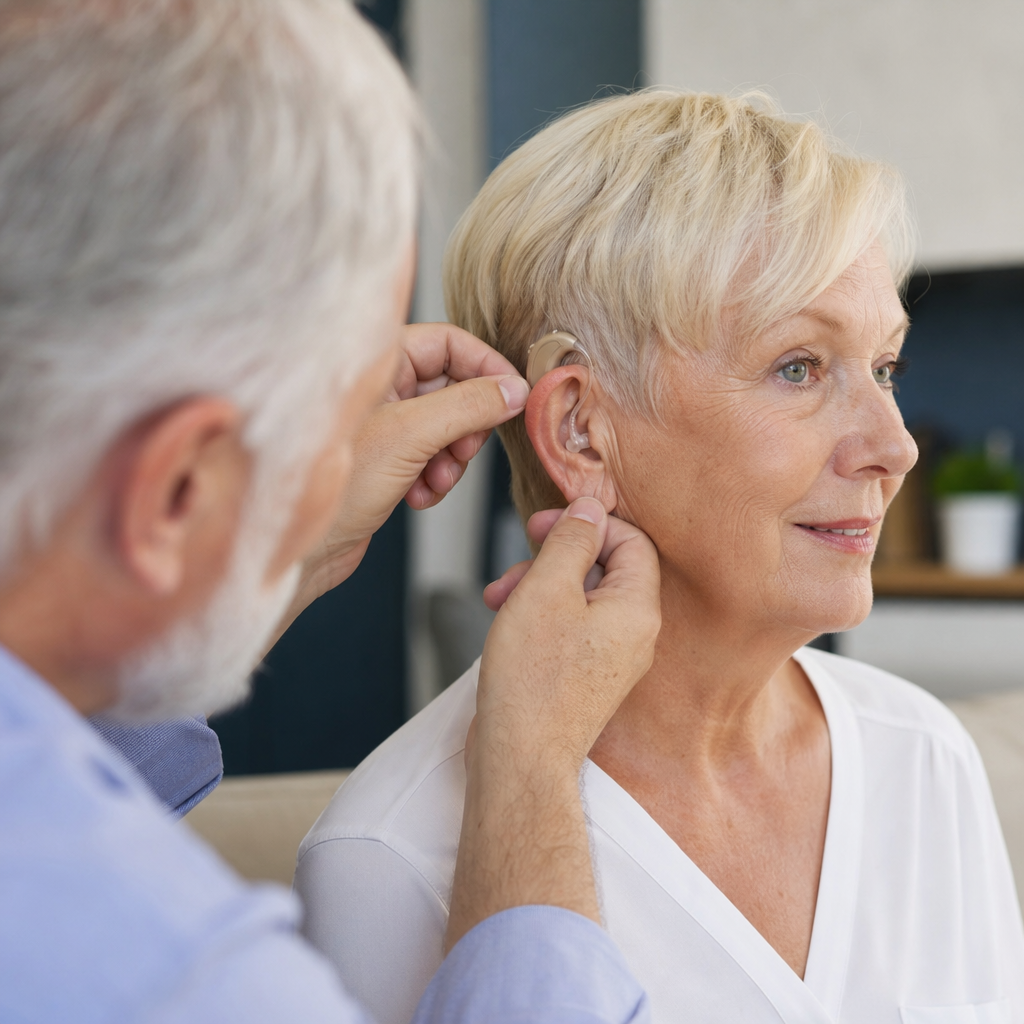
Cross hearing aid technology is one of the most practical solutions for people who hear well in one ear and have little or no usable hearing in the other. A CROS hearing aid routes sound from the poorer ear to the better ear, reducing the “head shadow” effect that blocks speech and environmental sounds coming from the side with hearing loss. For people with single-sided deafness or severe asymmetric hearing loss, that simple rerouting can improve awareness, reduce listening effort, and make daily conversations far easier.
In clinic, I have seen many patients arrive convinced that their bad ear can never be helped because traditional amplification does not restore clarity there. In many of those cases, a CROS or BiCROS system changed how they function in restaurants, cars, meetings, and family settings. The key is understanding what a cross hearing aid does, who it helps, what it cannot do, and how to evaluate options carefully. This guide covers the general essentials so you can make informed decisions and know what to discuss during a hearing aid consultation.
The term CROS stands for Contralateral Routing of Signal. In a standard CROS setup, a microphone sits on the non-hearing ear and wirelessly transmits sound to a device worn on the better-hearing ear. The better ear receives both its own sounds and the transmitted sounds from the opposite side. BiCROS is similar, but it is used when the better ear also has hearing loss and needs amplification in addition to receiving the transmitted signal. These systems are offered by major manufacturers including Phonak, Signia, Oticon, Starkey, ReSound, and Widex, usually within their mainstream hearing aid platforms rather than as a completely separate product line.
Why does this matter? Untreated unilateral hearing loss affects much more than volume. It can impair sound awareness, make speech in noise more difficult, increase fatigue, and create safety issues when traffic, alarms, or voices come from the poorer side. Children may struggle in classrooms, while adults often report missing comments at work or needing constant seat changes in social spaces. A cross hearing aid does not restore true binaural hearing, but it can significantly improve access to sounds that would otherwise be missed. For many people, that is the difference between coping and participating fully.
How a cross hearing aid works
A cross hearing aid works by picking up sound on the side with unaidable hearing loss and sending that sound to the ear with better hearing. In practical terms, if someone speaks on your deaf side, the microphone on that side captures the speech and transmits it instantly to the receiver on your better side. Modern systems use low-latency wireless transmission, so the signal arrives quickly enough that most users perceive it as natural after an adaptation period. This solves the access problem created by the head itself, which attenuates high-frequency speech cues by several decibels before they ever reach the better ear.
That mechanism is important because hearing from two sides and hearing with two ears are not the same thing. CROS systems improve access to sound from the poorer side, but they do not recreate binaural timing and level cues in the brain. As a result, they help with awareness and speech pickup, yet they generally do not restore accurate sound localization. Patients often expect to “hear normally again,” and that expectation needs to be corrected early. The best outcomes happen when counseling is clear: a CROS system improves audibility from the impaired side, reduces missed information, and often lowers effort, but it will not make the non-hearing ear work again.
Most current devices also include directional microphones, noise management, feedback control, rechargeability, smartphone apps, Bluetooth streaming, and remote fine-tuning. Those features matter because CROS users still face the same modern listening demands as other hearing aid wearers. A person may need clearer speech in a noisy restaurant, hands-free calls, or easy program changes for office meetings. Since many CROS systems sit within premium hearing aid ecosystems, users can often access the same convenience tools available in conventional amplification fittings.
Who should consider CROS or BiCROS systems
The ideal CROS candidate has one ear with unaidable hearing loss and one ear with normal hearing or near-normal hearing. “Unaidable” usually means the poorer ear receives little practical benefit from a conventional hearing aid because speech understanding is extremely poor or the hearing thresholds are too severe across key frequencies. Common causes include sudden sensorineural hearing loss, acoustic neuroma treatment, congenital single-sided deafness, viral injury, Ménière’s disease, trauma, or long-standing unilateral loss. The better ear must be strong enough to handle both its own listening demands and the routed signal.
BiCROS is the better option when the poorer ear is unaidable but the better ear also has measurable hearing loss. In that case, the better ear device amplifies local sounds while also receiving the transmitted signal from the opposite side. I often explain it this way: CROS is “routing only,” while BiCROS is “routing plus amplification.” That distinction is clinically important because the programming targets, receiver strength, earmold needs, and expectations differ. Someone with mild high-frequency loss in the better ear may do very well with BiCROS if the fitting is carefully balanced so the transmitted side does not overwhelm amplified speech on the better side.
Not everyone with one poor ear should default to CROS. Some patients may be candidates for bone conduction devices or cochlear implants for single-sided deafness, depending on anatomy, word recognition, duration of deafness, tinnitus burden, insurance coverage, and medical history. A complete audiologic and medical evaluation matters. If a person has usable speech understanding in the poorer ear, a traditional hearing aid trial may still be worthwhile before deciding the ear is unaidable. The right solution depends on test results, goals, lifestyle, and budget, not just the label of single-sided hearing loss.
Benefits, limitations, and realistic expectations
The biggest benefit of a cross hearing aid is improved access to speech and environmental sounds originating from the poorer side. In real life, that means you may hear a coworker seated on your deaf side in a conference room, notice a child speaking from that side in the back seat, or follow conversation better when your dining companion sits on the wrong side of the table. Many users also report less need to constantly reposition themselves. That reduction in compensatory behavior is often underestimated, yet it can improve comfort and confidence more than pure test scores suggest.
The main limitation is that CROS does not restore true two-eared hearing. Localization usually remains limited because both signals are delivered to one auditory pathway. Speech understanding in diffuse background noise can still be difficult, especially when noise is routed from the poorer side along with speech. Success depends heavily on the listening environment. A CROS system is most helpful when the desired speaker is on the poor side and the better ear is disadvantaged by head shadow. It may be less helpful when loud noise dominates the poor side microphone. Good programming and adaptive microphone settings can reduce that problem, but they do not eliminate it.
There are also practical tradeoffs. Wearing devices on both ears can feel unnecessary to someone whose better ear hears fairly well. Battery use may be higher because of constant wireless transmission, although rechargeable models have improved daylong reliability. Wind noise, eyeglasses comfort, and retention can require adjustments. Some users love open domes for comfort, while others need a more secure fit for stable acoustics. The right expectation is not perfection; it is better access, less missed speech, and more flexibility in everyday communication.
Evaluation, fitting, and follow-up process
A proper CROS fitting starts with comprehensive testing: pure-tone thresholds, speech reception thresholds, word recognition, uncomfortable loudness levels, otoscopy, and often real-ear verification on the better ear device. Case history is just as important as the audiogram. I routinely ask where communication breaks down most often: in the car, at restaurants, in worship spaces, during walks, or at workstations. Those details shape microphone settings, noise programs, and counseling. A patient who mainly struggles with people approaching from one side in a quiet office has different needs from a parent juggling school pickups, sports fields, and noisy kitchens.
Verification should go beyond “does it sound okay?” Best practice includes aided speech testing in different spatial conditions when possible. For example, comparing speech presented to the poor side with and without CROS routing can demonstrate measurable benefit. Questionnaires such as the Hearing Handicap Inventory or the Speech, Spatial and Qualities of Hearing Scale can document perceived change. Follow-up matters because first impressions are not always predictive. Some users need a few weeks for the brain to adapt to hearing signals from the poorer side through the better ear, especially if the hearing loss has been present for years.
| Option | Best for | Main benefit | Main limitation |
|---|---|---|---|
| CROS | Unaidable loss in one ear, normal or near-normal hearing in the other | Routes sound from poor side to better ear | Does not restore localization |
| BiCROS | Unaidable loss in one ear, aidable loss in the better ear | Amplifies better ear and routes poor-side sound | More balancing needed in programming |
| Traditional hearing aid | Aidable hearing in the poorer ear | Uses residual hearing in that ear directly | Limited if speech understanding is very poor |
| Bone conduction device | Selected unilateral losses with appropriate anatomy and goals | Bypasses outer or middle ear pathways | Requires medical and surgical consideration in many cases |
| Cochlear implant for single-sided deafness | Selected patients with profound unilateral sensorineural loss | Provides input to the deaf ear itself | Higher cost, surgery, and candidacy limits |
Programming details can make or break satisfaction. Gain on the better ear side must preserve comfort while keeping routed speech audible. Microphone directionality should match the user’s common environments, and streaming balance may need adjustment if phone calls or media are important. Many manufacturers now allow app-based control, but users still benefit from clinician fine-tuning after real-world trials. The best fittings are iterative: fit, verify, trial in everyday settings, then refine.
Choosing devices, costs, and everyday use tips
When choosing a cross hearing aid, focus on fit quality, wireless reliability, comfort, rechargeability, app usability, and clinician experience rather than brand marketing alone. All major manufacturers offer competent systems, but their ecosystems differ. Phonak is often recognized for strong wireless performance and broad connectivity. Signia has emphasized own-voice processing and slim form factors. Oticon, Starkey, ReSound, and Widex each offer distinct app controls, streaming approaches, and sound-processing philosophies. The best option is the one that matches your hearing profile and daily routines, then is programmed well.
Cost varies widely by region, technology level, bundled service model, and warranty terms. In the United States, a CROS or BiCROS setup often falls in the same pricing range as premium bilateral hearing aids because two devices are involved and professional services are included. Insurance coverage remains inconsistent, though some private plans, vocational rehabilitation programs, veterans’ benefits, and state assistance programs may help. Buyers should ask for a written breakdown covering devices, fitting fees, follow-up visits, loss-and-damage coverage, charger replacement terms, and trial or return policies. Those details matter more than a headline price.
For daily success, wear the system consistently rather than only in difficult settings. Your brain adapts faster when input is regular. Position yourself strategically anyway; CROS helps, but room acoustics still matter. Use restaurant seating that puts the main noise source away from the poor-side microphone when possible. Keep microphones clean, domes replaced on schedule, and firmware updated through the manufacturer app or clinic. If speech seems suddenly dull, check wax guards and microphone ports before assuming the settings changed. Most importantly, report specific listening failures to your audiologist. “It sounds bad” is less helpful than “voices from my left are clear in quiet but blurred in the car.”
Common questions about cross hearing aids
People usually ask whether a cross hearing aid can restore hearing in the deaf ear. The direct answer is no. It does not make the poorer ear hear; it transfers sound from that side to the better ear. Another common question is whether it helps tinnitus. Sometimes it does indirectly by improving sound awareness and reducing strain, but it is not a guaranteed tinnitus treatment. Patients also ask whether they will be able to tell where sounds come from. Usually not with normal precision, because localization depends on two functioning ears and the brain comparing timing and intensity differences between them.
Another frequent question is whether CROS is better than a cochlear implant for single-sided deafness. Neither is universally better. A cochlear implant can provide input to the deaf ear itself and may improve localization and tinnitus outcomes in selected patients, but it requires surgery and candidacy review. CROS is non-surgical, faster to trial, and often highly effective for speech access from the poor side. The right choice depends on hearing test results, medical factors, personal goals, and willingness to pursue an implant pathway. Trialing a non-surgical option first is reasonable in many cases, but not all.
Cross hearing aid systems give people with one unaidable ear a practical way to hear more of the world around them. Their value lies in solving a specific problem: missed speech and reduced awareness caused by sounds arriving on the poorer side. They work best when expectations are realistic, candidacy is confirmed through proper testing, and fitting is handled carefully with follow-up based on real listening situations. For many users, that combination leads to easier conversations, less fatigue, and fewer daily workarounds.
The most important takeaway is simple. If you have single-sided deafness or strong asymmetrical hearing loss, do not assume “nothing can be done” just because one ear is not aidable in the usual way. CROS and BiCROS systems, along with bone conduction devices and cochlear implant options for selected cases, provide meaningful paths forward. Start with a full hearing evaluation, ask which category your hearing falls into, and request a clear comparison of available solutions. The right next step is a consultation with an audiologist who fits these systems regularly and can match technology to your actual listening life.
Frequently Asked Questions
What is a CROS hearing aid, and how does it work?
A CROS hearing aid is designed for people who have little or no usable hearing in one ear but hear normally, or near normally, in the other ear. “CROS” stands for “Contralateral Routing of Signal.” In simple terms, a microphone worn on the poorer-hearing ear picks up sounds from that side and wirelessly sends them to a device worn on the better-hearing ear. Instead of trying to restore hearing in the non-hearing ear itself, the system helps you detect sounds that would otherwise be missed because they are coming from the wrong side.
This setup is especially helpful for overcoming what hearing professionals call the “head shadow” effect. Your head naturally blocks and reduces some speech and environmental sounds, particularly high-frequency sounds, before they reach your better ear. That means if someone speaks to you from the side with hearing loss, you may struggle to understand them even though your better ear works well. A CROS system solves that problem by collecting sound on the poorer side and delivering it to the better side, giving you access to conversations, alerts, and background sounds from both directions.
Modern CROS systems are typically small, wireless, and built on the same platforms as advanced hearing aids. Many include features such as noise reduction, directional microphones, rechargeable batteries, smartphone connectivity, and personalized programming. While a CROS hearing aid does not “bring back” hearing in the deaf ear or restore true binaural hearing, it can make everyday listening more balanced, improve environmental awareness, and reduce the constant need to turn your head to catch what is being said.
Who is a good candidate for a CROS hearing aid?
A CROS hearing aid is usually recommended for someone with single-sided deafness or severe asymmetric hearing loss. The classic candidate is a person who has unaidable hearing loss in one ear and good hearing in the other ear. In that case, routing sound to the better ear can be one of the most practical and effective ways to improve awareness of speech and sound coming from the poorer side.
There is also a related option called BiCROS, which is used when the better ear also has some degree of hearing loss. With a BiCROS system, the poorer side still sends sound across, but the receiving device on the better ear also provides amplification to support that ear’s own hearing needs. This is why a full hearing evaluation is so important. Two people may describe their hearing loss in similar ways, but the best technology for them may be different depending on how much hearing remains in each ear, their word recognition ability, and their day-to-day listening challenges.
Good candidates often report difficulties such as missing speech in group settings, not hearing people approach from one side, feeling mentally fatigued from trying to keep up in conversation, or constantly repositioning themselves in restaurants, meetings, and social situations. A hearing care professional will assess not only the hearing test results but also lifestyle factors, communication goals, dexterity, comfort with technology, and cosmetic preferences. In many cases, a CROS system is an excellent non-surgical option for improving function when one ear cannot benefit meaningfully from conventional amplification.
What are the main benefits and limitations of a CROS hearing aid?
The biggest benefit of a CROS hearing aid is improved access to sounds coming from the side with hearing loss. For many users, that means better awareness in conversations, less need to constantly turn the head, and reduced effort in everyday listening. This can be particularly useful in situations like walking with a companion, driving, attending meetings, talking at the dinner table, or being aware of traffic and other environmental sounds. Many people also appreciate feeling more connected to what is happening around them because fewer sounds are “lost” on the poorer side.
Another major advantage is reduced listening fatigue. When your brain has to work constantly to monitor one hearing ear and compensate for missing sound from the other side, communication can become exhausting. By routing signals from the poorer side to the better ear, a CROS system can make listening feel less demanding and more natural in many environments. Today’s devices also offer practical quality-of-life benefits such as discreet designs, rechargeability, app controls, streaming, and fine-tuning options that can make daily use more convenient.
That said, it is important to understand the limitations. A CROS hearing aid does not restore hearing in the non-hearing ear, and it does not create true stereo or binaural hearing. Sound localization, or the ability to tell exactly where a sound is coming from, may still remain difficult because both sides are ultimately being heard through one better-hearing ear. Performance can also vary depending on the listening environment. In quiet one-on-one conversations, the benefit may be obvious, while in noisy settings the improvement may be more situational. For this reason, realistic expectations, proper fitting, and a trial period are key to determining how much benefit a CROS system provides for your specific lifestyle.
How does a CROS hearing aid compare with other options for single-sided deafness?
A CROS hearing aid is one of several possible solutions for single-sided deafness, and the right choice depends on the cause of hearing loss, hearing levels in both ears, anatomy, medical history, and personal goals. Compared with doing nothing, a CROS system often offers a clear improvement in awareness of sounds coming from the poorer side. It is non-surgical, adjustable, reversible, and relatively easy to trial, which makes it an appealing first option for many people.
Other possibilities may include bone conduction devices or, in some cases, a cochlear implant. Bone conduction solutions work by transmitting sound vibrations through the skull to the better-hearing inner ear, bypassing the non-functioning ear. Some users do very well with this approach, particularly when anatomy or medical conditions make it preferable. Cochlear implants may be considered for certain people with single-sided deafness, especially when restoring access to sound in the poorer ear itself is a goal and candidacy requirements are met. Unlike CROS technology, a cochlear implant is designed to stimulate the deaf ear rather than reroute sound away from it.
Each option has trade-offs. A CROS hearing aid is typically the least invasive and easiest to adapt to, but it does not restore hearing to the poorer ear. Bone conduction systems may be worn externally or implanted, depending on the type, and may offer strong awareness benefits for the poorer side. Cochlear implants involve surgery and a more involved rehabilitation process, but for some patients they may provide benefits beyond simple routing, including improved sound access in the deaf ear. The best way to compare options is through a hearing and medical evaluation with specialists who can explain what each technology can realistically achieve in your case.
What should you expect when getting fitted for a CROS hearing aid?
The fitting process usually begins with a comprehensive hearing assessment to confirm whether a CROS or BiCROS system is appropriate. Your hearing care professional will measure hearing sensitivity in both ears, evaluate speech understanding, review your medical and hearing history, and talk through the listening situations that matter most to you. This step is essential because successful use depends on selecting the right type of system and programming it around your everyday needs rather than simply choosing a device off the shelf.
Once candidacy is confirmed, the professional will recommend a model and style, fit the devices physically for comfort, and program them so that sound from the poorer ear is routed clearly and comfortably to the better ear. You may also receive counseling about what the technology can and cannot do. That conversation matters. People who understand that CROS improves access to sound from the poorer side, rather than restoring normal two-eared hearing, tend to have a better experience and more realistic expectations.
There is usually an adjustment period. At first, hearing sound from the poorer side through the better ear can feel unfamiliar, even if it is helpful. Follow-up appointments are often needed to fine-tune volume balance, clarity, noise settings, and comfort. During this time, it helps to test the system in a variety of real-world environments such as restaurants, family gatherings, outdoor walks, and work meetings. Most importantly, successful fitting is not just about the technology itself. It is about personalized programming, consistent use, and ongoing support so the system works well in the situations that matter most in your daily life.