
Horizon hearing aid models are designed to improve speech understanding, reduce listening fatigue, and help people with hearing loss stay connected in daily life. In this guide, I will cover what a Horizon hearing aid is, how it works, who it suits, what features matter most, how fitting and maintenance affect results, and what buyers should compare before choosing one. Hearing aids are medical devices that amplify and process sound, but modern systems do far more than make everything louder. They use directional microphones, digital signal processing, feedback suppression, noise reduction, and wireless connectivity to prioritize speech and manage difficult environments. That distinction matters because untreated hearing loss affects communication, work performance, confidence, and cognitive load. I have seen users assume one device will solve every problem immediately, then become disappointed because they were never told that outcomes depend on the hearing profile, ear anatomy, programming quality, and realistic adaptation time. A good hub article should answer the broad questions first: what the device category includes, what technology actually changes day to day, what tradeoffs exist between style and performance, and what steps improve success after purchase. Whether someone is comparing their first device, replacing older instruments, or helping a family member, understanding the basics of Horizon hearing aid options makes the selection process clearer and far more practical.
What a Horizon hearing aid is and how the technology works
A Horizon hearing aid is best understood as part of the modern digital hearing aid category rather than a simple amplifier. Traditional amplifiers raise all incoming sound levels, including background noise, which often makes restaurants, cars, and family gatherings harder rather than easier. Digital hearing aids convert sound into a digital signal, analyze frequency and intensity, and apply programmed gain based on an audiogram. In practice, that means soft consonants such as f, s, and th can be made more audible without making already loud sounds uncomfortably intense. Most current devices also use wide dynamic range compression, which squeezes a broad range of environmental sound into the narrower range a damaged auditory system can use comfortably.
When I fit patients or advise families on hearing aid selection, I explain the signal path in plain terms. Microphones collect sound, the processor classifies it, the software applies gain and feature rules, and the receiver delivers the shaped sound into the ear canal. Better devices refine this path with multiple channels, allowing different frequencies to be adjusted separately. That matters because age-related hearing loss usually affects high frequencies more than low frequencies. A person may hear a voice but miss clarity, especially in female or children’s voices. The hearing aid addresses audibility first, then tries to improve intelligibility through directional pickup and noise management. No hearing aid can fully restore normal hearing, but the right one can improve access to speech significantly.
Styles, form factors, and who each option fits best
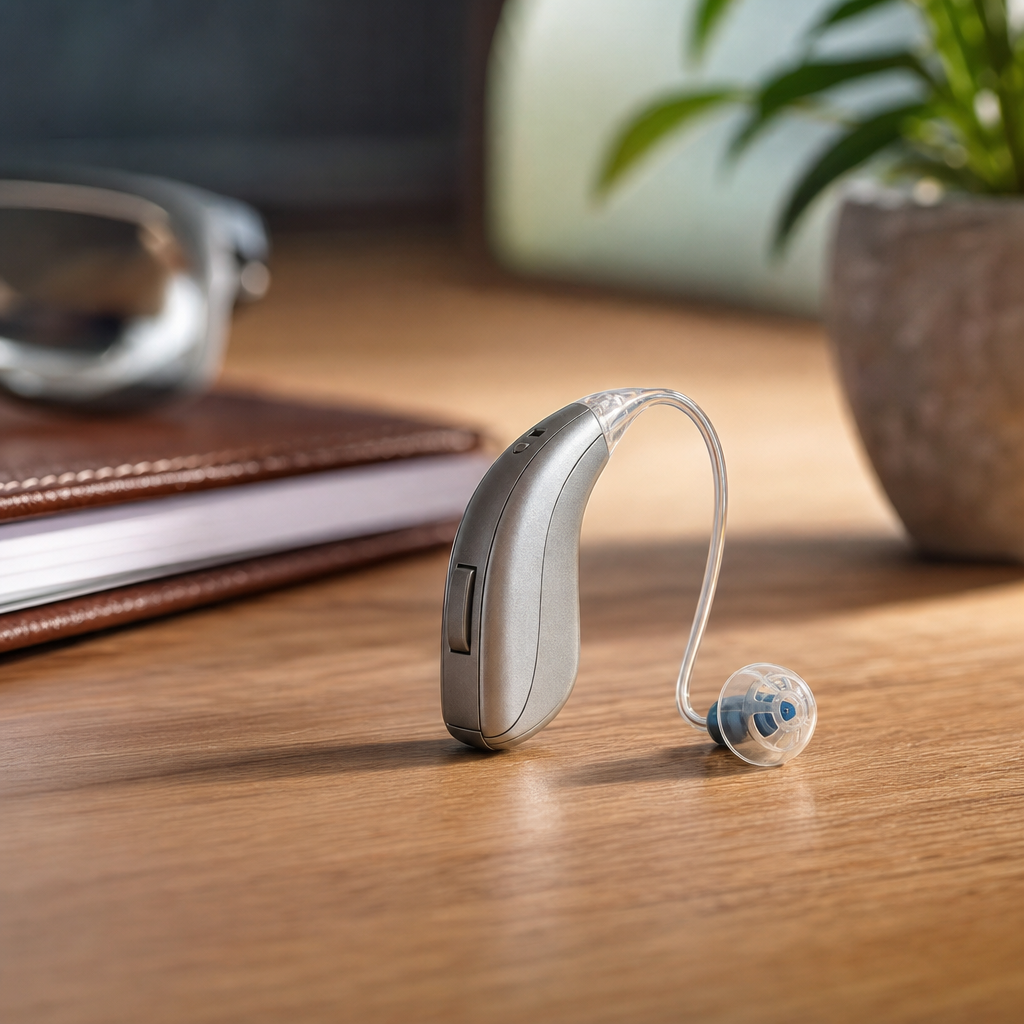
Horizon hearing aid products, like most hearing aid lines, are typically offered in several form factors. Receiver-in-canal models place the speaker in the ear canal and the electronics behind the ear. They are widely used because they balance power, comfort, cosmetic appeal, and acoustic flexibility. Behind-the-ear models are larger, often easier to handle, and usually the best choice for severe to profound hearing loss, pediatric fittings, or people who need durable earhooks and custom earmolds. In-the-ear and in-the-canal devices place more of the hardware in a custom shell and may appeal to users who want fewer visible components, though battery size, venting, and moisture exposure can limit some features.
Selection should start with hearing needs and dexterity, not appearance alone. Small devices can be attractive, but they may be harder to insert, clean, and control if the user has arthritis, tremor, or vision limitations. Open-fit designs feel less occluding and work well for many high-frequency losses, while closed domes or custom molds offer stronger low-frequency retention and better feedback control. Ear canal shape also matters. I have seen otherwise excellent fittings fail because a dome style was unstable or the retention lock irritated the concha. Comfort affects wear time, and wear time affects benefit. The best style is the one the person can wear consistently, manage independently, and hear well through in their real environments.
Core features that make the biggest day-to-day difference
Feature lists can become overwhelming, so it helps to focus on what changes outcomes. Directional microphones are among the most important features because they improve the signal-to-noise ratio by emphasizing sounds from the front and reducing sounds from other directions. This can help in restaurants, meetings, cars, and church settings, although the benefit depends on room acoustics and where the talker sits. Noise reduction algorithms can improve comfort by softening steady-state noises such as fans or road sound, but they do not magically erase background chatter. Feedback management is essential, especially for open fits and higher gain fittings, because whistling undermines both comfort and confidence.
Wireless connectivity now matters almost as much as acoustic processing for many buyers. Bluetooth or proprietary low-energy protocols let users stream phone calls, music, television audio, and navigation prompts directly to the hearing aid. App control can allow volume changes, program selection, geotagged settings, find-my-device support, and remote fine-tuning. Rechargeability is another practical feature with real value. Lithium-ion systems reduce battery handling, which is important for users with limited dexterity, though people who travel often or lack consistent charging habits may still prefer disposable batteries. Telecoils remain valuable in public venues equipped with hearing loop systems, including some theaters, worship spaces, and ticket counters. The strongest advice I give is simple: choose features that solve your actual listening problems, not features that look impressive on a sales sheet.
Clinical fitting, verification, and why programming quality matters
The hearing aid itself is only part of the result. Programming quality often determines whether a user keeps the device or leaves it in a drawer. A proper process starts with a recent diagnostic hearing test, including air and bone conduction thresholds and speech measures. From there, the clinician selects a prescription target such as NAL-NL2 or DSL, depending on the case, and programs gain accordingly. Real-ear measurement is the gold standard for verification because it measures amplified sound in the individual ear canal using probe microphones. Without verification, software predictions can be wrong due to venting, canal acoustics, and insertion depth. In my experience, many complaints labeled as hearing aid failure are actually fitting failures.
Adaptation should also be managed deliberately. New users often need a ramp-up period, especially if they have gone years without hearing soft high-frequency sounds. Their own voice may seem strange, environmental noise may feel distracting, and speech in noise may still require practice. Follow-up visits should address loudness comfort, physical fit, retention, moisture issues, and specific listening goals. Clinicians often rely on datalogging to see actual wear time and environment exposure, then use that information to refine settings. Speech mapping, outcome questionnaires such as the HHIE or APHAB, and aided testing can all help confirm whether the fitting is meeting the intended benefit. The best Horizon hearing aid fitting is evidence-based, not guesswork.
Comparing Horizon hearing aid options by practical buying criteria
People shopping for a Horizon hearing aid usually ask the same questions: Which level is best, how much technology do I need, and what should I compare beyond price? The answer depends on hearing loss severity, lifestyle complexity, and support access. Someone who spends most of the day in quiet one-on-one conversations may do well with a simpler technology package. Someone attending meetings, restaurants, outdoor events, and frequent phone calls benefits more from stronger directionality, faster scene analysis, and better wireless tools. Warranty terms, service availability, loss-and-damage coverage, charger reliability, and ear-coupling options are often as important as the headline feature list.
| Buying Factor | Why It Matters | Best Fit Example |
|---|---|---|
| Technology level | Higher tiers usually improve speech-in-noise automation and environmental classification | Busy professionals, active retirees, frequent diners out |
| Style | Affects comfort, power, battery life, visibility, and ease of handling | RIC for flexibility, BTE for power and durability |
| Rechargeable vs disposable | Changes daily routine, travel convenience, and maintenance needs | Rechargeable for dexterity limits, disposable for backup simplicity |
| Connectivity | Determines call streaming, app control, TV listening, and accessory support | Frequent smartphone and video call users |
| Professional support | Fitting accuracy and follow-up strongly influence satisfaction | First-time wearers, complex losses, tinnitus cases |
One more factor deserves attention: trial policy. Hearing aid adaptation is personal, and two users with similar audiograms may prefer different physical fittings or processing styles. A clear trial period allows enough time to test speech in noise, home use, work calls, and outdoor activity before making a final decision. That reduces regret and increases long-term adherence.
Maintenance, troubleshooting, and expected lifespan
Daily maintenance is not glamorous, but it has a direct effect on sound quality and repair frequency. Wax and moisture are the main enemies of hearing aids. Receivers and wax guards can clog gradually, leading users to think their hearing has worsened or the device has failed. Domes need replacement on schedule, microphone ports should be brushed gently, and charging contacts must stay clean. People who perspire heavily, live in humid climates, or exercise with hearing aids often benefit from a drying cup or electronic dehumidifier. If custom earmolds are used, tubing and vents should be checked regularly because debris changes acoustics and comfort.
Most quality hearing aids last around three to seven years, although lifespan depends on wear conditions, repair history, and changing hearing needs. Rechargeable battery performance can decline over time, and users should ask whether the internal cell is replaceable and what that service costs. Common troubleshooting steps include checking charge status or battery orientation, replacing wax guards, confirming the receiver is seated properly, and reviewing app connection settings. Intermittent sound can come from moisture, a cracked receiver wire, or an unstable dome fit. Sudden feedback may signal wax impaction in the ear, a loose mold, or hearing changes that require reprogramming. Routine checkups prevent many of these issues before they become expensive or frustrating.
Limitations, realistic expectations, and when to seek more help
A Horizon hearing aid can improve hearing access, but it is not a cure for every listening problem. People with severe speech discrimination loss may hear sounds more clearly yet still struggle to understand words in noise. Reverberant rooms remain difficult because echoes smear speech cues before the device can process them. Wind noise, distance from the speaker, and multiple simultaneous talkers also challenge even premium technology. Users with tinnitus may find relief through amplification because environmental sound becomes more audible, but some will need dedicated sound therapy or counseling as well. These limitations are normal and should be discussed before purchase.
Some situations call for evaluation beyond a standard hearing aid fitting. Sudden hearing loss, one-sided symptoms, persistent ear pain, drainage, rapidly changing hearing, or significant dizziness should be assessed medically, often by an otolaryngologist. If speech understanding remains poor despite appropriate fitting and verification, a cochlear implant evaluation may be reasonable, especially when aided sentence scores are low. Assistive listening devices can also extend benefit. Remote microphones improve one-to-one communication in noise, TV transmitters help with home listening, and captioned phones add another layer of access. The smartest approach is not to expect one device to solve every problem but to build a listening toolkit around real needs and measured outcomes.
The main point about Horizon hearing aid options is that success comes from matching technology to the person, then supporting that choice with precise fitting, realistic expectations, and consistent follow-up. A good device should improve access to speech, reduce effort, and fit comfortably enough for all-day wear, but those results depend on more than the product name. Style, prescription accuracy, real-ear verification, connectivity needs, battery routine, and ongoing maintenance all shape the user experience. Buyers should compare practical factors such as support quality, trial terms, and everyday listening goals rather than chasing the smallest shell or longest feature list. If you are evaluating a Horizon hearing aid for yourself or someone else, start with a current hearing assessment, ask detailed questions about fitting and verification, and test the device in the environments that matter most. That approach leads to better hearing decisions and better daily communication.
Frequently Asked Questions
What is a Horizon hearing aid, and how is it different from simply making sounds louder?
A Horizon hearing aid is a medical hearing device designed to help people with hearing loss hear speech more clearly and participate more comfortably in everyday conversations. Unlike a basic sound amplifier, a modern hearing aid does much more than increase volume. It uses digital processing to analyze incoming sounds, identify speech, manage background noise, and deliver amplification that is tailored to the wearer’s hearing profile. That matters because most people with hearing loss do not need every sound boosted equally. They often need more support in specific pitches or listening situations, especially when trying to understand speech.
In practical terms, a Horizon hearing aid is intended to improve speech understanding, reduce listening fatigue, and help users stay connected at home, at work, and in social settings. Many people with untreated hearing loss say they can hear that someone is speaking but cannot make out the words. That is where proper sound processing becomes important. A well-fitted device can emphasize speech cues, soften sudden loud sounds, and make noisy places more manageable than they would be with simple amplification alone.
This distinction is important for buyers. If you are evaluating a Horizon hearing aid, you should think of it as a personalized hearing solution rather than a generic audio product. The real value comes from how well it matches your hearing needs, your listening environments, and your comfort preferences. Features matter, but the device’s ability to support real-life communication is what ultimately determines whether it is successful.
How does a Horizon hearing aid work in everyday listening situations?
A Horizon hearing aid works by picking up sound through microphones, converting that sound into digital information, processing it according to programmed settings, and then delivering the adjusted sound into the ear through a speaker or receiver. While that sounds technical, the everyday goal is simple: help the user hear important sounds more clearly without making the world feel uncomfortably loud or distorted.
In a quiet conversation, the device may provide gentle, targeted amplification so speech sounds are easier to follow. In a restaurant or group setting, it may reduce some background noise and prioritize voices in front of the wearer. If someone moves from indoors to outdoors, the hearing aid may automatically adapt to wind, traffic noise, or changing sound levels. This constant processing is what makes modern hearing aids much more effective than older one-size-fits-all approaches.
Many users also benefit from features that improve comfort over the course of the day. For example, sound processing can reduce the strain of concentrating on speech in difficult environments, which may lower listening fatigue. Some systems also include feedback control to reduce whistling, directional microphones to focus on speech, and wireless connectivity for phone calls or streamed audio. The exact listening experience depends on the model, the fitting, and the wearer’s hearing loss, but the overall purpose remains the same: deliver clearer, more useful sound in the situations that matter most.
Who is a Horizon hearing aid best suited for?
A Horizon hearing aid may suit adults with mild, moderate, or potentially more significant hearing loss, depending on the available model range and the level of amplification offered. The best candidates are people who have noticeable difficulty hearing conversations, often ask others to repeat themselves, struggle in noisy places, or feel worn out from trying to listen all day. It can also be a strong option for people who want help staying engaged with family, work discussions, television, phone calls, and social activities.
That said, suitability is not just about the degree of hearing loss. Lifestyle plays a major role. Someone who spends a lot of time in meetings, restaurants, community events, or family gatherings may need stronger speech-in-noise performance than someone who mostly listens in quiet environments. Comfort, dexterity, cosmetic preference, and technology expectations also matter. For example, some people prioritize rechargeable batteries, easy controls, or Bluetooth connectivity, while others care most about simplicity and ease of maintenance.
The best way to know whether a Horizon hearing aid is appropriate is through a professional hearing evaluation and a discussion of daily listening needs. A hearing care provider can compare your hearing test results with the fitting range of the device and explain whether it matches your goals. Even an advanced hearing aid will not perform well if it is not the right style, power level, or programming for the individual. In other words, the right user-device match is just as important as the brand or model name.
What features should buyers compare when choosing a Horizon hearing aid?
Buyers should look beyond price alone and compare the features that affect everyday benefit. One of the most important is speech understanding support, especially in background noise. If you frequently spend time in busy environments, ask how the device handles competing voices, restaurant noise, and changing sound conditions. Directional microphones, adaptive noise reduction, and automatic environment detection can make a meaningful difference in real-world performance.
Comfort and usability are also essential. Compare hearing aid style, size, fit, rechargeable versus disposable battery options, and how easy the controls are to use. For some wearers, an app-based interface or simple push-button control can influence satisfaction just as much as sound quality. Connectivity is another key category. If you want to stream calls, media, or other audio from a smartphone or compatible device, make sure the Horizon hearing aid model you are considering supports the features you need.
You should also compare maintenance needs, warranty terms, follow-up care, and adjustment support. Hearing aids are not set-and-forget devices. Fine-tuning often improves results after the initial fitting, so ongoing service matters. Ask whether professional programming, cleanings, software updates, and future adjustments are included. It is also wise to compare durability features, such as moisture resistance, as well as accessories that may improve hearing in specific environments. The strongest buying decision usually comes from balancing sound performance, convenience, support, and long-term value rather than focusing on a single specification.
How do fitting, follow-up care, and maintenance affect results with a Horizon hearing aid?
They affect results tremendously. Even a high-quality Horizon hearing aid may underperform if it is poorly fitted, incorrectly programmed, or not maintained properly. A hearing aid should be adjusted to the user’s hearing test results, listening preferences, and real-life environments. Initial settings are important, but follow-up appointments are often where the biggest improvements happen. Users may discover that speech is clear in quiet but still challenging in noise, or that certain sounds feel too sharp, too soft, or unnatural. Fine-tuning addresses those issues and helps the device perform more effectively over time.
Maintenance is equally important because hearing aids sit in a demanding environment. Earwax, moisture, dust, and normal daily wear can affect microphone openings, speakers, charging contacts, and overall sound quality. Regular cleaning and routine checks help preserve performance and reduce avoidable problems. If sound seems weak, intermittent, or distorted, the cause may be something simple that maintenance can correct. Replacing wax guards, cleaning domes, checking battery or charging function, and storing the device properly can all help extend usable life.
Follow-up care also supports realistic expectations and better long-term satisfaction. Hearing aids help the brain access sounds that may have been reduced for a long time, and adaptation can take time. Consistent use, guided adjustments, and professional support can make the experience smoother and more successful. In short, buying the device is only one step. Proper fitting, regular care, and ongoing support are what turn a Horizon hearing aid from a piece of technology into an effective daily communication tool.