
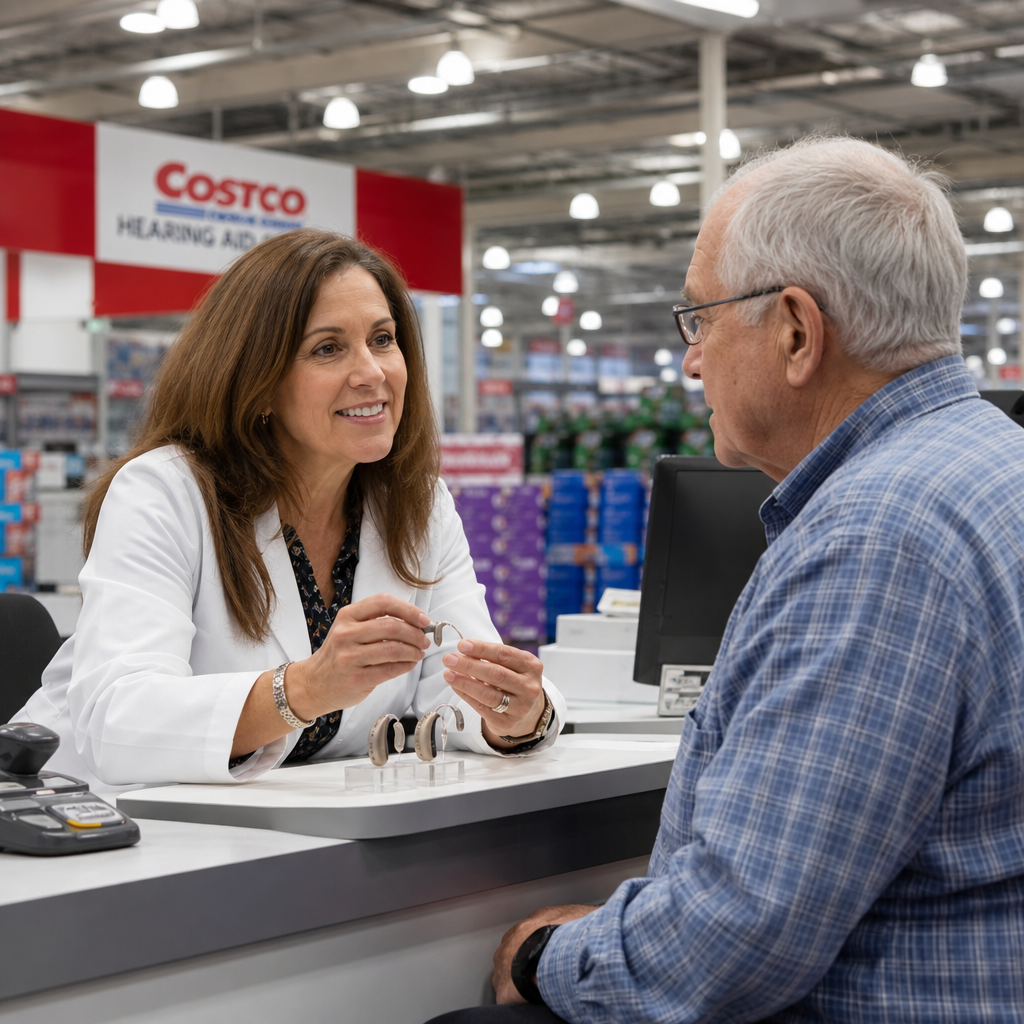
Costco hearing aid reviews consumer reports are a common starting point for shoppers who want better hearing without paying boutique-clinic prices. The phrase usually blends three concerns into one search: whether Costco hearing aids are good, how they compare with independent reviews, and what a buyer should expect from the warehouse model. In practical terms, Costco sells prescription hearing aids through in-store hearing centers, bundles testing and follow-up services, and typically prices devices below many private practices. That combination makes Costco highly relevant for adults managing age-related hearing loss, tinnitus conversations, TV volume complaints, or work and family communication problems.
When people read consumer reports style coverage, they are usually looking for clear answers to direct questions. Are Costco hearing aids cheaper? Yes, often substantially. Are they lower quality? Not necessarily, because Costco has carried devices from recognized manufacturers and has also offered premium-level features at midmarket prices. Is there a catch? There can be. Selection is narrower than in a large audiology clinic, appointment availability varies by location, and support depends heavily on the skill of the hearing instrument specialist or audiologist you meet. I have seen excellent Costco fittings and mediocre ones, just as I have seen in private practices. The outcome depends on the device, the fitting process, and your hearing profile.
This hub article explains the general landscape so you can make sense of Costco hearing aid reviews consumer reports, compare pricing and service models, understand technology levels, and decide whether Costco belongs on your shortlist. It covers who Costco serves well, where it falls short, what services are included, how to evaluate trial periods and warranties, and which questions to ask before buying. If you are just beginning your research in hearing aids, this page is meant to be the practical overview that helps every later decision make more sense.
What Costco Hearing Aids Usually Include
Costco’s hearing centers generally sell prescription hearing aids packaged with core hearing care services. That usually includes a hearing test, device programming, real-ear or speech-based verification depending on location and provider habits, follow-up adjustments, cleaning, and counseling on use and maintenance. Many consumers focus only on sticker price, but bundled care matters because hearing aids are not one-time purchases. They require fitting, adaptation, troubleshooting, and periodic reprogramming as hearing needs change.
Most Costco locations have offered devices from major brands, though specific lines change over time. Historically, shoppers have seen products associated with names such as Philips, Rexton, Jabra, and formerly Kirkland Signature models. The important point is not only the badge on the case. It is whether the instrument supports modern essentials like directional microphones, rechargeable batteries, Bluetooth streaming, noise management, feedback cancellation, app-based control, telecoil or Auracast readiness where relevant, and enough fitting flexibility for your audiogram. A lower price does not help if the software cannot fine-tune speech audibility in your most difficult environments.
The warehouse model also changes the buying experience. You are not walking into a boutique office with a long consultation every time. Costco tends to run a more standardized, volume-oriented workflow. For many people that works well, especially if their hearing loss is mild to moderate and they want practical service without aggressive upselling. For patients with complex asymmetrical loss, severe speech understanding deficits, unusual ear anatomy, active medical issues, or a need for highly specialized counseling, a private audiology practice or hospital clinic may still be the better fit.
How Costco Compares on Price, Value, and Features
The reason Costco hearing aid reviews consumer reports get so much attention is simple: price compression. In many markets, a pair of premium prescription hearing aids at a private clinic can run from roughly $4,000 to $7,000 or more when bundled with professional care. Costco pricing has often landed far below that, frequently in ranges that make buyers do a double take. Lower overhead, high sales volume, and a more limited brand mix help create that difference.
Price alone, however, is not value. Value is the combination of acquisition cost, fitting quality, follow-up support, warranty terms, technology relevance, and expected lifespan. A $1,600 pair that never gets adjusted properly can be worse value than a $4,500 pair fit with precise verification and ongoing rehabilitation. On the other hand, if Costco offers the feature set you need and the local center provides careful aftercare, the savings can be genuine rather than superficial.
| Factor | Costco Hearing Centers | Typical Private Clinic |
|---|---|---|
| Upfront price | Usually lower | Usually higher |
| Brand selection | More limited | Broader |
| Included follow-up care | Often bundled | Often bundled, sometimes tiered |
| Appointment length | Can be shorter | Often longer |
| Complex case management | Varies by center | Often stronger |
| Convenience for members | High for regular Costco shoppers | Depends on location and hours |
Feature comparisons need care because hearing aid families evolve quickly. One year’s standout model may be replaced by a platform with better speech-in-noise processing, motion sensors, tap controls, longer battery life, or improved streaming. The smart approach is to compare the specific model available at Costco against current competitors on your actual needs: restaurant listening, phone calls, TV clarity, wind handling, tinnitus programs, remote support, and comfort. Reviews are useful, but your listening goals matter more than marketing labels like premium or advanced.
What Consumer Reviews and Independent Ratings Really Tell You
Consumer reviews are helpful, but they are not the same as controlled clinical evidence. Reviews capture satisfaction, convenience, service speed, app stability, comfort, and perceived sound quality. Those are valuable signals. They also reflect bias. People who had a great bargain or a frustrating repair delay are more likely to post. A five-star review can mean “the hearing aid connected to my iPhone,” while a one-star review can stem from unrealistic expectations after only three days of use.
Independent rating organizations and survey-based publications add another layer by collecting larger samples and asking standardized questions. Those reports often focus on satisfaction with staff, testing process, counseling, value, reliability, and recommendation likelihood. In my experience, Costco often scores well on value and straightforward service, which aligns with what buyers expect. Where surveys are less revealing is clinical nuance. They rarely tell you whether real-ear measurements were used consistently, whether gain targets matched prescriptive formulas like NAL-NL2, or whether the patient had unresolved medical red flags that should have prompted ENT referral.
The best way to read Costco hearing aid reviews consumer reports is to sort them into three buckets. First, comments about price and convenience are usually reliable. Second, comments about sound quality are useful only if you know the reviewer’s hearing loss, fitting timeline, and listening environments. Third, comments about provider quality are highly location specific. One center may be superb at counseling and fine-tuning, while another feels rushed. That is why local reputation matters as much as national reputation.
Who Should Consider Costco and Who May Need More Specialized Care
Costco is often a strong option for adults with uncomplicated mild to moderate sensorineural hearing loss who want modern technology at a lower cost and are comfortable receiving care in a retail setting. It can also work well for experienced hearing aid users replacing an older pair who already understand domes, retention lines, charging habits, and the adaptation period. These users usually know what annoys them, what they need improved, and how to judge whether a fitting is on track.
There are also situations where I would urge caution. If you have sudden hearing loss, one-sided hearing loss, significant dizziness, ear pain, drainage, persistent asymmetry, rapidly changing thresholds, poor word recognition inconsistent with your pure-tone results, or a history of ear surgery, start with medical and audiologic evaluation rather than retail purchase. Likewise, if you need pediatric care, cochlear implant assessment, custom hearing protection integrated into treatment, or intensive auditory rehabilitation, Costco is not designed to replace a specialty clinic.
Manual dexterity and vision matter too. Small rechargeable receiver-in-canal devices are convenient, but they can be difficult for people with arthritis or tremor. In those cases, in-person coaching is critical, and you should assess whether the local center provides enough hands-on support. Costco can be a good fit, but only if the service model matches the user’s abilities, communication goals, and medical history.
How the Buying Process Works From Test to Trial Period
Most Costco hearing aid purchases begin with a hearing test and consultation at the hearing center. The provider reviews your hearing thresholds, discusses communication complaints, and recommends one or more devices. Ask whether the evaluation includes speech testing and whether the recommendation is based on your word recognition ability, not just your audiogram. A good fitting starts with understanding how you function in noise, on the phone, in meetings, and at home.
After selection, the devices are programmed to your hearing loss and comfort tolerance. This is where technique matters. Best practice in hearing aid fitting includes verification that the output in your ear matches prescriptive targets, especially for soft, average, and loud speech. Some providers use real-ear measurement consistently; others rely more on manufacturer first-fit settings. First-fit can be a starting point, but it is not the gold standard. If you are comparing centers, ask directly how they verify fittings.
Trial periods are especially important because initial sound impressions can be misleading. New users often describe their own voice as strange, paper as too loud, or restaurant noise as overwhelming. That does not always mean the hearing aids are wrong. It often means the brain is relearning neglected sounds. A proper trial lets you wear the devices in real environments, return for adjustments, and decide based on actual benefit rather than first-day discomfort. Also review warranty length, loss-and-damage terms, battery or charger coverage, and repair turnaround time before you commit.
Questions to Ask Before You Buy
Smart buyers arrive with a checklist. Ask which brands and models are available now, what technology tier is being recommended, and why that tier fits your lifestyle. Ask whether telecoil, Bluetooth LE Audio, hands-free calling, tinnitus sound therapy, and rechargeable options are included. If you use an Android phone, confirm compatibility for streaming and app control, because hearing aid connectivity still varies by device and operating system.
Ask about service logistics. How long are follow-up visits? Who handles repairs? Are walk-ins accepted for cleanings? What happens if your hearing changes after purchase? If you travel seasonally, can another Costco hearing center help you, or is support tied mainly to the original location? Those practical details influence long-term satisfaction more than shoppers expect.
Finally, ask one question many buyers skip: what objective method will be used to confirm the fitting is correct? If the answer is vague, probe further. Hearing aids should improve audibility in a measurable way, not just feel louder. The strongest providers can explain how they balance target matching, comfort, feedback risk, and speech understanding. That conversation tells you more than any glossy brochure.
Bottom Line on Costco Hearing Aid Reviews Consumer Reports
Costco deserves its reputation as a high-value hearing aid retailer, but value is not the same as universal best choice. The company’s hearing centers often deliver lower prices, solid technology, and convenient bundled follow-up care. For many adults with typical age-related hearing loss, that combination is enough to make Costco one of the smartest places to shop. Consumer reviews and survey-based ratings generally support that conclusion, especially on affordability and overall satisfaction.
At the same time, hearing outcomes depend on more than the logo on the hearing aid or the savings on the receipt. The most important variables are the accuracy of the evaluation, the skill of the fitting, the willingness to fine-tune over time, and the match between the service model and your hearing needs. Complex cases, medical warning signs, and demanding communication goals may justify a more specialized clinic even at a higher cost.
If you are researching hearing aids, use this hub as your baseline: compare specific models, verify what services are included, read local reviews carefully, and ask how fittings are validated. Then schedule a consultation and judge the process firsthand. Better hearing is too important to buy on price alone, but there is no reason to overpay when a well-run Costco hearing center can deliver excellent results.
Frequently Asked Questions
Are Costco hearing aids actually good compared with other hearing aid providers?
For many buyers, yes—Costco hearing aids are considered a strong value, especially for people who want modern prescription devices, professional fitting, and follow-up care at a lower total cost than many private clinics. Costco hearing centers typically carry major-brand technology or premium private-label models with features such as Bluetooth streaming, rechargeable batteries, background noise management, feedback reduction, and app-based controls. That means shoppers are not usually choosing between “cheap” hearing aids and “better” hearing aids; they are more often comparing similar levels of technology delivered through different business models.
What makes Costco stand out is the bundled pricing structure. In many cases, hearing tests, fitting appointments, adjustments, cleanings, and routine follow-up support are included in the purchase price. For consumers, this matters because hearing aids are not just products—they are medical devices that often need tuning over time. A lower upfront price with included service can translate into meaningful long-term savings. Reviews from consumers often reflect that reality: people frequently report satisfaction with both the performance of the devices and the affordability of the overall package.
That said, “good” depends on your needs. Costco may be an excellent fit for adults with mild to moderate hearing loss and fairly straightforward hearing-care needs, but it may be less ideal for people who want highly specialized care, same-day emergency access, or a long-standing relationship with a local audiology practice. The quality of the experience can also vary by location, provider availability, and appointment demand. So the short answer is that Costco hearing aids are often very good, but the best choice depends on whether you prioritize price, convenience, service model, technology options, or more customized clinical support.
What do consumer reviews and independent reports usually say about Costco hearing aids?
Consumer reviews and independent evaluations often highlight three consistent strengths: price, included services, and access to advanced technology. Shoppers commonly start by searching for “Costco hearing aid reviews consumer reports” because they want reassurance that lower prices do not mean lower quality. In many cases, outside reviews describe Costco as a competitive option for budget-conscious buyers who still want prescription-grade hearing aids and hearing-center support. Consumers often praise the transparency of pricing and the fact that they can compare devices in a retail environment that feels less intimidating than some medical offices.
Another theme in reviews is satisfaction with the bundled care model. Hearing aids usually need fine-tuning after the initial fitting, and buyers appreciate not having to pay separately for every adjustment or routine check. This can be especially attractive to first-time users, who often need multiple visits during the adaptation period. Positive reviews often mention that Costco hearing centers explain the basics clearly, provide hearing testing in-store, and offer practical help with maintenance and settings.
At the same time, independent reviews and customer feedback also mention limitations. Some users report longer wait times for appointments, fewer brand choices than they might find in private audiology clinics, and variation in service quality from one warehouse location to another. Others note that Costco’s model may feel more transactional than highly personalized boutique care. These mixed points do not necessarily indicate poor quality; rather, they reflect the trade-offs of a high-volume retail hearing-care system. Overall, the consensus is usually that Costco performs very well on value and accessibility, while more specialized clinics may outperform it in highly customized care or complex hearing-loss cases.
How much do Costco hearing aids cost, and why are they usually cheaper?
Costco hearing aids are usually less expensive than comparable devices sold through many independent clinics, and that price difference is one of the biggest reasons consumers research them so heavily. While exact prices vary by model, technology tier, and location, Costco is widely known for offering prescription hearing aids at lower package prices than many traditional providers. The savings often come from Costco’s warehouse business model, large purchasing power, streamlined sales environment, and bundled service approach rather than from offering low-end products.
In a private practice, pricing may reflect not only the hearing aid itself but also clinic overhead, provider time, extended service plans, and individual practice margins. Costco can often distribute those costs differently. Because the company operates at scale and serves a high volume of members, it can negotiate pricing more aggressively and keep the consumer cost lower. In addition, buyers typically receive a package that includes hearing testing, fitting, programming, follow-up appointments, and ongoing maintenance support, which can make the total value especially attractive.
However, shoppers should still look beyond the sticker price. The right question is not only “How much do Costco hearing aids cost?” but also “What is included, and how well does that match my needs?” A lower cost is most meaningful when the device is fitted properly and supported over time. If you need frequent advanced diagnostics, tinnitus management, pediatric care, or highly specialized audiological treatment, a clinic with higher prices may still offer better overall value for your situation. But for many adults seeking capable hearing aids with standard follow-up care, Costco’s pricing is one of the most compelling reasons to consider the warehouse model.
What should I expect from the Costco hearing center buying process?
The Costco hearing aid buying process is generally designed to be straightforward, practical, and relatively consumer-friendly. Most people begin by scheduling a hearing evaluation at a Costco hearing center. During that appointment, a hearing professional will usually test your hearing, review your listening challenges, and discuss whether hearing aids are appropriate for your level of hearing loss. If hearing aids are recommended, you will typically be shown device options that fit your hearing profile, lifestyle needs, and budget.
One important thing to expect is a retail-style environment rather than a private medical-office atmosphere. For many shoppers, that feels convenient and low-pressure. For others, it may feel less personalized than an independent audiology clinic. After you select a device, the center will usually program it to your hearing test results and schedule a fitting appointment. At the fitting, you should receive instructions on inserting the hearing aids, charging or handling batteries, using the app or controls, cleaning the devices, and adjusting to amplified sound over time.
Follow-up care is a key part of the experience. New users often need several adjustments in the first weeks or months, and Costco typically includes those visits as part of the purchase. You can also expect access to routine maintenance such as cleaning, checks, and minor troubleshooting. Still, the experience may vary by location. Some centers are extremely efficient and attentive, while others may be busier and harder to book quickly. It is smart to ask questions up front about appointment availability, trial periods, return policies, warranty details, and exactly what support is included after the sale. Doing that helps set realistic expectations and makes the entire process smoother.
Who is a good candidate for buying hearing aids at Costco, and who might be better off elsewhere?
Costco is often a very good fit for adults who want solid prescription hearing aids, recognizable technology features, and professional support without paying premium clinic prices. It can be especially appealing for first-time hearing aid users, retirees on a budget, and practical shoppers who like the idea of bundled service and transparent pricing. If your hearing loss is relatively straightforward and you want a balance of affordability, convenience, and performance, Costco is often worth serious consideration.
It may also be a strong option for people who value predictable ownership costs. Because testing, fitting, and follow-up support are commonly bundled, buyers often feel more comfortable returning for adjustments instead of worrying about extra service fees. That can improve real-world success, since hearing aids often need refinement after the initial fitting. Consumers who are comfortable shopping through a membership-based warehouse and do not mind scheduling appointments within that system may find the model both efficient and cost-effective.
On the other hand, some buyers may be better served by an independent audiologist or specialty hearing clinic. This includes people with complex hearing loss, unusual ear anatomy, significant tinnitus concerns, medically complicated hearing conditions, or a need for highly individualized rehabilitative care. Those providers may offer more extensive diagnostic services, a wider range of niche device options, and deeper long-term clinical management. People who want very fast appointment access or a highly personalized provider relationship may also prefer a private practice. In short, Costco is an excellent option for many consumers, but it is not automatically the best choice for every hearing-health situation. The smartest approach is to compare service depth, device selection, convenience, and total cost—not just the advertised price.