

Summer is a magical time of year when the warm weather beckons us outdoors to enjoy nature and each other’s company. Picnics are a quintessential summertime activity, but for the Deaf community, traditional gatherings might pose certain challenges. However, with a bit of planning and the right approach, we can create memorable and inclusive picnics that cater to everyone’s needs. This article will guide you through delicious recipes, practical tips for communication, and entertaining activities that will make your picnic perfect for Deaf family members and friends.
When organizing a picnic, the priority is to ensure everyone feels included and comfortable. This involves not only providing mouth-watering recipes but also considering access to communication and activities suited for the Deaf community. Let’s dive into some easy and delicious recipes that everybody can enjoy, followed by tips and activities to enhance your picnic experience.
Easy Recipes for Your Picnic
Food plays a central role in any gathering, and a picnic is no exception. Having a variety of easy-to-make and delicious recipes can elevate the experience. Here are some recipes that are perfect for your summer picnic:
- Chicken Salad Sandwiches – Simple, tasty, and easy to prepare, chicken salad sandwiches are a picnic staple. Use shredded chicken, mayonnaise, a dash of mustard, diced celery, and seasonings to taste. Serve on fresh bread or croissants.
- Fruit Skewers – Refreshing and vibrant, fruit skewers are both visually appealing and healthy. Simply skewer chunks of your favorite fruits like watermelon, pineapple, grapes, and strawberries.
- Pasta Salad – Easy to make ahead and perfect for outdoor meals, a pasta salad with cherry tomatoes, olives, mozzarella balls, and a drizzle of Italian dressing is always a hit.
- Lemonade – No picnic is complete without a refreshing beverage. Homemade lemonade, made with fresh lemons, water, and a bit of sugar, offers a zesty refreshment.
- Cookies – Prepare some delicious cookies in advance for a sweet treat. Chocolate chip cookies or oatmeal raisin cookies can be stored easily and enjoyed by all.
These recipes are not only delicious but also easy to handle and share, making them ideal for a picnic setting.
Deaf-Friendly Communication Tips
When hosting a picnic for Deaf friends or family members, communication is key to making everyone feel included. Here are some practical tips to foster clear communication:
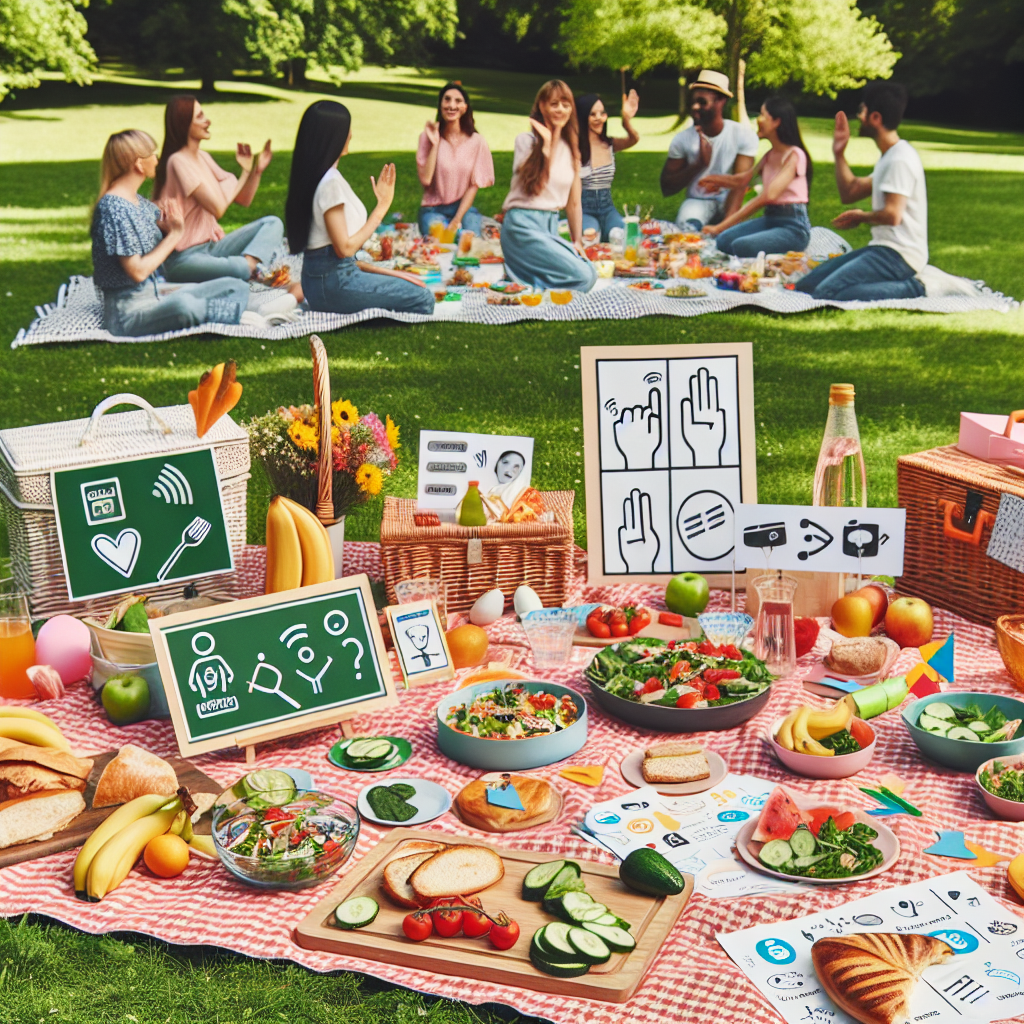
- Use Visual Aids – Having note cards, whiteboards, or printed menus can help convey messages clearly. Labeling food and activities can also be helpful for everyone present.
- Sign Language – If you know sign language, use it! It’s a good idea to learn some basic signs beforehand. Even simple greetings and expressions of gratitude go a long way.
- Clear Line of Sight – Ensure everyone can see each other and there is good lighting. Visual cues are important for effective communication.
- Assistive Devices – Have devices like hearing aids and smartphones handy if needed. Some people might prefer text-based communication.
- Patience – It’s important to be patient and give time for responses. Effective communication is a two-way street requiring effort and understanding from all parties.
These tips can significantly enhance the inclusiveness of your picnic, making it a more enjoyable experience for Deaf individuals.
Accessible Picnic Activities
Engaging in fun activities is a big part of any picnic. Here are some Deaf-friendly activities that everyone can participate in:
- Silent Games – Games like charades or Pictionary, where actions and drawings are used instead of words, are perfect for Deaf-friendly gatherings.
- Visual Storytelling – Share stories using sign language or create pictorial stories. This can be a unique and interactive way to bond over shared narratives.
- Art and Crafts – Setting up a station with art supplies allows for creativity and expression that does not rely on verbal communication. Activities like painting, collage-making, or clay modeling can be very inclusive.
- Group Photo Sessions – Capture memories with a group photo session. Using a camera with a timer can include everyone in the fun.
- Nature Walks – Go for a group walk to explore the surroundings. Non-verbal communication can be enriched through shared experiences and the beauty of nature.
These activities promote inclusion and enjoyment, ensuring that Deaf individuals feel just as engaged as their hearing counterparts.
Creating an Inclusive Environment
An inclusive environment is paramount for a successful Deaf-friendly picnic. Here’s how you can create a welcoming setting:
- Seating Arrangement – Arrange seats in a circle or semi-circle to facilitate easier visual communication amongst all attendees.
- Accessibility – Ensure the picnic location is accessible for all, considering mobility issues that some Deaf individuals might have.
- Step-Free Access – Barrier-free access to bathrooms, parking spaces, and other facilities is crucial.
- Comfort Items – Have comfortable seating, shade, and hydration readily available.
- First Aid Kit – Keeping a first aid kit nearby is always wise to tackle any minor injuries or health concerns that may arise.
Setting up a comfortable and accessible picnic site contributes greatly to the overall experience, ensuring everyone feels welcomed and catered to.
Feedback and Reflection
After your picnic, it’s important to gather feedback and reflect on the experience to continue improving the inclusiveness and enjoyment of future gatherings:
- Ask for Feedback – Seek input from Deaf participants regarding what worked well and what could be improved. This helps in understanding specific needs and preferences.
- Observe and Learn – Pay attention to non-verbal cues and interactions during the picnic to identify areas of improvement.
- Continuous Learning – Stay informed about Deaf culture and inclusivity. Attend workshops, read articles, and stay connected with advocacy groups.
- Share Experiences – Document and share your insights to encourage others to create Deaf-friendly gatherings. This helps raise awareness and promotes inclusivity.
Feedback and continuous learning are pivotal in fostering an inclusive and supportive environment for the Deaf community, ensuring that each gathering is better than the last.
Conclusion
Creating a Deaf-friendly picnic is all about thoughtful planning and a genuine desire to include everyone. From easy and delicious recipes to accessible activities and effective communication strategies, each element plays a crucial role in the success of your gathering. By embracing inclusivity, we contribute to a more connected and understanding community where everyone’s needs are respected and met.
With these tips and recipes, you are well-equipped to host a summer picnic that is not only enjoyable but also inclusive. Remember, the goal is to make everyone feel welcome and appreciated. So, gather your favorite recipes, plan engaging activities, and create an environment where Deaf individuals can fully participate and enjoy. With these efforts, your picnic will surely be memorable and impactful, leaving everyone looking forward to the next gathering.