
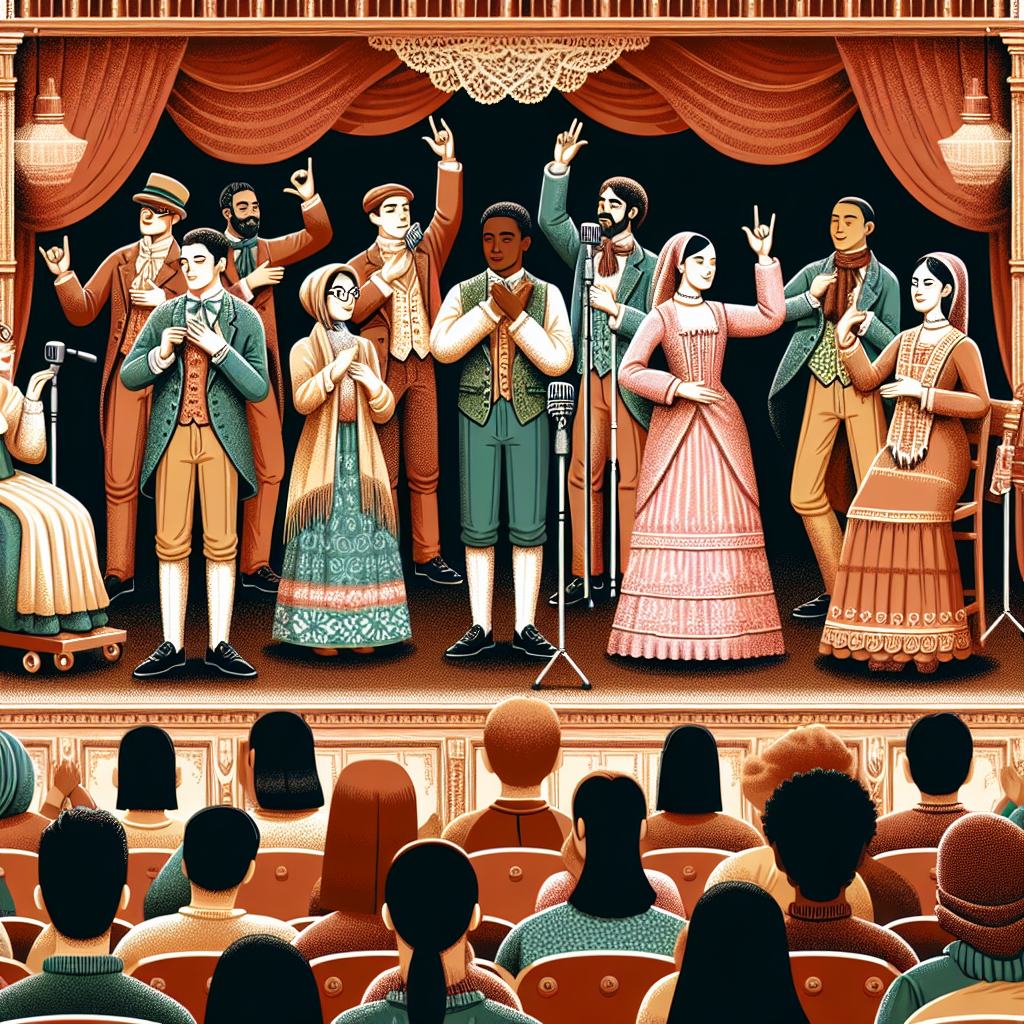
Theater has long been a cherished art form, captivating audiences with its dramatic performances and artistic storytelling. However, for the Deaf and hard of hearing community, accessing these performances has traditionally been fraught with challenges. For years, this community has been sidelined from engaging fully with theatrical experiences, primarily due to the language barriers and lack of inclusive practices within the theater industry. The rise of performances incorporating American Sign Language (ASL) marks a revolutionary shift towards inclusivity. ASL not only bridges the communication gap but enriches the cultural tapestry of theater, allowing Deaf performers and audiences to actively participate and resonate with the narratives on stage.
As awareness around Deaf culture and the importance of accessibility increases, theaters worldwide are embracing ASL performances. This evolution represents a critical step toward expanding the theater industry’s audience base, highlighting the importance of inclusive arts. From beloved Broadway shows to local community productions, the introduction of ASL interpreters and Deaf actors into productions is gradually making theater more accessible. The goal is to celebrate diversity and enhance societal understanding of the Deaf community, ultimately striving for a more inclusive artistic expression. Below, we delve into how this transformation is actively reshaping the theater landscape, encouraging a convergence of cultures and enhancing the overall theatrical experience for all
The Impact of ASL in Theater on Deaf and Hearing Audiences
The integration of ASL into theater productions offers profound benefits for both Deaf and hearing audiences. For Deaf attendees, ASL performances provide an unparalleled immersive experience. Subtitles and captioning, while beneficial, lack the emotional depth and linguistic nuances that ASL brings. ASL incorporates expressive gestures, facial expressions, and body language, providing a full spectrum of emotional context that is often lost in textual translations. This form of visual storytelling allows Deaf audiences to connect with the narrative on a deeper level, experiencing every high and low of the storyline as intended by the creators.
The impact extends beyond Deaf audiences. Hearing attendees experience a richer, more dynamic performance, where they perceive the power of visual language and gain insights into a broader communication spectrum. These productions foster a deeper appreciation and understanding of Deaf culture among the hearing community. As theatergoers witness ASL interpretation seamlessly woven into performances, they become more aware of the importance of inclusivity and accessibility. The cultural exchange enriches the theater-going experience, promoting diversity and paving the way for a society that values multi-modal communication. This shared experience ultimately bridges cultural divides, fostering empathy and understanding across distinct communities.
The Growth and Challenges of Incorporating ASL in Theater
The increasing presence of ASL in theatrical performances marks substantial progress, yet it is not without its challenges. The growth of ASL-inclusive theater is fueled by a collective push toward accessibility, driven by advocacy groups, Deaf performers, and progressive theater companies. Venues are now more committed to accessibility, hiring Deaf actors and ASL interpreters, offering specialized performances, and hosting workshops that encourage richer integration of ASL. This trend has given rise to productions like “Spring Awakening” and “Bernarda Alba,” which feature Deaf actors and utilize ASL as a central performance element, setting a precedent for future shows.
Nevertheless, the journey isn’t without hurdles. The integration process requires cooperative efforts from artistic teams, often necessitating the redesign of aspects such as choreography and scriptwork to ensure synchronization between ASL and spoken dialogues. Limited funding and a lack of accessibility resources pose further challenges, compelling many theaters to prioritize budgetary constraints over inclusivity initiatives. Overcoming these obstacles demands continuous advocacy and support from the community and policymakers, who understand the long-term benefits of creating inclusive spaces. With financial investment and dedication, theater communities can sustainably adapt and expand ASL offerings, ensuring that the arts remain an integral, accessible part of everyone’s cultural experience.

Case Studies: Successful ASL Performances
Several groundbreaking productions have set the stage for successful ASL-inclusive performances, highlighting the power and impact of accessible theater. The 2015 revival of “Spring Awakening” by Deaf West Theatre is often cited as a landmark project. This production utilized a dual cast of Deaf and hearing actors, with ASL and spoken English cast together to deliver a powerful rendition of the acclaimed musical. The show was celebrated for its innovative approach, blending stunning choreography with ASL and earning critical acclaim for its immersive storytelling and narrative depth. It demonstrated that the inclusion of ASL enriched the performance, offering layers of interpretation that engaged audiences beyond the traditional auditory experience.
Another successful project, “The Curious Incident of the Dog in the Night-Time,” showcased how theaters could accommodate Deaf audiences through structured performances featuring interpreters strategically positioned on stage. Similarly, community theater groups have begun incorporating ASL, with some offering completely silent performances, relying solely on gestures and expressions to convey stories. These successful models exemplify the symbiotic relationship between ASL and theater, proving that inclusivity enhances the art rather than detracts from it. As the industry learns from these cases, it sets a precedent for widespread industry adoption, urging greater commitment to accessibility and cultural representation.
The Role of Institutions and Advocates in Advancing ASL in Theater
The advancement of ASL performances in theater owes much to the vital roles played by institutions, advocacy groups, and dedicated individuals committed to the cause of accessibility. Organizations like the National Theater for the Deaf and Deaf West Theatre have spearheaded initiatives promoting ASL in performative arts, providing platforms for Deaf artists and advocating for the importance of representation. These organizations work tirelessly to raise awareness, inspire change, and cultivate a new generation of Deaf performers ready to showcase their talents on prominent stages.
Educational institutions are also instrumental, integrating sign language into their curricula and offering specialized training in Deaf performance arts. Schools and drama programs play a crucial role in developing students’ understanding and appreciation of Deaf culture, preparing future generations for a world where theater embraces diversity as a fundamental component. Advocates and grassroots movements have amplified these efforts, driving social change through campaigns and storytelling that highlight the talents and contributions of the Deaf community. Through collaborative efforts, these groups aim to reduce the barriers faced by Deaf individuals, ensuring their full inclusion within the rich tapestry of theatrical arts.
The Future of Accessible Theater: Wider Implications and Potentials
The rise of ASL performances in theater holds promising futures for the broader trend of inclusivity and accessibility in the arts. As awareness spreads and successful implementations serve as templates for others, the industry is poised for a transformative shift towards universally accessible performances. With technology improving accessibility tools like real-time captioning and audio description, more possible venues emerge for incorporating diverse modes of communication. Virtual reality and augmented reality technology also present potential avenues for immersively integrating ASL into performances, further enhancing theatrical storytelling across cultural and auditory spectrums.
The implications extend beyond theater, influencing perceptions and practices across other artistic fields like music, film, and television. The principles of inclusivity, spurred by theater’s progress, can be adapted to cater to diverse audiences and create resonant, universal art. This potentialization paves the way for enriched cultural expressions that reflect society’s diversified narrative. Promoting continuous dialogue, collaboration, and innovation remains imperative, ensuring that while the art form evolves, it remains a platform where all voices, modes of communication, and expressions are valued and celebrated, offering an authentic reflection of our shared human experiences.
Conclusion: Embracing an Inclusive Arts Landscape
The rise of ASL performances in theater represents not just a trend but a critical movement towards an inclusive arts landscape. This progression underscores the importance of representation, enabling the Deaf community to access and contribute to cultural dialogues fully. As we continue to embrace diverse storytelling methods and recognize the art’s role in fostering understanding and empathy, the barriers that have long hindered access are beginning to dissolve. This evolution illustrates a commitment to creating spaces where every voice is heard, every story is told, and every individual feels valued.
The theater serves as a powerful medium through which society can explore and challenge perceptions, and the inclusion of ASL performances only amplifies this potential. By nurturing environments that support accessible art, we not only enrich the cultural landscape but also advocate for broader societal changes toward inclusivity and equality. In doing so, we open doors to new narratives, foster cross-cultural exchanges, and inspire future generations to value diversity as an asset integral to human creativity. As we look forward, let this movement serve as a beacon, guiding us towards a future celebrated for its inclusivity, where the arts continue to thrive as a universal language transcending barriers.