
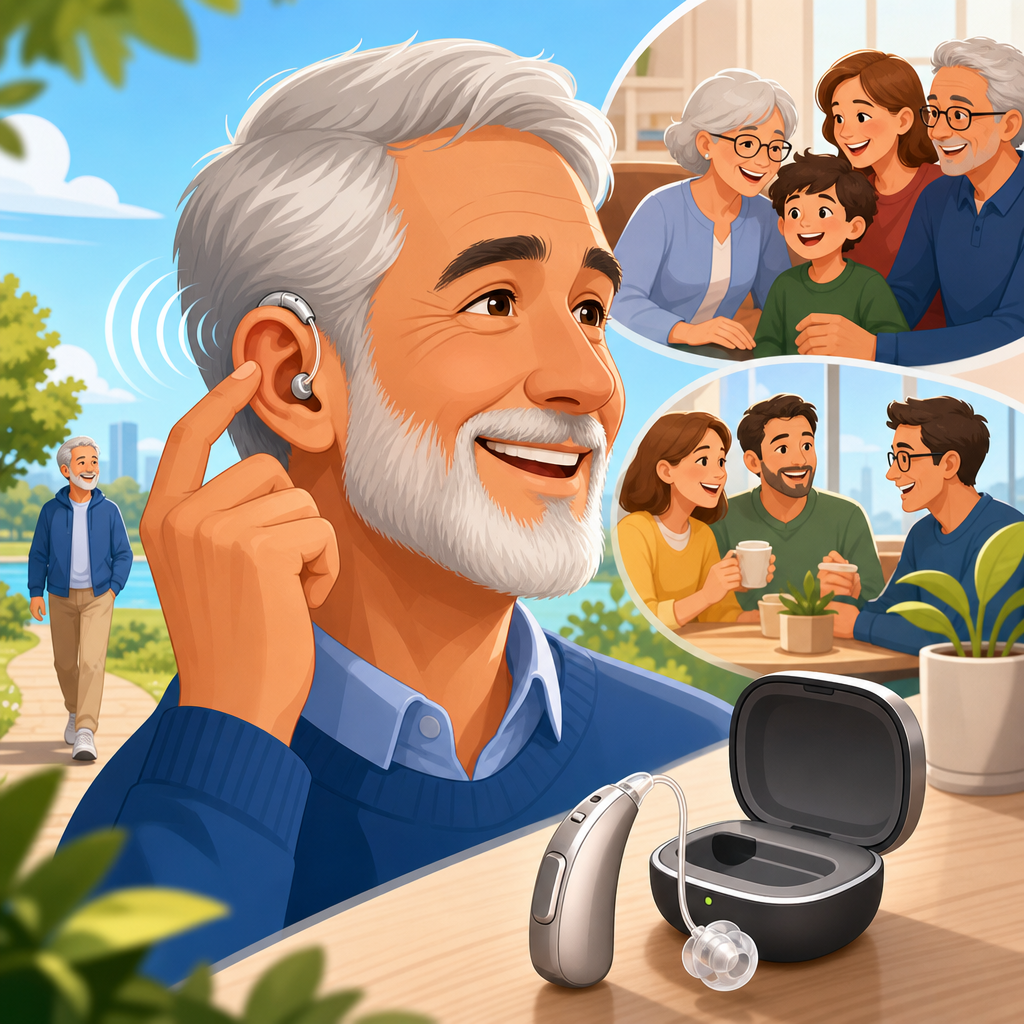
Nebroo hearing aid is a direct-to-consumer hearing support product positioned for adults who want an affordable, simple alternative to traditional prescription hearing devices. In practical terms, that means small wearable amplifiers or over-the-counter style devices designed to make speech and environmental sounds easier to hear in common situations such as conversations, television viewing, church services, restaurants, and phone calls. For anyone researching hearing aids, hearing amplifiers, or budget hearing support, this topic matters because the market now spans medical-grade prescription devices, FDA-regulated over-the-counter hearing aids, and personal sound amplification products, each with different capabilities, limits, and price points.
I have worked with people comparing online hearing products to clinic-fitted devices, and the same questions come up every time: Is Nebroo a real hearing aid, who is it for, what features should buyers expect, and how does it compare with better-known brands? Those are reasonable questions because hearing care has changed quickly since the FDA created a category for over-the-counter hearing aids for adults with perceived mild to moderate hearing loss. At the same time, online advertising often blurs the line between amplification and treatment. Understanding that distinction is the starting point for making a smart purchase.
When people say “hearing aid,” they often mean any small ear-worn device that makes sound louder. Clinically, however, a hearing aid is a regulated medical device intended to compensate for hearing loss through calibrated amplification, frequency shaping, feedback control, compression, and output limits. A hearing amplifier, sometimes sold as a personal sound amplification product, can make sounds louder but may not provide the same individualized tuning, speech optimization, or safety controls. If you are evaluating Nebroo hearing aid options, the most important step is to verify exactly which category the product falls into, what hearing loss level it targets, and whether its claims align with recognized standards for hearing care.
This hub article explains the general picture: how Nebroo hearing aid products are typically marketed, what features matter most, who should consider them, what red flags to watch for, and how to evaluate value beyond the headline price. It also covers fitting, maintenance, return policies, and when to seek a formal hearing exam. By the end, you should be able to judge whether Nebroo belongs on your shortlist, what questions to ask before buying, and how this product category fits into the broader hearing aids landscape.
What Nebroo Hearing Aid Usually Refers To
Nebroo hearing aid searches commonly lead to compact, rechargeable, ready-to-wear devices sold online without an in-person audiology appointment. These products are usually promoted around ease of use, low cost, and immediate access. Common marketing points include digital noise reduction, feedback cancellation, discreet design, and rechargeable batteries. Those features are not meaningless, but they require context. “Noise reduction,” for example, can refer to basic steady-state noise suppression rather than advanced scene analysis that premium prescription devices use to separate speech from multiple competing voices.
In the current market, a Nebroo product may be best understood as part of the value hearing support segment. That segment appeals to buyers who are not ready to spend several thousand dollars through a hearing clinic, or who want to test whether amplification helps before committing to more advanced devices. For adults with very mild difficulty hearing speech in quiet settings, a simple product may provide noticeable benefit. For people with significant high-frequency loss, distorted hearing, one-sided hearing loss, tinnitus as a primary complaint, or poor speech understanding in noise, basic devices often disappoint because the problem is not just volume. It is audibility plus clarity, and clarity requires more precise processing.
Buyers should also know that hearing trouble can have many causes. Age-related hearing loss is common, but earwax impaction, middle ear fluid, sudden sensorineural loss, Ménière’s disease, noise exposure, ototoxic medication effects, and asymmetrical hearing changes all require different responses. Any product page that suggests one inexpensive device is a universal answer should be approached carefully. A credible hearing solution explains both benefits and limits.
Key Features to Evaluate Before You Buy
If you are considering a Nebroo hearing aid, focus on technical and practical factors rather than broad claims. Start with fit style. Behind-the-ear designs with a wire and dome are often easier to handle, offer more battery space, and reduce occlusion compared with fully in-canal designs. In-the-ear products can be more discreet, but they may be harder to insert and adjust, especially for older adults with dexterity issues. Rechargeability is another important factor. Lithium-ion charging is convenient and can eliminate frequent battery changes, but buyers should confirm realistic run time, charging cycle expectations, and whether the case itself stores extra power.
Next, review how the device handles gain and frequency response. Products aimed at age-related hearing loss should emphasize higher frequencies because consonants such as s, f, th, and sh carry speech clarity. If a device only makes everything louder, low-frequency sounds can mask speech rather than improve understanding. Compression matters too. Wide dynamic range compression helps softer sounds become audible without making louder sounds painfully intense. Feedback management is essential for comfort, especially when the device is turned up near telephones, hats, or eyeglass arms.
Usability is just as important as signal processing. Look for simple onboard controls, clear instructions, and available customer support. Good devices include multiple listening modes for quiet, noise, and television use, but mode switching should be intuitive. Check ingress protection if sweat or humidity is a concern. Also verify what accessories are included, such as dome sizes, wax guards, charging cable, cleaning brush, and carrying case. Small omissions create ongoing frustration and hidden cost.
| Evaluation Factor | Why It Matters | What to Check |
|---|---|---|
| Device category | Determines intended use, regulation, and performance expectations | Whether it is OTC hearing aid, prescription device, or amplifier |
| Fit style | Affects comfort, handling, and sound delivery | BTE versus in-ear, dome options, ear retention |
| Sound processing | Influences speech clarity and listening comfort | Compression, feedback control, directional microphones |
| Battery system | Shapes convenience and long-term maintenance | Recharge time, daily runtime, battery lifespan |
| Return policy | Reduces risk if performance is poor | Trial length, restocking fees, warranty terms |
How Nebroo Compares With Prescription and OTC Hearing Aids
The biggest comparison point is not brand prestige but care model. Prescription hearing aids are typically fit by an audiologist or hearing instrument specialist after hearing testing. They are programmed to an audiogram using fitting formulas such as NAL-NL2 or DSL, then fine-tuned using real-ear measurement, which verifies the actual sound level delivered in the ear canal. In my experience, this verification step is where much of the value lies. It turns a device from a generic sound booster into a measured intervention tailored to a person’s hearing profile.
Over-the-counter hearing aids sit between clinic care and basic amplifiers. They are intended for adults with perceived mild to moderate hearing loss and may include self-fitting software, in-app hearing checks, and customizable presets. Some OTC products from established companies perform surprisingly well for straightforward age-related loss, especially when users are comfortable with smartphones. A Nebroo hearing aid may compete on price and simplicity, but buyers should compare it against recognized OTC devices from companies such as Jabra Enhance, Sony, Lexie, Audien, Eargo, and Sennheiser’s consumer hearing offerings where available. Price alone is not enough if support, fitting flexibility, and return protections are weak.
Prescription devices still hold advantages in complex listening environments, severe hearing losses, and patients with unusual ear anatomy or medical issues. They also offer better pathways for earmolds, remote microphones, tinnitus programs, and long-term service. That does not make lower-cost products useless. It means buyers should match the solution to the problem. For occasional listening help in controlled settings, a simple Nebroo-style device may be acceptable. For daily communication difficulties affecting work, relationships, and safety, deeper evaluation is usually warranted.
Benefits, Limits, and Realistic Expectations
The main benefit of an affordable hearing device is access. Many adults delay treatment for years because of cost, stigma, or uncertainty. A lower-priced entry point can reduce that barrier and help someone hear television at a reasonable volume, follow family conversations more easily, and feel less isolated. For some users, that first improvement is enough to increase confidence and encourage fuller hearing care later. Rechargeable convenience and easy online ordering also appeal to people in rural areas or those with limited clinic access.
Still, realistic expectations are essential. No hearing aid restores normal hearing, and basic devices are least effective in noisy spaces with multiple competing speakers. A common mistake is judging performance only in a busy restaurant. Even premium hearing aids struggle there because hearing loss affects temporal and frequency resolution in ways amplification cannot fully reverse. Improvement is usually greatest in one-to-one conversation, small groups, and television listening. Expect an adaptation period as the brain relearns environmental sounds that may have been absent for years, such as rustling paper, turn signals, or footsteps.
Comfort and consistency also determine success. If a device whistles, feels blocked, or sounds harsh, users stop wearing it. That is why dome fit, insertion depth, and conservative starting volume matter. Anyone trying Nebroo should plan to use the device in stages: begin at home in quiet, then add television, then controlled conversations, and only later test noisier locations. This gradual approach produces better outcomes than turning the device up fully on day one and assuming failure if the sound feels overwhelming.
Buying Safely: Red Flags, Returns, and Support
Before purchasing any Nebroo hearing aid, investigate the seller as carefully as the product. Start with contact information, warranty details, and a written return policy. A reputable hearing device seller states trial period length, who pays return shipping, whether hygiene-related exclusions apply, and whether restocking fees are charged. Thirty to forty-five days is a common minimum window because hearing aid adaptation takes time. If the return terms are vague, buried, or hard to find, that is a warning sign.
Next, review product claims. Be cautious with language promising “miracle hearing restoration,” “clinically proven for all hearing loss,” or “works better than expensive hearing aids” without evidence. Credible sellers explain intended users, limitations, and setup steps. Independent reviews can help, but they should be read critically because many review sites are affiliate-driven. Better signals include Better Business Bureau complaint patterns, verified customer feedback discussing actual use, and whether the company offers live onboarding support. A real support line matters more than polished advertising because first-week troubleshooting often decides whether a device is used or forgotten in a drawer.
Payment security and recurring charges deserve attention too. Some low-cost hearing products are tied to aggressive upsells, subscription accessories, or difficult cancellation processes. Use a payment method with dispute protection, save all order emails, and photograph the package contents on arrival. If hearing devices arrive without serial numbers, manuals, or sanitation seals where expected, document that immediately. These small habits protect consumers and make returns easier if performance does not match the listing.
When to See an Audiologist Instead of Buying Online
Online hearing products are not appropriate for every situation. Seek an audiologist, ENT physician, or licensed hearing professional promptly if hearing loss is sudden, rapidly worsening, painful, one-sided, associated with drainage, or accompanied by dizziness, ear fullness, or bothersome tinnitus in one ear. The same applies if speech sounds unclear even when volume is high, because poor word recognition can indicate issues that simple amplification will not solve. Earwax blockage should also be ruled out before assuming permanent hearing loss.
A formal hearing exam provides information that online screening cannot fully replace: pure-tone thresholds by frequency, air-bone comparison, speech reception threshold, word recognition testing, tympanometry when needed, and case history review. Those details guide treatment. I have seen people buy inexpensive devices for what they thought was mild age-related hearing loss, only to discover asymmetrical loss requiring medical referral. That is why professional evaluation remains the safest route when symptoms are unusual or daily communication problems are significant.
Even if you ultimately choose a lower-cost product, a baseline hearing test is valuable. It tells you whether the device category matches your needs and creates a reference point for future change. Hearing generally changes gradually, and having documented results helps you recognize when a simple online solution is no longer enough.
Nebroo hearing aid products can make sense for adults seeking a budget-friendly, accessible first step in hearing support, but only when buyers evaluate them with clear standards. The core questions are straightforward: what type of device is being sold, what level of hearing loss is it meant to address, what features improve clarity rather than just loudness, and what protections exist if the fit or sound is disappointing. Those answers matter more than promotional headlines.
As a general rule, Nebroo-style devices are most useful for mild listening difficulties in predictable settings, especially when cost and convenience are top priorities. They are less suitable for complex hearing loss, demanding work environments, severe background noise, or symptoms that suggest a medical problem. Comparing Nebroo with established OTC hearing aids and clinic-fitted prescription options gives needed perspective. Better hearing is rarely about finding the cheapest product; it is about matching the right technology and support to the real communication challenge.
If you are building your shortlist, start with the basics: confirm the product category, read the return policy line by line, check support availability, and get a hearing test if you have any red-flag symptoms or persistent difficulty understanding speech. Use this hub as your starting point for the broader Hearing Aids topic, then compare styles, feature sets, and care models before you buy. A careful decision now gives you the best chance of hearing more clearly, comfortably, and confidently every day.
Frequently Asked Questions
What is the Nebroo hearing aid, and who is it designed for?
The Nebroo hearing aid is typically marketed as a direct-to-consumer hearing support device for adults who want a simpler, more affordable option than traditional prescription hearing aids. In everyday use, it is positioned to help make speech and common environmental sounds easier to hear in situations such as one-on-one conversations, watching television, attending church services, dining in restaurants, and talking on the phone. For many shoppers, the main appeal is convenience: instead of scheduling multiple clinical appointments, they can explore a ready-to-use hearing support product from home.
It is generally best suited for adults with mild to moderate hearing difficulty who are looking for basic amplification and ease of use rather than highly customized medical-grade treatment. People who want straightforward controls, less complicated setup, and a lower upfront cost often find this category appealing. That said, it is important to understand that not every hearing-related problem is caused by the same issue. Some people benefit from simple amplification, while others need a full hearing evaluation, customized programming, or medical treatment. Nebroo may be a practical starting point for people with everyday listening challenges, but it is not necessarily the right solution for severe hearing loss, sudden hearing changes, ear pain, ringing that is new or worsening, or hearing problems accompanied by dizziness. In those situations, an evaluation by an audiologist or physician is the safer and more appropriate next step.
How does Nebroo compare to traditional prescription hearing aids?
The biggest difference usually comes down to customization, clinical support, and price. Prescription hearing aids are professionally fitted and programmed based on a detailed hearing test. An audiologist can fine-tune them to match the wearer’s exact hearing profile, which often leads to better performance in complex environments and improved long-term comfort. These devices may also include advanced features such as more precise noise reduction, directional microphones, feedback management, smartphone app controls, telehealth adjustments, tinnitus support, and ongoing follow-up care.
Nebroo and similar direct-to-consumer hearing support products are generally designed to be simpler and more accessible. They may cost much less, be faster to purchase, and feel less intimidating for first-time users. For people who mainly need help hearing speech more clearly in common daily settings, that simplicity can be a real advantage. However, the tradeoff is that direct-to-consumer devices may offer less personalized fitting and fewer advanced adjustments than prescription models. In a quiet room or during a simple conversation, that may not matter much. In busy, noisy, or acoustically challenging places, the difference can become more noticeable.
In short, Nebroo may be a good fit for budget-conscious adults who want practical amplification without the higher cost and complexity of traditional hearing care. Prescription hearing aids are often the better choice for people with more significant hearing loss, more demanding listening needs, or anyone who wants the most individualized support possible. The right option depends on hearing level, lifestyle, expectations, and whether convenience or customization is the top priority.
Can Nebroo help with conversations, TV listening, restaurants, and phone calls?
For many users, that is exactly the type of everyday listening support Nebroo is intended to provide. In conversations, especially in quieter settings, a hearing support device can make voices sound more present and easier to follow. This can reduce the need to ask people to repeat themselves and may make social interactions feel less tiring. During television viewing, amplification may help users hear dialogue more clearly without raising the volume as much, which can be especially helpful when watching with family members who prefer a lower sound level.
In public settings such as church services, family gatherings, or restaurants, the benefit can vary depending on the level of background noise and the device’s sound-processing ability. Some users notice meaningful improvement because voices are brought forward and sound becomes more audible. Others may still find noisy environments challenging, since amplification can make background sound louder too. That is why expectations matter: a simple hearing support device may improve audibility, but it may not separate speech from noise as effectively as a more advanced, professionally programmed prescription hearing aid.
Phone calls can also improve, particularly if the device helps bring speech frequencies into a clearer range. Results depend on the phone being used, the positioning of the earpiece, and the wearer’s hearing pattern. Some users benefit quickly, while others need a short adjustment period to learn the best volume setting and placement. Overall, Nebroo may be helpful for many of the situations people struggle with most, but the experience will vary from person to person. The best results usually come when the user takes time to fit the device properly, starts in quieter environments, and gradually adapts to amplified sound over several days or weeks.
Is Nebroo easy to use, and what should first-time buyers expect?
Ease of use is one of the main reasons people look at products like Nebroo. These devices are typically designed for adults who do not want an overly technical process and prefer straightforward operation. Many direct-to-consumer hearing support products focus on simple controls, basic volume adjustment, wearable comfort, and quick setup. For first-time buyers, this can feel much less overwhelming than entering the traditional hearing-aid system, especially if they have been delaying treatment because of cost, complexity, or uncertainty about where to begin.
That said, even a simple device comes with a learning curve. At first, amplified sound may seem unusually sharp, bright, or loud because the brain is reintroducing sounds it has been missing. Everyday noises such as footsteps, dishes, paper rustling, or air vents can stand out more than expected. This is normal for many new users. It does not always mean the device is defective; often it means the wearer needs a gradual adjustment period. Starting with short listening sessions at home, using lower settings initially, and increasing wear time slowly can make the transition much easier.
Comfort and fit also matter. A secure fit helps sound quality, reduces whistling or feedback, and makes the device more pleasant to wear throughout the day. Buyers should read the setup instructions carefully, test different ear tip sizes if included, and keep the device clean and dry. It is also wise to review the seller’s return policy, warranty terms, charging or battery requirements, and customer support options before buying. First-time buyers should expect a practical, entry-level hearing support experience rather than a fully customized clinical one. For many people, that is enough. For others, trying a simpler product helps them realize they would benefit more from a professional hearing evaluation and a more advanced solution.
When should someone choose Nebroo, and when is it better to see an audiologist instead?
Nebroo may be worth considering when an adult has mild, gradual hearing difficulty and wants an affordable, low-barrier way to improve day-to-day listening. It can be a reasonable option for someone who mainly struggles with speech clarity during conversations, TV watching, group settings, or similar routine situations, especially if they prefer a simple buying process and are comfortable trying a device without a full in-person fitting. It may also appeal to people who are not ready to invest in prescription hearing aids but want to take a practical first step rather than continue struggling in silence.
However, there are clear situations where professional care is the better choice. Anyone with sudden hearing loss, hearing loss in only one ear, ear pain, ear drainage, dizziness, a feeling of pressure, rapidly worsening symptoms, or significant ringing in the ears should seek medical evaluation promptly. Those signs can point to an underlying condition that should not be addressed with amplification alone. The same is true for people with severe hearing loss, complicated communication needs, or poor results from basic hearing support devices. An audiologist can perform formal testing, determine the type and degree of hearing loss, rule out certain problems, and recommend the most appropriate treatment path.
The bottom line is that Nebroo can be a convenient and budget-friendly option for some adults, but it is not a substitute for professional diagnosis when symptoms are significant, unusual, or medically concerning. If hearing difficulties are affecting quality of life, work, safety, or relationships, getting expert guidance can save time and lead to better results. Many people start with a direct-to-consumer device for convenience, but the smartest long-term decision is always the one that matches the seriousness of the hearing issue and the level of support truly needed.