

Kwanzaa is a week-long celebration rooted in African-American culture, observed each year from December 26 to January 1. Created by Dr. Maulana Karenga in 1966, the holiday seeks to connect people with African heritage and foster a sense of community. With seven core principles known as “Nguzo Saba,” Kwanzaa encourages unity, self-determination, and collective responsibility, among others. As the celebration grows in popularity, it’s important to ensure inclusivity, especially for the Deaf and hard-of-hearing communities.
American Sign Language (ASL) is a complete, natural language that has been widely adopted by the Deaf community in the United States and parts of Canada. Just like spoken languages, ASL has its own grammar, syntax, and cultural nuances. By incorporating ASL into Kwanzaa celebrations, we can make the event more inclusive, ensuring that Deaf individuals can fully participate in the festivities and unite with the broader community.
In this article, we’ll explore how to share the principles of Kwanzaa through stories, activities, and various other methods, all while utilizing ASL. Not only will this be an educational experience, but it will also foster a sense of belonging and collaboration between the Deaf and hearing communities. Let’s delve into the seven principles of Kwanzaa and how we can celebrate them with ASL.
Engaging Storytelling through ASL
Storytelling is a powerful tool for preserving traditions and passing down cultural knowledge. In the context of Kwanzaa, stories can help explain the significance of the seven principles and how they can be applied in daily life. By using ASL, we can ensure that these stories are accessible to Deaf individuals, allowing them to engage with the cultural heritage that Kwanzaa celebrates.
To begin, consider selecting traditional African folktales that embody the principles of Kwanzaa. These stories can then be translated into ASL by skilled sign language interpreters or members of the Deaf community who are fluent in ASL. Videos of these stories being signed can be created and shared online or at in-person Kwanzaa events.
Another approach is to invite Deaf storytellers to share their own personal experiences and interpretations of Kwanzaa through ASL. This can create a meaningful connection between the storyteller and the audience, fostering a sense of unity and mutual understanding. Additionally, using visual aids such as pictures, props, and costumes can enhance the storytelling experience and make it more engaging for everyone involved.
Ultimately, the goal is to create an inclusive environment where Deaf individuals feel valued and able to contribute to the celebration. By incorporating ASL into storytelling, we ensure that the rich cultural heritage of Kwanzaa is accessible to all.
Interactive Activities with ASL
Interactive activities are a fun and engaging way to celebrate Kwanzaa while promoting the use of ASL. These activities can bring people together, fostering a sense of community and mutual respect. Let’s explore some ideas for incorporating ASL into Kwanzaa celebrations through hands-on activities.
One popular activity is to create and share Kwanzaa crafts that represent the seven principles. For example, participants can make Kwanzaa kinara (candle holders) and decorate them with colors and symbols that are meaningful to the celebration. As these crafts are being made, instructors or Deaf community members can sign the explanations and significance of each element using ASL.
Games are another excellent way to engage participants while promoting ASL. Consider organizing a scavenger hunt where participants search for items related to Kwanzaa principles. Clues and instructions can be provided in both written form and ASL, ensuring that everyone can participate. Additionally, charades or Pictionary-style games using ASL can be a fun and educational way to reinforce the principles and vocabulary associated with Kwanzaa.
Workshops can also be a valuable addition to Kwanzaa celebrations. These workshops can focus on teaching basic ASL signs and phrases related to Kwanzaa, allowing both hearing and Deaf participants to learn and practice together. This not only promotes learning but also encourages collaboration and mutual respect between communities.
By incorporating ASL into interactive activities, we create an inclusive environment where everyone can participate, learn, and celebrate the values of Kwanzaa.
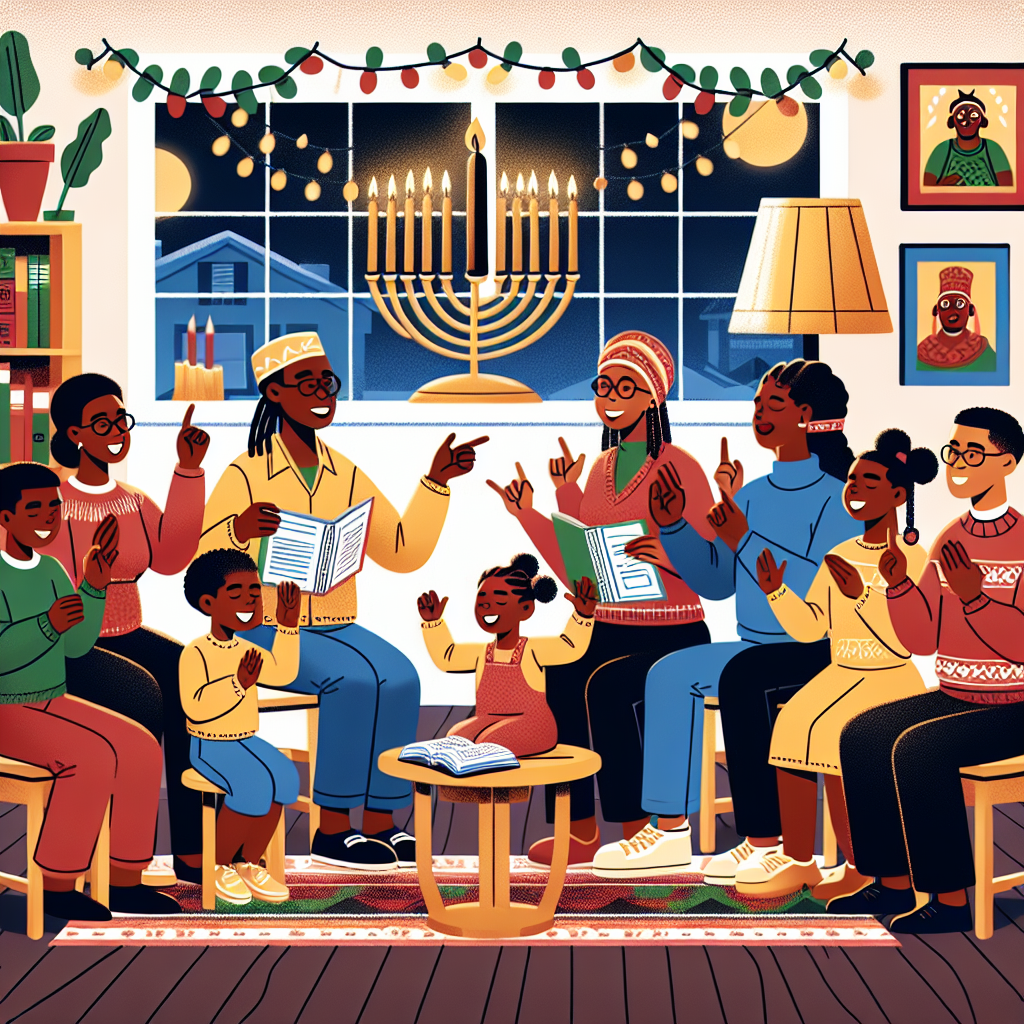
Music and Dance with ASL
Music and dance are integral parts of Kwanzaa celebrations, offering a way to express joy, unity, and cultural pride. By incorporating ASL into musical performances and dance routines, we can ensure that Deaf participants are fully included in the festivities.
One approach is to have songs performed in both spoken word and ASL simultaneously. This can be done by having sign language interpreters on stage alongside singers or by teaching the performers how to sign the lyrics themselves. This way, Deaf individuals can experience the music through visual language and rhythm.
Dance performances can also be adapted to include ASL, particularly when it comes to interpreting the lyrics or themes of the dance pieces. Deaf dancers can be included in the choreography, using ASL to convey the emotions and stories being told through the dance. This not only makes the performance more inclusive but also adds a unique and powerful visual element to the presentation.
Another idea is to host a drum circle or rhythm workshop where participants can learn to feel the beat of the music through vibrations. This can be an especially enriching experience for Deaf individuals, allowing them to connect with the music on a tactile level. Instructors can use ASL to teach participants how to play different rhythms and instruments, creating a harmonious and inclusive musical experience.
By integrating ASL into music and dance performances, we ensure that the joyous expressions of Kwanzaa are accessible to everyone, fostering a sense of unity and celebration across communities.
Educational Workshops and Discussions
Education is a key component of Kwanzaa, as it aims to promote cultural awareness and understanding. By hosting educational workshops and discussions in both spoken English and ASL, we can ensure that Deaf individuals are included in these important learning experiences.
Consider organizing workshops that focus on the history of Kwanzaa, the significance of the seven principles, and how they can be applied in daily life. These workshops can be led by knowledgeable speakers who are fluent in ASL or by using skilled sign language interpreters to convey the information to Deaf participants. Visual presentations, such as slideshows and videos with ASL interpretation, can enhance the learning experience and make the information more accessible.
Panel discussions can also provide valuable insights into the experiences of Deaf individuals within the context of Kwanzaa. By inviting Deaf community members to share their perspectives and experiences, we create an inclusive platform for dialogue and mutual understanding. These discussions can cover a range of topics, from the challenges and triumphs of celebrating Kwanzaa as a Deaf individual to the importance of accessibility and inclusion in cultural events.
Workshops on learning ASL can also be beneficial, particularly for hearing individuals who want to communicate more effectively with Deaf community members. These workshops can cover basic ASL vocabulary and phrases related to Kwanzaa, as well as cultural etiquette and awareness. By fostering mutual respect and understanding through language education, we can create a more inclusive and harmonious community.
Educational workshops and discussions that incorporate ASL not only promote learning but also ensure that Deaf individuals are fully included in the cultural exchange, enriching the overall Kwanzaa experience for everyone involved.
Implementing the Principles of Kwanzaa through ASL
The seven principles of Kwanzaa, known as “Nguzo Saba,” provide a framework for building strong, interconnected communities. By implementing these principles through ASL, we can ensure that Deaf individuals are active participants in the celebration and the communal growth it promotes.
Let’s explore how each principle can be embraced through ASL:
- Umoja (Unity):
Strengthening unity within the community can be achieved by creating inclusive events where Deaf and hearing individuals interact and collaborate. Encouraging the use of ASL during gatherings fosters mutual respect and understanding. - Kujichagulia (Self-Determination):
Encouraging Deaf individuals to share their personal stories and experiences in ASL empowers them to define their own identities and contributions within the community. This can be done through storytelling sessions, panel discussions, and personal reflections. - Ujima (Collective Work and Responsibility):
Collaborative activities, such as community service projects or group discussions, can be made more inclusive by providing ASL interpretation and ensuring that Deaf individuals have equal opportunities to contribute and lead. - Ujamaa (Cooperative Economics):
Promoting Deaf-owned businesses and supporting economic initiatives within the Deaf community aligns with this principle. Hosting workshops on entrepreneurship and financial literacy in ASL can empower Deaf individuals to achieve economic independence. - Nia (Purpose):
Encouraging Deaf individuals to pursue their passions and goals within the context of Kwanzaa can promote a sense of purpose. Workshops and mentoring programs in ASL can provide guidance and support in achieving these aspirations. - Kuumba (Creativity):
Artistic expressions, such as visual art, music, and dance, can be celebrated through ASL. Hosting art exhibitions, talent shows, and creative workshops that are inclusive of Deaf participants can highlight the diverse talents within the community. - Imani (Faith):
Fostering faith and confidence within individuals and the community can be achieved by creating supportive and inclusive environments. By embracing ASL, we demonstrate a commitment to accessibility and equity, building trust and solidarity.
Implementing these principles through ASL ensures that the values of Kwanzaa are accessible and meaningful to everyone, promoting a sense of belonging and unity within the community.
Conclusion: Celebrating Kwanzaa with ASL
Kwanzaa is a time to celebrate cultural heritage, community, and shared values. By incorporating ASL into Kwanzaa celebrations, we ensure that Deaf individuals are fully included in the festivities, allowing them to participate, learn, and contribute to the communal experience. From engaging storytelling and interactive activities to inclusive music, dance, and educational workshops, there are many ways to integrate ASL into Kwanzaa celebrations.
By embracing the principles of Umoja, Kujichagulia, Ujima, Ujamaa, Nia, Kuumba, and Imani through ASL, we create a more inclusive and respectful community where everyone can thrive. These efforts not only make Kwanzaa more accessible but also enrich the experience for all participants, fostering a sense of unity and mutual respect.
As we continue to celebrate Kwanzaa, let us remain committed to inclusivity and accessibility, ensuring that the values and traditions of this important holiday are shared and cherished by everyone, regardless of their hearing abilities. Together, we can honor the spirit of Kwanzaa and build a stronger, more united community for generations to come.
Happy Kwanzaa!