
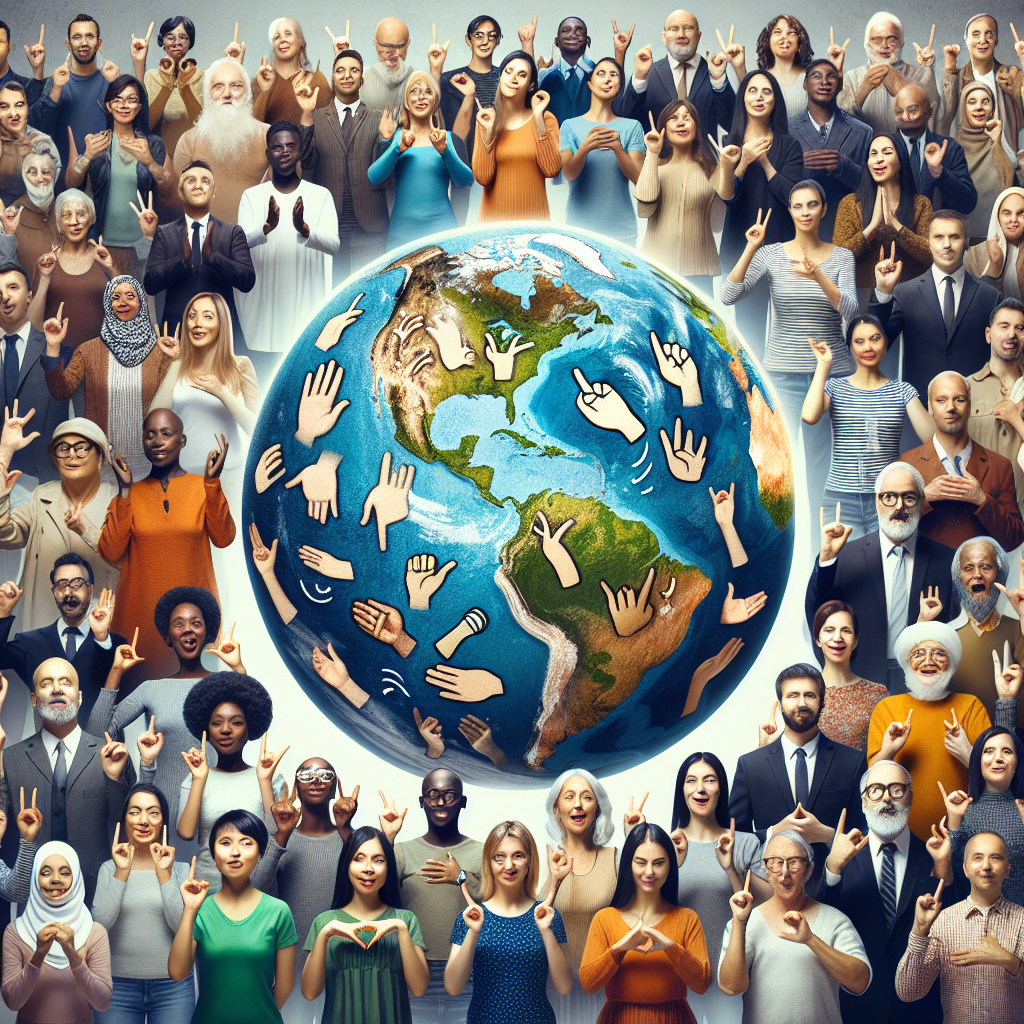
Communication is a fundamental aspect of human life, enabling connections, relationships, and the transfer of information. While spoken and written languages dominate our daily interactions, there is an equally rich and expressive form of communication that often goes unnoticed: sign language. International Sign Language Day provides us with an opportunity to recognize, celebrate, and increase awareness about the significance of sign languages worldwide. This day emphasizes the rich linguistic diversity and unique cultural aspects of the Deaf community.
Sign language is more than just a tool for communication; it represents the identity, culture, and heritage of the Deaf community. Unlike spoken languages, which are primarily auditory, sign languages use visual-manual modality to convey meaning. They have their own grammar, syntax, and cultural norms, making them full-fledged languages in their own right. Despite their complexity and richness, sign languages have historically been marginalized, with many people unaware of their existence or importance.
As we celebrate International Sign Language Day, it’s crucial to understand the history, linguistic features, and cultural significance of sign languages. This not only fosters appreciation but also encourages inclusion and accessibility for Deaf individuals in all aspects of society. By promoting Deaf education and awareness, we can ensure that sign languages are given the recognition and respect they deserve. Join us on this journey to explore the world of sign languages and celebrate the beauty and diversity they bring to our global tapestry.
The History of International Sign Language Day
International Sign Language Day, celebrated annually on September 23rd, is a significant event that highlights the importance of sign languages and Deaf culture. The date commemorates the establishment of the World Federation of the Deaf (WFD) in 1951. The WFD is an international organization dedicated to the rights and welfare of Deaf individuals across the globe. Their advocacy efforts have been instrumental in promoting sign language recognition and Deaf rights.
In 2017, the United Nations General Assembly officially declared September 23rd as International Day of Sign Languages (IDSL). This declaration aimed to raise awareness about the critical role sign languages play in achieving human rights and advancing social inclusion. The theme for each year’s celebration focuses on various aspects of sign languages and Deaf culture, encouraging communities and organizations to participate and spread the message.
The history of sign languages themselves dates back centuries, with each sign language evolving within its own community. For example, American Sign Language (ASL) originated in the early 19th century from a blend of French Sign Language (LSF) and indigenous sign systems in the United States. Similarly, British Sign Language (BSL) and other sign languages have their own unique histories and development paths. Recognizing and understanding these histories is essential in appreciating the depth and diversity of sign languages worldwide.
Linguistic Features of Sign Languages
Sign languages are natural languages with their own sets of linguistic features that distinguish them from spoken languages. One of the most striking aspects of sign languages is their use of visual-manual modality. This means they rely on hand movements, facial expressions, and body language to convey meaning, as opposed to the auditory-oral modality of spoken languages.
Grammar and syntax in sign languages are complex and rule-governed. Unlike spoken languages that use intonation and word order to indicate questions or emphasis, sign languages often use facial expressions and body movements. For instance, raising the eyebrows can indicate a question in ASL. The spatial aspect is another unique feature; signers utilize the space around them to represent subjects, objects, and verbs, creating a three-dimensional narrative.
Morphology in sign languages involves the use of handshapes, locations, and movements to create different meanings. For example, a slight change in the movement or handshape can alter the meaning of a sign. Additionally, sign languages exhibit regional variations and dialects, just like spoken languages. These variations can be influenced by geographical, social, and cultural factors, adding another layer of richness to the linguistic landscape of sign languages.
The study of sign linguistics is a growing field, shedding light on the intricacies and beauty of these languages. By understanding the linguistic features of sign languages, we can better appreciate their complexity and the cognitive processes involved in their use. This awareness paves the way for more inclusive educational practices and policies that support the Deaf community.
The Cultural Significance of Sign Languages
Sign languages are not just means of communication; they are deeply intertwined with the cultural identity and heritage of the Deaf community. Deaf culture encompasses unique traditions, values, art forms, and social norms that have developed within Deaf communities over generations. Sign language is at the heart of this culture, serving as a vehicle for passing down knowledge, stories, and experiences.
One of the key aspects of Deaf culture is the concept of “Deaf Gain.” This term shifts the perspective from viewing deafness as a loss or disability to recognizing the unique contributions and strengths of Deaf individuals. Sign language is a vital part of this concept, highlighting the ways in which Deaf people enrich the broader society through their visual-spatial skills, creativity, and cultural insights.
Deaf art, literature, and performance are vibrant expressions of Deaf culture. Visual art forms, such as painting and sculpture, often incorporate themes related to the Deaf experience and the beauty of sign language. Deaf literature includes a rich tradition of storytelling, poetry, and plays performed in sign language, offering a unique narrative style that combines visual and linguistic elements.
Understanding and celebrating Deaf culture fosters a sense of community and belonging among Deaf individuals. It also promotes a more inclusive society where diversity is respected and valued. By embracing the cultural significance of sign languages, we can build bridges between Deaf and hearing communities, creating a more harmonious and understanding world.
Deaf Education and Awareness
Education plays a crucial role in empowering Deaf individuals and promoting sign language awareness. Accessible and inclusive education ensures that Deaf students receive the same opportunities as their hearing peers, allowing them to reach their full potential. Deaf education encompasses a range of approaches, from bilingual-bicultural programs to mainstreaming with appropriate support services.
Bilingual-bicultural (Bi-Bi) education is an approach that utilizes both sign language and written/spoken language in instruction. This model recognizes sign language as the primary language of Deaf students, facilitating cognitive and linguistic development. In a Bi-Bi program, students learn academic content through sign language while also acquiring proficiency in the written form of the dominant spoken language.
Mainstreaming involves integrating Deaf students into general education classrooms with necessary accommodations, such as sign language interpreters or assistive technology. This approach promotes social interaction and inclusion, exposing hearing students to sign language and Deaf culture. However, it is essential to ensure that appropriate support is in place to address the unique needs of Deaf students and prevent isolation or frustration.
Raising awareness about Deaf education also involves educating teachers, parents, and the broader community about the importance of sign language and Deaf culture. Professional development programs for educators can equip them with the skills to create inclusive and supportive learning environments. Additionally, community outreach initiatives can foster understanding and acceptance, breaking down barriers and stereotypes associated with deafness.
Advocacy and Policy for Sign Language Recognition
Advocacy efforts play a vital role in promoting the recognition and use of sign languages. Organizations like the World Federation of the Deaf (WFD) work tirelessly to advance the rights of Deaf individuals and ensure that sign languages are recognized at national and international levels. Legal recognition of sign languages is a crucial step towards achieving equality and accessibility for Deaf communities.
Several countries have made significant progress in recognizing sign languages as official languages. For instance, New Zealand was one of the first countries to grant official status to New Zealand Sign Language (NZSL) in 2006. Similarly, the United States recognizes American Sign Language (ASL) as a distinct language in many states, with efforts ongoing for federal recognition. These legal recognitions affirm the linguistic and cultural identity of Deaf individuals, promoting their rights to education, employment, and social participation.
Policy initiatives also focus on removing barriers and ensuring accessibility in various domains, such as media, healthcare, and public services. Implementing sign language interpretation services, captioning, and other accommodations can significantly enhance the participation of Deaf individuals in society. Additionally, promoting sign language education for hearing individuals can foster mutual understanding and communication, creating a more inclusive environment.
How You Can Celebrate International Sign Language Day
Celebrating International Sign Language Day offers a wonderful opportunity to engage in activities that promote sign language awareness and appreciation. Whether you are a member of the Deaf community or an ally, there are numerous ways to participate and contribute to this global celebration.
One way to celebrate is by learning basic sign language. Familiarizing yourself with common signs and phrases can enhance your ability to communicate with Deaf individuals and show your support for their language and culture. Many online resources, courses, and mobile apps make learning sign language accessible and enjoyable.
Hosting or attending events that showcase Deaf culture and sign language is another excellent way to celebrate. These events can include sign language workshops, Deaf poetry readings, art exhibitions, and film screenings featuring Deaf creators and actors. By participating in these events, you can immerse yourself in the richness of Deaf culture and gain a deeper appreciation for sign languages.
Advocating for sign language recognition and accessibility is a powerful way to contribute. This can involve supporting organizations that work towards Deaf rights, participating in campaigns, or engaging with policymakers to promote inclusive legislation. Sharing information about International Sign Language Day on social media platforms can also help raise awareness and inspire others to join the cause.
Ultimately, celebrating International Sign Language Day is about recognizing and honoring the linguistic diversity and cultural significance of sign languages. It is an opportunity to stand in solidarity with the Deaf community and work towards a more inclusive and equitable world.
Conclusion
International Sign Language Day is a celebration of the linguistic diversity and beauty of sign languages worldwide. It provides a platform to recognize the importance of sign languages in the lives of Deaf individuals and the broader society. From the historical significance of the World Federation of the Deaf to the unique linguistic features and cultural richness of sign languages, there is much to appreciate and learn.
By promoting Deaf education and awareness, advocating for sign language recognition, and actively celebrating this special day, we can contribute to a more inclusive and equitable world. Let us embrace the beauty of sign languages, honor the cultural heritage of the Deaf community, and work together to ensure that every voice, whether spoken or signed, is heard and valued.