
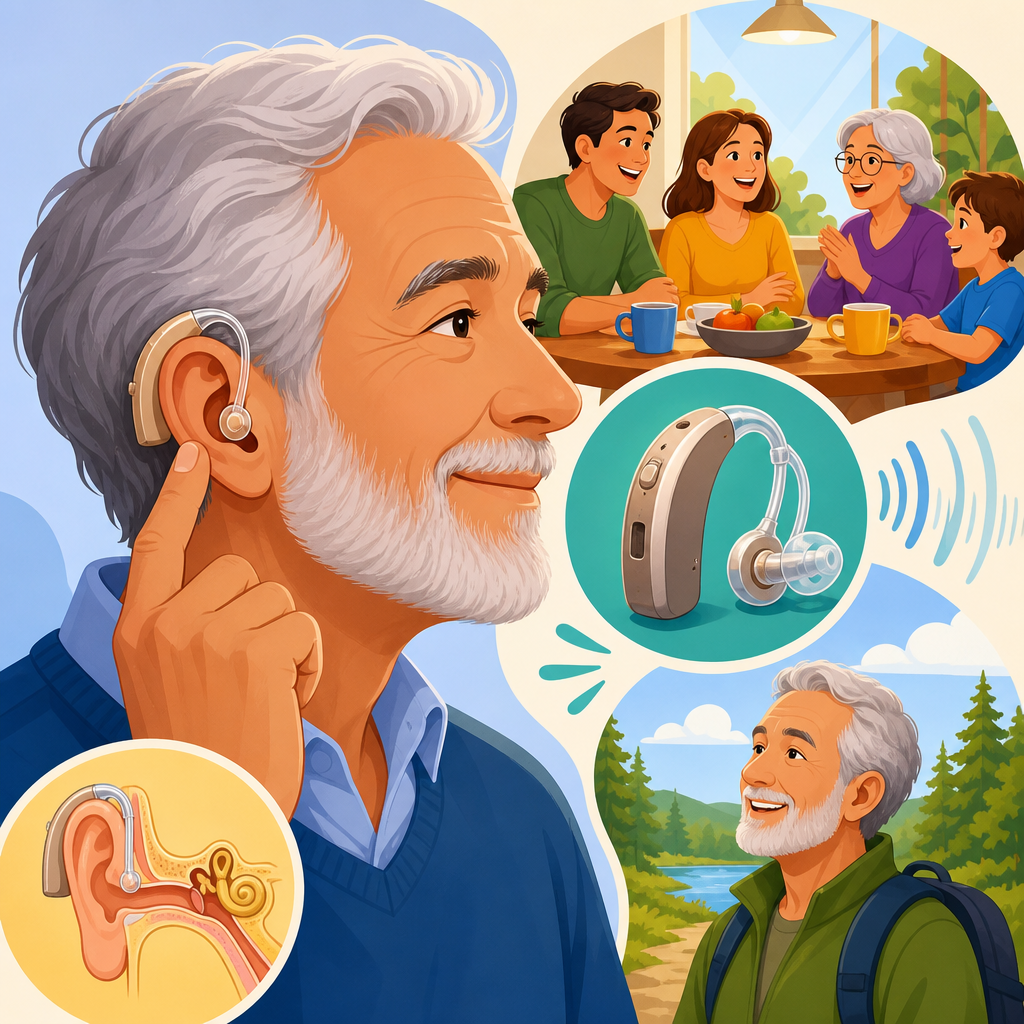
Hearing aids for severe hearing loss can restore access to speech, environmental sound, and daily independence, but choosing the right solution requires understanding how severe loss differs from mild or moderate hearing problems and what modern devices can realistically deliver. Severe hearing loss usually means a person needs sounds amplified to roughly 71 to 90 decibels before hearing them, while profound hearing loss extends beyond that threshold and often changes the conversation from standard amplification to highly specialized devices or implantable options. In practice, I have seen this distinction matter because the wrong recommendation wastes money, delays rehabilitation, and leaves users believing hearing technology does not work when the fitting strategy was the real issue. This topic matters because untreated severe hearing loss is associated with reduced communication, listening fatigue, social withdrawal, safety concerns, lower work performance, and increased risk of depression and cognitive strain. A good hearing aid plan is not just about making sound louder; it is about maximizing speech intelligibility, preserving comfort, reducing distortion, and matching technology to a person’s ear anatomy, word recognition ability, and listening environments. This guide serves as a general hub for the subject, explaining what severe hearing loss means, which hearing aids are typically recommended, how features like directional microphones and feedback management help, when cochlear implants should be discussed, what costs and care look like, and how to approach the buying process with realistic expectations. If you are researching hearing aids for severe hearing loss for yourself, a parent, or a partner, the goal is clarity: what works, what does not, and what questions to ask before making a decision.
What severe hearing loss means and why device selection is different
Severe hearing loss is usually diagnosed through a comprehensive audiologic evaluation that includes pure-tone air and bone conduction testing, speech reception thresholds, and word recognition scores. The audiogram shows the quietest sounds a person can detect across frequencies, but for severe hearing loss, the audiogram alone is not enough. In clinic, two people with similar thresholds can perform very differently with speech because clarity, not just volume, may be impaired. That is why best practice often includes real-ear measurements, loudness discomfort testing, and aided speech testing in quiet and noise. The central challenge is limited auditory dynamic range: soft sounds are inaudible, conversational speech is often unclear, and loud sounds can become uncomfortable quickly. Devices must provide substantial gain and output without causing distortion or acoustic feedback. Standard small hearing aids that work well for mild loss may not have enough power, battery capacity, or receiver strength for severe loss, especially in the high frequencies where consonants such as /s/, /f/, and /th/ carry meaning.
Another reason device selection is different is ear acoustics and venting. People with severe hearing loss often need a more occluding earmold to prevent feedback and retain amplified sound, but that can increase the sensation of blockage and amplify the wearer’s own voice. Audiologists manage this tradeoff through custom earmold design, tubing selection, and fitting software that shapes gain by frequency. Severe loss also makes technology features more important. Directional microphones, digital noise reduction, impulse sound management, and frequency lowering are no longer optional conveniences; they can materially affect whether speech is usable in restaurants, cars, meetings, and religious services. The hearing aid must also be physically robust enough for daily use because inconsistent wear slows adaptation. For many adults, that means behind-the-ear models with custom earmolds remain the most reliable category.
Best hearing aid styles and technologies for severe hearing loss
The best hearing aids for severe hearing loss are usually powerful behind-the-ear, receiver-in-canal models with high-power receivers, or super power devices designed to deliver higher maximum output. Behind-the-ear instruments dominate this category because they can house larger amplifiers, stronger batteries or rechargeable cells, advanced directional microphone arrays, telecoils, and wireless chips without sacrificing durability. In my experience fitting adults with severe loss, the most successful outcomes usually come from devices paired with well-made custom earmolds rather than domes. A custom mold improves acoustic seal, stabilizes the device, and supports higher gain before feedback. It also allows the audiologist to fine-tune bore size, material hardness, and venting. Soft silicone molds are often chosen when retention and seal are priorities, while acrylic may be used when insertion ease or certain acoustic goals matter more.
Feature selection should focus on speech access, not marketing labels. Directional microphones help by prioritizing sounds from in front of the listener, particularly in one-on-one conversations. Feedback cancellation is essential because severe fittings operate close to acoustic limits. Frequency lowering can move otherwise inaudible high-frequency information into a lower range where hearing is better, improving awareness of plural endings and fricatives. Wireless streaming can be transformative for phone calls and television because it delivers a cleaner signal directly to the aids. Telecoils still matter in public venues with hearing loop systems, including many theaters, houses of worship, and government buildings. Rechargeable models are increasingly strong enough for all-day wear, but high-power users should still verify battery endurance under streaming conditions. Not every person with severe hearing loss is a good candidate for tiny in-the-canal devices. Cosmetics matter, but speech understanding, comfort, serviceability, and feedback control matter more.
| Option | Best use case | Main advantage | Important limitation |
|---|---|---|---|
| Power behind-the-ear | Severe to profound loss needing maximum amplification | High output, strong feedback control, durable design | More visible than smaller styles |
| Receiver-in-canal with power receiver | Severe loss with good ear anatomy and fit stability | Natural microphone placement, strong connectivity | May provide less headroom than super power BTEs |
| Custom earmold with power aid | Users needing acoustic seal and retention | Reduces feedback and supports precise fitting | Can increase occlusion sensation |
| Cochlear implant evaluation | Limited benefit from well-fitted hearing aids | Can improve speech access when amplification is insufficient | Requires surgical assessment and candidacy review |
How hearing aids are fitted, verified, and adjusted for better speech understanding
A hearing aid for severe hearing loss should never be programmed by guesswork. The gold standard is a fitting based on a validated prescription formula such as NAL-NL2 or DSL, followed by real-ear verification using probe microphone measures. Real-ear measurement places a thin microphone tube in the ear canal to confirm that amplified sound at the eardrum matches target levels for soft, average, and loud speech. This matters because manufacturer first-fit settings are often inaccurate, and the difference is especially important in severe losses where every decibel of usable audibility counts. I have repeatedly seen users report that a new device sounds “strong” while still missing key consonants; real-ear testing often reveals under-amplification in the high frequencies or inappropriate compression settings.
Verification should be paired with validation. In plain terms, verification checks whether the device is delivering the prescribed sound, while validation checks whether the patient is actually functioning better. Common tools include the Abbreviated Profile of Hearing Aid Benefit, the Client Oriented Scale of Improvement, and aided speech testing in noise. Follow-up visits are not optional. The brain needs time to adapt, and severe-loss fittings often require staged adjustments to balance clarity and comfort. Initial gain may be set slightly below full target for wear tolerance, then increased over several weeks. Counseling is part of the fitting itself. Users need to know that hearing aids do not restore normal hearing, do not erase all background noise, and may not fix poor word recognition caused by cochlear damage. What they can do is improve access to speech cues, environmental awareness, and communication confidence when they are precisely fit and consistently worn.
When hearing aids help, when they struggle, and when to consider cochlear implants
Hearing aids help severe hearing loss most when enough functioning inner ear cells remain to transmit amplified speech information to the auditory nerve. They are particularly effective for people whose word recognition scores remain fair to good, who wear the devices full time, and who receive proper follow-up care. They struggle when speech is not merely too quiet but too distorted by cochlear damage. This is the point many families miss. If a person says, “I hear you talking, but I can’t understand the words,” the issue may be reduced speech discrimination rather than insufficient volume. In those cases, turning the hearing aid up further can make speech louder without making it clearer. That is why aided testing and speech scores are critical decision tools.
Cochlear implant evaluation should enter the discussion earlier than many people realize. Modern referral guidance increasingly emphasizes not waiting until someone receives little to no benefit at all. Adults with severe to profound sensorineural hearing loss, poor aided sentence recognition, or repeated dissatisfaction despite well-fitted power hearing aids may be better served by an implant assessment. Cochlear implants bypass damaged hair cells and directly stimulate the auditory nerve, which can significantly improve speech understanding for appropriate candidates. This does not mean hearing aids have failed in a personal sense; it means the biology of hearing loss has changed the best treatment option. A hub page on hearing aids for severe hearing loss should state this plainly because delayed referral is common. If conversations remain effortful, television volume is extreme, phone use is poor, and speech understanding in quiet is still limited after optimized hearing aid fitting, ask for a cochlear implant evaluation.
Costs, maintenance, accessories, and everyday communication strategies
Hearing aids for severe hearing loss often cost more than entry-level devices because users usually need premium power platforms, custom earmolds, frequent follow-up care, and accessories that improve signal quality. In the United States, a pair may range from several thousand dollars to well over six thousand depending on technology level, clinic model, service bundle, and warranty terms. The smartest buying decision is not always the cheapest device or the most expensive one. It is the option that includes professional fitting, real-ear verification, trial terms, repair coverage, and a realistic service plan. Medicare generally does not cover routine hearing aids, though some Medicare Advantage plans, Medicaid programs, the Department of Veterans Affairs, nonprofit funding sources, and private insurance benefits may help. State vocational rehabilitation agencies may support working adults when hearing affects employment.
Maintenance is more demanding with power fittings because moisture, cerumen, tubing wear, and clogged earmold bores can quickly reduce performance. Daily cleaning, regular filter checks, and prompt repair of weak sound are essential. Accessories can make a major difference. Remote microphones improve speech understanding in noise by placing the microphone near the talker. TV streamers deliver a direct audio signal without forcing everyone else in the room to endure high volume. Captioned telephones and smartphone captioning apps add another layer of access. Communication strategies still matter even with advanced devices: face the speaker, reduce background noise when possible, confirm key details such as names and times, and advocate for looped rooms or captioning in public settings. The strongest outcomes come from combining the right hearing aid technology with realistic counseling, auditory practice, and environmental support.
Severe hearing loss requires more than a basic hearing aid purchase; it requires a coordinated treatment plan built around accurate testing, high-power technology, careful verification, and honest expectations about what amplification can and cannot do. The key points are straightforward. Severe hearing loss often needs power behind-the-ear devices with custom earmolds, not just smaller cosmetic styles. Proper fitting must include prescription-based programming and real-ear measurements, because underpowered or poorly tuned devices leave critical speech sounds inaccessible. Advanced features such as directional microphones, frequency lowering, telecoils, and wireless streaming are practical tools that improve daily communication, not optional extras. Just as important, hearing aids are not the right long-term answer for every case. When aided speech understanding remains poor, cochlear implant evaluation should be discussed promptly rather than postponed for years.
As a hub article under the broader hearing aids topic, this guide gives you the framework for evaluating every related question: style, power level, fitting method, accessories, cost, maintenance, and alternatives. The main benefit of getting this process right is not simply louder sound. It is better speech access, less listening fatigue, improved safety, stronger relationships, and a more confident return to work, family life, and community settings. If you are comparing options now, schedule a comprehensive hearing evaluation with an audiologist who performs real-ear verification and discusses both hearing aids and implant referrals when appropriate. That single step will save time, money, and frustration, and it is the clearest path toward hearing technology that truly helps.
Frequently Asked Questions
What qualifies as severe hearing loss, and how is it different from profound hearing loss?
Severe hearing loss generally means a person needs sounds to be amplified to about 71 to 90 decibels before they can hear them consistently. In practical terms, that often means normal conversation, soft environmental sounds, and many important speech cues are difficult or impossible to hear without significant amplification. Profound hearing loss goes beyond that range and usually means even very loud speech may not be clear enough to understand, especially without visual cues or specialized technology.
The difference matters because it affects what hearing devices can realistically do. Someone with severe hearing loss may still benefit substantially from powerful hearing aids that amplify speech, reduce background noise, and improve access to daily sounds such as alarms, traffic, phones, and conversations. For profound hearing loss, traditional hearing aids may still help in some cases, but the discussion may also include cochlear implants, assistive listening devices, captioning technology, and communication strategies. A full hearing evaluation is the best way to determine where a person falls on the hearing loss spectrum and which treatment path makes the most sense.
Can hearing aids really help people with severe hearing loss?
Yes, many people with severe hearing loss benefit meaningfully from hearing aids, especially when they are professionally fitted and programmed for the individual’s hearing profile. Modern power hearing aids are designed to provide stronger amplification, clearer speech processing, feedback control, directional microphones, and noise management features that make communication easier in real-world settings. They can improve access to speech, help people detect environmental sounds, and support greater independence at home, at work, and in social situations.
That said, it is important to have realistic expectations. Hearing aids do not “restore normal hearing,” and they do not work like simply turning up the volume. Severe hearing loss often affects both loudness and clarity, which means amplified sound may still require the brain to relearn how to interpret speech. Some users notice immediate improvement, while others need time, follow-up adjustments, and listening practice. The right expectation is not perfection, but better communication, greater awareness of sound, and improved quality of life. For many people, that improvement is substantial.
What features should I look for in hearing aids for severe hearing loss?
For severe hearing loss, power and precision are both essential. The device must be strong enough to provide the amplification you need, but it also has to do so in a way that keeps speech as clear and comfortable as possible. High-powered behind-the-ear models are often recommended because they can accommodate larger batteries, more powerful receivers, and custom earmolds that help deliver sound effectively while reducing feedback. A secure fit is especially important when higher amplification levels are required.
Key features to consider include advanced feedback suppression, directional microphones for speech understanding in noise, digital noise reduction, rechargeable or long-lasting battery options, Bluetooth connectivity, telecoil compatibility, and customizable programs for different listening environments. Some devices also offer frequency lowering technology, which can shift certain hard-to-hear speech sounds into a range the wearer can detect more easily. Just as important as the feature list is the fitting process. Verification measures, follow-up fine-tuning, and counseling from an audiologist can make the difference between a hearing aid that is technically powerful and one that is truly useful in everyday life.
Are hearing aids enough for severe hearing loss, or should I consider cochlear implants?
The answer depends on how much benefit you get from properly fitted hearing aids. Many people with severe hearing loss do very well with power hearing aids, particularly if they still have usable speech understanding when sound is amplified appropriately. However, if speech remains unclear even with strong amplification, or if conversations are still extremely difficult in quiet settings, it may be time to ask about a cochlear implant evaluation. This is especially relevant when hearing aids make sounds louder but not clearer.
Cochlear implants work differently from hearing aids. Instead of simply amplifying sound, they bypass damaged parts of the inner ear and directly stimulate the hearing nerve. That can be a better option for some people with severe-to-profound hearing loss who receive limited benefit from hearing aids. Importantly, considering a cochlear implant does not mean hearing aids have “failed.” It means your hearing needs may require a different kind of technology. The best next step is to discuss speech testing results, real-world performance, and implant candidacy with an audiologist or ear specialist who can guide you based on objective measures and your daily communication goals.
How can I get the best results from hearing aids if I have severe hearing loss?
Success starts with a comprehensive hearing evaluation and a hearing aid fitting tailored to your specific hearing thresholds, speech understanding ability, ear anatomy, and lifestyle. For severe hearing loss, a one-size-fits-all approach rarely works. You may need custom earmolds, higher-powered devices, multiple programming adjustments, and a structured adaptation period. Wearing the hearing aids consistently is also important, because the brain needs regular exposure to amplified sound to rebuild listening skills and improve speech recognition over time.
It also helps to use hearing aids as part of a broader communication strategy. Face the person speaking, reduce background noise when possible, use good lighting for visual cues, and ask communication partners to speak clearly rather than simply louder. In many cases, assistive listening technology such as remote microphones, TV streamers, captioned phones, and smartphone accessibility tools can dramatically improve performance in difficult listening environments. Regular follow-up appointments matter as well. Severe hearing loss can require more fine-tuning than mild loss, and small programming changes can lead to major gains in comfort and clarity. With the right technology, professional support, and realistic expectations, many people achieve far better hearing access than they thought possible.