
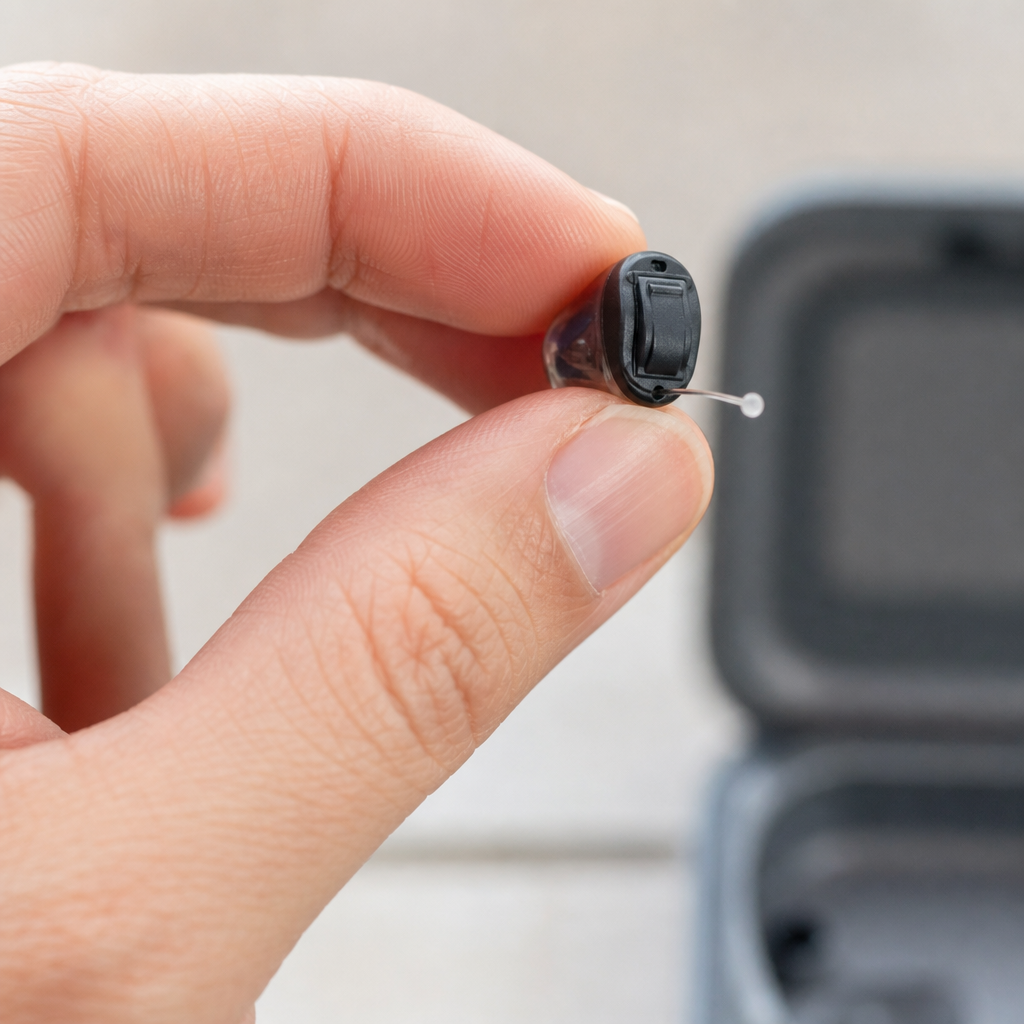
The smallest hearing aids are designed to deliver meaningful amplification while staying discreet, comfortable, and practical for daily life. For many people, size is the first question they ask about modern hearing technology, because appearance, fit, and confidence often shape whether someone seeks treatment at all. In practice, “smallest hearing aids” usually refers to devices that sit deep in the ear canal, nearly disappear behind the ear, or combine tiny housings with advanced digital processing. The category includes invisible-in-canal models, completely-in-canal devices, slim receiver-in-canal designs, and compact custom options built from ear impressions or digital scans.
This matters because untreated hearing loss affects far more than volume. It can reduce speech understanding, increase listening fatigue, strain relationships, and make meetings, restaurants, phone calls, and television frustrating. The World Health Organization has repeatedly emphasized the global impact of hearing loss on communication, social participation, and quality of life. In my work with hearing aid users, I have seen a consistent pattern: people who initially focus on cosmetic concerns often discover that the real value of a small hearing aid is not merely that others do not notice it, but that it helps them rejoin conversations without feeling self-conscious. That combination of discretion and function is why this topic deserves a detailed guide.
A useful definition helps set expectations. Small does not automatically mean invisible, and invisible does not always mean best. The smallest hearing aids are limited by battery size, microphone placement, venting requirements, receiver power, and the shape of the ear canal. Someone with mild high-frequency hearing loss may be a strong candidate for a nearly invisible custom device, while someone with severe hearing loss, dexterity challenges, chronic earwax, or recurring ear infections may do better with a slightly larger model that is easier to manage and more powerful. The right choice depends on hearing thresholds, speech clarity, ear anatomy, lifestyle, and personal priorities.
As a hub article, this guide covers the essentials of the smallest hearing aids: the main styles, who they suit, the tradeoffs to expect, the technology packed into tiny shells, pricing realities, fitting considerations, and how to compare options intelligently. If you are researching hearing aids for yourself or a family member, this page is the starting point for understanding what “smallest” really means and how to choose a device that works beyond the fitting room.
What counts as the smallest hearing aid
The smallest hearing aids generally fall into three groups. First are invisible-in-canal devices, often called IIC hearing aids. These are custom-made and fit deep inside the ear canal, making them the least visible option for many users. Second are completely-in-canal, or CIC, hearing aids, which are still very small but sit slightly closer to the canal opening. Third are mini receiver-in-canal, or mini RIC, devices. These are not hidden inside the canal, but their behind-the-ear housing is extremely slim, and the thin receiver wire makes them cosmetically subtle.
The reason these categories matter is that manufacturers use different engineering strategies to make a device small. Custom in-ear products reduce visibility by using the ear canal itself to conceal the shell. Mini RIC products reduce visibility by moving processing into a tiny case behind the ear while keeping the speaker in the canal. In real fittings, I often explain that the smallest custom device usually wins on invisibility, while the smallest RIC usually wins on features, rechargeability, wireless connectivity, and flexibility.
Size also depends on the individual ear. A hearing aid that sits invisibly in one person’s canal may protrude slightly in another because of canal diameter, bend shape, or the amount of space needed for venting. This is why photographs can mislead. A model marketed as the smallest hearing aid on the market may not be equally discreet for every wearer. Professional assessment remains essential.
Main styles, strengths, and limitations
Choosing among small hearing aid styles becomes easier when you compare visibility, power, features, and ease of handling together rather than focusing on size alone.
| Style | Where it sits | Best for | Main advantages | Main limitations |
|---|---|---|---|---|
| IIC | Deep in ear canal | Mild to moderate loss, maximum discretion | Least visible, natural phone use, reduced wind exposure | Tiny battery, fewer wireless features, harder to handle |
| CIC | In ear canal near opening | Mild to moderately severe loss | Very discreet, custom fit, often comfortable for glasses users | Limited controls, moisture and wax exposure, small battery |
| Mini RIC | Small case behind ear with receiver in canal | Mild to severe loss, users wanting features | Bluetooth, rechargeability, directional microphones, easier adjustments | More visible than IIC or CIC, wire can catch on masks or glasses |
Invisible-in-canal hearing aids are the answer for people who prioritize the lowest possible visibility. Because they sit deep in the canal, they can take advantage of the outer ear’s natural acoustics. Many users report that their own voice sounds more natural than expected, though this varies by fit and venting. However, IIC devices usually use very small zinc-air batteries, often size 10, and battery life may be only a few days depending on wear time and amplification needs. They are also rarely the best choice for users who want direct smartphone streaming.
Completely-in-canal models are a practical middle ground. They remain discreet while allowing slightly more space for controls, vents, and circuitry. In some cases, that extra space improves fitting flexibility. For a user with moderate hearing loss who wants a device that is hard to notice but still manageable, CIC can be the sweet spot. The tradeoff is that the device remains exposed to wax and humidity, so maintenance matters.
Mini RIC hearing aids are often overlooked by shoppers searching for the smallest hearing aids, yet they are among the most successful fittings in current audiology practice. Phonak, Oticon, ReSound, Signia, Starkey, and Widex all offer very compact RIC platforms. These models may be slightly more visible, but they are usually easier to fine-tune, support stronger receivers, and include advanced feedback management, binaural processing, app control, and rechargeable lithium-ion batteries.
Who is a good candidate for very small hearing aids
The best candidates for the smallest hearing aids typically have mild to moderate hearing loss, good manual dexterity, and a strong preference for discreet wear. They also need ear canals that can accommodate the shell and any necessary venting. If hearing loss is concentrated in the high frequencies, small devices often perform well because they can amplify speech cues without needing the power output required for more significant loss.
Ear anatomy is more important than most people realize. Narrow canals, sharp canal bends, collapsing canals, bony growths, and unusual jaw movement can all affect whether a tiny custom hearing aid will fit properly or stay comfortable through a full day. During fittings, this is one of the biggest reasons expectations need to be individualized. Two people with the same audiogram may end up in different styles because their ears are shaped differently.
Daily habits also matter. Very small hearing aids are less ideal for users with heavy earwax production, chronic otitis externa, poor near vision, tremor, or arthritis that makes battery changes difficult. They can also be challenging for people who frequently need volume changes in noisy environments and prefer large physical buttons. In these cases, a mini RIC or another slightly larger design may provide better long-term satisfaction even if it is not the smallest option on paper.
Age alone does not determine suitability. I have fit tiny custom devices for older adults who handled them expertly and slim behind-the-ear products for younger adults who wanted streaming and rechargeability more than invisibility. The right question is not “What is the smallest hearing aid?” but “What is the smallest hearing aid that still supports my hearing, dexterity, and daily routine?”
Technology inside today’s tiny devices
Modern small hearing aids are far more capable than their size suggests. Even compact models use digital signal processing to analyze incoming sound, apply frequency-specific gain, manage feedback, reduce sudden noise, and improve speech audibility. Premium tiers may also include adaptive directionality, impulse noise reduction, environmental classification, wind noise control, tinnitus masking options, and machine-learning-based personalization.
That said, smaller shells create real engineering compromises. Microphone spacing is one example. Directional microphone performance depends partly on the physical distance between microphones, so larger devices can sometimes deliver stronger directional benefits in complex noise. Battery capacity is another limitation. Rechargeable systems and always-on wireless streaming consume power, which is why the very smallest invisible products often lag behind mini RIC devices in connectivity. Thermal management, antenna placement, and available memory also influence feature sets.
Custom deep-fit devices can still provide impressive results when matched carefully. A well-programmed IIC or CIC may help in one-on-one conversations, small group settings, television listening, and everyday errands. But if your work depends on heavy phone use, video calls, app-based control, and all-day Bluetooth streaming, the smallest custom shell may not be the smartest choice. This is where product families from major brands differ. Some emphasize discretion first, others feature integration first, and some offer multiple form factors on the same processing platform.
Programming quality remains decisive. Real-ear measurements, which verify amplified sound in the actual ear canal, are considered best practice by organizations such as the American Academy of Audiology and ASHA. Tiny devices benefit from precise verification because minor acoustic differences in canal placement can affect output significantly. A small hearing aid fitted well routinely outperforms a more advanced device fitted poorly.
Comfort, sound quality, and everyday use
Comfort with the smallest hearing aids depends on shell shape, insertion depth, venting, and how the device interacts with jaw movement over the day. A deep canal fit can feel remarkably secure and unobtrusive once the user adapts, but there is an adjustment period. Some first-time wearers notice a plugged sensation, especially if the fitting requires limited venting to provide enough low-frequency control or prevent feedback. Follow-up adjustments often improve comfort substantially.
Sound quality is not determined by size alone. A tiny custom device can sound natural in quiet spaces because it preserves some of the ear’s normal acoustic cues and avoids the behind-the-ear microphone position. On the other hand, miniature custom styles may have less headroom for severe loss and fewer directional advantages in restaurants or group events. Mini RIC hearing aids often perform better in those situations because they can use more sophisticated microphone arrays and wireless ear-to-ear coordination.
Handling is where small devices separate enthusiastic buyers from satisfied long-term users. Inserting and removing an IIC or CIC requires practice, good lighting, and steady fingers. Battery doors are tiny. Wax guards must be changed. If the removal filament breaks or the device shifts with chewing, a remake or adjustment may be needed. None of this is unusual, but it is easier to accept when discussed upfront. In my experience, people are happiest when they choose a small style with full awareness of these daily tasks.
Maintenance is simple but nonnegotiable. Keep devices dry, brush microphone openings gently, replace wax filters on schedule, and store them safely away from heat, pets, and bathroom humidity. Rechargeable mini RIC models often reduce battery handling but still require regular cleaning of domes and receivers. Small hearing aids last longer when users treat them like precision instruments rather than accessories.
Cost, brands, and how to choose wisely
The price of the smallest hearing aids varies widely based on technology level, bundled service, warranty terms, and whether you buy through a private audiology clinic, hearing instrument specialist, ENT practice, large retail provider, or direct-to-consumer channel. In many markets, prescription hearing aids from leading brands commonly range from roughly $2,000 to $7,000 per pair with professional care included, though local pricing differs. Custom invisible models are often priced similarly to premium mini RIC products, even when their feature sets differ, because custom manufacturing and fitting complexity add cost.
Major brands with strong offerings in the small-device category include Phonak, Oticon, ReSound, Signia, Starkey, Widex, and Unitron. Product lines change frequently, so focus on form factor, fitting support, repair policy, trial period, and service access rather than marketing slogans. Ask specific questions: Is the device rechargeable? Does it support iPhone and Android streaming? What is the expected battery life? Can the receiver or shell be serviced locally? Are follow-up visits and real-ear verification included?
The smartest buying process starts with a complete hearing evaluation, not a catalog search. Compare your audiogram, speech-in-noise needs, dexterity, cosmetic goals, and budget. If discretion is your top priority, request to see both IIC/CIC and mini RIC options side by side. Try handling them. Look in a mirror. Practice inserting them. Ask the clinician which style they would choose if they had your hearing profile and why. That conversation often reveals more than any specification sheet.
The main benefit of the smallest hearing aids is straightforward: they lower the barrier to treating hearing loss by making help feel wearable, acceptable, and personal. The best small device is the one you will actually use every day, hear well with, and maintain confidently. Start with a professional hearing test, compare discreet styles honestly, and choose the smallest option that does not compromise the hearing support you need. When fit, programmed, and maintained properly, tiny hearing aids can make a big difference in daily life.
Frequently Asked Questions
What are the smallest hearing aids available today?
The smallest hearing aids generally fall into two main categories: completely-in-canal (CIC) and invisible-in-canal (IIC) models. These devices are custom-made to fit deep inside the ear canal, which makes them much less noticeable than larger styles. In many cases, when people talk about the “smallest hearing aids,” they mean devices designed to sit far enough into the canal that they are very difficult to see during normal conversation. There are also very small receiver-in-canal (RIC) hearing aids that rest behind the ear with a thin wire leading to the ear canal. While they are not fully hidden, many modern RIC models are extremely discreet and offer advanced features in a tiny package.
It is important to understand that the smallest option is not automatically the best option for every person. Ear canal shape, degree of hearing loss, dexterity, lifestyle needs, and feature preferences all play a role in determining what will work well. Some very small hearing aids prioritize cosmetic appeal and discretion, while slightly larger models may offer easier handling, longer battery life, Bluetooth streaming, directional microphones, and more flexibility for different listening environments. A hearing care professional can explain which small models are appropriate based on your hearing test results and the physical structure of your ear.
Are the smallest hearing aids powerful enough for everyday hearing needs?
Yes, many of the smallest hearing aids can provide meaningful amplification for everyday listening, especially for people with mild to moderate hearing loss. Thanks to advances in digital sound processing, even tiny devices can improve speech clarity, reduce some background noise, and help users hear better in conversations, meetings, restaurants, and other common settings. Modern miniature hearing aids are far more capable than older generations, and they are designed to balance small size with practical performance.
That said, there are still limits to how much technology can fit into the smallest housing. Because space is restricted, the tiniest hearing aids may have smaller batteries, fewer onboard controls, and less room for certain premium features. In some cases, people with more severe hearing loss need larger devices simply because those models can deliver more amplification and support stronger receivers or larger custom fittings. The best way to think about it is this: the smallest hearing aid can be highly effective, but only if it is matched properly to your hearing profile. A good fitting matters more than choosing the smallest possible device based on appearance alone.
Do tiny hearing aids sacrifice comfort or sound quality for discretion?
Not necessarily, but comfort and sound quality depend heavily on fit, design, and proper programming. Many small hearing aids are specifically engineered to feel natural in the ear, with custom shells or soft components that reduce pressure and improve long-term wearability. For people who value discretion, this can be a major benefit because a device that is both comfortable and nearly invisible is more likely to be worn consistently. And consistent wear is one of the biggest factors in successful hearing treatment.
Sound quality can also be excellent in small hearing aids, particularly when they are professionally adjusted. However, there are practical trade-offs. Very small in-the-ear devices may be more sensitive to earwax, moisture, and occlusion effects, depending on how deep they sit and how the ear canal is shaped. They may also offer fewer microphone options than larger styles, which can influence performance in challenging noisy environments. For some users, a discreet behind-the-ear option provides a better balance of comfort, clarity, battery performance, and advanced sound features while still remaining visually subtle. The key is not just how small a hearing aid looks, but how well it performs in your daily life.
Who is a good candidate for the smallest hearing aids?
A good candidate for the smallest hearing aids is typically someone with mild to moderate hearing loss who wants a discreet solution and has ear anatomy that can support a deep or compact fit. People who are especially concerned about visibility often prefer CIC or IIC devices because they can provide confidence in social and professional settings. Smaller hearing aids may also appeal to first-time users who have delayed treatment because they were worried about appearance. For these individuals, modern miniaturized designs can make it easier to take the first step toward better hearing.
However, candidacy is not based on preference alone. Very small hearing aids may not be ideal for people with severe hearing loss, unusually narrow ear canals, chronic earwax buildup, recurring ear infections, or limited finger dexterity. Because tiny devices are smaller to insert, remove, and clean, some users find them harder to manage on a daily basis. Others may prefer a slightly larger style with rechargeable batteries, app controls, and easier maintenance. A comprehensive hearing evaluation will determine not only whether you need amplification, but also whether the smallest hearing aid style is realistic, comfortable, and effective for your specific needs.
What should you consider before choosing the smallest hearing aids?
Before choosing the smallest hearing aids, it helps to look beyond size and think about overall usability. Discretion matters, but so do sound performance, battery type, maintenance needs, connectivity, and durability. The tiniest custom devices may be appealing because they are difficult to see, but they can require more frequent battery changes, careful cleaning, and realistic expectations about which advanced features are available. If you want direct Bluetooth streaming, hands-free calling, or simpler controls, a slightly larger model may actually provide a better experience while still being very discreet.
You should also consider your daily routine. If you spend time in noisy social settings, work in meetings, wear glasses, exercise regularly, or want something easy to handle, these factors can influence which model is best. Comfort during all-day wear is just as important as cosmetics, and a professional fitting can make a major difference. Most importantly, work with a qualified hearing care provider who can compare small hearing aid styles, verify performance with your prescription, and help you weigh appearance against function. The right choice is the one that supports consistent hearing improvement, confidence, and long-term satisfaction.