

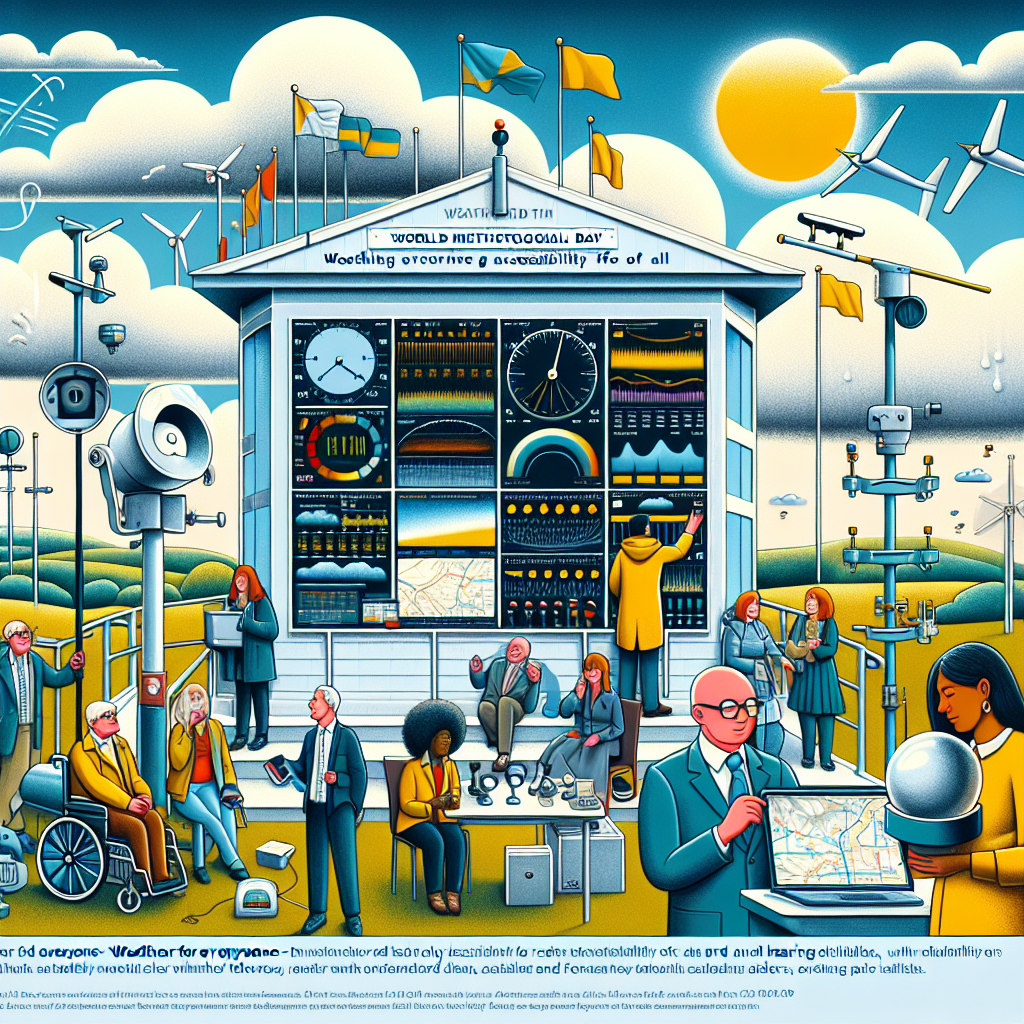
World Meteorological Day is celebrated every year on March 23 to commemorate the establishment of the World Meteorological Organization (WMO). This day highlights the crucial work done in meteorology and its impact on human life. While the significance of weather alerts cannot be overstated, there remains a pressing issue: the accessibility of these vital warnings for Deaf and hard of hearing individuals. Being aware of severe weather conditions is essential for everyone’s safety, yet Deaf and hard of hearing communities face significant barriers in accessing this life-saving information. This article explores the challenges, advancements, and future directions in ensuring that weather alerts are fully accessible to all. By understanding these aspects, we can build a more inclusive environment where everyone, regardless of their hearing abilities, is equally informed and protected.
The Importance of Accessible Weather Alerts
Weather alerts are critical notifications that provide timely information about severe weather conditions, natural disasters, and other environmental hazards. These alerts can save lives by giving people the necessary time to prepare and take precautionary measures. However, Deaf and hard of hearing individuals often miss out on these important alerts due to the reliance on auditory signals, such as sirens and radio announcements. Accessible weather alerts mean that these notifications must be conveyed in ways that cater to the needs of the Deaf and hard of hearing community. This includes utilizing visual, text-based, and vibratory means to ensure that everyone is aware of impending dangers. The need for accessibility in weather alerts is not just a matter of convenience; it is a matter of safety and inclusivity.
Challenges Faced by Deaf and Hard of Hearing Individuals
One of the primary challenges is the lack of standardized procedures across different platforms and regions. While some areas may have provisions for visual alerts via television broadcasts, other regions might not be equipped with such measures. Moreover, reliance on apps and internet connectivity can be problematic for those without access to these technologies. Another significant challenge is the dependency on family or community members for information dissemination. In emergency situations, this dependency can lead to delays and miscommunications. Additionally, many emergency management systems are designed with a hearing-centric approach, making it difficult for Deaf and hard of hearing individuals to receive immediate and accurate weather alerts. To overcome these challenges, a multi-faceted approach involving technology, policy, and community efforts is required.
Technological Advancements in Accessible Weather Alerts
Fortunately, technological advancements are paving the way for more accessible weather alerts. Smartphones, for instance, have become indispensable tools in communication and safety. Many weather apps now offer features tailored for the Deaf and hard of hearing community, such as text alerts, visual notifications, and vibration functions. In addition, emergency alert systems are being integrated with smart home devices that can flash lights or emit visual signals when an alert is issued. Developers are also working on creating more inclusive platforms that integrate multiple forms of communication, ensuring that alerts are available in sign language, text, and visual formats. Innovations like these are crucial in bridging the gap and ensuring that weather alerts are accessible to everyone, irrespective of their hearing abilities.
Government and Organizational Efforts
Governments and organizations are recognizing the importance of accessible weather alerts and are taking proactive measures to address this issue. In the United States, the Federal Communications Commission (FCC) has mandated that emergency information must be accessible to individuals with disabilities. This includes ensuring that televised emergency information is accompanied by closed captioning and visual elements. Similarly, international bodies like the WMO are working on global standards for inclusive weather alerts. Local governments are also partnering with Deaf and hard of hearing communities to understand their needs and implement more effective communication strategies. Such collaborative efforts are essential in creating a standardized approach to accessible weather alerts, ensuring that no one is left uninformed during an emergency.
Role of Community and Advocacy Groups
Community and advocacy groups play a pivotal role in raising awareness and pushing for changes to make weather alerts more accessible. Organizations dedicated to the Deaf and hard of hearing communities, such as the National Association of the Deaf (NAD) and the World Federation of the Deaf (WFD), are instrumental in advocating for policies and technologies that cater to the specific needs of these groups. These organizations often collaborate with government bodies, tech companies, and emergency management agencies to develop and implement accessible solutions. Advocacy groups also organize educational campaigns to inform Deaf and hard of hearing individuals about the available resources and how to utilize them during emergencies. The collective efforts of these groups are vital in driving systemic changes and ensuring that weather alerts are inclusive and effective.
Future Directions and Innovations
The future holds promising prospects for making weather alerts more accessible. One area of innovation is the development of artificial intelligence (AI) and machine learning algorithms that can analyze various data sources and predict severe weather conditions with high accuracy. These technologies can then disseminate alerts through multiple channels, ensuring that everyone receives timely and accurate information. Additionally, there is ongoing research into the use of wearables, such as smartwatches, that can deliver haptic feedback to alert users about emergent weather conditions. Another exciting development is the integration of real-time sign language interpreters in weather broadcasts, providing Deaf and hard of hearing individuals with immediate access to vital information. As technology continues to evolve, it is crucial to prioritize accessibility to ensure that these innovations benefit all members of society.
Conclusion
The celebration of World Meteorological Day serves as a reminder of the importance of meteorology and the essential role of weather alerts in safeguarding lives. For Deaf and hard of hearing individuals, accessible weather alerts are not just a convenience but a necessity for ensuring their safety. While challenges remain, significant strides are being made through technological advancements, government regulations, and the efforts of community and advocacy groups. By continuing to prioritize accessibility and inclusivity, we can achieve a future where everyone, regardless of their hearing abilities, has equal access to life-saving information. On this World Meteorological Day, let us commit to working towards a more inclusive society where weather alerts are accessible to all, ensuring the safety and well-being of every individual.