
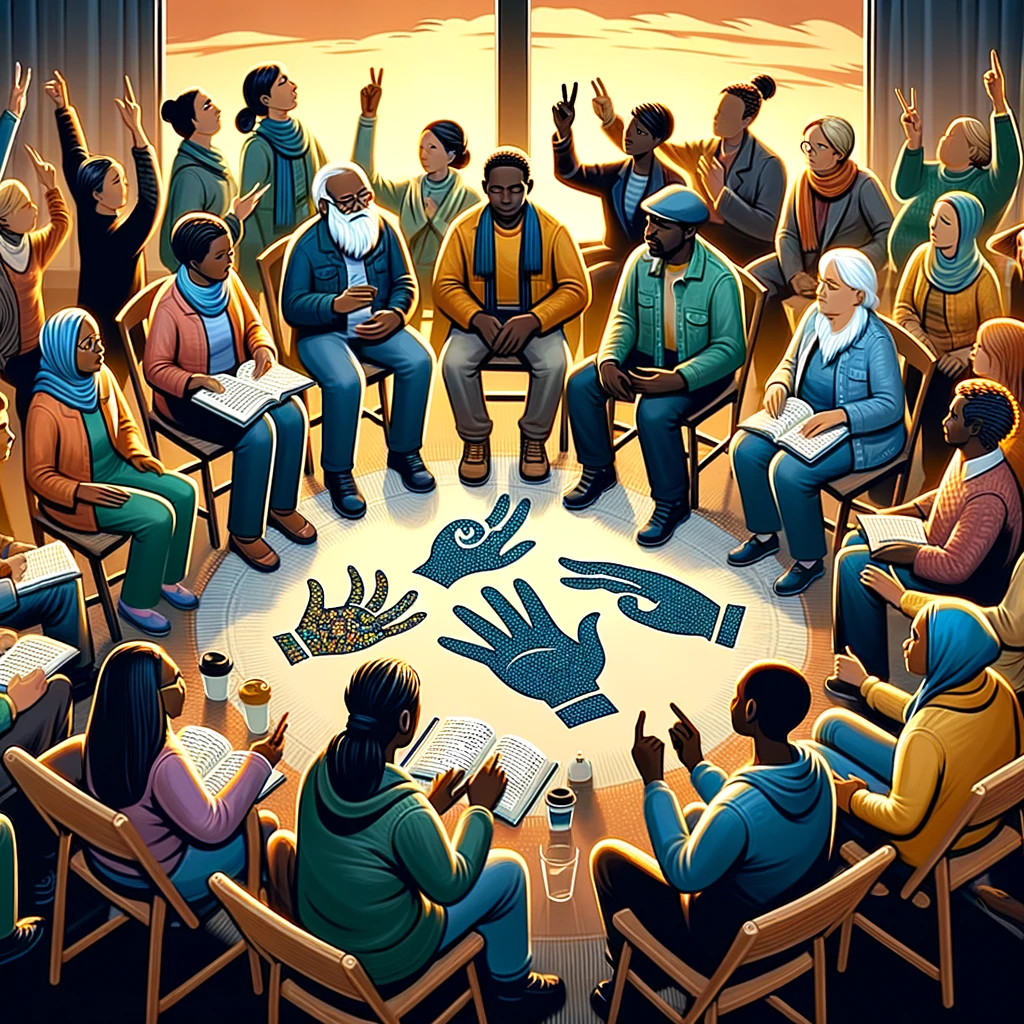
In the rich tapestry of social advocacy, intersectionality has emerged as a pivotal concept, elucidating the complex interactions of various social categorizations such as race, class, and ability. At the intersection of these multifaceted identities lie groups often marginalized in unique and compounded ways. Among these, the intersection of the Deaf and Black communities presents a compelling case for focused advocacy and solidarity-building efforts. This article delves into the nuances of intersectional advocacy within these communities, exploring challenges, strategies, and success stories in the pursuit of equity and mutual support.
Understanding Intersectionality in Advocacy
Intersectionality, a term coined by Kimberlé Crenshaw in 1989, provides a framework for understanding how various forms of inequality and discrimination interconnect and affect individuals. It challenges the single-axis framework that often dominates social advocacy, pushing for a more nuanced approach that considers multiple facets of identity. For the Deaf and Black communities, this means recognizing that the experiences of Black Deaf individuals are distinct from those of individuals who are solely a member of either community.
Historical Context
Historically, both the Deaf and Black communities have faced systemic barriers and discrimination. The Deaf community has battled against audism—the belief that those who can hear are superior—and lack of accessibility in education, employment, and public services. Similarly, the Black community has contended with the enduring legacy of racism and racial inequality. However, Black Deaf individuals face a unique intersection of these challenges, often marginalized within both the Deaf and Black communities due to a lack of awareness and representation.
The Need for Intersectional Advocacy
The unique challenges faced by Black Deaf individuals underscore the need for intersectional advocacy. This form of advocacy aims to address the overlapping forms of discrimination they face, advocating for solutions that are mindful of their complete identity. Intersectional advocacy in this context is not merely about combining efforts but about understanding and addressing the specific needs and experiences of those who belong to both communities.
Challenges in Intersectional Advocacy
Building solidarity between the Deaf and Black communities is not without its challenges. These include:
Communication Barriers
A primary challenge is the communication barrier. Many Black Deaf individuals use American Sign Language (ASL), which may not be widely understood in the broader Black community. Similarly, the Deaf community may not be equipped with the cultural competencies necessary to address issues specific to the Black experience.
Cultural Differences
Differences in cultural experiences and histories can also pose challenges. The Deaf community has its distinct culture, often shaped around Deaf schools and institutions. Conversely, the Black community’s culture is deeply rooted in shared historical experiences of racial discrimination and community resilience. Bridging these cultural differences requires mutual understanding and respect.
Systemic Barriers
Systemic barriers in education, healthcare, and employment disproportionately affect Black Deaf individuals. These barriers are often compounded by a lack of interpreters and resources that are culturally and linguistically appropriate, making it difficult for them to access services and advocate for their rights.
Strategies for Building Solidarity
To overcome these challenges, specific strategies can be employed:
Education and Awareness
Raising awareness about the unique experiences of Black Deaf individuals is crucial. This can involve educational campaigns in both the Deaf and Black communities, highlighting the intersection of deafness and race. Workshops, seminars, and cultural events can serve as platforms for this education.
Collaborative Advocacy
Collaborative advocacy efforts between Deaf and Black organizations are essential. By working together, these organizations can pool resources, share knowledge, and amplify their voices. Joint initiatives can address issues such as police brutality, healthcare disparities, and educational inequalities that disproportionately affect Black Deaf individuals.
Cultural Competency Training
Cultural competency training for service providers, educators, and advocates is vital. This training should focus on understanding the intersection of deafness and race and how to provide services that are accessible and culturally sensitive.
Inclusive Policies and Practices
Advocating for inclusive policies and practices in education, healthcare, and employment is necessary. This includes ensuring that Deaf and Black perspectives are included in policymaking and that services are designed to be accessible and equitable for all.
Success Stories in Intersectional Advocacy
Despite the challenges, there have been significant strides in building solidarity between the Deaf and Black communities:
The National Black Deaf Advocates (NBDA)
The National Black Deaf Advocates (NBDA) is a prominent example of successful intersectional advocacy. Founded in 1982, the NBDA has worked tirelessly to address the specific needs of Black Deaf individuals, advocating for equal access to education, employment, and social services. Their efforts have led to increased visibility and representation of Black Deaf individuals in various spheres.
Grassroots Movements
Grassroots movements have also played a critical role. Local initiatives, often led by Black Deaf advocates, have been instrumental in raising awareness and driving change at the community level. These movements have successfully lobbied for the inclusion of ASL in schools, better access to healthcare, and greater representation in media and politics.
Educational Institutions
Educational institutions have begun to recognize the importance of intersectionality in their curricula and services. Schools and universities are increasingly offering courses on Deaf culture and history, as well as African American studies, with some institutions developing programs specifically focused on the intersection of these identities.

Fostering Inclusive Environments
A critical aspect of intersectional advocacy is the creation of inclusive environments that respect and celebrate the diversity within the Deaf and Black communities. This involves creating spaces where Black Deaf individuals feel seen, heard, and valued. Inclusive environments are not just about physical accessibility, such as providing sign language interpreters but also about emotional and cultural inclusivity.
Role of Community Leaders
Community leaders play a pivotal role in fostering inclusivity. By leading by example, they can encourage others within their communities to embrace diversity and intersectionality. Leaders can organize events that celebrate both Deaf and Black cultures, create mentorship programs for young Black Deaf individuals, and advocate for policies that promote inclusivity.
Media Representation
Media representation is another powerful tool in promoting inclusivity. The portrayal of Black Deaf individuals in television, film, and social media influences public perceptions and helps to break down stereotypes. By highlighting the stories and achievements of Black Deaf individuals, media can play a significant role in fostering a more inclusive society.
Leveraging Technology for Advocacy
In the digital age, technology plays a crucial role in advocacy efforts. Social media platforms, online forums, and virtual events provide opportunities for the Deaf and Black communities to connect, share resources, and mobilize for change.
Social Media Campaigns
Social media campaigns can effectively raise awareness about the issues faced by Black Deaf individuals. Hashtags, online petitions, and digital storytelling can reach a broad audience and generate support for advocacy initiatives. Social media also allows for the creation of online communities where Black Deaf individuals can connect and share their experiences.
Accessible Technologies
The development of accessible technologies is essential for the Deaf community, particularly for Black Deaf individuals. Video relay services, captioning, and sign language recognition technology can help bridge communication gaps and ensure that information is accessible to all.
Collaborations with Educational Institutions
Educational institutions play a vital role in intersectional advocacy. Collaborations between schools, universities, and advocacy organizations can lead to more inclusive educational practices and curricula.
Inclusive Curricula
Developing inclusive curricula that incorporate Deaf culture, Black history, and intersectionality is crucial. This education can foster understanding and empathy among students and prepare them to be advocates for inclusivity in their future careers.
Scholarships and Programs
Scholarships and programs specifically for Black Deaf students can help address educational disparities. These initiatives can provide financial support, mentorship, and resources, helping students to achieve their academic and professional goals.
Policy Advocacy
Policy advocacy is essential in addressing the systemic barriers faced by Black Deaf individuals. Advocates can work with policymakers to ensure that laws and regulations are inclusive and address the needs of those at the intersection of race and ability.
Disability and Civil Rights Legislation
Advocates can push for amendments to disability and civil rights legislation to explicitly include the needs of Black Deaf individuals. This might involve advocating for better access to interpreters in legal settings, more funding for Deaf education, and policies that address the intersection of racism and ableism.
Community Involvement in Policymaking
Involving the Black Deaf community in policymaking is critical. By ensuring that their voices are heard in the halls of power, policies can be more effectively tailored to address their unique challenges.
The Road Ahead
The journey towards true solidarity between the Deaf and Black communities is an ongoing process that requires persistence, empathy, and collaboration. Intersectional advocacy not only addresses the challenges faced by Black Deaf individuals but also enriches both communities by fostering a deeper understanding and appreciation of diversity.
As we continue to build bridges and break down barriers, it is essential to remember that the fight for equality and inclusivity is a collective effort. By working together, sharing experiences, and learning from each other, we can create a world where every individual, regardless of their race or ability, is valued and empowered.