

Captions, words displayed on screens to describe audio or sound in media, are an indispensable tool for providing equal access to information and entertainment for individuals who are deaf or hard-of-hearing. This article delves into the multifaceted benefits and growing necessity of accessible captioning in our increasingly digital and multimedia-centric world.
The Invaluable Role of Captions for the Deaf and Hard-of-Hearing
Captions bridge the gap in communication by allowing deaf or hard-of-hearing individuals to follow dialogues and actions in a program synchronously. They provide essential auditory information, including speaker identification and sound effects, which are crucial for comprehending and enjoying multimedia content. Moreover, captions cater to varying types of content like live events or scripted programs, and they are designed to be either open (always visible) or closed (viewer can toggle on or off) (NIDCD).
Accessibility Beyond Hearing Loss
However, the utility of captioning extends beyond individuals with hearing impairments. It benefits people learning a new language, those with learning disabilities, and individuals watching content in noisy or quiet environments where audio is not feasible. For instance, captions aid English as a Second Language (ESL) students in learning English sounds more efficiently (Quality Matters) (3Play Media).
The Science and Art of Captioning
The process of creating captions involves transcribing audio content into written text, which is then synchronized with the video content. This synchronization is vital as it ensures captions align accurately with spoken words. While technology plays a significant role in transcription, human intervention remains essential for capturing nuances like accents and ensuring contextual accuracy (Amberscript).
Legal Implications and Compliance
The Americans with Disabilities Act (ADA) and other civil rights laws mandate the inclusion of auxiliary aids like captions to prevent discrimination against individuals with disabilities. This legal framework underpins the necessity of accessible captioning across various platforms, including digital media (National Association of the Deaf) (Ava Captions).
Captioning in the Age of Technology and Video Content
As our society embraces digital technology, the importance of captioning has become more pronounced. The ADA, though not explicitly addressing online accessibility, has seen a trend in litigation favoring the inclusion of captions in digital content. This shift is reflective of the changing landscape, where online platforms and video content are integral to communication and entertainment (3Play Media).
The Evolution of Captioning Technology
While speech-to-text technology has made strides, it is not infallible. Studies have shown a notable error rate in automated captioning systems. This reinforces the need for human oversight in captioning to ensure accuracy and contextual integrity. Accurate captions are not just a legal requirement; they are a commitment to inclusive and effective communication (Quality Matters).
The Broader Educational Benefits of Captioning
Captions are more than just a tool for accessibility; they are a powerful educational aid. Studies have shown that captions can enhance learning outcomes by assisting in information retention and comprehension. They are particularly beneficial in a learning environment, helping students to track narration and augmenting cognitive load for better recall (Quality Matters).
Toward a More Inclusive Future
Captioning, in essence, is a gateway to inclusive communication, bridging the accessibility gap for a diverse audience. As technology evolves and video content becomes ubiquitous, the importance of providing accessible captioning only grows. It’s not merely about complying with legal standards but about recognizing the universal benefit of clear visual information. By advocating for and implementing effective captioning strategies, we contribute to a more inclusive, informed, and connected society.
As we move forward in an era where digital content is omnipresent, the advocacy for accessible captioning becomes more critical than ever. By understanding its far-reaching benefits and continuing to strive for improvements in caption accuracy and accessibility, we pave the way for a more inclusive and equitable world. This is a call to action for all content creators, educators, and policymakers: to recognize and champion the value of captioning as a tool that benefits everyone.

You
continueChatGPT
ChatGPT
Embracing Captioning for a Diverse Audience
The notion that captioning is solely for the deaf or hard-of-hearing community is a misconception. It has been proven that captions are beneficial for a wide array of audiences. People whose native language isn’t English, for instance, find captions invaluable in understanding content in English. Additionally, individuals with attention deficits or learning disabilities also find captions helpful in maintaining concentration and enhancing comprehension. This broad applicability of captioning underscores its significance in an increasingly diverse society (3Play Media).
Captioning and Compliance: Legal and Ethical Aspects
Captioning is not just a considerate practice; it’s often a legal requirement. Various laws in the U.S., such as the Americans with Disabilities Act (ADA), require businesses and public facilities to provide auxiliary aids like captions. These laws are designed to prevent discrimination against people with disabilities, ensuring equal access to information and services. Failure to comply can lead to legal repercussions, emphasizing the importance of incorporating captions into all forms of media and communication (Ava Captions) (National Association of the Deaf).
Technology and Captioning: A Balancing Act
While technology has facilitated the process of captioning, it’s crucial to strike a balance between automated and human-made captioning. Automatic speech-to-text technology, although efficient, often lacks the accuracy required for effective communication. Human oversight is essential to capture the nuances of language, contextual details, and ensure accuracy. Technological advancements should be harnessed to enhance, not replace, the human element in creating captions (Amberscript).
Captioning in Education: A Tool for Enhanced Learning
Captions have a significant role in educational contexts. They support diverse learning styles and can aid in better retention and understanding of the material. For instance, learners who are non-native speakers of the language in the video find captions helpful for language learning. This educational aspect highlights the multipurpose nature of captioning – it’s not just an accessibility tool but an educational resource as well (Quality Matters).
The Future of Captioning: An Ongoing Journey
The journey towards perfecting captioning is ongoing. It’s about continual improvement in the accuracy, timing, and presentation of captions. This includes ensuring captions are synchronized with the audio, verbatim when necessary, and clearly distinguishable on the screen. The future of captioning lies in its integration into all forms of digital content, embracing the technological advancements while upholding the standards of accuracy and inclusivity (Quality Matters).
A Universal Benefit
The advocacy for accessible captioning transcends the need to assist the deaf and hard-of-hearing community. It’s a commitment to inclusivity, a bridge to better understanding and learning, and a compliance with legal and ethical standards. Accessible captioning not only benefits specific groups but enhances the overall communication and learning experience for everyone. By championing this cause, we move towards a more inclusive, empathetic, and connected world where information is accessible to all.
Captioning is more than a feature for accessibility; it is a universal tool that enriches the experience of a diverse audience. Its impact on learning, legal compliance, and the technological landscape underscores its critical role in our digital era. The path forward is clear – embracing and enhancing accessible captioning benefits everyone, contributing to a more inclusive and informed society.
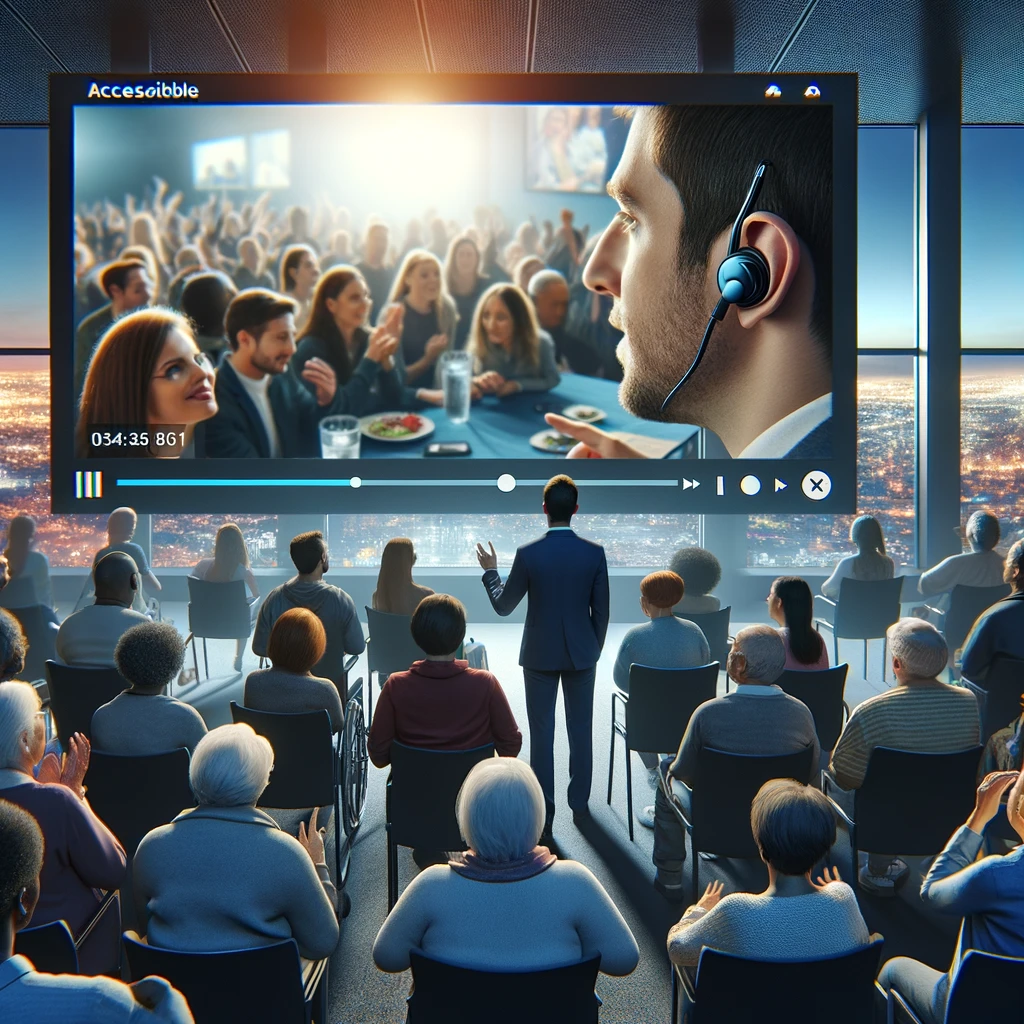
The Universal Impact of Captioning on Communication
Accessible captioning not only complies with legal requirements but significantly improves the user experience across various platforms. From educational materials to online videos, captions ensure that everyone, regardless of their hearing ability, can access and engage with content effectively. This broadens the reach of digital media, making it more inclusive and accessible to a global audience.
Addressing the Challenges and Misconceptions
One of the challenges in advocating for accessible captioning is overcoming misconceptions. Often, people assume that captions are only for those with hearing impairments. However, the reality is that captions benefit a much wider audience, including non-native speakers, individuals with learning disabilities, and even viewers in sound-sensitive environments. Therefore, it’s crucial to educate content creators and the public about the diverse benefits of captioning.
Captioning: A Step Towards Inclusivity in Digital Content
The rise of digital content has brought with it a responsibility to ensure accessibility for all users. Captioning plays a crucial role in this, as it breaks down barriers and creates a more inclusive digital environment. As more content is produced and consumed online, the need for accessible captioning becomes increasingly important.
The Future of Captioning: Innovations and Improvements
The future of captioning looks promising, with continuous advancements in technology and a growing awareness of its importance. Innovations in speech recognition and artificial intelligence are expected to improve the accuracy and efficiency of captioning. However, the human element remains crucial in ensuring context and nuance are captured correctly.
Call to Action: Embracing Accessible Captioning
As we move towards a more digitally connected world, the need for accessible captioning cannot be overstated. It’s a call to action for content creators, educators, and policymakers to prioritize and implement effective captioning strategies. By doing so, we can ensure that digital content is accessible, inclusive, and beneficial to all.
Conclusion
Accessible captioning is more than a compliance measure or an accessibility tool; it’s a facilitator of inclusive communication and learning. By understanding its broad benefits and continuing to improve its quality and reach, we can create a more inclusive digital landscape. Accessible captioning is not just for a few; it’s a benefit for everyone, enhancing our ability to communicate, learn, and connect in a diverse world.