
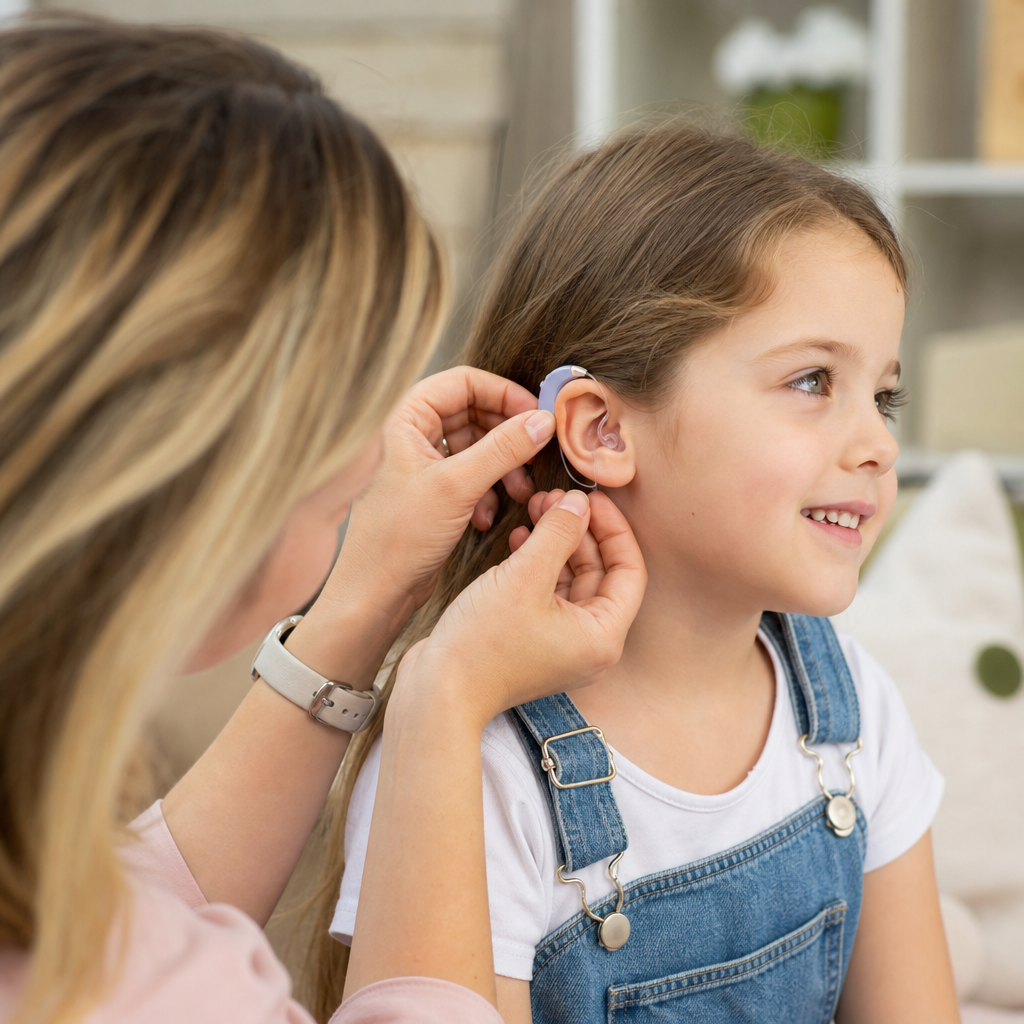
Children’s hearing aids play a central role in speech, language, learning, and social development because the brain needs consistent access to sound during the years when auditory pathways are forming fastest. A hearing aid for a child is a small medical device that amplifies sound in a carefully prescribed way, based on the child’s hearing test results, ear anatomy, and everyday listening needs. In practice, this category includes behind-the-ear devices, custom earmolds, remote microphones, verification tools, and follow-up care, not just the aid itself. I have seen families arrive expecting a simple product decision and leave understanding that successful pediatric amplification is really an ongoing system of diagnosis, fitting, coaching, school support, and monitoring.
This matters because even mild or unilateral hearing loss can affect access to soft speech sounds, classroom instruction, and incidental learning. Children do not learn language only from direct conversation; they also absorb vocabulary and social cues from overheard talk, group discussion, and background context. When access to those sounds is reduced, delays can follow in articulation, literacy, attention, and confidence. The good news is that early identification and well-fitted hearing aids substantially improve outcomes. Universal newborn hearing screening, pediatric audiology protocols, and modern digital processing have made timely intervention more effective than at any point in the past. For parents, caregivers, and educators, a general guide is useful because the field uses specialized terms, multiple professionals, and many device options. This hub article explains the fundamentals clearly so you can make informed next-step decisions.
At a basic level, pediatric hearing care usually starts with diagnosis, often using auditory brainstem response, otoacoustic emissions, tympanometry, and behavioral audiometry as the child grows. Once hearing levels are established, the audiologist determines whether hearing aids are appropriate, which style is safest and most practical, and how amplification should be programmed. Prescription formulas such as DSL v5.0 or NAL are used to match amplification to measured hearing loss rather than guesswork. Because children’s ears grow quickly, earmolds need regular replacement, and settings must be checked as hearing, language, and school demands change. The most effective plans treat hearing aids as part of a broader communication strategy that may also include speech-language therapy, classroom accommodations, listening technology, and family coaching.
Parents commonly ask three questions first: does my child really need hearing aids, what type is best, and what difference will they make day to day. The short answer is that children who have permanent hearing loss and insufficient access to conversational speech usually benefit from amplification, but candidacy depends on degree, type, and configuration of loss. The best type is usually the one that can be fitted accurately, worn safely all day, and supported consistently at home and school. The day-to-day difference can be profound: better awareness of environmental sounds, clearer speech perception, stronger participation in class, and less listening fatigue. Still, hearing aids do not restore normal hearing, and results vary with age at fitting, consistency of use, additional needs, and the listening environment. Understanding those realities helps families set confident, realistic expectations from the start.
How children’s hearing aids work and who needs them
Modern children’s hearing aids are digital devices with microphones, a processor, an amplifier, and a receiver. They analyze incoming sound and apply frequency-specific gain so quieter speech becomes audible without making louder sounds uncomfortable. Features may include feedback management, directional microphones, noise reduction, datalogging, telecoil or Bluetooth connectivity, and tamper-resistant battery doors. In pediatric fittings, the technical goal is audibility across the speech spectrum, especially soft high-frequency consonants such as /s/, /f/, /th/, and /sh/, because those sounds carry grammar and word meaning. If a child cannot consistently hear plural endings, possessives, or subtle word contrasts, language learning can be affected long before anyone notices a severe communication problem.
Not every hearing loss is managed the same way. Conductive loss from persistent middle ear fluid may require medical treatment, temporary amplification, or bone conduction solutions depending on duration and severity. Sensorineural loss is commonly permanent and often managed with conventional air-conduction hearing aids when enough usable hearing remains. Mixed loss combines both elements and may need coordinated medical and audiologic care. Children with unilateral hearing loss are sometimes overlooked, yet many struggle in noise, in localization, and in classrooms where the teacher’s voice competes with peers and ventilation. Pediatric audiologists increasingly recommend intervention for one-sided loss based on functional difficulty, not outdated assumptions that “one good ear is enough.”
Age matters, but candidacy is less about age alone than about diagnosis and developmental timing. Infants can be fitted within the first months of life once thresholds are established with sufficient confidence. This aligns with early hearing detection and intervention benchmarks that emphasize screening by one month, diagnosis by three months, and intervention by six months, with many programs now pushing even earlier action. In my experience, families often worry that a baby is too young for hearing aids, but the larger risk is waiting while the child misses speech input during a critical window. For older children, the signs may include delayed speech, inconsistent responses, turning one ear toward sound, struggling in school, or increasing volume on devices. In each case, a full pediatric evaluation should guide the decision.
Choosing the right device, fit, and features
Behind-the-ear hearing aids are the standard recommendation for most infants and children because they are durable, adaptable, and easier to refit as ears grow. The electronics sit behind the ear, while sound travels through tubing into a soft custom earmold. When the earmold becomes loose, causing whistling or reduced sound delivery, it can be replaced without replacing the hearing aid itself. Receiver-in-canal styles are common in adults but used more cautiously in children because small parts, moisture exposure, and growth make them less practical. For severe to profound losses, more powerful behind-the-ear devices may be needed, and some children eventually transition to cochlear implant evaluation if hearing aids do not provide enough speech access.
Feature selection should be driven by function rather than marketing language. Pediatric devices benefit from direct audio input or wireless compatibility for remote microphone systems, robust feedback control, water resistance, indicator lights, and secure retention options. Rechargeable batteries are increasingly popular and can simplify daily routines, but disposable batteries still offer flexibility for travel and long school days. Connectivity for tablets and phones can support remote care, streaming, and assistive listening, yet basic audibility remains more important than convenience features. The best device is the one that meets prescription targets, survives playground life, and integrates smoothly with the child’s educational setting.
| Consideration | Why it matters for children | Typical best practice |
|---|---|---|
| Device style | Children’s ears grow, and devices take more physical wear | Behind-the-ear models with replaceable earmolds |
| Earmold fit | Poor fit causes feedback, discomfort, and reduced amplification | Check regularly and replace as growth changes ear shape |
| Verification | Adult default settings can underamplify or overamplify | Use real-ear-to-coupler difference and pediatric targets |
| School listening | Noise and distance reduce speech clarity dramatically | Add a remote microphone or classroom system |
| Retention and safety | Young children drop, chew, or remove devices | Use clips, pilot caps, tamper-resistant doors, and family training |
A precise fit is essential because pediatric ears are acoustically different from adult ears. Smaller ear canals create higher sound pressure levels, so the same hearing aid output can be much louder in a child than in an adult. That is why pediatric fitting relies on measured ear acoustics, often through real-ear-to-coupler difference values, simulated real-ear verification, and speech mapping to prescribed targets. The Joint Committee on Infant Hearing and the American Academy of Audiology both support evidence-based pediatric verification rather than manufacturer first-fit settings alone. If you remember one technical point from this guide, let it be this: children’s hearing aids should be verified with pediatric protocols, not simply programmed and handed over.
Fitting, follow-up, and daily management at home and school
The fitting appointment is only the beginning. After programming, the audiologist verifies output, teaches caregivers how to insert earmolds, perform listening checks, clean tubing, change batteries or manage charging, and troubleshoot common issues. Families should leave knowing what normal function sounds like through a listening stethoscope, how to spot moisture or wax problems, and when to call for help. Datalogging is useful because it shows average daily wear time, helping the care team address barriers without blame. I often find that what looks like “noncompliance” is really a solvable issue such as a sore earmold, frequent feedback, sensory sensitivity, or uncertainty about handling the device in public.
Consistency is the single biggest predictor of benefit after an accurate fitting. A child who wears hearing aids for only part of the school day misses instruction, peer conversation, and the repeated language exposure needed for learning. Building full-time use usually requires routines: aids on after waking, a designated storage place, a school check-in system, and backup batteries or chargers. Teachers and daycare staff should know how to perform a simple visual inspection and who to contact if a device fails. Many schools support hearing technology through individualized education programs or 504 plans, and educational audiologists can coordinate classroom acoustics, hearing assistive technology, and teacher microphone use.
Remote microphone systems deserve special attention because they often deliver the largest practical improvement in noisy classrooms. Even a well-fitted hearing aid cannot fully overcome distance and background noise; speech intensity drops as the speaker moves away, while noise remains present. A teacher-worn microphone transmits the voice directly to the child’s devices, improving the signal-to-noise ratio far more effectively than amplification alone. This is one of the clearest examples of why pediatric hearing care extends beyond the hearing aid itself. Families should ask specifically whether their child needs a remote microphone for school, therapy, sports coaching, or car travel, where road noise and seat position make conversation difficult.
Follow-up intervals are more frequent for children than for adults because hearing status, earmold fit, and developmental needs change rapidly. Infants may be seen every few months, with appointments gradually spacing out as management stabilizes, though any sudden change in hearing, discomfort, or behavior warrants earlier review. Speech and language progress should be tracked alongside audiologic data. If a child has appropriate hearing aid output but limited progress, the team may investigate middle ear disease, auditory neuropathy spectrum disorder, inconsistent use, learning differences, or insufficient classroom support. Good pediatric care is interdisciplinary and responsive, not a one-time transaction.
Costs, outcomes, and when to consider other options
The cost of children’s hearing aids varies widely by technology level, bundled services, and region, and families should ask for a clear breakdown that separates devices, earmolds, fitting, verification, follow-up visits, and accessories. Insurance coverage is inconsistent. Some private plans cover pediatric hearing aids fully or partially, while others exclude them; Medicaid and state mandates can improve access depending on location. Nonprofit programs, early intervention systems, hospital foundations, vocational rehabilitation agencies, and manufacturer loaner support may also help. Because children outgrow earmolds and may need replacement devices over time, long-term budgeting matters as much as the initial purchase. A lower upfront price is not always the better value if follow-up care and verification are limited.
Results are strongest when hearing loss is identified early, amplification is fitted to target, and use is consistent across environments. Studies following children with permanent hearing loss have repeatedly shown better language outcomes with earlier intervention and higher daily use. But outcomes are not identical for every child. Degree of hearing loss, additional disabilities, family access to support, language exposure, and school acoustics all shape progress. It is important to expect improvement without assuming perfection. Hearing aids can make speech more audible, but they do not remove reverberation, erase fatigue, or guarantee that a child will hear every word in noise. Realistic expectations usually lead to better long-term satisfaction.
Some children need alternatives or next-step technologies. Bone anchored hearing systems may be appropriate for chronic conductive problems, aural atresia, or cases where conventional earmolds are not feasible. Cochlear implants should be considered when hearing aids do not provide adequate access to speech, particularly in severe to profound sensorineural loss. This decision is based on aided speech perception, auditory progress, and comprehensive implant team assessment, not just unaided thresholds. The key is not loyalty to one device category; it is matching the child to the technology that delivers the best access to sound and language. If progress stalls despite strong hearing aid management, asking for cochlear implant evaluation is appropriate and often time-sensitive.
For families navigating this process, the clearest path is to focus on access, not labels. Ask whether your child can hear soft speech, understand conversation in noise, participate in class, and wear devices all day without distress. Ask whether fittings were verified to pediatric targets, whether school technology is in place, and whether language development is being tracked. Those questions reveal more than brand comparisons alone. Children’s hearing aids work best when they are part of a larger plan built around measurable audibility, daily use, regular follow-up, and communication support across home and school. Start with a pediatric audiologist, request evidence-based fitting and verification, and build the care team your child needs to thrive.
Frequently Asked Questions
Why are hearing aids so important for children?
Children’s hearing aids are important because hearing is closely tied to how the brain learns speech, language, and communication skills in the early years. During infancy and childhood, the auditory system is developing rapidly, and the brain depends on consistent access to clear sound to build the pathways used for listening, understanding words, speaking, reading, and learning in the classroom. When hearing loss limits that access, even mild or moderate sound deprivation can affect vocabulary growth, speech clarity, social interaction, and academic progress. A properly fitted hearing aid helps reduce that gap by amplifying sound according to the child’s specific hearing levels, rather than simply making everything louder.
Hearing aids also support day-to-day development beyond spoken language. Children use hearing to notice environmental sounds, respond to caregivers, follow routines, and take part in play, music, and group activities. Good access to sound can improve confidence, attention, and participation at home and at school. Just as important, early and consistent use gives children the best opportunity to make use of the hearing they have. For that reason, pediatric hearing care focuses not only on identifying hearing loss, but also on getting children fitted quickly, monitoring their progress closely, and adjusting devices as they grow and their listening needs change.
What types of hearing aids are commonly used for children?
The most common hearing aids for children are behind-the-ear, or BTE, devices. These are widely used in pediatric care because they are reliable, flexible, and well suited to growing ears. The main electronic portion sits behind the ear, while sound travels through tubing into a custom earmold that fits inside the ear. As a child grows, the earmold can be remade without replacing the entire hearing aid, which makes BTE systems practical and cost-effective over time. They are also available in a wide range of power levels, so they can be used for many degrees of hearing loss, from mild to profound, depending on the model and prescription.
In addition to the hearing aids themselves, children may use custom earmolds, retention accessories, tamper-resistant battery doors, and wireless technology such as remote microphones. Remote microphones are especially useful in noisy places like classrooms, where a teacher’s voice needs to be clearer than background sound. Some children also use hearing aids with direct connectivity to educational devices, tablets, or assistive listening systems. The right setup depends on the child’s age, hearing test results, ear anatomy, school environment, and communication goals. Pediatric audiologists choose technology based on how the child actually listens throughout the day, not just on the hearing loss shown on an audiogram.
How are hearing aids fitted and adjusted for a child?
Fitting a child with hearing aids is a detailed medical and audiologic process. It begins with a complete hearing evaluation to determine the type and degree of hearing loss in each ear. The audiologist then uses those results to create a prescription for amplification, which is specific to the child’s hearing needs. For children, the process also takes ear canal size, comfort, safety, and developmental stage into account. Once the hearing aids are selected, they are programmed using pediatric fitting formulas and verified with objective measurements, often including real-ear or simulated real-ear testing. This step is essential because children’s ears are small, and small changes in ear canal acoustics can significantly affect how much sound reaches the eardrum.
Adjustment does not end at the first appointment. Children need regular follow-up visits to monitor hearing, check earmold fit, verify device performance, and fine-tune settings as listening demands change. A child may need different support for quiet conversations at home, playtime with siblings, and speech understanding in a busy classroom. Parents and caregivers are usually taught how to do listening checks, change batteries or manage charging, clean the earmolds, and watch for signs that the hearing aids are not working properly. Because children grow quickly, earmolds often need replacement and programming may need updates. Ongoing care is what helps hearing aids continue to provide clear, safe, and useful sound over time.
How can parents tell if a child’s hearing aids are working well?
Parents can often tell hearing aids are working well by looking at both technology checks and real-world behavior. From a practical standpoint, the devices should turn on properly, produce clear sound without distortion or feedback, fit securely, and remain comfortable during daily wear. The earmolds should not be too loose or too tight, and the child should tolerate wearing the hearing aids consistently for most waking hours, unless otherwise directed by the care team. Many families are taught to perform daily listening checks and visual inspections to confirm that tubing, microphones, battery contacts, and moisture protection are all in good condition. If the child uses rechargeable devices or accessories such as a remote microphone, those should also function reliably.
Equally important are developmental and listening signs. A child whose hearing aids are appropriately fitted may become more responsive to voices, environmental sounds, and their name, and may show better speech detection, vocalization, word learning, classroom attention, and social engagement. Older children may report that speech sounds clearer or that it is easier to follow directions. However, progress is not judged by one behavior alone. Audiologists, parents, teachers, and speech-language professionals often work together to track listening ability, communication milestones, and academic performance. If a child suddenly resists wearing the devices, seems less responsive, or struggles more than usual, that can be a sign that the hearing has changed, the earmolds no longer fit well, or the hearing aids need repair or reprogramming.
What should families know about hearing aids at school and in everyday life?
Families should know that hearing aids are most effective when they are part of a larger support plan for communication, learning, and daily participation. In school, children with hearing aids may still have difficulty hearing clearly in noise, at a distance, or in rooms with echo. That is why many benefit from additional tools such as remote microphone systems, classroom accommodations, preferential seating, and teacher awareness of listening fatigue. A teacher speaking from across the room is a very different listening situation from one-on-one conversation at home. When schools, audiologists, and families coordinate well, children are much more likely to have the access they need for instruction, peer interaction, and confidence in the classroom.
In everyday life, consistency matters. Children learn from hearing all day long, not only during therapy or school hours. Wearing hearing aids during routines, meals, play, reading, errands, and family conversations gives them repeated exposure to speech and sound in meaningful contexts. Families should also expect some ongoing maintenance, including cleaning, battery charging or replacement, earmold updates, troubleshooting, and periodic hearing evaluations. It is helpful to build device care into the daily routine so hearing aids become a normal part of the child’s life. Most of all, families should remember that hearing aids are not a one-time purchase but an ongoing intervention that supports long-term development. With timely fitting, good follow-up care, and strong teamwork, children with hearing loss can make excellent progress in communication, learning, and social connection.