
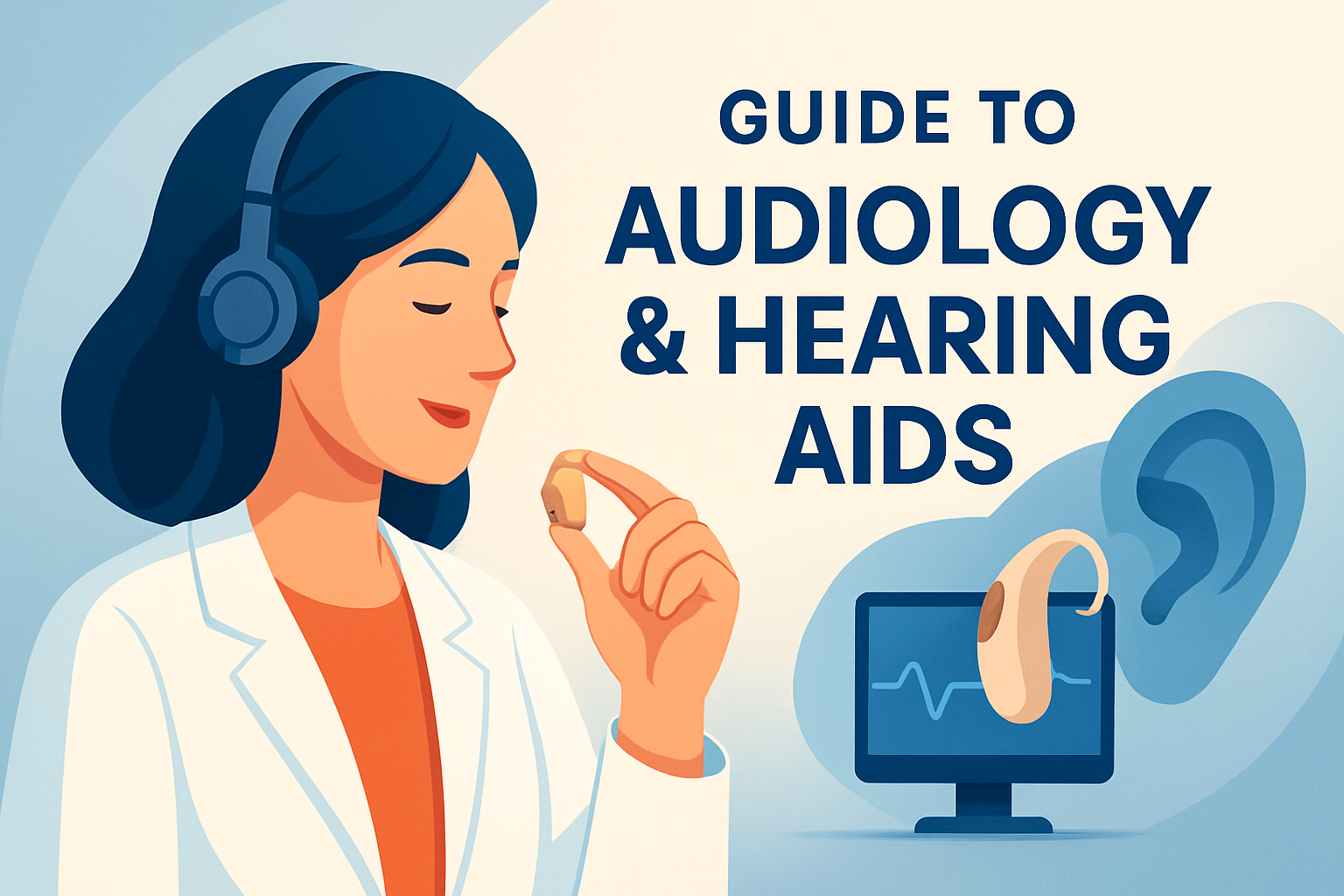
In a world full of sound, our ability to hear plays a crucial role in how we interact with others and understand our environment. When this ability diminishes, whether due to age, exposure to loud sounds, or other factors, our experiences are significantly affected. Enter audiology, the science of hearing, and hearing aids, the technological marvels that help restore communication pathways for those with hearing difficulties. Audiology is the field of healthcare dedicated to diagnosing and treating hearing disorders, while hearing aids are devices designed to amplify sound for individuals with hearing loss. This guide explores these essential fields, providing insights into how they can improve quality of life and facilitate better communication.
The importance of addressing hearing loss cannot be overstated. It affects social interactions, safety, and overall mental health. By understanding the basics of audiology and hearing aids, individuals can make informed decisions on managing their hearing health. For those experiencing hearing loss, acknowledging it is the first step towards finding a solution that works, enhancing not just auditory experience but also boosting confidence and connection with the world around them.
Understanding Hearing Loss
Hearing loss varies widely, affecting people of all ages. It can be caused by genetics, prolonged exposure to noise, infections, trauma, and aging, among other factors. Audiologists categorize hearing loss into three foundational types: conductive, sensorineural, and mixed. Conductive hearing loss involves problems with the ear canal, eardrum, or middle ear and its little bones. Sensorineural hearing loss is due to issues within the inner ear or with the auditory nerve. Mixed hearing loss is a combination of conductive and sensorineural loss.
For example, an elderly individual might experience sensorineural hearing loss due to the natural aging process affecting the nerve pathways to their brain. In this situation, an audiologist would assess the degree of the loss and recommend the appropriate hearing aids, such as behind-the-ear models, which are typically more powerful and suitable for significant hearing loss.
Timely intervention in such cases not only aids in better sound perception but also reduces the risk of social isolation and cognitive decline associated with untreated hearing loss.
The Role of Audiologists
Audiologists are specialists trained to diagnose, manage, and treat hearing or balance problems. Their expertise encompasses a range of services, from conducting hearing tests to fitting and adjusting hearing aids. An audiologist’s evaluation typically begins with a thorough hearing test using audiometry to determine the extent and type of hearing loss.
For instance, consider a young musician who notices a ringing in their ear after playing loudly in concerts. An audiologist would use specialized tests to diagnose the problem as noise-induced hearing loss and might suggest hearing protection to prevent further damage. In cases where permanent hearing loss is diagnosed, hearing aids come into play, providing a tailored solution to enhance sound reception without overwhelming the listener.
By personalizing treatment plans, audiologists ensure that each patient’s lifestyle and hearing needs are fully catered for, which ultimately leads to more satisfactory outcomes and improved quality of life.
Exploring Hearing Aids
Hearing aids are sophisticated devices that have evolved greatly over the years. Today, they come in various styles, such as invisible in the canal (IIC), completely in the canal (CIC), in the ear (ITE), and behind the ear (BTE). Each of these styles offers different advantages depending on the user’s specific needs and degree of hearing loss.
For a clearer understanding, consider someone with mild hearing loss who prefers discretion; they might choose an IIC model, which is barely visible and sits deeper within the canal. Conversely, another person with severe loss might opt for a powerful BTE device that can be easily adjusted and is more durable.
Modern hearing aids are not just amplifiers; they include features like directional microphones, wireless connectivity, and noise reduction algorithms. These advancements allow users to enjoy clearer sound quality, participate in conversations in noisy environments, and even stream audio directly from their smartphones.
- Invisible in the Canal (IIC)
- Completely in the Canal (CIC)
- In the Ear (ITE)
- Behind the Ear (BTE)
Benefits of Early Intervention with Hearing Aids
Early intervention can significantly improve the outcomes for individuals with hearing loss. Addressing hearing loss sooner rather than later can prevent the deterioration of auditory pathways in the brain, a condition sometimes referred to as auditory deprivation. Hearing aids facilitate the consistent delivery of sound to the brain, which is crucial for maintaining speech understanding and auditory processing over time.
Take the case of a middle-aged professional beginning to experience hearing loss. When their hearing is not corrected soon, it can lead to decreased job performance, misunderstandings, and withdrawal from social settings. However, by using hearing aids at an early stage, they maintain cognitive engagement and communicate effectively both in their professional and personal lives.
This proactive approach underscores the importance of not delaying audiological consultations, thereby securing better long-term hearing health and overall well-being.
Living with Hearing Aids
Adjusting to hearing aids can take time, patience, and practice. New users often describe the experience of rediscovering sounds they hadn’t realized they were missing, like the rustle of leaves or the hum of a refrigerator. Audiologists often provide aural rehabilitation to help individuals adapt to hearing aids, which may include exercises to improve listening skills, communication strategies, and support resources.
Consider an older adult who has recently started using hearing aids. Initially, they might find environmental noises overwhelming. Through tailored rehabilitation sessions, they gradually learn to focus on meaningful sounds, such as speech, and ignore unwelcome noise interference, improving their overall hearing experience.
Consistent use and adjustment, as guided by audiologists, allow new users to achieve the maximum benefit from their devices, resulting in improved confidence and social interactions.
Advancements in Audiology & Hearing Aids Technology
The field of audiology and hearing aids technology is continually advancing, providing users with more convenient and efficient solutions. Recent developments include rechargeable hearing aids, which eliminate the need for constantly changing batteries, and the integration of artificial intelligence that adapts to various listening environments, offering a personalized experience.
An example can be seen in the lives of tech-savvy seniors who appreciate the integration of their hearing aids with smartphones via Bluetooth, enabling them to take calls, stream music, and control their hearings aid settings with an app.
These technological advancements reflect a commitment to user-friendly, effective solutions that cater to the modern user’s needs, enhancing not just hearing but also overall lifestyle and independence.
Conclusion: Taking Charge of Your Hearing Health
Hearing health is intertwined with our overall quality of life, influencing our ability to connect with the world around us. Recognizing and addressing hearing loss at the earliest signs is key to managing potential impacts on our social, emotional, and cognitive wellbeing. Through understanding the basics of audiology and the diverse range of hearing aids available, we can make informed decisions about our hearing health journey.
The main takeaway is that you don’t have to face hearing loss alone. With the help of qualified audiologists and cutting-edge technology, you have the tools necessary to live a full and active life. If you or someone you know is experiencing hearing difficulties, the next step is to consult with a hearing professional today and explore the solutions available to you.
Take charge of your hearing health by staying informed, seeking professional guidance, and embracing the technologies designed to bridge the gap between silence and sound, ensuring that every day can be filled with the richness of auditory experiences.
Frequently Asked Questions
1. What is audiology and how does it differ from other medical fields?
Audiology is a specialized field within healthcare focused on diagnosing, managing, and treating hearing and balance issues. Unlike other medical fields that may deal with infectious diseases, surgeries, or general physical health, audiologists concentrate exclusively on auditory capabilities and related disorders. Their expertise includes assessing hearing impairments, recommending appropriate treatments, and guiding patients on hearing conservation. They use various tests and assessments to evaluate hearing loss and utilize their training to interpret these results to find the best course of action for each individual. Additionally, audiologists are skilled in the fitting and dispensing of hearing aids and other assistive listening devices, offering a tailored approach to hearing rehabilitation.
2. How do hearing aids work to improve hearing abilities?
Hearing aids are complex electronic devices designed to amplify sound for individuals with hearing loss. At their core, they consist of a microphone, amplifier, and speaker. The microphone picks up sound from the environment, converting it into electrical signals. These signals are processed and amplified by the device’s amplifier. The boosted sound is then delivered to the ear through the speaker, often customized to boost specific frequencies that the wearer struggles to hear. Modern hearing aids incorporate digital technology, allowing for advanced features like noise reduction, directional microphones for better understanding in crowded environments, and Bluetooth connectivity for seamless integration with phones and other devices. The ultimate aim of hearing aids is to enhance the clarity and volume of sounds, making communication and interaction much easier and more natural for those with hearing difficulties.
3. What factors contribute to hearing loss, and can it be prevented?
Hearing loss can be attributed to several factors, both genetic and environmental. Age-related hearing loss, or presbycusis, naturally occurs as people age, affecting the delicate structures within the ear. Prolonged exposure to loud sounds, such as music, industrial noise, or even everyday environmental noise, can also damage the sensitive hair cells in the cochlea, leading to noise-induced hearing loss. Infections, certain medications, and health conditions like diabetes or hypertension can contribute to or exacerbate hearing difficulties. Prevention can be achieved by limiting exposure to loud noises, using ear protection in high-noise environments, maintaining good ear hygiene, and having regular hearing check-ups. Early detection and intervention are crucial in managing hearing loss and preventing further deterioration.
4. How do I know if I need a hearing aid, and where should I start?
If you find yourself frequently asking others to repeat themselves, struggling to understand conversations in noisy environments, or noticing that sounds seem muffled, it might be an indication of hearing loss. It’s essential to start with a comprehensive hearing evaluation conducted by a qualified audiologist. During this examination, the audiologist will measure your hearing at various frequencies and intensities to determine the degree and type of hearing loss. Based on these results, they may recommend hearing aids or other interventions as needed. The process of getting hearing aids includes selecting the right model, undergoing a fitting session to ensure comfort, and periodic adjustments for optimal performance. An audiologist will guide you through every step, making sure you are comfortable and informed of the choices available to you.
5. Are all hearing aids the same, or are there different types for different needs?
Hearing aids come in various styles and feature different levels of technology, catering to a wide range of needs and preferences. The primary styles include Behind-the-Ear (BTE), In-the-Ear (ITE), In-the-Canal (ITC), and Completely-in-the-Canal (CIC) hearing aids. BTE models are versatile and can accommodate a range of hearing losses, sitting comfortably behind the ear with the sound sent into the ear through a tube. ITE and ITC models fit directly in the outer ear or ear canal, providing discretion. CIC models are the smallest and least visible but might not suit severe hearing loss. Hearing aids today boast many technological advancements such as connectivity options, rechargeable batteries, and customizability to suit individual lifestyles and preferences. An audiologist will assist in determining the most suitable type based on the severity of the hearing loss, lifestyle requirements, and personal preferences.