
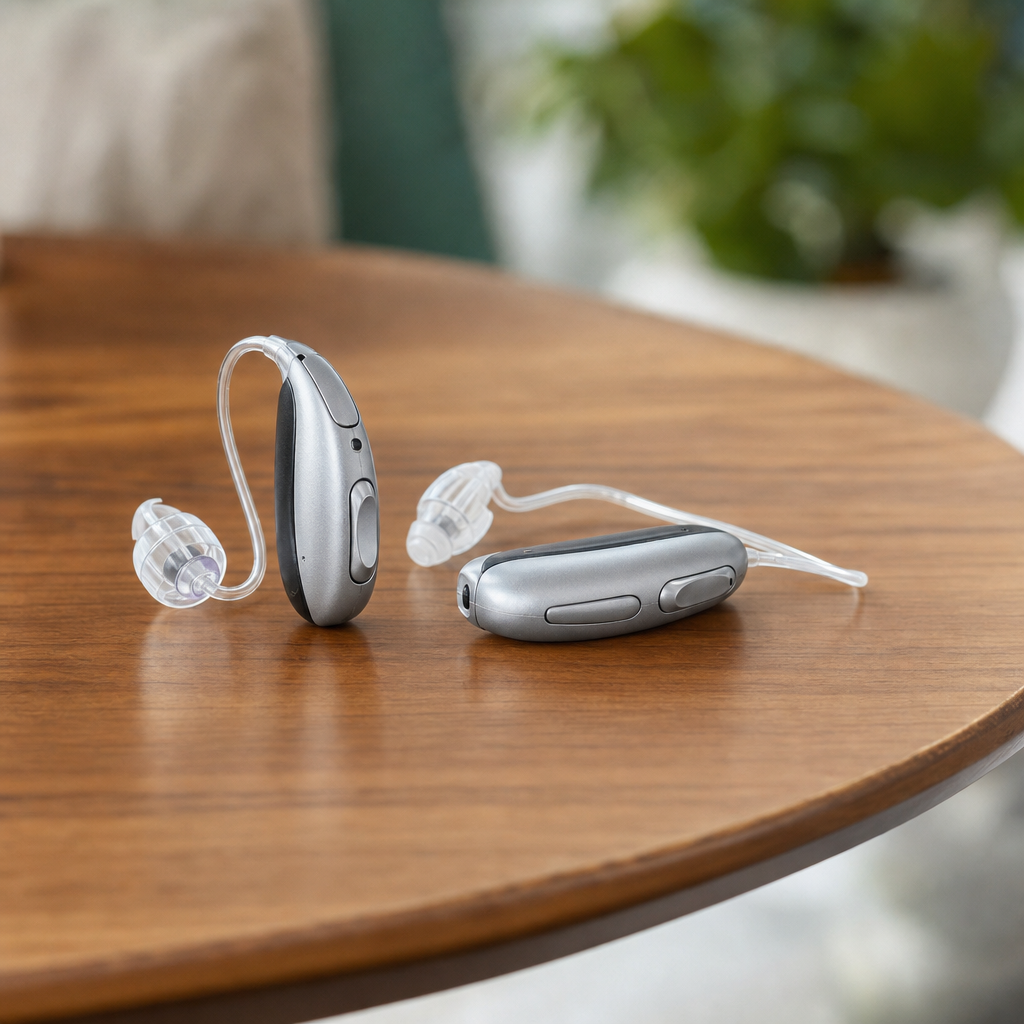
Insignia hearing aids are private-label devices sold through Costco, and for many shoppers they represent one of the most practical ways to access modern hearing technology without paying traditional clinic prices. In this guide, I will cover what Insignia hearing aids are, how they work, who they fit best, what features matter, and what limitations buyers should understand before choosing them. The goal is simple: give you a reliable hub for the general topic so you can compare models, costs, fittings, and service with confidence.
Hearing aids amplify sound, but modern devices do much more than make everything louder. They analyze speech, reduce background noise, limit feedback, stream audio from phones, and adjust automatically to changing environments. Insignia hearing aids use the same broad technology categories found across the market: digital signal processing, directional microphones, rechargeable batteries in many models, telecoil support in some versions, Bluetooth connectivity, and software-based fitting. What separates them is not the concept of hearing correction itself, but the combination of manufacturer partnerships, Costco distribution, and value-driven pricing.
This matters because untreated hearing loss affects communication, safety, and cognitive load every day. People with even mild hearing loss often report listening fatigue, misunderstandings in meetings, television volume conflicts, and withdrawal from noisy social settings. Clinically, hearing loss has also been associated with reduced quality of life and higher social isolation. A well-fitted device can improve speech understanding, but the best result depends on matching technology level, hearing profile, ear anatomy, and support services. Price matters too, because access is often the biggest barrier.
When people search for a guide to Insignia hearing aids, they usually want direct answers: Are they good? Are they made by a major manufacturer? How much do they cost? Do they include free adjustments? Can they handle Bluetooth streaming and difficult noise environments? Those are the right questions. In practice, Insignia devices are best understood as Costco hearing aids designed to deliver mainstream features at lower prices than many independent audiology clinics. That makes them attractive, but not automatically the right choice for every listener.
What Insignia hearing aids are and who makes them
Insignia is a hearing aid brand historically associated with Costco’s hearing centers. Like Kirkland Signature hearing aids, Insignia devices have typically been built through arrangements with established hearing aid manufacturers rather than produced by a standalone hearing aid company operating its own broad retail network. That private-label structure is important because hearing aid performance depends heavily on the underlying platform, fitting software, receiver options, and service model. In plain terms, the name on the shell matters less than the technology inside and the quality of the fitting.
Over the years, specific Insignia generations have been linked to platforms derived from major manufacturers, and model availability has changed as Costco updated suppliers and product lines. Because those relationships can shift, the safest approach is to evaluate the current generation on its actual features rather than assuming all Insignia hearing aids are identical. Ask the hearing center which style is available, what wireless protocol it uses, whether it supports hands-free calling or only media streaming, and what accessories are compatible. Those practical answers tell you more than branding alone.
For most buyers, Insignia hearing aids are positioned as a value option for adults with mild to moderate hearing loss, though some fittings may address more severe losses depending on receiver power and earmold configuration. They are commonly offered in receiver-in-canal styles because RIC devices balance cosmetics, comfort, and acoustic flexibility well. In my experience reviewing hearing aid fittings, RIC instruments dominate modern dispensing because replacing receivers and changing domes is straightforward, and that convenience matters when fine-tuning comfort and sound quality over time.
Key features and technology you should expect
Modern Insignia hearing aids generally include the core feature set expected from current digital devices. That means multiple listening programs, automatic environment detection, noise reduction, directional microphones, feedback management, and compression settings customized to an audiogram. Many versions also include rechargeable lithium-ion batteries, which are now preferred by a large share of users because they eliminate the routine cost and handling of disposable cells. Rechargeable cases vary, so confirm whether the charger is portable, whether it stores reserve power, and how many hours of use the aids deliver per charge.
Wireless connectivity is another major draw. Depending on generation and phone compatibility, Insignia hearing aids may support direct streaming for phone calls, music, podcasts, television audio, and app-based control. Bluetooth implementation differs by platform, so users with iPhone and Android devices should verify compatibility before purchasing. I have seen this become a deciding factor, especially for people who expect seamless call routing. Some hearing aids stream beautifully but do not offer true hands-free microphone pickup on every phone model, and that difference affects day-to-day convenience.
Speech enhancement in noise is often the most important technology, even though it is harder to summarize in a brochure. Better hearing aids do not simply amplify all sounds equally. They use microphone directionality, impulse noise reduction, modulation analysis, and gain adjustments to prioritize speech cues. Results still depend on the environment. No hearing aid can make a crowded restaurant sound like a quiet living room, but stronger processing can reduce effort and improve clarity. Buyers should test performance in realistic places, not just in a silent fitting room.
| Feature | Why it matters | What to ask before buying |
|---|---|---|
| Rechargeable battery | Simplifies daily use and avoids disposable battery changes | How many hours does one charge last with streaming? |
| Bluetooth streaming | Sends calls, music, and media directly to hearing aids | Is my phone fully compatible for calls and app control? |
| Directional microphones | Helps focus on speech in front of you | How does the device perform in restaurants and meetings? |
| Telecoil | Connects to loop systems in theaters, worship spaces, and public venues | Does this model include a telecoil in my chosen style? |
| App controls | Lets users adjust volume, programs, and sometimes geolocation settings | Which adjustments can I make myself versus in clinic? |
Cost, value, and what is usually included
Insignia hearing aids are discussed so often because of cost. Traditional hearing aid pricing at private clinics can range widely, often from several thousand dollars to well above that for a pair, depending on technology tier, bundled service plans, and geographic market. Costco has long pressured that model by selling hearing aids at lower prices while including hearing tests, fitting appointments, follow-up adjustments, and warranty coverage in many cases. Exact pricing changes by model and time period, so current quotes should always come directly from the hearing center.
Value, however, is not just the sticker price. It is the combination of technology, aftercare, convenience, and fit. A lower-cost pair is not a bargain if the user cannot get timely cleanings, domes, wax guards, repairs, or programming support. Costco’s scale can make hearing care more accessible, but access still depends on local appointment availability and the expertise of the specific provider. Some centers are excellent and methodical with verification and counseling. Others may be busier, with less time for complex troubleshooting. That variation is real across the industry, not unique to one retailer.
Buyers should also understand bundled versus unbundled economics. In many retail hearing models, the device price includes a package of services for a set term: testing, fitting, adjustments, routine maintenance, and warranty handling. This can be cost-effective for new users because the first year usually involves several follow-up visits. Ask exactly what is covered, for how long, and what happens if you move or need service at another location. Those questions matter just as much as the device name because consistent support strongly influences satisfaction.
How the fitting process works and why it matters
The fitting process begins with a hearing evaluation, but a good evaluation is more than a basic hearing screen. It should identify degree and configuration of hearing loss across frequencies, evaluate speech understanding, review otoscopic findings, and flag medical red flags that warrant physician referral, such as sudden hearing loss, asymmetrical loss, drainage, pain, or persistent unilateral tinnitus. A hearing aid recommendation should then connect those results to a style, receiver strength, dome or mold selection, and amplification target that makes clinical sense.
Programming is where many first-time users either succeed or give up. Best practice in the industry includes matching the hearing aid settings to prescriptive targets such as NAL-NL2 or DSL, then verifying output with real-ear measurement. Real-ear measurement uses a probe microphone in the ear canal to confirm that amplified speech reaches appropriate levels for soft, average, and loud inputs. Not every buyer asks for this, but they should. I have seen the difference it makes. A device that sounds acceptable on day one can perform much better when verified and fine-tuned objectively.
Adaptation is another crucial part of the process. Even with an accurate fitting, the brain needs time to re-learn sounds it has been missing. High-frequency consonants, dishes clinking, footsteps, and paper rustling may seem unusually sharp at first. That does not necessarily mean the fitting is wrong. It often means the auditory system is reintroducing detail. Good providers set expectations, schedule follow-up visits, and adjust settings without overreacting to the first week. The aim is not just comfort in the clinic. It is sustained benefit in everyday life.
Who should consider Insignia hearing aids and who may need something else
Insignia hearing aids are usually a strong fit for budget-conscious adults who want current features, straightforward support, and a retail buying experience that feels less intimidating than a traditional specialist office. They can work especially well for people with common age-related sensorineural hearing loss, comfortable dexterity, and hearing goals centered on conversation, television, phone use, and routine social settings. If your priority is strong value and you have access to a Costco hearing center with experienced staff, they deserve serious consideration.
They may be less ideal for people with medically complex ears, highly asymmetrical hearing loss, profound loss requiring specialty power solutions, or communication demands that call for advanced custom programming and extensive auditory rehabilitation. Musicians, broadcast professionals, and listeners with severe speech-in-noise complaints sometimes benefit from a clinic that offers a wider range of premium brands, earmold options, assistive listening systems, and diagnostic depth. Likewise, patients needing close coordination with ENT physicians or cochlear implant teams may find a specialty practice better aligned with their care pathway.
Travel and geography also matter. If you live far from a Costco location, routine visits for adjustments and repairs may become inconvenient. A hearing aid is not a one-time purchase like headphones. It is a medical device that performs best with follow-up care. Before buying, think through where you will get cleanings, replacement parts, software updates, and troubleshooting help over the next three to five years. The best hearing aid is the one you can wear comfortably and support consistently.
How to compare Insignia with other hearing aid options
To compare Insignia hearing aids fairly, focus on outcomes rather than marketing labels. Start with style: receiver-in-canal, behind-the-ear, in-the-ear, or custom options. Then look at battery type, Bluetooth behavior, telecoil availability, accessory ecosystem, water and dust resistance rating, tinnitus features, and charger design. Next compare service: hearing test quality, real-ear verification, trial period, loss and damage terms, warranty length, and follow-up access. Those factors affect satisfaction more than broad claims like premium, advanced, or essential.
It is also wise to compare them with over-the-counter hearing aids, especially for adults with perceived mild to moderate hearing loss. OTC devices can cost less and may work for tech-comfortable users with straightforward needs, but they usually place more responsibility on the buyer for setup, self-testing, and troubleshooting. Prescription or professionally fitted devices still offer advantages when hearing loss patterns are complex, speech understanding is poor, or the user wants in-person counseling. Insignia often sits between high-cost clinic care and self-directed OTC solutions, which explains its appeal.
Read reviews carefully. User reviews often reflect service experiences as much as sound quality, and hearing aid satisfaction is highly individual. One person may praise streaming and comfort, while another struggles because the dome fit, insertion depth, or receiver power was wrong. When possible, judge devices during a trial period in your real environments: the car, the kitchen, the conference room, the place of worship, and the restaurant you actually visit. That evidence is more useful than any star rating.
In the end, Insignia hearing aids are worth attention because they make capable hearing technology more accessible. They are not magic, and they are not the perfect answer for every type of hearing loss, but they can be an excellent option when the fitting is careful and the service is reliable. Remember the core points: confirm the current manufacturer platform, evaluate features based on your phone and listening habits, ask what service is bundled, and prioritize real-ear verification during fitting.
If you are building your understanding of the hearing aids category, use this guide as your starting point for deeper comparisons on styles, costs, maintenance, accessories, and hearing test preparation. The right next step is simple: schedule a hearing evaluation, bring a list of your daily listening challenges, and compare Insignia hearing aids against at least one other option using the same real-world criteria. Better hearing decisions come from clear questions, measured expectations, and support you can count on.
Frequently Asked Questions
What are Insignia hearing aids, and how are they different from other hearing aid brands?
Insignia hearing aids are private-label devices sold through Costco Hearing Centers, which means they are offered under the Insignia name rather than a traditional manufacturer brand that is marketed through independent audiology clinics. For many buyers, that distinction matters because it usually affects pricing, service structure, model selection, and how the products are positioned in the market. Instead of paying the higher prices often associated with premium hearing aids sold in private practices, Costco shoppers are typically accessing more affordable technology bundles that include hearing tests, fitting, follow-up care, and warranty support through Costco’s hearing program.
In practical terms, Insignia hearing aids are designed to give users many of the core benefits people expect from modern digital hearing technology, such as amplification tailored to the user’s hearing loss, feedback management, speech enhancement, and wireless convenience in some models. The biggest difference is not that Insignia devices are necessarily “basic,” but that they are part of a value-focused retail model. Buyers should think of them as hearing aids sold within Costco’s ecosystem rather than as a fully independent hearing aid brand with broad distribution across clinics nationwide.
Another important difference is buyer experience. With many traditional hearing aid brands, shoppers compare products across audiology offices, ENT practices, and hearing aid specialists. With Insignia, the experience is more centralized. Costco handles the testing, fitting, adjustments, and service process, which can be a major advantage for people who want straightforward access and predictable pricing. At the same time, that setup may be less ideal for someone who prefers extensive brand choice, highly specialized clinical care, or complex treatment planning for difficult hearing cases.
Who is a good candidate for Insignia hearing aids?
Insignia hearing aids are often a strong fit for adults with mild to moderate hearing loss who want modern hearing help without stepping into the high-cost structure of a traditional hearing clinic. They can be especially appealing to first-time users who are cost-conscious, value convenience, and already shop at Costco. If your main goals are hearing conversations more clearly, improving speech understanding in everyday environments, and getting access to current hearing aid features at a lower overall price, Insignia may be worth serious consideration.
They also tend to suit buyers who want a relatively simple purchasing path. Costco’s hearing centers can provide hearing evaluations, fittings, programming, and follow-up visits in one place, which removes some of the friction people feel when trying to compare multiple providers and brands. For users who want dependable support, access to in-person adjustments, and a clearer sense of total cost up front, this can be a practical and reassuring option.
That said, they may not be the best fit for everyone. People with severe or profound hearing loss, complicated hearing profiles, active ear disease, significant asymmetry between ears, tinnitus issues requiring advanced clinical management, or medical concerns that need coordination with an audiologist or ENT may benefit from a more specialized setting. The same goes for users who want access to a wider selection of premium features, niche form factors, or the latest flagship technology from major manufacturers. In short, Insignia hearing aids are often best for shoppers seeking strong value and mainstream functionality, but they are not automatically the ideal solution for complex hearing care needs.
What features should buyers pay attention to when comparing Insignia hearing aids?
When comparing Insignia hearing aids, buyers should focus less on marketing labels and more on the features that directly affect day-to-day hearing performance. One of the most important is how well the devices handle speech in noise. Many people do not struggle most in quiet rooms; they struggle in restaurants, family gatherings, stores, worship services, and cars. Features like directional microphones, background noise reduction, and speech-focused processing can make a meaningful difference in these situations, so they deserve close attention during a demo or consultation.
Another major factor is the physical style and power level of the device. Depending on the model, buyers may be choosing among receiver-in-canal or behind-the-ear designs, each with tradeoffs involving comfort, visibility, battery size, and fit. A hearing aid that is discreet but too small to handle easily may frustrate someone with dexterity or vision issues. Likewise, a model that looks slightly larger may offer easier controls, more battery capacity, or a better fit for the user’s hearing loss. Comfort, retention, and ease of insertion matter just as much as sound processing on paper.
Rechargeability is another feature many shoppers prioritize. Rechargeable hearing aids can be much more convenient than disposable battery models, especially for users who dislike handling tiny batteries or want a simpler daily routine. Wireless connectivity may also matter if you want to stream calls, audio, or media from a smartphone or use an app for volume and program control. Buyers should also ask about feedback suppression, moisture resistance, telecoil options if relevant, and what customization is available for different listening environments.
Finally, one of the most overlooked “features” is service. Ask what is included in the purchase, how many follow-up visits are covered, how repairs are handled, what the warranty includes, and whether trial or return periods apply. A hearing aid is not just a device; it is a hearing care package. The quality of fitting, fine-tuning, and ongoing support often has as much impact on satisfaction as the hardware itself.
Are Insignia hearing aids a good value compared with hearing aids from traditional clinics?
For many shoppers, yes. Insignia hearing aids are widely viewed as a good value because they are sold through Costco’s lower-price retail model rather than the traditional private-practice pricing structure. In many cases, buyers can get hearing aids with solid modern features, fitting services, follow-up support, and warranty coverage for significantly less than what they might pay through some independent clinics. That lower cost is one of the biggest reasons Insignia devices attract attention from people who may have delayed treatment because of price.
Value, however, should be understood in context. Lower price does not automatically mean better choice for every user, and higher price does not automatically mean better hearing outcomes. The real question is whether the product, fitting process, and support package match your needs. If you have straightforward hearing loss and want a practical, budget-friendlier route into prescription hearing aids, Insignia can offer excellent value. You may get much of what you need without paying for a premium clinical model that includes features or services you will never use.
On the other hand, if your hearing needs are complex, or if you want highly individualized audiology care, extended diagnostic support, or access to a broad portfolio of top-tier manufacturer technology, a traditional clinic may still be worth the extra expense. The best way to think about value is not simply “cheapest versus most expensive,” but “best overall fit for your hearing, lifestyle, and service expectations.” For a large segment of Costco shoppers, Insignia hearing aids land in a sweet spot where affordability and functionality meet in a very practical way.
What limitations or drawbacks should buyers understand before choosing Insignia hearing aids?
The most important limitation is that Insignia hearing aids are tied to Costco’s hearing care model. That can be a strength, but it can also be a constraint. If you want broad access to providers across many private clinics, or if you travel frequently and prefer a brand with a wider independent service network, the Costco-centered structure may feel limiting. Service access is often most convenient when you remain within that system, so buyers should think about long-term follow-up, relocation, and convenience before committing.
Another potential drawback is selection. Because Insignia is part of a private-label lineup, you are not comparing the full open market of hearing aid brands and flagship products in one place. Some users are perfectly happy with that because they want a curated, simpler decision process. Others may feel restricted if they are trying to compare every possible style, sound processing platform, accessory ecosystem, or advanced specialty feature available from major manufacturers. If you are a research-heavy buyer, it is worth understanding that Costco’s offering is intentionally narrower than the full audiology marketplace.
Buyers should also recognize that hearing aid success depends heavily on fitting quality, realistic expectations, and follow-up adjustments. Even a good-value hearing aid can disappoint if it is not properly programmed, if the user expects instant perfection, or if they do not give themselves time to adapt. In addition, some users may find that lower-cost private-label options do not offer every premium convenience or advanced sound-management capability found in top-end devices sold through specialty clinics. That does not make them ineffective; it simply means there can be tradeoffs.
The bottom line is that Insignia hearing aids can be an excellent choice for the right person, but they are not a one-size-fits-all solution. Before buying, consider your degree of hearing loss, lifestyle demands, comfort with Costco’s service model, desired features, and the importance of ongoing professional support. Going in with a clear understanding of both the strengths and the limitations will help you make a more confident and realistic decision.