
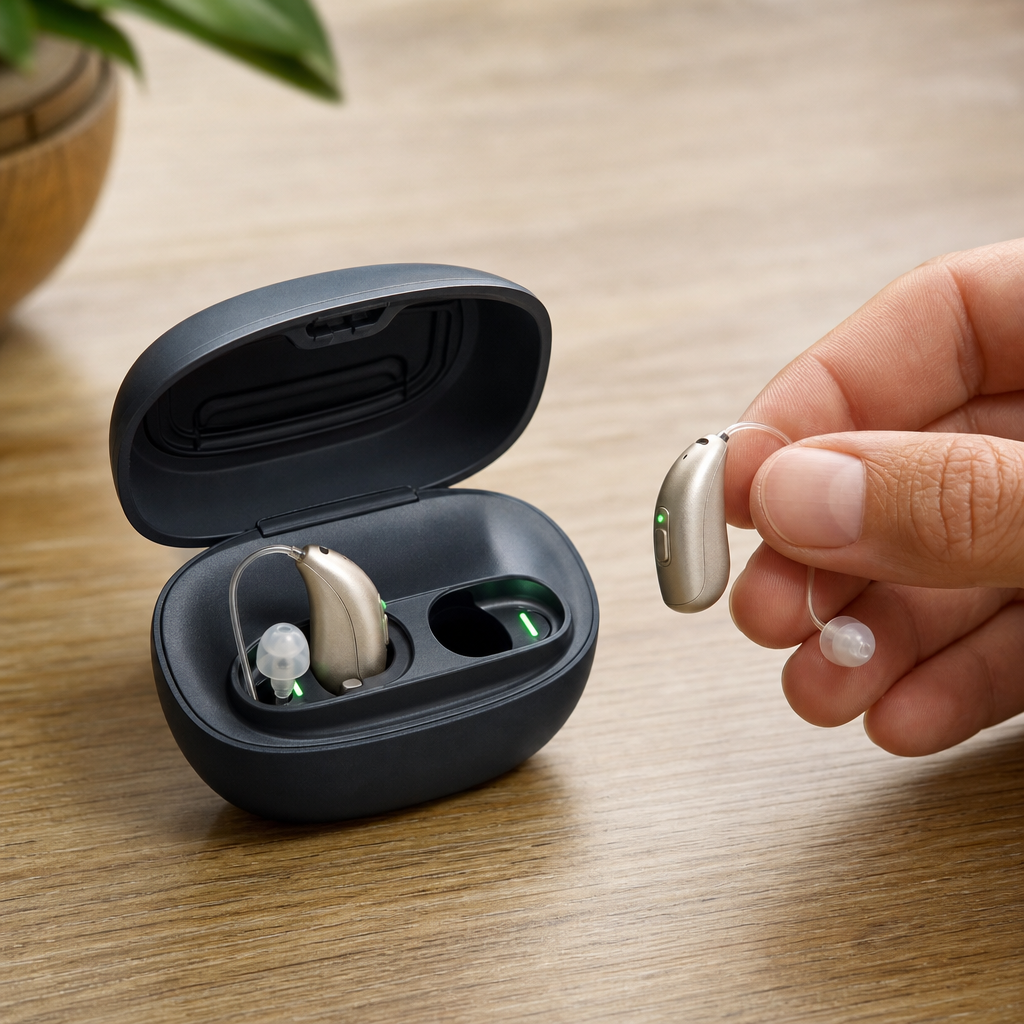
Rechargeable hearing aid batteries have changed how people use, maintain, and shop for modern hearing aids by replacing disposable cells with sealed power systems that charge overnight and support all-day listening. In practical terms, a rechargeable hearing aid battery is usually a built-in lithium-ion or silver-zinc cell designed to be recharged hundreds of times, rather than removed and discarded every few days. That shift matters because battery performance affects speech clarity, streaming reliability, travel convenience, device size, moisture protection, and long-term ownership cost. After fitting and troubleshooting many hearing aids, I have seen battery expectations shape satisfaction more than buyers expect. People ask the same core questions: How long does a charge last, how many years will the battery hold up, what happens if power runs out midday, and are rechargeables better than disposable batteries for every lifestyle? The short answer is that rechargeable systems now serve most adults very well, but they are not identical across brands or use cases. Performance depends on battery chemistry, hearing aid style, wireless features, charger design, and daily habits. Understanding those factors helps you choose a device that matches your hearing needs rather than simply following a trend. This guide explains how rechargeable hearing aid batteries work, what advantages and tradeoffs to expect, how to compare models, and how to keep charging systems dependable over time.
How rechargeable hearing aid batteries work
Most current rechargeable hearing aids use lithium-ion batteries sealed inside the device housing. Lithium-ion became dominant because it offers high energy density, stable voltage delivery, low self-discharge, and compact sizing that fits behind-the-ear and receiver-in-canal designs. In plain terms, that means the battery can power microphones, digital signal processing, feedback management, directional microphones, Bluetooth streaming, telecoils, and app connections for a full day in many users. Some earlier or less common systems used silver-zinc batteries, which could be replaced by a professional after their service life ended, but the market has largely standardized around lithium-ion because charging behavior is more predictable and waterproof sealing is easier to engineer around a nonremovable battery compartment.
A rechargeable hearing aid system includes more than the battery itself. It also includes power management firmware, charging contacts or inductive charging hardware, thermal protection, and the charger cradle. Good systems monitor charging rate and battery temperature to prevent overcharging and to preserve capacity. Many chargers also dry the hearing aids gently during the charging cycle, which is useful because moisture from sweat, humidity, and ear canal condensation is one of the most common causes of hearing aid failure. Brands such as Phonak, ReSound, Oticon, Signia, Starkey, and Widex all offer rechargeable platforms, but run time varies depending on amplification demand and wireless use. A patient with severe hearing loss who streams audio for several hours each day will draw more power than someone with mild loss who uses little streaming.
Key benefits of rechargeable hearing aid batteries
The biggest advantage is convenience. Disposable zinc-air batteries require regular handling, correct orientation, storage, and timely replacement. That can be frustrating for anyone with arthritis, reduced fingertip sensation, tremor, or low vision. Rechargeable hearing aid batteries remove that routine. You place the hearing aids in the charger at night and take them out in the morning. For many users, that simple habit improves consistency of wear because there is less risk of discovering a dead battery with no spare on hand. In clinic follow-ups, I often hear that rechargeables feel more like charging a phone than maintaining a medical device, which lowers the learning curve for first-time users.
Rechargeables also reduce waste. Traditional hearing aid batteries are small, metal-containing cells that must be manufactured, packaged, transported, and discarded repeatedly. A single user may go through dozens of disposable batteries each year. A rechargeable system concentrates that environmental impact into one built-in battery over several years of service. Cost can improve as well, although the savings depend on how long you keep the hearing aids. The upfront purchase price for rechargeable models may be higher, but many owners spend less over time because they are not buying replacement batteries every week. There is also a reliability benefit: the sealed battery compartment allows stronger protection against dust and moisture ingress, which can support higher ingress protection ratings and fewer problems from corroded battery doors.
Limitations and tradeoffs to understand
Rechargeable hearing aid batteries are not automatically better for every person. The main tradeoff is dependence on access to electricity and a charger. With disposable batteries, you can carry spares and swap power instantly. With rechargeables, a depleted battery usually means you must recharge before full use resumes. Some modern chargers provide fast charging, such as several hours of use from a 15 to 30 minute top-up, but emergency replacement is not as simple as changing a cell. Travelers, campers, and people in areas with unreliable power should think carefully about backup plans such as portable charger cases, power banks, or a second hearing aid set if hearing access is mission critical.
Battery aging is the other major limitation. All rechargeable batteries lose capacity over time because charge cycles and heat gradually reduce usable energy storage. Most premium hearing aid batteries are expected to last several years, often aligning with the common three- to five-year replacement cycle for hearing aids themselves, but longevity is not infinite. If a battery originally delivers 24 hours and drops noticeably after years of use, service may be needed. Repairs can involve manufacturer battery replacement rather than a simple over-the-counter purchase. Rechargeables also remain less common in very small completely-in-canal or invisible styles, where size limits battery capacity. If cosmetic invisibility is your top priority, disposable options may still offer more design choices.
What battery life really means in daily use
Manufacturers often advertise all-day battery life, but the number should be interpreted in context. Run time reflects a test profile that may include a defined listening program, moderate gain, and a specific amount of wireless streaming. In real life, battery drain changes with hearing loss severity, acoustic environment, frequency shaping, directional microphone use, tinnitus masking, and Bluetooth activity. Streaming phone calls or media can cut operating time significantly because wireless radios consume more power than ordinary acoustic amplification. That does not make the claim inaccurate; it means users should ask for details about the test assumptions before comparing brands.
| Factor | Typical effect on run time | Why it matters |
|---|---|---|
| Degree of hearing loss | Shorter run time with higher power demand | More amplification requires more energy from the battery |
| Bluetooth streaming | Often reduces total daily hours | Wireless audio transmission increases power consumption |
| Charger type | May improve convenience, not battery capacity | Portable cases help travel, but do not change device efficiency |
| Temperature and moisture | Can reduce performance or speed aging | Heat stresses battery chemistry and moisture affects electronics |
| Device style | Larger styles usually allow larger batteries | Behind-the-ear models have more physical space for power storage |
When I counsel patients, I treat 16 to 24 hours as the practical benchmark for a strong rechargeable platform, with the caveat that heavy streamers should ask for specific streaming-hour estimates. A person who uses hearing aids from 6 a.m. to 11 p.m., streams podcasts during a commute, and takes frequent calls has a different battery profile from someone who wears devices mainly for conversation at home. The right question is not “How long does the battery last?” but “How long will it last with my hearing loss, my settings, and my streaming habits?”
Comparing rechargeable and disposable hearing aid batteries
Disposable zinc-air batteries still have strengths. They are widely available, easy to stock in quantity, and effective for users who need immediate backup power. Zinc-air chemistry activates when the tab is removed and air enters the cell, which is why unused batteries must remain sealed until needed. They have been the standard for decades and are available in familiar sizes such as 10, 312, 13, and 675. For high-power hearing aids, especially some super-power models, disposables historically offered longer operating windows than early rechargeables. That gap has narrowed, but it has not disappeared in every category.
Rechargeable hearing aid batteries generally win on ease of use, sealed design, and lower ongoing battery purchases. Disposable batteries still win on instant replacement and sometimes on flexibility in remote settings. For a retired couple at home with reliable power and dexterity challenges, rechargeable hearing aids are often the clear recommendation. For a hunter spending long weekends off-grid, a user working twelve-hour shifts without charging access, or someone who cannot risk downtime during travel, disposables may remain practical. The better option depends on routine, not just technology. Good hearing care professionals match power format to lifestyle, manual dexterity, vision, and hearing aid style, then explain the ownership tradeoffs plainly before purchase.
Choosing the right charger and feature set
Chargers vary more than many buyers realize. Basic desktop chargers simply recharge the hearing aids. Premium charger cases may include an internal battery so the case itself can store power for several additional charges without being plugged in. That is valuable for travel, long days away from home, or households where the outlet location changes. Some chargers use metal contacts, which require accurate seating and occasional cleaning. Others use contactless inductive charging, which can be easier for users with limited dexterity and less vulnerable to corrosion. Dry-and-charge systems add low-heat dehumidification or UV sanitation features, though the practical value of UV depends on design and should not replace ordinary cleaning.
Ask direct questions before buying. Does the charger come standard or cost extra? How many full charges can the portable case deliver? Is charging contact-based or inductive? What is the fast-charge specification? Does the hearing aid power on automatically when removed from the charger? Can the charger be connected by USB-C, which simplifies travel, or does it require a brand-specific power brick? These details affect ownership every day. In my experience, charger fit and ease of use can determine whether an older adult actually benefits from a rechargeable system. A technically excellent battery platform is less useful if the user struggles nightly to dock the devices correctly.
Maintenance, troubleshooting, and expected lifespan
Rechargeable hearing aid batteries need less routine handling than disposables, but they still need care. Keep the charger on a stable surface, away from direct heat, and connected to a reliable power source. Wipe hearing aids regularly to remove wax and debris before placing them into the charger, because blocked microphone ports and dirty charging contacts cause avoidable service visits. If a device does not charge, first check power to the charger, seating alignment, debris on contacts, and any status lights indicated in the manual. Then test whether one hearing aid charges while the other does not, which helps isolate whether the problem is the device or the charger.
Battery lifespan depends heavily on temperature and charging habits, though modern battery management systems handle most of the complexity automatically. Unlike older consumer electronics, hearing aid rechargeables are designed to live in the charger overnight, so routine nightly charging is appropriate. The larger threat is heat exposure, such as leaving devices in a hot car, near a radiator, or in direct sun. If battery performance drops noticeably within the warranty period, manufacturers often evaluate replacement under service coverage. Over a normal ownership cycle, many users never need separate battery service at all. Still, if reliable all-day use is fading, do not assume your hearing has changed first; battery aging or charger failure may be the simpler explanation.
Who should choose rechargeable hearing aid batteries
Rechargeable hearing aid batteries are the best fit for most adults who want simple daily use, stream audio regularly, and have dependable charging access at home. They are especially helpful for people with arthritis, Parkinsonian tremor, neuropathy, low vision, or any condition that makes handling tiny disposable batteries frustrating. They also suit users who value moisture resistance, reduced waste, and cleaner nightstand routines. Parents managing pediatric hearing technology may appreciate rechargeables too, although children’s wear schedules, school-day streaming, and backup planning deserve extra discussion with a pediatric audiologist.
Disposable batteries still deserve consideration for users who prioritize the smallest in-ear styles, spend extended time off-grid, or need instant field replacement. The right decision should follow a hearing evaluation, a realistic review of daily habits, and a hands-on charger demonstration. If you are comparing hearing aids now, ask your audiologist to document expected battery life with your programmed settings, not a generic brochure estimate. Rechargeable hearing aid batteries are mature, dependable technology, and for many people they remove one of the biggest hassles of hearing aid ownership. Choose the system that fits your life, then use it consistently, because the real benefit is simple: more hours of effortless hearing with less daily maintenance. Schedule a professional hearing aid consultation and test rechargeable options side by side before you buy.
Frequently Asked Questions
What is a rechargeable hearing aid battery, and how is it different from a disposable hearing aid battery?
A rechargeable hearing aid battery is a built-in power cell designed to be charged and reused hundreds of times instead of being removed and replaced every few days like a traditional disposable battery. In most modern hearing aids, that rechargeable cell is either lithium-ion or silver-zinc, with lithium-ion being especially common because it offers dependable all-day performance, convenient overnight charging, and a sealed design that supports smaller, more streamlined devices. Unlike older zinc-air disposable batteries, rechargeable systems are usually integrated into the hearing aid, which means users do not have to handle tiny battery doors or keep spare cells on hand for routine daily use.
The difference goes beyond convenience. Battery type directly affects how a hearing aid performs throughout the day, especially when the device is processing speech in noisy settings, connecting to smartphones, or streaming calls, music, and television audio. Rechargeable hearing aids are designed to deliver stable power output across a full day of listening, which can help support consistent sound quality and speech clarity. For many people, that reliability is a major advantage over disposable cells, which may weaken unpredictably as they near the end of their life.
Rechargeable batteries also change the ownership experience. Instead of budgeting for regular packs of disposable batteries and remembering to replace them, users typically place their hearing aids in a charger at night and start the next day with a full charge. That simplicity can be especially helpful for older adults, people with reduced dexterity, and anyone who prefers low-maintenance hearing care. While rechargeable devices may have different long-term service considerations than disposable-battery models, they have become a leading choice because they combine ease of use, modern connectivity support, and a cleaner day-to-day routine.
How long do rechargeable hearing aid batteries last on a single charge?
Most rechargeable hearing aid batteries are designed to last a full waking day on a single charge, often roughly 16 to 30 hours depending on the model, battery chemistry, hearing aid style, and how the device is being used. For many wearers, that means charging overnight and wearing the hearing aids all day without worrying about power. However, real-world battery life is influenced by several factors, including volume level, degree of hearing loss, the amount of background noise the hearing aids are processing, and how often features like Bluetooth streaming, hands-free calling, directional microphones, and tinnitus masking are used.
Streaming is one of the biggest variables. Hearing aids that are frequently used for phone calls, music, podcasts, or television audio generally consume more power than hearing aids used mainly for conversational listening. Similarly, users with more complex hearing needs may require more signal processing, which can also increase battery demand. Environmental conditions matter too. Very hot or very cold temperatures can affect charging behavior and battery efficiency, and over time, all rechargeable batteries naturally lose some capacity as they age.
It is also helpful to distinguish between daily runtime and total battery lifespan. Daily runtime refers to how many hours the hearing aids can operate before needing to be recharged. Total battery lifespan refers to how many years the rechargeable cell can continue performing well before it may need professional service or replacement. In many cases, rechargeable hearing aid batteries are built to provide reliable use for several years. If a hearing aid that once lasted all day begins running out much earlier than expected, that may be a sign the battery is aging or that the charger, usage pattern, or hearing aid settings should be checked by a hearing care professional.
Are rechargeable hearing aids better for convenience, cost, and the environment?
For many users, rechargeable hearing aids are a strong improvement in convenience. The biggest reason is simple: there is no need to frequently buy, store, and replace tiny disposable batteries. Instead, the hearing aids are placed in a charging dock, case, or desktop charger overnight, much like a smartphone or smartwatch. That routine is easy to learn and easy to maintain, and it reduces the chance of being caught without a fresh battery during the day. It can also make hearing aids more approachable for people who have arthritis, limited vision, tremors, or difficulty opening small battery compartments.
From a cost perspective, rechargeable systems can be appealing because they reduce or eliminate the ongoing expense of disposable batteries. While the upfront price of rechargeable hearing aids may sometimes be higher depending on the brand and model, many users appreciate the long-term savings and the reduced hassle of constant battery purchases. That said, total value should be considered over the life of the hearing aids. Buyers should ask whether the charger is included, what warranty coverage applies to the battery, and what service options exist if battery performance declines after several years. Those details can make a meaningful difference in long-term ownership costs.
Environmentally, rechargeable hearing aid batteries offer clear advantages because they reduce the number of disposable cells being used and discarded. Traditional hearing aid batteries are small, frequently replaced, and easy to accumulate over time, especially for full-time users. Rechargeable technology helps cut down on that waste stream. It does not eliminate environmental impact entirely, since rechargeable batteries still have a manufacturing footprint and eventually reach end of life, but it can significantly reduce the volume of single-use battery disposal. For users who want a more sustainable hearing care option without sacrificing modern performance, rechargeable hearing aids are often an excellent fit.
How do you properly charge and care for rechargeable hearing aid batteries?
Good charging habits are one of the best ways to support reliable battery performance. In most cases, manufacturers recommend charging hearing aids every night so they begin the next day at full power. The hearing aids should be placed in their designated charger according to the manufacturer’s instructions, and the charger itself should be kept on a stable surface in a clean, dry area. It is important to use the charger and power accessories approved for that specific hearing aid model, since using incompatible equipment can affect charging efficiency or even damage the device.
Routine care also matters. Hearing aids should be kept clean and dry, especially around the charging contacts. Earwax, dust, and moisture can interfere with proper charging if they build up on the device or inside the charger. Wiping the hearing aids gently with a dry, soft cloth and checking the charger regularly for debris can help prevent connection issues. If the charger has indicator lights, users should become familiar with what those lights mean so they can quickly spot whether the hearing aids are charging correctly or whether there is a positioning problem.
Temperature and storage are also important. Rechargeable batteries generally perform best when charged and stored within the temperature range recommended by the manufacturer. Leaving hearing aids in a hot car, exposing them to excess humidity, or charging them in extreme cold can reduce battery efficiency and may shorten long-term performance. If a user will not wear the hearing aids for an extended period, they should follow the manufacturer’s storage guidance rather than guessing. And if charging suddenly becomes inconsistent, the hearing aids stop holding a full-day charge, or the charger appears unreliable, it is wise to schedule a professional check instead of continuing to troubleshoot indefinitely at home.
How do I know if rechargeable hearing aids are the right choice for me?
Rechargeable hearing aids are the right choice for many people, but the best option depends on lifestyle, hearing needs, and personal preferences. They are especially well suited for users who wear hearing aids all day, want a simpler daily routine, and value easy overnight charging over frequent battery swaps. They can be an excellent match for people who regularly use smartphone connectivity and streaming features, since many modern rechargeable models are built with those functions in mind. They are also popular among users who want a cleaner, more modern design without the hassle of carrying spare disposable batteries.
That said, there are situations where a disposable-battery model may still be worth considering. Some users travel extensively, spend long periods away from reliable power, or prefer the flexibility of changing batteries instantly instead of waiting for a recharge. Others may want a specific hearing aid style or power level that is offered more broadly in certain non-rechargeable models. The right decision often comes down to how predictable your routine is, how comfortable you are with charging technology, and how important features like streaming, portability, and maintenance simplicity are in everyday life.
The smartest next step is to discuss your hearing profile and daily habits with a hearing care professional. They can explain expected battery runtime based on your listening demands, recommend models that fit your dexterity and lifestyle needs, and clarify warranty and service details before you buy. In other words, choosing between rechargeable and disposable hearing aid batteries is not just about power source alone. It is about selecting a hearing solution that supports dependable speech understanding, all-day comfort, and a day-to-day experience you will actually find easy to live with.