
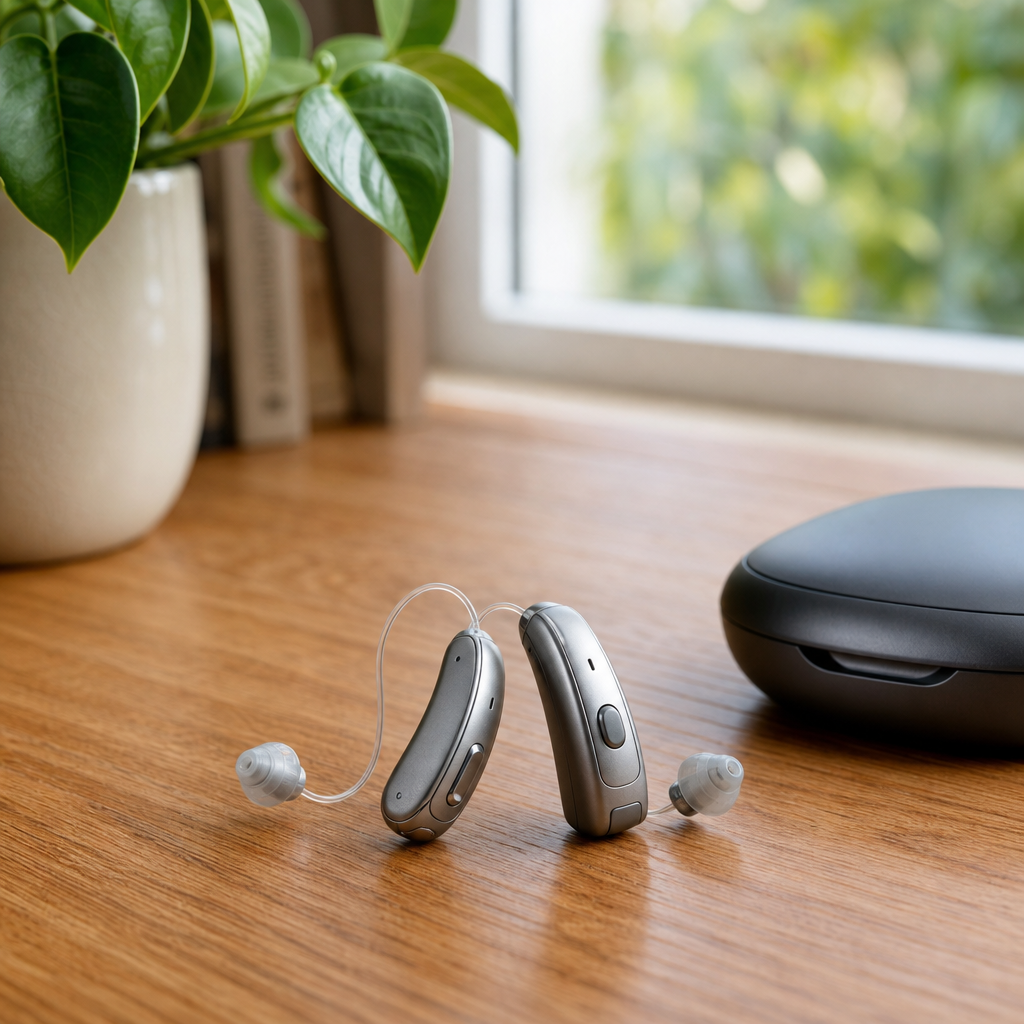
Hear.com hearing aids sit at the intersection of modern audiology, telecare, and consumer-friendly purchasing, making them a useful case study for anyone researching hearing technology. Hear.com is not a hearing aid manufacturer in the traditional sense. It is primarily a hearing care platform that connects people with licensed hearing specialists, offers hearing assessments, coordinates fittings, and sells devices through partner networks and its own branded options in some markets. That distinction matters because shoppers are often comparing brands such as Phonak, Signia, Oticon, Widex, Starkey, Jabra Enhance, and Eargo, while Hear.com operates more like a guided service model. In practice, that means the value proposition includes support, trial periods, financing, and follow-up care, not just the hardware in your ears.
When I evaluate hearing aid providers, I start with the same questions patients ask in clinic and online: How much do Hear.com hearing aids cost? What technology levels are available? Is the fitting process remote or in person? Are these prescription hearing aids or over-the-counter products? What kind of hearing loss can they address? Those are the right questions because hearing aid success depends on more than amplification. Good outcomes come from accurate testing, proper programming, realistic counseling, and consistent aftercare. A premium device fit poorly will underperform. A midrange device fit well may change daily life.
For readers building a broad understanding of hearing aids, this guide covers Hear.com in general terms as a hub article. It explains what the company does, how its process works, which features matter most, what buyers should expect on pricing and support, and where Hear.com fits within the larger hearing care market. If you are new to the category, key terms help frame the discussion. A prescription hearing aid is a medical device programmed to an audiogram by a licensed professional. Sensorineural hearing loss is the most common adult form, usually caused by aging, noise exposure, or both. Real-ear measurement is the gold-standard verification method for checking whether amplification at the eardrum matches target levels. Rechargeable hearing aids use built-in lithium-ion batteries, while disposable battery models use zinc-air cells.
This topic matters because untreated hearing loss affects more than volume. Research consistently links hearing loss with social withdrawal, listening fatigue, reduced workplace performance, and poorer communication in noisy settings. The National Institute on Deafness and Other Communication Disorders estimates that roughly one in eight people in the United States aged twelve or older has hearing loss in both ears based on standard hearing examinations, and prevalence rises sharply with age. Yet many people wait years before seeking help, often because they are overwhelmed by technology, pricing, stigma, and inconsistent information. A clear guide to Hear.com hearing aids can shorten that learning curve and help readers decide whether this service-led approach fits their needs, budget, and expectations.
What Hear.com Is and How Its Service Model Works
Hear.com generally functions as a hearing care marketplace with concierge-style guidance. Instead of asking you to sort through every hearing aid brand alone, the company typically begins with a consultation, screens your hearing concerns, and matches you with a licensed hearing care professional or clinic. Depending on location and product line, you may receive a hearing test in person, discuss lifestyle challenges such as restaurants or meetings, and then review recommended devices. That service model can be helpful for first-time buyers who need structure. It can also reduce the friction of finding a clinic, understanding feature tiers, and navigating financing.
In my experience reviewing hearing aid delivery models, this kind of platform works best for people who want support and a relatively guided path, not for shoppers who only want the absolute lowest device price. The platform’s role means you are paying for clinical care and follow-up in addition to the hearing aids themselves. That is standard in traditional bundled hearing care. A common misunderstanding is that all hearing aid prices are inflated because of branding. In reality, a large portion of the bill often reflects testing, fitting, software programming, adjustment visits, warranty administration, and counseling. Hear.com leans into that bundled value rather than a bare-device transaction.
Another point worth clarifying is product sourcing. Hear.com may offer devices from established manufacturers through partner clinics, and in some markets it promotes proprietary or exclusive product lines. Buyers should ask directly which manufacturer built the recommended device, what chipset generation it uses, and whether accessories, app control, charger, telecare, and loss-and-damage protection are included. Those questions are not nitpicks. Hearing aid names can be private labeled, and consumers should know exactly what platform they are buying so they can compare features and support accurately.
Who Hear.com Hearing Aids Are Best For
Hear.com hearing aids are usually best for adults with perceived mild to severe hearing difficulties who want professional guidance instead of self-fitting alone. They are especially relevant for people who have never worn hearing aids before, spouses trying to help a reluctant partner, and busy professionals who value a streamlined path from consultation to fitting. Many older adults also benefit because the model emphasizes human support, and hearing aid adaptation often requires coaching over several weeks. If you struggle most in restaurants, group conversations, worship services, classrooms, family gatherings, or video calls, a guided fitting process can uncover whether directional microphones, stronger noise management, telecoil access, or Bluetooth streaming should be prioritized.
They are less ideal for some edge cases. People with sudden hearing loss, single-sided deafness, chronic ear drainage, active ear pain, asymmetrical hearing loss, unilateral tinnitus with recent onset, or significant dizziness need medical evaluation first, usually from an otolaryngologist. Those red flags should not be handled as a straightforward retail purchase. The same is true for people considering cochlear implants or bone-anchored systems, because candidacy requires specialized assessment. Hear.com can still be part of the journey, but not as a substitute for medical workup.
Shoppers comparing over-the-counter hearing aids should also understand the difference. OTC devices are intended for adults with perceived mild to moderate hearing loss and do not require a prescription or professional fitting. Prescription hearing aids, which are typically what Hear.com focuses on, can address more complex hearing profiles and are custom-programmed. If your hearing loss is straightforward and your budget is tight, OTC may be worth comparing. If speech clarity is poor, hearing loss is uneven across pitches, or you want higher-touch support, prescription care usually delivers better results.
Features, Technology Levels, and Everyday Performance
Most modern hearing aids offered through service platforms like Hear.com include a familiar set of core features, but the quality of implementation differs by technology tier and manufacturer. At the baseline, expect digital signal processing, multiple listening programs, feedback suppression, wind noise reduction, and some level of directional microphone behavior. Midrange and premium devices add stronger speech-in-noise processing, automatic environmental classification, motion sensors, tap controls, direct streaming, hands-free calling on select phones, and rechargeable cases. Advanced models may support Auracast readiness in emerging platforms, remote fine-tuning, tinnitus masking sounds, and more sophisticated beamforming.
Speech in noise is where hearing aids earn their reputation or disappoint users. Nearly every brand promises better hearing in restaurants, but no device restores normal hearing. What the better platforms do is improve the signal-to-noise ratio by emphasizing speech coming from in front of you, reducing steady-state noise, and preserving cues that help the brain separate talkers. In practice, that means a good fitting might turn an exhausting dinner conversation into something manageable, though not effortless. Expectations matter. Hearing aids amplify and process sound; they do not let you hear through walls of noise.
Style choice also affects performance. Receiver-in-canal models, often abbreviated RIC or RITE, dominate the prescription market because they fit many hearing losses, allow open fittings for natural sound, and are easier to upgrade and service. Behind-the-ear models offer durability and power for more severe losses. In-the-ear and custom in-the-canal devices can be appealing for cosmetics, but they may trade battery size, microphone spacing, or moisture resistance. Hear.com buyers should ask not only which style looks best, but which style supports their audiogram, dexterity, wax production, and communication environments.
| Category | What to Ask | Why It Matters |
|---|---|---|
| Hearing profile | Is this recommendation based on a full audiogram? | Programming should match hearing thresholds and speech needs. |
| Verification | Will real-ear measurement be used at fitting? | Verification improves accuracy more than guesswork or first-fit settings. |
| Connectivity | Does it stream to iPhone, Android, TV accessories, or microphones? | Daily convenience often determines long-term satisfaction. |
| Battery | Rechargeable or disposable? | Rechargeables simplify use, while disposable batteries can help frequent travelers. |
| Service plan | How many follow-up visits and remote adjustments are included? | Adaptation usually requires more than one fitting appointment. |
| Protection | What are the warranty and loss-and-damage terms? | Small devices are easy to misplace and expensive to replace. |
Pricing, Trial Periods, and What You Are Really Paying For
One of the biggest search questions about Hear.com hearing aids is cost. Prices vary by device tier, clinic, included services, and region, so broad estimates are more honest than rigid numbers. In the prescription market, a pair of professionally fit hearing aids often ranges from the low thousands into the upper thousands of dollars. Hear.com commonly positions itself in that mainstream professional range, often with financing and trial offers designed to reduce purchase hesitation. If you see an attractive monthly payment, read the full terms. The more useful comparison is total cost over the expected life of the devices, usually around three to five years.
What does that price usually cover? Often it includes the hearing evaluation, fitting appointment, programming, a charger if rechargeable, follow-up visits, warranty support, and sometimes remote care. It may also include a trial period, which is critical because hearing aids are not like ordinary electronics. A trial lets you test real-life performance at home, in traffic, at work, and around family. If a company advertises a lengthy trial, confirm whether there are fitting fees, restocking fees, or nonrefundable service charges if you return the devices. Those details affect the true financial risk.
Insurance coverage is mixed. Traditional Medicare does not generally cover hearing aids, though some Medicare Advantage plans offer hearing benefits through networks. Employer coverage, state vocational rehabilitation, Medicaid in some states, veterans’ benefits, health savings accounts, and flexible spending accounts can also play a role. Hear.com shoppers should ask for an itemized breakdown and submit it to their plan if direct billing is unavailable. A transparent provider should explain exactly what is included and what is optional, such as TV streamers, remote microphones, extra chargers, or extended warranties.
The Fitting Process, Follow-Up Care, and Long-Term Satisfaction
A strong fitting process is more important than marketing language. The best hearing aids in the world will disappoint if they are selected or programmed poorly. A typical Hear.com pathway starts with intake questions and a consultation, then moves to a hearing test and recommendation. During the fitting, the clinician should check physical comfort, insert the devices properly, run feedback calibration, set gain targets, and explain use, care, and app controls. If real-ear measurement is available, it should be part of the process. This verification method uses a probe microphone in the ear canal to measure actual amplified sound, and it consistently improves fitting precision.
Follow-up care is where many first-time users either succeed or abandon their devices. The first two to six weeks are an adaptation period. Environmental sounds may seem sharper, your own voice may feel different, and noisy places will still require communication strategies such as facing the speaker or choosing quieter seating. Good providers normalize that adjustment period and schedule follow-ups to fine-tune settings based on specific listening examples. I tell readers to keep notes: which places sounded too loud, where speech still felt muddy, whether streaming volume was balanced, and whether the domes or molds stayed comfortable through a full day.
Maintenance also matters. Hearing aids need regular cleaning, wax guard replacement, software updates, and occasional component swaps such as receivers, domes, or retention locks. Rechargeables simplify battery handling, but all devices face moisture, earwax, and drop damage. That is why local or remote support should not be treated as a bonus feature. It is central to the ownership experience. Hear.com’s value depends heavily on how effectively that support is delivered after the sale.
How Hear.com Compares Within the Hearing Aid Market
Compared with buying directly from a local independent audiology clinic, Hear.com often offers more centralized intake and marketing convenience. Compared with warehouse models or big-box hearing centers, it may provide a more consultative feel and wider manufacturer access, depending on the network. Compared with direct-to-consumer OTC brands, it usually costs more but offers stronger clinical involvement. None of those models is universally best. The right choice depends on hearing complexity, budget, preference for in-person care, and how much guidance you want.
For most adults researching hearing aids broadly, the practical takeaway is simple: evaluate Hear.com on process quality, not just promises. Ask who performs the hearing test, whether real-ear verification is used, which exact devices are recommended, what the trial terms say, how follow-up is handled, and what happens if your hearing changes. Those answers reveal more than slogans. If the service is transparent and clinically grounded, Hear.com can be a strong entry point into prescription hearing care.
Hear.com hearing aids are best understood as part of a full-service hearing care pathway rather than a single brand story. The company’s main advantage is guided support: consultation, professional matching, device selection, financing options, and aftercare wrapped into one process. For many first-time buyers, that structure reduces confusion and improves the odds of successful adoption. The key is to verify the details behind the offer, especially device origin, fitting standards, trial terms, and follow-up access.
As you continue exploring the Hearing Aids topic, use this hub as your foundation. Compare technology levels, learn the differences between prescription and OTC products, and pay close attention to fitting quality, because that is where hearing aid outcomes are decided. If you are considering Hear.com, schedule a consultation, request a full explanation of the recommended devices, and make sure the care plan matches your real listening environments before you buy.
Frequently Asked Questions
What is Hear.com, and how is it different from a traditional hearing aid manufacturer?
Hear.com is best understood as a hearing care platform rather than a conventional hearing aid manufacturer. Instead of operating like a brand that only designs and produces devices, Hear.com focuses on helping consumers move through the full hearing care journey, from initial consultation and hearing screening to device selection, fitting, follow-up support, and ongoing adjustments. In many cases, it works by connecting customers with licensed hearing professionals through a network of providers, while also offering telecare and consumer-friendly service options that simplify the buying process.
This distinction matters because when people research Hear.com hearing aids, they are often comparing two different things at once: the technology inside the device and the service model surrounding it. With Hear.com, the service experience is a central part of the value. The company may offer access to hearing aids through partner manufacturers and, in some markets, through its own branded solutions, but the core idea is that consumers are not just buying a product off a shelf. They are entering a guided care process that includes professional recommendations and support.
For many buyers, that platform model can be appealing because hearing aids typically work best when they are selected and programmed based on an individual’s hearing profile, lifestyle, dexterity, and listening goals. A traditional manufacturer may make excellent devices, but Hear.com aims to package the technology with clinical guidance and post-purchase care. That makes it a useful option for people who want a more hands-on, managed experience instead of trying to evaluate every hearing aid brand and specification on their own.
How does the Hear.com hearing aid process work from consultation to fitting?
While the exact process can vary by location and provider network, the general Hear.com experience is designed to be more guided than a simple online retail purchase. It typically starts with an initial consultation or hearing assessment, which may involve a phone discussion, online intake, or an appointment with a licensed hearing specialist. During this stage, the goal is to understand the person’s hearing concerns, communication challenges, medical history, lifestyle needs, and expectations for treatment.
From there, the customer is usually matched with a hearing care professional who can perform more detailed testing and recommend appropriate hearing aid options. That recommendation is based on much more than just the severity of hearing loss. It may include factors such as whether the person struggles most in restaurants, meetings, phone calls, television listening, or one-on-one conversations; whether they want rechargeable devices; whether they need Bluetooth streaming; and whether they prefer a discreet in-ear style or a behind-the-ear design with more power and features.
Once a device is selected, the fitting process begins. This is where hearing aids are physically adjusted and programmed to the individual’s audiogram and comfort preferences. Proper fitting is extremely important because even advanced devices can underperform if they are not calibrated correctly. Hear.com’s model often emphasizes follow-up care, which may include check-ins, remote fine-tuning, education on cleaning and charging, and troubleshooting as the wearer adapts. That continuing support is especially valuable during the first few weeks, when many new users need volume changes, sound balance adjustments, or coaching on how to interpret sounds that they have not heard clearly in a long time.
What types of hearing aids and features are usually available through Hear.com?
Hear.com generally offers access to modern digital hearing aids with the kinds of features people expect from premium and mid-range hearing technology. Depending on the market and the specific devices available through its network, users may find rechargeable models, Bluetooth-enabled hearing aids, directional microphones, feedback suppression, noise reduction systems, tinnitus masking features, and smartphone app controls. Some options are designed to be nearly invisible in the ear, while others prioritize battery life, durability, easier handling, or stronger amplification for more significant hearing loss.
One of the practical advantages of going through a platform like Hear.com is that recommendations are often based on fit and need rather than on loyalty to a single manufacturing line. That can be helpful for consumers who are unsure whether they need a discreet custom device, a receiver-in-canal model with streaming capabilities, or a more powerful style for complex hearing profiles. Instead of forcing the buyer to interpret a long list of technical terms alone, the provider can explain which features are likely to make a noticeable difference in everyday listening situations.
It is also important to remember that not every feature matters equally for every person. For example, Bluetooth streaming may be essential for someone who spends all day on phone calls, while advanced speech-in-noise processing may be the top priority for someone who frequently attends group dinners or works in a busy office. Hear.com’s value proposition often lies in helping users sort through these tradeoffs. Rather than chasing the most feature-packed device, the aim is usually to identify the hearing aid that best matches real-world communication needs, comfort, and budget.
Are Hear.com hearing aids a good choice for people who want remote care and convenience?
For many people, yes. Hear.com is often especially appealing to buyers who want a blend of professional hearing care and modern convenience. Traditional hearing aid purchasing can feel fragmented, requiring separate steps for research, appointments, fittings, and follow-up. Hear.com tries to streamline that process by coordinating those elements through a more consumer-oriented platform, often with telecare options that make support easier to access after the initial fitting.
Remote care can be a meaningful benefit because hearing aid success rarely depends on the first programming alone. Many users need adjustments after wearing their devices in the real world. They may discover that background noise feels too sharp, soft voices are still difficult to hear, or their own voice sounds unusual. If a provider can make certain changes remotely or guide the wearer through issues without requiring repeated in-person visits, the overall experience may become less stressful and more efficient. This can be particularly useful for busy professionals, older adults who prefer fewer trips, or people who live farther from hearing care offices.
That said, convenience should not be mistaken for a completely hands-off experience. Good hearing care still requires accurate assessment, thoughtful fitting, and communication between the patient and the provider. The best outcomes tend to happen when telecare complements professional oversight rather than replacing it entirely. Hear.com can be a strong fit for people who want support and accessibility, but it is still wise to ask what services are included, how remote adjustments work, when in-person visits are required, and what level of follow-up is available over time.
What should you consider before buying hearing aids through Hear.com?
Before committing, it is smart to evaluate both the hearing aid technology and the service structure that comes with it. Since Hear.com functions primarily as a hearing care platform, buyers should ask clear questions about which devices are being offered, who the fitting professional will be, what brands or product families are included, and whether the recommendation is based on a full hearing evaluation. Understanding the care model is just as important as understanding the hardware.
Cost is another major consideration. Hearing aids are often priced as part of a broader care package that may include testing, fitting, follow-up visits, warranties, cleanings, remote support, and trial periods. That bundled approach can be beneficial, but consumers should still ask for a transparent breakdown of what is included. It is helpful to know how long support lasts, whether loss and damage coverage is available, what happens if adjustments are needed after the initial fitting period, and whether there is a return or satisfaction policy.
You should also consider your own priorities. If you value guided service, access to licensed professionals, and a more simplified path through the hearing care process, Hear.com may be a very attractive option. If you are highly brand-specific or want to compare a broad range of manufacturers independently, you may want to verify exactly what choices are available through the platform in your area. Ultimately, the best hearing aid purchase is not just about buying advanced technology. It is about finding a solution that combines appropriate amplification, a comfortable fit, responsive support, and enough flexibility to adapt as your hearing needs change.