
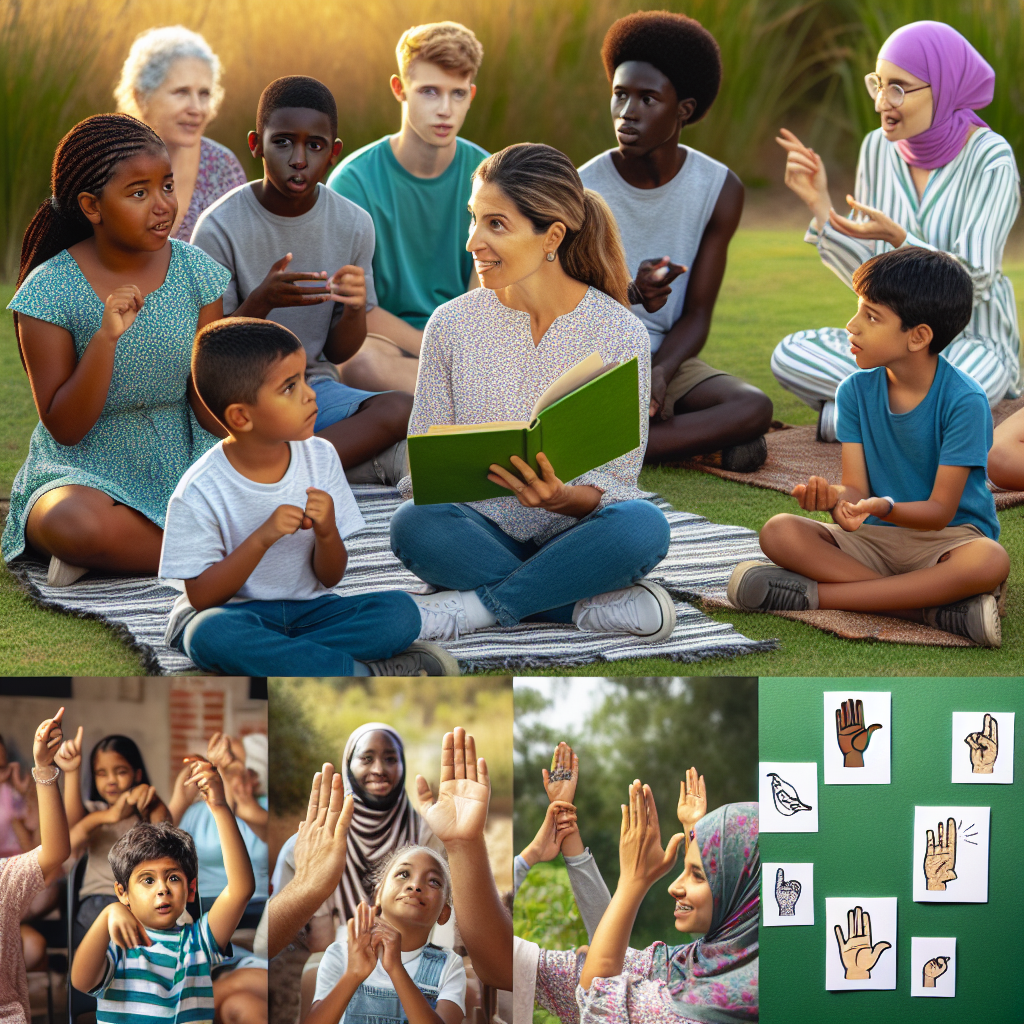
American Sign Language (ASL) is a beautiful, expressive language that is rich in culture and history. Learning ASL not only opens doors to communicating with the Deaf and Hard of Hearing communities but also enhances cognitive and social skills. At the ASL Storytelling Camp, we believe in transforming the process of learning sign language into an interactive and enjoyable experience. The camp offers an immersive environment where children and adults can learn ASL through storytelling, games, and other engaging activities.
Storytelling is a powerful educational tool that has been used for centuries to impart knowledge, morals, and cultural values. In the context of ASL, storytelling becomes even more impactful as it incorporates visual elements that make it easier to learn and remember signs. Our camp utilizes a blend of live narratives, puppetry, and digital storytelling to make learning ASL both fun and effective. We cater to all skill levels, from beginners who are just starting their ASL journey to advanced learners looking to refine their skills.
The History and Importance of Sign Language
Sign language has been an essential mode of communication for Deaf individuals throughout history. Its significance goes beyond mere communication; it is a critical component of Deaf culture. ASL, in particular, is a complete, natural language that has its own grammar and syntax. Understanding the history of sign language adds depth to the learning process and reinforces its importance in fostering inclusive societies.
ASL has its roots in French Sign Language (LSF) and was brought to the United States by Thomas Hopkins Gallaudet and Laurent Clerc in the early 19th century. Over time, it evolved into the distinct language we recognize today. The fight for recognition and respect for ASL and other sign languages has been long, often intertwined with the broader struggle for Deaf rights and equity.
Benefits of ASL Storytelling for Learning
There are numerous benefits to learning sign language through storytelling. First and foremost, storytelling is engaging. It captures the imagination and keeps learners interested, which is particularly important for younger participants. Interactive stories create a dynamic learning environment that encourages participation and helps reinforce new vocabulary and grammatical structures.
Additionally, storytelling in ASL allows learners to see signs in context. This contextual learning makes it easier to understand and remember individual signs. It also helps learners grasp the flow and rhythm of ASL, which can be different from spoken languages. Furthermore, storytelling often involves repetition, a key component in language acquisition. Repeating relevant signs within a narrative helps cement them in the learner’s memory.

Engaging Activities at ASL Storytelling Camp
The ASL Storytelling Camp offers a variety of activities designed to make learning fun and effective. These activities go beyond traditional classroom instruction. They are hands-on, interactive, and often incorporate elements of play, which is particularly beneficial for younger learners. Here are some of the key activities participants can look forward to:
Puppetry and Role-Playing
Puppetry and role-playing are excellent ways to bring stories to life. Learners can use puppets to act out stories, practicing their ASL skills in a creative and supportive environment. This method is particularly effective for younger children, as it makes the learning process feel like play.
Interactive Story Reading
Interactive story reading involves reading stories while simultaneously signing in ASL. This dual input helps learners make connections between written language and sign language. It also provides opportunities for learners to practice signing along with the story, reinforcing their skills.
Digital Storytelling
Digital storytelling utilizes technology to create and share stories in ASL. Learners can create their own digital stories, incorporating signs they have learned. This activity fosters creativity and provides a platform for self-expression. It also helps learners practice their ASL skills in a modern, engaging way.
The Role of Qualified Instructors
At the heart of the ASL Storytelling Camp are our qualified instructors. These professionals are not only fluent in ASL but are also passionate about teaching and promoting Deaf culture. They bring a wealth of experience and knowledge to the camp, ensuring that participants receive high-quality instruction.
Our instructors use a variety of teaching methods to accommodate different learning styles. They understand the unique challenges that come with learning a new language and are skilled at creating supportive and inclusive learning environments. With their guidance, learners gain confidence and proficiency in ASL, whether they are beginners or more advanced students.
In addition to their teaching skills, our instructors serve as role models and ambassadors for Deaf culture. They help learners understand the cultural context of ASL and emphasize the importance of respect and inclusion. This holistic approach to teaching ensures that participants not only learn the language but also appreciate the community it serves.
Success Stories and Testimonials
The success of the ASL Storytelling Camp is best illustrated by the stories and testimonials of those who have participated in our programs. Many of our learners have gone on to achieve remarkable proficiency in ASL, and their experiences serve as powerful testimonials to the effectiveness of our approach.
One parent shared, “My daughter was initially shy and hesitant to use ASL. After attending the camp, she became much more confident and enthusiastic about signing. The storytelling activities made learning fun and engaging for her.”
Another learner, a teenager, remarked, “The camp exceeded my expectations. The instructors were amazing, and the activities were so much fun. I learned a lot and made new friends who share my interest in ASL.”
How to Join the ASL Storytelling Camp
Joining the ASL Storytelling Camp is easy and straightforward. Whether you’re a parent looking to enroll your child or an adult interested in learning ASL, we have programs suitable for all ages and skill levels.
Registration Process
Our registration process is simple. Visit our website to access the registration form, fill in the required details, and submit it online. You can also contact us directly if you have any questions or need assistance with the registration process.
Program Fees
We strive to make our programs accessible and affordable. Detailed information about program fees and payment options is available on our website. We also offer scholarships and financial aid to eligible applicants to ensure that everyone has the opportunity to learn ASL.
Conclusion
The ASL Storytelling Camp offers a unique and effective approach to learning American Sign Language. Through interactive stories and engaging activities, participants of all ages can develop their ASL skills in a fun and supportive environment. Our qualified instructors ensure that learners receive high-quality instruction and gain a deeper appreciation for Deaf culture.
We invite you to join us at the ASL Storytelling Camp and experience the joy of learning ASL through storytelling. Whether you are a beginner or looking to refine your skills, our camp provides the perfect environment to achieve your language learning goals.