
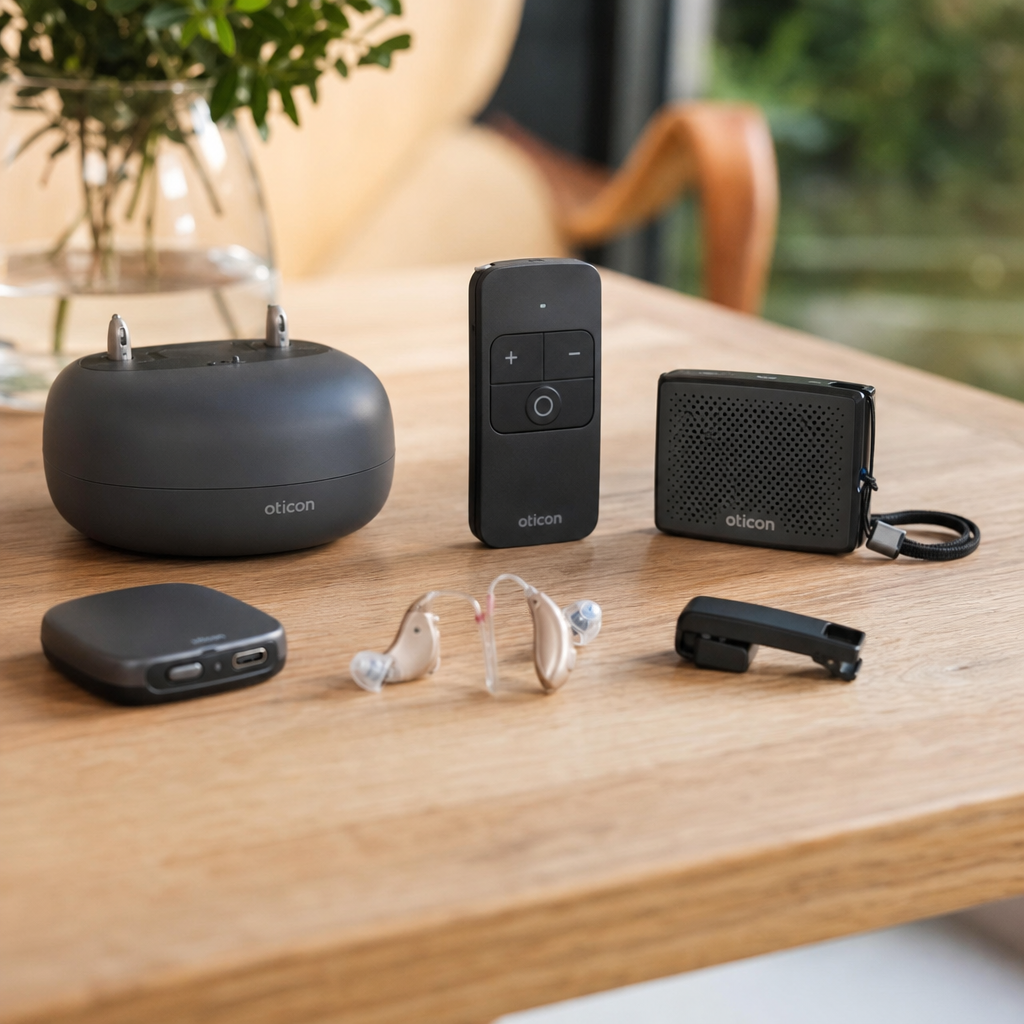
Oticon hearing aid accessories extend far beyond add-on convenience items; they are practical tools that improve speech understanding, device handling, charging, connectivity, and everyday comfort for people who rely on hearing technology. In clinical fittings and follow-up appointments, I have seen the right accessory change how consistently someone wears hearing aids, how well they hear in noise, and how confident they feel in meetings, restaurants, cars, classrooms, and at home. In simple terms, Oticon hearing aid accessories are companion products designed to work with Oticon devices, including wireless microphones, TV audio streamers, chargers, remote controls, cleaning supplies, retention parts, and phone-connectivity tools. They matter because hearing aids do not operate in a vacuum: real listening happens in noisy, dynamic environments, and even a well-fit hearing aid can benefit from targeted support. If you are comparing options, this guide explains what Oticon hearing aid accessories do, who benefits most, how compatibility works, and which categories deserve priority when building a reliable hearing care setup.
What Oticon Hearing Aid Accessories Include
Oticon hearing aid accessories generally fall into five groups: listening accessories, power accessories, control accessories, maintenance items, and physical comfort or retention parts. Listening accessories transmit a cleaner signal directly to the hearing aids. Common examples include TV adapters that stream television audio, remote microphones such as ConnectClip or EduMic, and telecoil-compatible loop solutions in public venues. Power accessories include desktop chargers, SmartCharger travel cases, and rechargeable battery systems for selected Oticon miniRITE and BTE models. Control accessories give users simpler ways to adjust volume, mute microphones, or switch programs without handling tiny onboard buttons. Maintenance items cover wax guards, domes, tubing, receiver units, cleaning cloths, drying kits, and dehumidifiers. Comfort accessories include sports locks, ear grips, retention lines, sleeves, and custom earmolds.
These categories exist because hearing aid performance depends on more than amplification. For example, someone with mild hearing loss may hear well one-to-one but struggle across a dining table. A remote microphone clipped to the speaking partner can improve the signal-to-noise ratio by sending the voice directly into both hearing aids. Another patient may hear television too loudly for family members. A TV adapter solves that by letting the wearer stream sound personally while others listen at a normal room volume. Small practical issues matter too: if hearing aids slip during exercise, retention accessories reduce the chance of loss. If dexterity is limited by arthritis, a charger may be more useful than replacing disposable batteries. When people ask which accessory is best, the right answer depends on the listening problem, the hearing aid model, and the user’s daily routine.
Streaming and Connectivity Accessories
Streaming accessories are often the most transformative because they address the hardest part of hearing loss: understanding speech in noise and hearing media clearly at a comfortable volume. Oticon’s ConnectClip is a good example. It can function as a remote microphone, a hands-free communication bridge for some phone setups, and a remote control. In practice, I recommend it to people who frequently talk in cars, attend small meetings, or need a spouse’s voice brought closer in restaurants. The basic principle is straightforward. Distance and background noise weaken speech clarity. A remote microphone reduces both problems by capturing speech near the talker’s mouth and wirelessly sending it to the hearing aids.
TV adapters serve a different but equally common need. Television mixes often compress dialogue under music and effects, making speech harder to understand even for listeners with premium hearing aids. A dedicated TV streamer sends audio directly from the television to the ears, bypassing room acoustics. That direct path usually improves clarity, reduces listening effort, and prevents family conflict over volume. Phone connectivity accessories matter as well. Depending on the Oticon hearing aid generation and the user’s smartphone, direct streaming may already be built in through Made for iPhone or ASHA-compatible Android support. In other cases, an intermediary accessory improves call stability and microphone pickup. Compatibility always matters, so checking the exact hearing aid family, firmware version, and phone operating system is essential before buying.
| Accessory Type | Main Use | Best For | Key Benefit |
|---|---|---|---|
| ConnectClip | Remote microphone and call bridge | Meetings, restaurants, car rides | Clearer speech from a selected talker |
| TV Adapter | Direct television streaming | Home entertainment | Improved dialogue clarity without raising room volume |
| EduMic | Teacher or speaker microphone system | Classrooms, lectures, training | Better access to distant speech |
| Remote Control | Program and volume adjustment | Users with dexterity or vision limits | Simpler daily handling |
| SmartCharger | Rechargeable charging on the go | Travel and all-day wear | Portable power with storage protection |
Charging, Batteries, and Daily Power Management
Power management is one of the least glamorous but most important parts of hearing aid success. Oticon offers rechargeable solutions for many current devices, and for many users they are easier than disposable batteries. A charger reduces fiddling, lowers the risk of putting batteries in backward, and helps people build a consistent nightly routine. The SmartCharger line adds portability, which matters for travelers and people who spend long days away from home. In real use, the convenience is significant. Users place the hearing aids in the charger at night, wake up to a full day of use, and avoid carrying battery caddies. Rechargeable systems also help people with reduced finger strength or neuropathy who struggle to open battery doors and peel tabs from zinc-air cells.
Disposable batteries still have advantages. They are immediately replaceable, widely available, and useful for long trips where electricity is uncertain. Sizes such as 10, 312, 13, and 675 remain standard across many hearing devices, though exact compatibility depends on the aid style. The tradeoff is ongoing cost, more handling, and the need to monitor charge depletion. Moisture is another factor. Sweat, humidity, and battery compartment debris can interrupt power delivery, so regular cleaning remains necessary regardless of power type. For users deciding between rechargeable and disposable systems, the best choice depends on lifestyle, dexterity, travel patterns, and whether uninterrupted overnight charging is realistic. An audiologist can estimate expected battery life based on streaming time, hearing loss severity, and feature use.
Cleaning, Maintenance, and Replacement Parts
Even advanced Oticon hearing aid accessories cannot compensate for poor maintenance. Sound quality often declines because of simple blockages, especially wax at the receiver port or moisture in microphone inlets. That is why everyday care supplies are essential accessories, not optional extras. Common items include wax filters such as ProWax or NoWax styles depending on the receiver design, cleaning brushes, vent cleaners, microfiber cloths, drying cups, drying beakers, and electronic dehumidifiers. Receiver-in-canal models also use domes and retention locks that wear out over time. If a dome becomes loose, stiff, or discolored, comfort and acoustic seal can change, affecting gain, feedback control, and low-frequency output. I advise users to treat these small components like tires on a car: inexpensive, easy to ignore, but critical to safe performance.
Replacement schedules vary. Heavy wax producers may need wax guard changes every few weeks, while others can go months. Domes typically need periodic replacement to maintain hygiene and fit. Custom earmolds last longer but may need remakes if a child grows or an adult experiences weight change or soreness. Moisture management deserves special attention in humid climates and among active wearers. A dry-aid kit can prevent intermittent sound, corrosion, and charging contact issues. If a hearing aid seems dead, weak, or distorted, the first troubleshooting steps are simple: inspect the wax guard, change or charge the battery, clean the contact points, and confirm the dome or earmold opening is clear. Those steps resolve many common complaints without a repair visit.
Comfort, Retention, and Fit Accessories
A hearing aid that sounds good but feels insecure will not be worn consistently, which makes comfort accessories especially important. Oticon users may rely on domes, Grip Tip solutions, custom molds, retention tails, and sports locks to keep devices stable. Receiver-in-canal aids are small and cosmetically appealing, but they can shift with jaw movement, eyeglasses, masks, helmets, or exercise. A retention accessory prevents migration, reduces the sensation that the aid is about to fall out, and can improve acoustic consistency by holding the receiver in the intended place. That stability matters because even slight movement changes microphone orientation and ear canal seal. For active users, I often recommend testing retention options before assuming a style is unsuitable.
Fit accessories also affect sound quality. Open domes allow more natural low-frequency hearing and reduce the plugged sensation, but they also let in more ambient sound and limit bass amplification. Closed domes and power domes provide a tighter seal, which supports greater amplification and better feedback management, but some users feel more occlusion. Custom earmolds offer the most tailored fit and can solve repeated dome slippage, severe hearing loss demands, or unusual ear canal anatomy. The key point is that comfort and acoustics are linked. If an accessory causes soreness, users wear the aids less. If the fit is too loose, speech clarity suffers. Small fit adjustments often produce bigger real-world gains than people expect.
Compatibility, Setup, and Buying Advice
Compatibility is the question buyers most often underestimate. Oticon accessories are not universally interchangeable across every product generation. Connectivity depends on the hearing aid platform, wireless protocol, firmware, and app support. For example, an accessory designed for newer Bluetooth-enabled Oticon miniRITE devices may not function the same way with older streamer-based systems. The same is true for smartphone features. iPhone direct streaming support differs from Android support, and Android performance can vary by handset maker, operating system version, and Bluetooth implementation. Before purchasing any Oticon hearing aid accessory, confirm the exact hearing aid model name, serial information if needed, battery type, and current firmware. An audiology clinic or manufacturer support page can usually verify this quickly.
Price should be considered alongside use frequency and hearing goals. A TV adapter may be indispensable if television is a daily activity, while a remote microphone may deliver greater value for someone who works in meetings. Some accessories require pairing and orientation from a clinician to get the best result. Others, such as wax guards and domes, are routine supplies worth keeping on hand. If budget is limited, start with the accessory that solves the biggest communication barrier, not the one with the longest feature list. Also review warranty terms and return windows, especially for electronic accessories. The best Oticon hearing aid accessories are the ones that remove specific obstacles to hearing, fit seamlessly into daily habits, and remain reliable over time. If you wear Oticon devices or are considering them, use this hub as your starting point, then compare compatible accessories with your hearing care professional and choose the setup that supports how you actually live.
Oticon hearing aid accessories are valuable because they turn hearing aids from standalone devices into complete communication systems. The major categories are easy to remember: streaming tools for clearer speech and media, charging solutions for dependable daily power, maintenance supplies for sound quality and hygiene, and fit accessories for secure comfortable wear. Each category solves a distinct real-world problem. TV streamers improve dialogue. Remote microphones reduce the impact of distance and background noise. Chargers simplify routines. Wax guards and drying tools prevent avoidable performance issues. Retention parts keep hearing aids stable during normal movement and exercise. When chosen carefully, these accessories improve not only audibility but also consistency of use, which is what ultimately supports better outcomes.
The main benefit is practical control. Instead of accepting missed words, awkward volume compromises, or frequent handling problems, you can build an Oticon setup around your actual day. Start by identifying where hearing breaks down most often: television, phone calls, noisy conversations, long workdays, moisture, or fit. Then match the accessory to that problem and verify compatibility before buying. This hub gives you the general foundation for the category, and it should make your next conversation with an audiologist much more productive. If you want better performance from your hearing aids, review your daily listening challenges, check which Oticon accessories work with your model, and add the one that will make the biggest immediate difference.
Frequently Asked Questions
What kinds of Oticon hearing aid accessories are available, and what do they actually help with?
Oticon hearing aid accessories cover several practical categories, and each one is designed to solve a real-world listening or handling problem rather than simply add convenience. Broadly, these accessories include remote microphones, TV listening devices, phone and media streaming tools, chargers, remote controls, app-based controls, care and maintenance items, and connectivity accessories for work, school, and everyday communication. For many wearers, these tools can make the difference between hearing well in ideal settings and hearing confidently in the places that matter most, such as restaurants, family gatherings, meetings, classrooms, cars, and living rooms.
One of the most helpful categories is speech and sound transmission accessories. For example, remote microphones can bring a speaker’s voice closer to the hearing aids, which often improves clarity in noisy or distant listening situations. This can be especially useful in lectures, one-on-one conversations across a room, religious services, or workplace meetings. TV accessories are also popular because they stream television audio directly to compatible hearing aids, allowing the wearer to hear dialogue more clearly without forcing everyone else in the room to listen at a higher volume.
Another major category is power management. Chargers for rechargeable Oticon hearing aids simplify daily use by eliminating the need to handle disposable batteries. For people with vision issues, dexterity limitations, arthritis, or simply a desire for a simpler routine, a charging accessory can make hearing aid use much easier and more consistent. Consistent use matters because hearing aids tend to work best when they are worn regularly, and anything that reduces friction in the process often improves long-term success.
Connectivity accessories are equally important. Depending on the hearing aid model and phone compatibility, Oticon users may be able to stream calls, music, podcasts, or other audio directly. Some accessories or companion technologies also improve hands-free communication or connect hearing aids with other devices in a more stable, user-friendly way. In addition, remote control options and smartphone apps let users adjust volume, switch programs, or personalize settings without touching the hearing aids themselves.
Finally, there are accessories focused on comfort, maintenance, and reliability. These include cleaning tools, drying systems, domes, wax guards, and other small but essential items that keep the devices working properly and feeling comfortable in the ear. In daily practice, these often get overlooked, but they are extremely important. Even the most advanced hearing aid will not perform well if it is blocked with wax, exposed to excess moisture, or fitted with worn-out consumable parts. In short, Oticon accessories are best thought of as tools that support clearer hearing, easier use, and more dependable day-to-day performance.
Do Oticon accessories really improve hearing in noisy places like restaurants, meetings, and classrooms?
Yes, the right Oticon accessories can make a meaningful difference in noisy or acoustically difficult environments, although it is important to set realistic expectations. Hearing aids alone do a great job in many situations, but background noise, distance from the speaker, room echo, and multiple simultaneous talkers can still make communication challenging. Accessories help by addressing one or more of those specific problems directly. In many cases, they improve the signal you want to hear before it even reaches the hearing aids.
A remote microphone is one of the clearest examples. If a speaker wears or places a microphone near them, their voice can be transmitted more directly to the hearing aids. This reduces the negative impact of distance, competing voices, and environmental noise. In a classroom, that may mean hearing an instructor more clearly from anywhere in the room. In a business meeting, it may help the wearer follow the main speaker without straining. In a car, where road noise and seat position create major listening challenges, a remote microphone can be especially effective because it helps deliver speech more consistently than hearing aids alone can from several feet away.
For restaurant listening, accessories can help, but the amount of benefit depends on the setup and the nature of the conversation. If you are trying to hear one primary communication partner, a microphone-based accessory may significantly improve clarity. If multiple people are speaking around a table in heavy background noise, it can still help, but the results depend on microphone placement, the hearing aid programming, and how dynamic the conversation is. This is why individualized counseling matters so much. The goal is not to promise perfect hearing in every noisy room, but to use the accessory strategically in the situations where it offers the most benefit.
TV accessories are another strong example of improved hearing in difficult listening conditions. Television dialogue is often hard to understand because of music, sound effects, speaker accents, and inconsistent mixing levels. Streaming the TV sound directly to the hearing aids can improve clarity dramatically because it reduces interference from room acoustics and background activity in the home. This often leads to less frustration, lower TV volume, and a more enjoyable experience for both the hearing aid user and family members.
The key point is that accessories do not replace proper hearing aid fitting, but they can extend performance into situations where even excellent hearing aids may otherwise be limited. When matched to the wearer’s specific listening needs, they often improve comfort, reduce listening effort, and increase confidence. That combination can be just as valuable as the raw improvement in speech understanding.
How do I know which Oticon accessory is right for my lifestyle and hearing needs?
The best Oticon accessory is the one that solves the listening problems you face most often. Choosing the right option starts with identifying where communication breaks down in your everyday life. If you hear well in quiet but struggle with television, a TV streaming accessory may be the most helpful investment. If meetings, classes, or conversations in noise are your biggest challenge, a remote microphone may deliver the greatest benefit. If battery handling is frustrating, a charger or rechargeable solution may improve your daily routine more than any listening accessory would.
It helps to think in terms of specific environments rather than general preferences. Ask yourself a few practical questions: Do you often ask people to repeat themselves in the car? Do you avoid restaurants because of noise? Is TV dialogue hard to follow even when the volume is high? Do you need easier phone connectivity for work calls? Do small batteries feel difficult to manage because of reduced vision or hand dexterity? These types of questions usually reveal where an accessory can have the strongest impact.
Compatibility is also essential. Not every accessory works with every Oticon hearing aid model, and features can vary depending on the generation of the device, wireless capabilities, rechargeable design, and smartphone operating system. That is why it is always best to confirm compatibility with your hearing care professional before purchasing anything. They can also explain whether an accessory will integrate directly with your hearing aids, require a separate intermediary device, or work best under certain conditions.
Another important factor is ease of use. An accessory may have excellent technical features, but if it feels complicated or inconvenient, it may end up sitting in a drawer. In fittings and follow-up care, this is something clinicians pay close attention to. A simple accessory that gets used every day is usually more valuable than a complex one that offers theoretical benefits but does not fit naturally into the wearer’s routine. The right choice should feel intuitive enough to support consistency, not create another layer of stress.
Finally, the best selection process includes real-world testing and follow-up. If possible, ask your provider to demonstrate the accessory, pair it with your hearing aids, and walk you through typical use scenarios. Then discuss what worked, what felt confusing, and whether programming adjustments are needed. Hearing technology works best when it is personalized. Oticon accessories are most effective when they are chosen with your actual listening goals, comfort preferences, and day-to-day routines in mind.
Can Oticon accessories connect to phones, TVs, and other devices, and is setup difficult?
Many Oticon accessories are designed specifically to improve connectivity with phones, televisions, tablets, computers, and other audio sources, but the exact experience depends on the hearing aid model, the accessory itself, and the type of device you are trying to connect. In general, Oticon’s ecosystem aims to make direct streaming and control more seamless so that hearing aid wearers can participate more fully in phone conversations, media use, video calls, and home entertainment without relying only on environmental sound picked up by the hearing aid microphones.
Phone connectivity is one of the most common priorities. Depending on compatibility, some Oticon hearing aids can pair directly with supported smartphones for call audio, media streaming, and app-based control. In some cases, an additional accessory may improve the experience or expand options. This can be particularly useful for people who take frequent calls for work, listen to podcasts, use navigation prompts, or want easier control over volume and programs without handling the hearing aids directly. For many users, being able to route sound closer to the ears provides better clarity than holding a phone to the ear or relying on speakerphone in noisy settings.
TV connectivity is also a major benefit area. A compatible TV accessory can send audio directly from the television to the hearing aids, often producing clearer speech and reducing the need to turn up the room volume. This setup can improve comfort for the user and everyone else in the home. It is especially helpful when TV dialogue is difficult to understand because of background music, soft-spoken actors, or poor room acoustics. Direct transmission often makes spoken content feel cleaner and easier to follow.
As for setup, many