
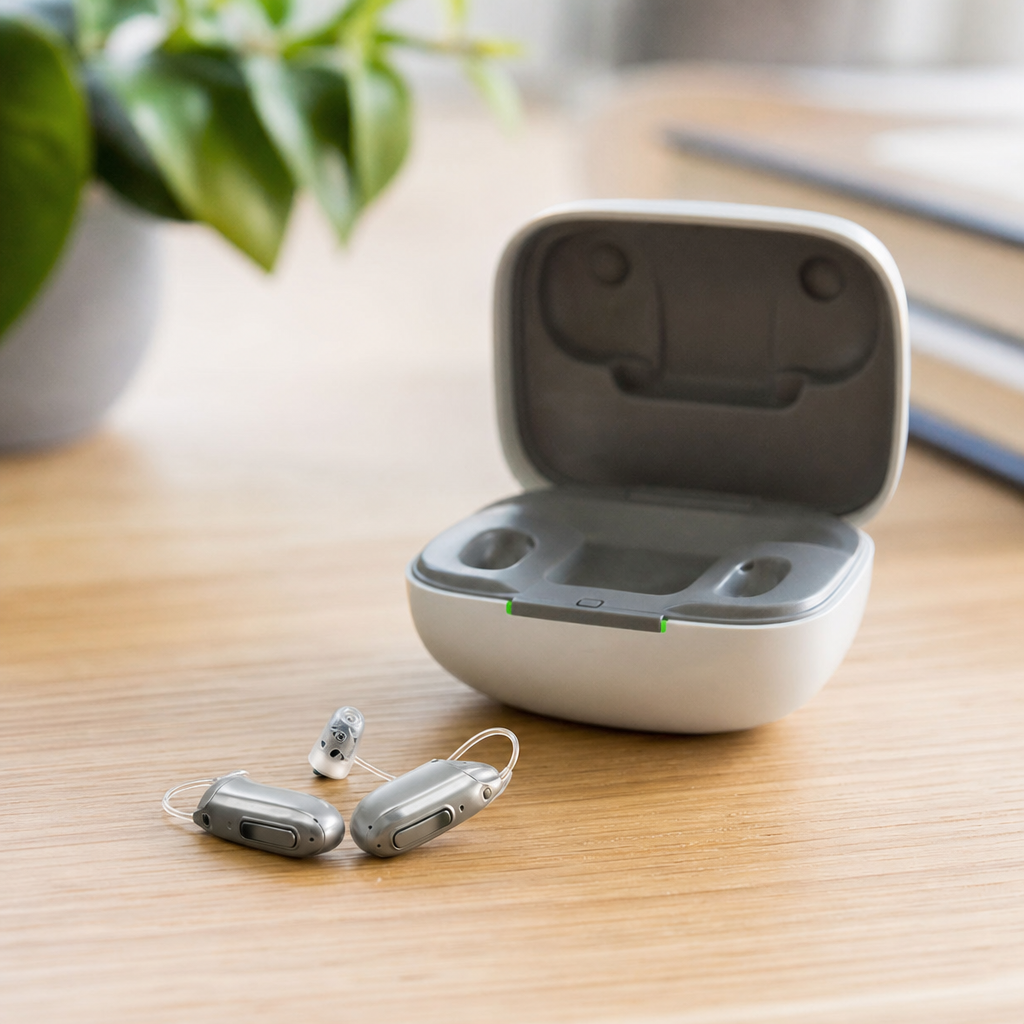
New hearing aids are smaller, smarter, and more customizable than ever, but choosing the right device still requires understanding how hearing loss works, what current technology can and cannot do, and which features actually matter in daily life. In clinical fittings and product evaluations, I have seen the same pattern repeatedly: people focus first on style or price, then discover that comfort, programming quality, and follow-up care determine whether a device becomes life changing or ends up in a drawer. A guide to new hearing aids should therefore start with the basics. Hearing aids are medical devices that amplify and process sound for people with hearing loss, while hearing loss itself usually falls into conductive, sensorineural, or mixed categories. Modern devices do far more than simple amplification. They analyze sound environments, reduce feedback, emphasize speech, connect to phones, and adapt automatically across settings such as restaurants, cars, meetings, and quiet rooms. This matters because untreated hearing loss is associated with social withdrawal, communication strain, listening fatigue, reduced workplace performance, and poorer overall quality of life. A well-fitted hearing aid does not restore natural hearing, but it can significantly improve speech understanding, environmental awareness, and confidence. For anyone researching hearing aids for the first time, this hub provides the general foundation: types of devices, core features, buying paths, fitting process, maintenance, costs, and practical expectations.
How new hearing aids work and who benefits
At a functional level, new hearing aids use microphones to pick up sound, a digital signal processor to analyze and shape it, an amplifier to increase selected sounds, and a receiver or speaker to deliver the processed signal into the ear. That sounds straightforward, yet the sophistication lies in the software. Today’s digital hearing aids use multichannel compression, directional microphone systems, impulse noise management, feedback cancellation, and environment classification. Instead of making everything uniformly louder, they boost specific frequencies based on an audiogram and listening goals. That is critical because most age-related hearing loss affects higher frequencies first, which is why people often say, “I hear you, but I can’t understand you.” Consonants such as s, f, th, and sh carry clarity, and hearing aids are designed to improve access to those sounds without making low-frequency noise overwhelming.
Who benefits most from new hearing aids? Adults with mild to severe sensorineural hearing loss are the most common users, but many people with conductive or mixed losses also benefit depending on medical status and ear anatomy. People who struggle in conversation, miss soft speech, turn up the television, or avoid noisy environments should not wait until the problem becomes severe. Earlier adoption is usually easier because the brain has more recent experience processing speech details. There are limits, however. Hearing aids help most when they are matched to the wearer’s hearing profile and verified properly. They are less effective if the hearing loss is profound, if speech discrimination is very poor, or if the user expects perfect hearing in every setting. In some cases, bone conduction devices, cochlear implants, or medical treatment may be more appropriate. A hearing test by an audiologist or hearing instrument specialist is the right starting point because symptoms like sudden hearing loss, one-sided hearing loss, ear pain, drainage, or rapid changes require medical evaluation before hearing aid selection.
Main types of hearing aids and best use cases
The main physical styles are behind-the-ear, receiver-in-canal, in-the-ear, in-the-canal, completely-in-canal, and invisible-in-canal models. Behind-the-ear devices house most electronics in a case that sits behind the ear and sends sound through tubing or a thin wire. Receiver-in-canal models, now the most common style, place the speaker in the ear canal, which allows a smaller case and often a more natural sound for mild to severe losses. Custom in-the-ear and in-the-canal products fit within the outer ear or canal and appeal to users who want a less visible device, though their smaller size can limit battery life, controls, and sometimes connectivity. Invisible models can be cosmetically appealing but are not ideal for every ear canal or every degree of loss.
In practice, style should follow hearing needs, dexterity, ear anatomy, and lifestyle. I routinely recommend receiver-in-canal devices for first-time wearers because they balance comfort, retention, phone streaming, and fitting flexibility. Behind-the-ear models are excellent for children, for severe hearing loss, and for users who need durable housings and larger controls. Custom in-the-ear products can work well for eyeglass wearers, people who dislike behind-the-ear hardware, or those with specific cosmetic preferences. The tradeoff is that very small devices may be harder to insert, clean, and adjust. Moisture, earwax, and narrow canals can also shorten performance life if maintenance is neglected. The right answer is not the smallest hearing aid; it is the device that supports reliable daily use.
Features that matter most in daily listening
Marketing language can make every hearing aid sound revolutionary, so it helps to sort essential features from optional ones. The most important capability is precise programming to your hearing thresholds and loudness tolerance. After that, users usually notice directional microphones, noise reduction, feedback management, and Bluetooth connectivity. Directional microphones help the device focus more on speech in front of the wearer than on competing noise around them. Noise reduction does not remove all background sound, but it can reduce steady noise such as fans, road hum, or restaurant clatter and lower listening effort. Feedback suppression prevents the high-pitched whistling older devices were known for. Rechargeable batteries have also become a major quality-of-life improvement, especially for older adults with reduced hand strength.
Other features are valuable in the right context. Telecoils still matter in places with hearing loop systems, including theaters, houses of worship, and some service counters. Remote microphones are often more useful for conversation in noise than upgrading to a more expensive hearing aid tier. Smartphone apps can give users volume control, program changes, geotagged settings, and “find my hearing aid” functions. Fall detection and health tracking are beginning to appear in some premium products, but these are secondary benefits. Buyers should ask a simple question: which features solve a specific communication problem I actually have?
| Feature | What it does | Best for | Limitation |
|---|---|---|---|
| Directional microphones | Prioritize speech from certain directions | Restaurants, meetings, group conversation | Less effective in highly diffuse noise |
| Noise reduction | Lowers steady background noise | Driving, office HVAC, cafés | Does not make loud places quiet |
| Bluetooth streaming | Sends phone audio directly to aids | Calls, video, music, navigation | Compatibility varies by phone platform |
| Rechargeable battery | Uses charging dock instead of disposable cells | Daily convenience, easier handling | Requires reliable charging routine |
| Telecoil | Receives signal from loop systems | Public venues with hearing loops | Only useful where loops are installed |
The hearing aid buying process from test to fitting
The buying process usually begins with a hearing evaluation, case history, and discussion of listening priorities. A proper hearing assessment includes pure-tone thresholds, speech testing, otoscopy, and sometimes uncomfortable loudness measures or middle ear testing. Those results guide candidacy and programming targets. Best practice fitting uses evidence-based prescriptive formulas such as NAL-NL2 or DSL, followed by real-ear measurement. Real-ear measurement matters because it verifies what sound levels are actually reaching the eardrum in your ear canal, not in a software simulation. In my experience, this is one of the clearest differences between a merely sold hearing aid and a properly fit hearing aid.
After selection, users need an orientation covering insertion, removal, charging, cleaning, app use, and realistic adaptation. Follow-up visits are not optional. They are where fine-tuning happens based on real-world feedback: restaurant difficulty, television balance, occlusion, wind noise, or discomfort from domes and molds. Most new wearers need an adjustment period because amplified sound can seem sharp, busy, or tiring at first. Consistent wear, gradual exposure, and structured follow-up usually improve outcomes. Any provider who treats hearing aids as a one-time retail transaction is skipping the work that makes them successful.
Prescription, over-the-counter, and online options
New hearing aids are now sold through several channels, and each has a place. Prescription hearing aids fitted by audiologists or licensed dispensers remain the best route for people with moderate or greater hearing loss, medically complex histories, tinnitus concerns, asymmetry, dexterity issues, or poor speech understanding. These products typically offer the widest fitting range, professional verification, custom earmolds, and stronger aftercare. Over-the-counter hearing aids, available in the United States for adults with perceived mild to moderate hearing loss, can be a practical lower-cost entry point. The Food and Drug Administration created this category to improve access, and some devices in it are credible products, not mere amplifiers.
That said, over-the-counter and direct-to-consumer models work best for motivated adults who can self-screen reasonably well, use smartphone setup tools, and return products promptly if benefit is limited. They are not appropriate for children or adults with red-flag symptoms such as sudden loss, unilateral symptoms, dizziness, tinnitus in one ear, ear drainage, or significant asymmetry. Online hearing aid buying can be convenient, but the quality varies dramatically. Look for clear return periods, warranty details, licensed support, and disclosure of whether the product is a true hearing aid or a personal sound amplification product. Access matters, but so does getting the right intervention.
Costs, insurance, maintenance, and lifespan
Hearing aid cost depends on technology tier, service model, brand, bundled care, and accessories. Premium prescription pairs may cost several thousand dollars, while over-the-counter devices are usually much less. Price differences often reflect both hardware and support. A clinic package may include testing, fitting, real-ear verification, follow-ups, cleanings, firmware updates, and loaner support. Lower-cost channels may reduce service or shift more setup work to the user. Insurance coverage is inconsistent. Traditional Medicare generally does not cover routine hearing aids, although many Medicare Advantage plans, state Medicaid programs, Veterans Health Administration benefits, union plans, or private insurers may provide partial coverage or contracted discounts.
Maintenance is straightforward but nonnegotiable. Hearing aids should be cleaned regularly to remove wax and debris from microphones, domes, wax guards, and charging contacts. Moisture protection matters, especially in humid climates or for active users. Receivers and tubing wear out. Rechargeable batteries degrade over time. Most devices last roughly three to seven years depending on build quality, earwax exposure, care habits, and technological needs. A hearing aid should be viewed less like a consumer gadget and more like durable medical technology that performs best with routine upkeep and periodic reassessment.
What results to expect and common mistakes to avoid
The clearest expectation to set is that hearing aids improve communication; they do not recreate normal hearing. Users usually notice the biggest gains in one-to-one conversation, television listening, environmental awareness, and reduced strain. The hardest situations remain distance, reverberant rooms, multi-talker noise, and conversations where many speakers overlap. Success often improves when hearing aids are paired with communication strategies such as facing the speaker, reducing background noise, using captioning, and adding assistive listening accessories. Family involvement also matters because communication is shared behavior, not just an ear problem.
Common mistakes are predictable. People buy based on invisibility instead of usability, skip follow-up appointments, wear devices only occasionally, or judge performance before their brains adapt. Others choose the cheapest option without checking return terms or whether professional verification is included. Another frequent issue is underreporting real problems to the provider. If restaurant speech is poor, if your own voice sounds blocked, or if streaming is unreliable, say so specifically. New hearing aids can be remarkably effective, but they need matching, tuning, and honest troubleshooting. If you are exploring hearing aids now, use this hub as your starting point, then move to deeper topics on styles, features, care, and buying options. The benefit is simple: better hearing supports better connection, safety, and independence. Book a hearing evaluation or compare qualified providers, and take the first practical step toward easier everyday listening.
Frequently Asked Questions
What should I look for first when choosing new hearing aids?
The most important starting point is not the brand, the style, or even the price. It is the quality of the hearing evaluation and the accuracy of the fitting process. New hearing aids can be remarkably advanced, but they only work well when they are matched to your specific hearing loss, ear shape, listening needs, and comfort preferences. A proper hearing test should identify not just whether you have hearing loss, but how that loss affects different pitches, speech understanding, and performance in quiet versus noisy environments.
After that, focus on how you actually live. Someone who spends time in meetings, restaurants, family gatherings, or outdoor activities will need very different programming priorities than someone who mainly wants better one-on-one conversation and television clarity. This is why comfort, sound quality, and follow-up care matter so much. Many people initially compare hearing aids by appearance or sticker price, then later realize that poor fit, weak programming, or limited support can make even expensive devices frustrating to use.
In practical terms, look for a provider who offers a comprehensive assessment, explains the results clearly, programs the devices to your hearing profile, and includes follow-up visits for fine-tuning. Features can help, but the best hearing aid is the one that is fit well, feels comfortable for long wear, and performs reliably in the situations that matter most to you.
Are new hearing aids really better than older models?
Yes, in many cases they are significantly better, especially in size, sound processing, wireless connectivity, and customization. Modern hearing aids are generally smaller and more discreet than older devices, but the real improvement is in how they handle everyday listening challenges. Many newer models use faster processors and more sophisticated algorithms to reduce background noise, improve speech clarity, and automatically adjust to different environments such as quiet rooms, cars, restaurants, and outdoor spaces.
Another major improvement is personalization. Current devices can often be programmed with much greater precision than older aids, allowing adjustments for speech frequencies, loudness comfort, and listening preferences. Many also connect directly to smartphones for streaming calls, music, and media, and some allow users to make minor sound adjustments through an app. Rechargeable batteries have also become more common, which removes the need for frequent battery changes and makes daily use easier for many people.
That said, newer does not mean perfect. Even the best hearing aids cannot restore natural hearing exactly as it was before hearing loss. They improve access to sound and speech, but they still require realistic expectations, adaptation, and fine-tuning. The biggest gains usually come from combining newer technology with skilled fitting, patient education, and consistent use. So yes, new hearing aids are often much better than older models, but their success depends just as much on the fitting process as on the technology itself.
Which hearing aid features actually matter in daily life?
The most useful features are the ones that improve listening comfort and communication in your real-world routine. For most people, the top priorities are clear speech processing, background noise management, feedback control, comfort, and reliable automatic adjustments. These functions affect whether you can follow conversation at dinner, hear a companion in the car, participate in meetings, or stay comfortable wearing the devices all day.
Directional microphones are especially important because they help emphasize speech coming from in front of you while reducing competing sounds around you. Noise reduction systems can make noisy places less exhausting, although they do not completely eliminate background noise. Feedback suppression helps prevent the whistling that some users worry about. Rechargeable batteries are a practical advantage for many people, and Bluetooth connectivity can be extremely useful if you frequently take phone calls, watch television, or use mobile devices.
Some features are valuable but depend on your lifestyle. For example, telecoil functionality can be helpful in public venues with compatible loop systems. App control can be useful if you want convenient access to volume or program changes, but not everyone wants or needs that level of interaction. Fall detection, health tracking, and AI-based environment analysis may be helpful for some users, but they are not always essential. The key is to prioritize features that solve daily listening problems rather than choosing a device based on marketing language alone.
How long does it take to get used to new hearing aids?
Adjustment is a process, not a single moment, and most people need several days to several weeks to feel comfortable with new hearing aids. If you have been missing certain sounds for a long time, your brain may need time to re-learn them. Everyday noises such as footsteps, paper rustling, dishes, running water, and your own voice may seem unusually noticeable at first. That does not necessarily mean the hearing aids are programmed incorrectly. Often it reflects the normal process of auditory re-acclimation.
In the first week or two, many people benefit from gradually increasing wear time while using the devices in different environments. Start with quiet settings, then move into more complex listening situations such as grocery stores, family dinners, or outdoor walks. Consistent daily use is important because the brain adapts better when it has regular exposure to amplified sound. Taking the hearing aids in and out only occasionally often slows progress.
Follow-up appointments are critical during this period. If speech still sounds unclear, background noise feels overwhelming, or physical comfort is poor, the devices may need adjustment. Fine-tuning is normal and expected. A well-managed adaptation period includes education, realistic expectations, and a willingness to make programming changes based on your feedback. Most users do improve with time, especially when they work closely with a knowledgeable provider and wear the devices consistently.
Is it better to buy hearing aids based on price, style, or professional support?
Professional support should be the deciding factor, because price and style only tell part of the story. A sleek, nearly invisible device may look appealing, and a lower price may seem attractive upfront, but neither guarantees success. Hearing aids are not just products; they are medical devices that need to be selected, fitted, programmed, and adjusted carefully. The quality of that process often determines whether the devices become genuinely helpful or end up unused in a drawer.
Style does matter to a point. Smaller devices can be cosmetically appealing, but they may have trade-offs in battery size, controls, power, or ease of handling. Some users do best with a discreet behind-the-ear model because it offers better comfort, stronger performance, and easier maintenance. Others may prioritize visibility less after realizing how much day-to-day function matters. Price also matters, but it should be understood in terms of total value, including testing, fitting, warranty coverage, service visits, repairs, and future adjustments.
The most successful purchases usually come from providers who take time to understand your hearing goals, explain your options honestly, and offer structured follow-up care. If you are comparing options, ask what services are included, how many adjustment visits are available, whether real-ear verification is used during fitting, and what happens if the first settings are not right. In the long run, strong professional support is often more valuable than saving money on a device that is never properly optimized for your hearing.