
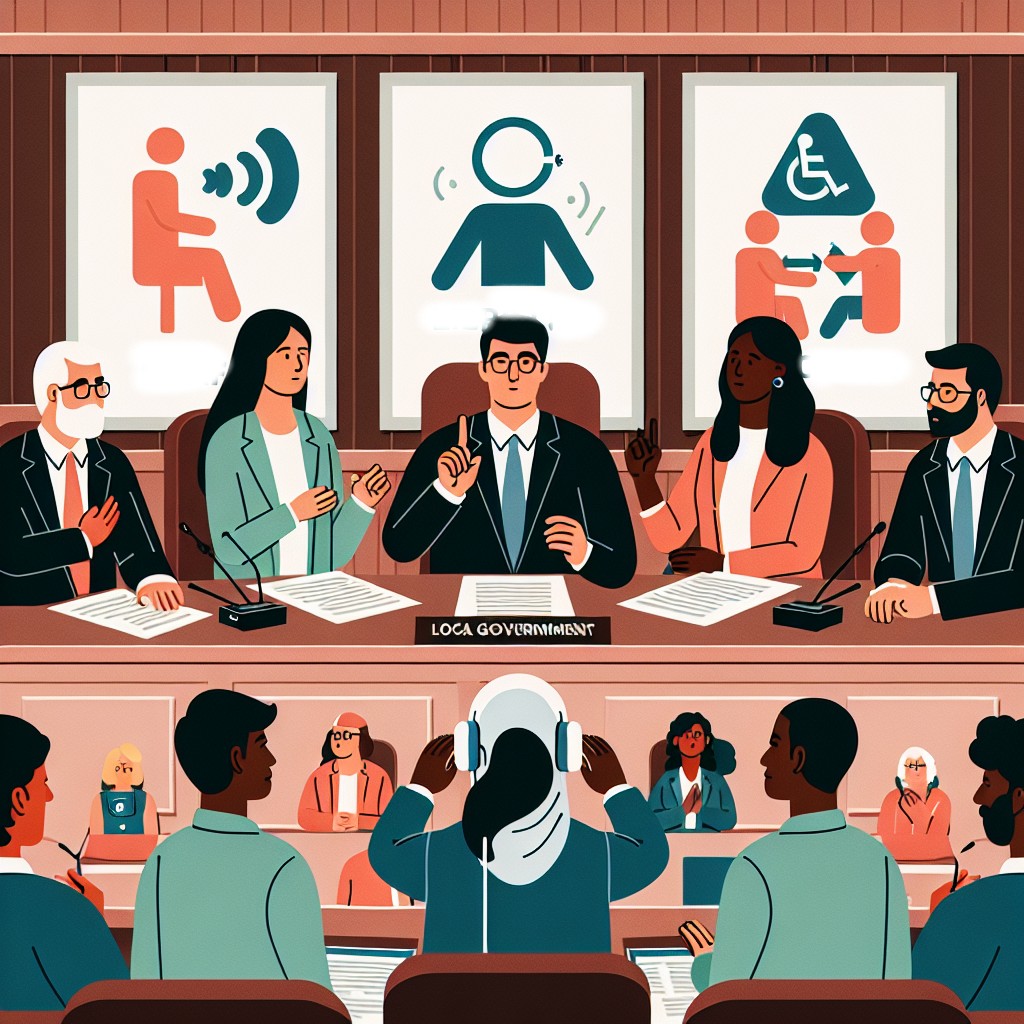
The importance of inclusion within societies has gained notable attention over recent years. One of the critical aspects of fostering inclusivity lies in the empowerment of marginalized communities, with the Deaf community being a significant part of this narrative. Local governments play a crucial role in shaping inclusive environments where every individual, irrespective of their hearing abilities, can thrive. Given their immediate impact on communities, local governments possess the power to implement policies, provide resources, and create programs that actively support and engage Deaf individuals. By understanding the unique challenges faced by the Deaf community and addressing these through structured support systems, local governments can foster a sense of belonging and equality. In this article, we will delve into the ways local governments can promote Deaf inclusion, ensuring that the Deaf community is not only heard but is also an active participant in their immediate environment. From policy development to community engagements and resources allocation, there are numerous avenues through which Deaf inclusion can be woven into the societal fabric.
Understanding the Deaf Community and Its Needs
Before local governments can effectively promote Deaf inclusion, it is fundamental to understand the Deaf community and its distinct needs. The Deaf community comprises individuals with varying degrees of hearing loss and diverse communication preferences, including American Sign Language (ASL) and other sign languages worldwide. Although technological advancements, like hearing aids and cochlear implants, have helped many, it’s crucial to recognize that not all Deaf individuals rely on such devices or benefit from them equally. Thus, communication accessibility in public spaces, government facilities, and community resources is a principal concern.
Moreover, educational opportunities for Deaf children and adults often remain unequal. Local governments can begin by assessing these disparities and promoting accessible education formats that accommodate various learning needs. This can include hiring qualified sign language interpreters, providing real-time captioning services during public meetings, and ensuring that all governmental digital communications are accessible. Understanding these aspects enables local governments to create policies that truly resonate with and support the Deaf community.
Policy Making and Legislative Support
Local governments can spearhead the push for Deaf inclusion through the creation and enactment of inclusive policies. This legislative support is foundational in establishing a formal and enforceable commitment to support the Deaf community. Here, governments can begin by conducting thorough research and consultations with Deaf advocacy groups and experts to shape policies tailored to these unique needs.
For example, mandatory accessibility standards can be instituted in public facilities to ensure Deaf individuals have access to critical services. Additionally, training programs on Deaf culture and sign language for local government employees can foster a more accommodating environment for all. Such policies not only pave the way for accessible infrastructures but also promote cultural sensitivity, thereby creating a more inclusive atmosphere for the Deaf community. By prioritizing these legislative measures, local governments can ensure long-term, sustainable support for Deaf inclusion.
Educational Initiatives and Support Systems
A robust educational framework is key to empowering the Deaf community, enabling them to actively participate in both local and broader societal contexts. Local governments, therefore, have a vested interest in supporting educational institutions by advocating for and implementing inclusive educational initiatives. For instance, schools can incorporate Deaf studies into their curricula, raising awareness and understanding among hearing students.
In collaboration with educational institutions, local governments can also ensure the availability of qualified sign language interpreters and offer professional development opportunities for educators. It is essential to offer resources for parents of Deaf children to help them support their children’s educational and social journey effectively. Together, these measures create an equitably empowering educational environment, fostering greater opportunities for the Deaf community to thrive across various facets of life.
Employment Opportunites and Economic Empowerment
Access to employment is a critical factor in achieving economic empowerment and independence for the Deaf community. Local governments can play a significant role in fostering employment opportunities by collaborating with businesses and organizations to create inclusive workplaces. Initiatives such as job fairs targeting the Deaf community, workshops on Deaf culture and accessibility for employers, and mentoring programs that pair Deaf individuals with industry professionals can have a substantial impact.
Moreover, governments can provide grants and incentives to businesses adopting inclusive hiring practices and creating adaptable work environments. Local governments can also lead by example, ensuring their workforce policies accommodate Deaf employees and offering competitive opportunities within the government sector itself. Through these initiatives, local governments can pave the way for meaningful economic participation and empowerment for the Deaf community.
Promoting Deaf Culture and Social Inclusion
Cultural understanding is foundational in bridging gaps between the Deaf and hearing communities. Local governments can take proactive steps to promote Deaf culture and social inclusion through public events, workshops, and awareness campaigns. Hosting Deaf cultural festivals, exhibits, and open forums for dialogue can highlight the richness of Deaf culture and foster mutual respect and understanding.
Public libraries and community centers can feature Deaf-related resources, including books, films, and educational materials. Additionally, governments can support the creation of Deaf clubs and social groups, providing spaces where Deaf individuals can engage with their peers and the broader public, fostering a cohesive and inclusive community. These cultural initiatives are essential in breaking down social barriers and nurturing an inclusive environment where diversity is embraced and celebrated.
Leveraging Technology for Accessibility
In the digital age, technology is an indispensable tool for accessibility and inclusion. Local governments can harness technology to provide better services and access for the Deaf community. This includes implementing readily available assistive technologies across public services and platforms, such as captioned video content, speech-to-text apps for live translations, and sign language interpreter services through video calls.
Furthermore, local governments can work with tech companies and startups to innovate and enhance technology solutions tailored for Deaf individuals. By offering incentives for tech advancements that benefit the Deaf community, local governments can significantly broaden the accessibility spectrum, making crucial digital services more inclusive and representative of all community members. Leveraging technology in this way holds the promise of profoundly transforming accessibility for the Deaf community.
Conclusion: Building Inclusive Communities Together
Inclusion is not a singular effort but a collaborative and ongoing commitment, requiring the participation of different societal stakeholders. Local governments, with their wide-reaching influence and resources, have the capacity to lead the charge for effective Deaf inclusion. By understanding the unique needs of the Deaf community and actively working to address them through thoughtful policies, educational support, economic empowerment, cultural promotion, and technological integration, local governments can build more inclusive communities.
Ultimately, promoting Deaf inclusion enhances societal networking, fosters equality, and breaks down barriers that have historically marginalized Deaf individuals. It ensures that everyone, regardless of their hearing abilities, can enjoy and contribute to community life. By coming together and acknowledging the value of diversity, we stand to create environments that are truly reflective of our collective humanity.