
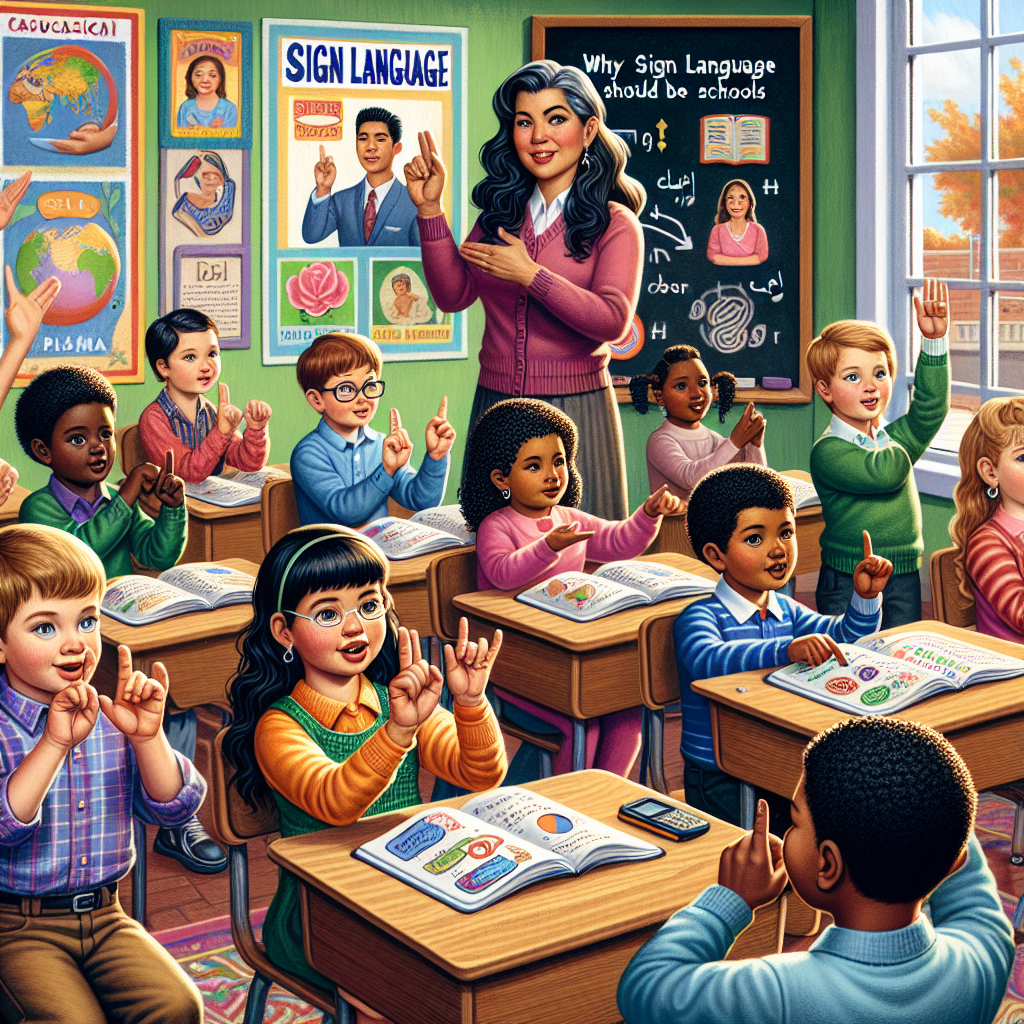
The growing advocacy for deaf culture and the importance of inclusivity underscores a significant topic—why sign language should be taught in schools. In a world growing more connected yet increasingly diverse, language remains the ultimate bridge. While many might recognize spoken languages as essential to this bridge, the underestimated power of sign language often remains in the shadows. Sign language is not merely a means of communication for the deaf; it stands at the very heart of their culture. Deaf culture brims with a rich heritage, thriving communities, and poetry and art forms unique to it. Embedding sign language education in schools not only enriches hearing students but champions a more inclusive society where empathy and understanding reign.
Learning a second language is known to benefit cognitive development and cultural awareness. When that language is sign language, students gain insight into the world of the deaf community. As society evolves, so too does education. Amplifying deaf education in mainstream schools fosters a level of awareness and advocacy that can ripple throughout communities, altering how we approach inclusivity from a young age. It shouldn’t solely be on those who are hard of hearing to integrate into a predominantly hearing world. Instead, society should take broader strides to adapt, where communication barriers are diminished and understanding is prioritized.
Incorporating sign language into school curriculums isn’t merely an act of equity—it inherently reaffirms the notion that diversity in communication methods is as vital as diversity in every other aspect of life. Teaching sign language at schools can profoundly impact thousands of deaf individuals and advances the conversation about inclusivity into action. This article delves into why sign language deserves a rightful place in school curriculums, the potential societal benefits, and how modern advocacy efforts champion this cause.
A Celebration of Deaf Culture:
Deaf culture isn’t just a subculture; it’s a vivid spectrum of history, art, and community life that thrives beyond the auditory-centric world. The cultural identity of deaf individuals is often misunderstood in wider society. While audible means of communication are predominant, sign language embodies a unique expressiveness—replete with its syntax, grammar, and, more importantly, a narrative that verbal language sometimes fails to encapsulate. By introducing sign language in schools, students aren’t simply learning hand signs; they’re uncovering a narrative, a community story steeped in resilience and joy.
By engaging with sign language, students are provided with a lens to view the diverse world and engage with the tapestry of human experiences. This language offers profound insights into visual expression, nonverbal storytelling, and even handshapes that speak volumes.
Many might not realize that for the deaf community, American Sign Language (ASL) and other regional variants are not auditory translations but languages in their own right. It is the conduit through which deaf individuals forge their identity. Recognizing this critical aspect leads to more enriching dialogues between deaf and hearing cultures.
The teaching of sign language amongst hearing individuals further diversifies the languages spoken, allowing children to connect beyond conventional vocalized languages. Immersing oneself in the features of deaf culture alongside educational frameworks can sculpt individuals who respect, understand, and celebrate diversity.
Moreover, by exposing children to this cultural facet at a young age, empathy and awareness are cultivated. Respect for all individuals, regardless of how they communicate, becomes an intrinsic value. Next, we’ll explore the advocating role modern movements and organizations have in realizing these educational changes.
Advocacy and Modern Movements:
The call for inclusive education reverberates louder today, backed by passionate advocacy movements and modern activism. Key organizations and influencers spearhead pivotal campaigns to integrate sign language within school systems. These remarkable efforts promote awareness and challenge educational norms, pushing boundaries for an inclusive and accessible educational format.
Movements emphasize the essential role empathy plays in this educational shift. Beyond mere vocabulary and grammar, they’re championing empathy-driven goals that foster kinship and mutual understanding among all students. Grassroots campaigns have garnered attention and mobilized communities to advocate for equivalent legislative changes—highlighting the democratic aspect of introducing sign language as a routine school facet.
These advocacies advocate for universal human rights, calling for a school system that honors communication differences without bias. Recognizing communication rights as basic human rights resonates well with a generation eager to redefine equality parameters in education and beyond, nudging society towards more inclusive horizons.
Moreover, individual advocates from within the deaf community are crucial, personalizing the narrative and communicating the urgency of these educational policy modifications. These advocates render voice to experiences, emphasizing how such educational changes denounce exclusion and encourage acceptance. Through extensive campaigns, enhanced awareness, and progressive education views, the advocacy for sign language in schools finds allyship in new policies, legislative attention, and the voices of the next generation.
Sign Language as Cognitive Enrichment:
Learning sign language has more to offer than just social awareness; it also facilitates cognitive development. Just as bilingual students outperform their peers in problem-solving and multitasking, students engaging with sign language can experience similar cognitive advantages. The unique structure of sign language enhances spatial reasoning, visual awareness, and memory retention, nurturing holistically developed students.
Investigations into language learning suggest that the multilingual brain operates differently, paving pathways to better executive functions. Practicing sign language exercises visual memory, pattern recognition, and simultaneous information processing—skills essential to academic and life success.
Moreover, introducing sign language learning experiences through immersive educational practices supports all-inclusive cognitive enrichment. Sign language encourages imaginative thinking and the innovation that arises from non-verbal communications—facilitating problem-solving capabilities in ways not addressed by traditional auditory methods.
In this scheme of learning, both deaf and hearing students can occupy shared spaces where diversity in communication enriches intellectual pursuits and emotional intelligence. This understanding and celebration of new languages contribute to a more passionate pursuit of knowledge, learning practices that fully accommodate an array of student needs, and dismantling conventional educational limitations.
Empathy and Social Connections:
The teaching of sign language in schools offers an invaluable platform for cultivating empathy and fostering deeper social connections. Empathy is sharpened through understanding different perspectives and communication styles, and sign language stands as a promising pathway to bridge divides. In learning a language that emphasizes visual and gestural cues, students discover how non-verbal communication transcends traditional conversations.
Such education initiatives foster friendships and relationships between hearing and deaf students, cultivating a sense of shared community that breaks down barriers of prejudice and misunderstanding. Within these interconnected atmospheres, students learn the importance of listening beyond spoken words—listening actively with visual cues and full-body awareness. This shift not only cultivates empathy but also underpins the very foundations of social interactivity, emphasizing connectivity that embraces difference.
Inclusion, sensitive awareness, and empathy towards those who navigate the world without relying on sound exemplify key outcomes of embedding sign language education in schools. Students versed in sign language can grow into adults who influence their communities through their cultivated empathy and advocacy for inclusive communication practices.
Conclusion:
Inclusion, empathy, cognitive development, and cultural appreciation frame the overarching significance of teaching sign language in schools. Integrating sign language into the mainstream curriculum is no longer a noble idea but a necessary step towards a more empathetic, inclusive society. This approach transcends simple communication; it involves understanding, connecting, and respecting diverse human experiences.
Educational systems that embrace this modern advocacy allow future generations to transcend the barriers language constructs, ushering in a more equitable and diversified society that respects the nuances of every communication style. Introducing students to sign language enhances empathy, enriches cognitive abilities, and fosters relationships built on mutual respect and understanding.
As campaigns continue to emphasize the importance of inclusive education, schools have the transformative potential to serve as the epicenters of cultural and social evolution. In advocating for sign language instruction, we empower students to become allies and advocates themselves—championing a society sensitive to varying expressions of life, thoughts, and connectivity.
The profound impact of these educational changes—rooted in linguistic diversity and acceptance—creates a ripple effect of understanding and acceptance. Whether through cognitive benefits, connections formed, or cultural insights gained, teaching sign language at schools remains an invaluable endeavor in modern advocacy and inclusive education frameworks.