
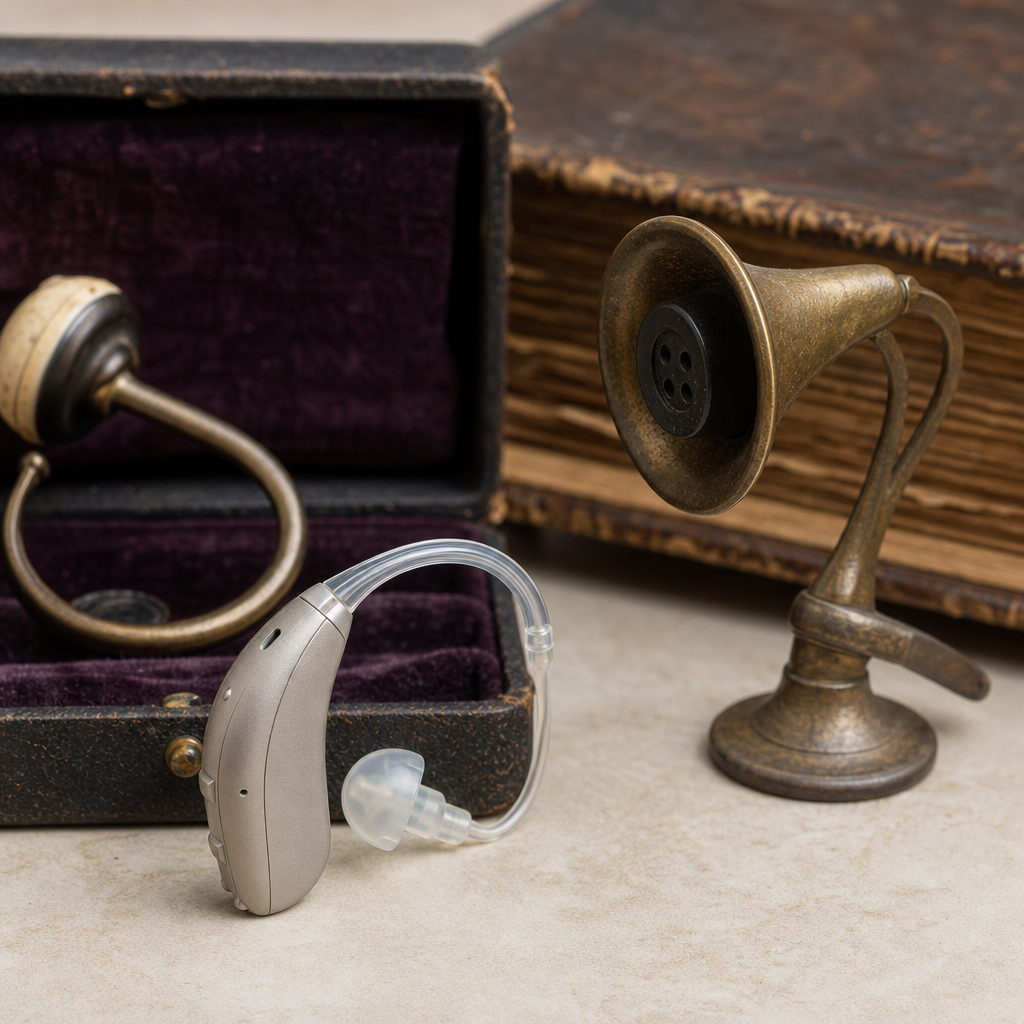
Hearing aids were invented long before modern electronics, and understanding that history helps explain how today’s tiny, programmable devices became one of the most important tools in hearing healthcare. In simple terms, a hearing aid is any device designed to make sound more audible for a person with hearing loss, whether by collecting sound acoustically, amplifying it electronically, or processing it digitally before delivering it to the ear. The question “When were hearing aids invented?” does not have one single answer because the technology evolved in stages: ear trumpets appeared centuries ago, carbon hearing aids arrived in the late nineteenth century, vacuum-tube models followed in the early twentieth century, transistor devices transformed wearability after the 1950s, and digital hearing aids became commercially significant in the 1990s. That timeline matters because each step solved a real limitation in loudness, clarity, size, comfort, and daily usability. I have worked with patients and product histories enough to see that people often imagine hearing aids as a recent invention, yet the need they address is ancient and universal. Age-related hearing loss, noise exposure, infections, genetics, and injury have always affected communication, safety, and social connection. For that reason, the history of hearing aids is not just a story about gadgets. It is a story about medicine, engineering, disability access, and quality of life. This hub article covers the general picture comprehensively so readers can understand the origins, milestones, types, and practical importance of hearing aids today.
Early hearing aids: acoustic devices before electricity
The earliest hearing aids were purely acoustic devices, meaning they did not use batteries or electronic circuits. Instead, they gathered sound waves and funneled them toward the ear canal. The best-known example is the ear trumpet, which began appearing in recognizable form by the seventeenth and eighteenth centuries, though simpler sound-collecting horns likely existed earlier. An ear trumpet works on a basic principle: a wide opening captures sound energy and a narrow end concentrates it toward the listener’s ear. These devices were handcrafted from materials such as metal, wood, silver, brass, shell, and even papier-mâché. Some were ornate enough to double as personal accessories, while others were concealed in furniture, fans, hats, or walking sticks for social discretion.
Acoustic hearing aids helped some people, but they had major limitations. They could make sound louder in a general sense, yet they could not selectively improve speech understanding in noisy places. They also depended heavily on positioning, room acoustics, and the speaker’s distance. In practice, users often had to hold the device carefully and ask conversation partners to speak directly into it. That was better than no assistance, but far from convenient. Historians often point to Frederick Rein’s commercial ear trumpets in the early 1800s as a milestone because they represent organized manufacturing rather than isolated craft production. Rein’s London business sold hearing devices widely, showing there was sustained demand long before electronic amplification existed.
For many readers, this is the first clear answer to the title question: if you define hearing aids broadly, they were invented centuries ago in acoustic form. If you mean powered hearing aids, the invention comes later. That distinction is essential because both statements are correct depending on the definition used.
The late nineteenth century: the first electronic hearing aids
Electronic hearing aids emerged after the telephone changed the science of sound transmission. Alexander Graham Bell’s telephone patents in 1876 and the rapid development of microphones, receivers, and carbon transmitters created the technical foundation for amplification devices. The first practical electric hearing aids appeared in the late 1890s. Miller Reese Hutchison is widely credited with inventing the Akouphone in 1898, a battery-powered hearing aid that used a carbon transmitter to amplify sound. This matters because it marks the transition from passive sound collection to active electrical amplification.
The Akouphone and similar early electric devices were not small. They often required bulky batteries and external components, and they were expensive. Still, they offered something ear trumpets could not: true amplification with more gain. For people with significant hearing loss, that was a meaningful improvement. Early users included affluent individuals and public figures because cost and size limited access. By the early 1900s, hearing aid manufacturers began refining tabletop and body-worn electric models. Some systems separated the microphone, amplifier, batteries, and earpiece into different parts connected by wires. From a modern viewpoint they seem cumbersome, but clinically they were a breakthrough because they expanded the range of people who could benefit.
One lesson from this era still applies in modern fittings: louder is not always clearer. Carbon hearing aids increased volume, but distortion and background noise were common. Even so, these instruments established the basic architecture of powered hearing assistance and launched the hearing aid industry as a recognizable commercial category.
From vacuum tubes to transistors: the path to modern wearability
Vacuum-tube hearing aids arrived in the early twentieth century and improved amplification over carbon technology. After Lee de Forest invented the audion tube in 1906, amplification technology advanced rapidly. By the 1920s and 1930s, vacuum-tube hearing aids could provide stronger and more controllable gain, though they remained large and power-hungry. Many were body-worn, with batteries carried separately. During this period, hearing aid design became more medical and more standardized, but size was still the central problem. Users had to balance audibility against visibility, battery burden, and comfort.
The real turning point came with the transistor. Bell Labs announced the transistor in 1947, and by the 1950s hearing aid companies were integrating transistor technology into commercial devices. This was revolutionary because transistors were smaller, more durable, and far more energy efficient than vacuum tubes. For the first time, hearing aids could realistically shrink toward eyeglass models, behind-the-ear formats, and eventually smaller custom styles. In clinics, this transformed adoption. Patients who rejected earlier devices because they were heavy or conspicuous suddenly had options that fit daily life better.
Manufacturers such as Zenith, Sonotone, and Siemens played major roles in this period. The hearing aid industry also became more sophisticated in earmold design, frequency response tuning, and component miniaturization. Improved microphones and receivers allowed devices to target speech frequencies more effectively, although analog processing still had clear limits. From my experience explaining this history to patients, the transistor era is the easiest way to understand why hearing aids became mainstream: once the technology became portable, people could wear it consistently, and consistent use is what turns amplification into practical communication support.
Digital hearing aids and the rise of personalized sound processing
Modern hearing aids are defined by digital signal processing, or DSP. Although digital concepts were explored earlier, the first commercially significant fully digital hearing aids appeared in the 1990s, with major advances through the 2000s and 2010s. Digital processing changed hearing aids from simple amplifiers into adaptive computing devices. Instead of merely making all sound louder, a digital hearing aid converts incoming sound into data, analyzes it, and applies programmed adjustments based on the user’s hearing thresholds, listening environment, and comfort needs.
That shift enabled features people now expect: multichannel compression, directional microphones, feedback cancellation, noise reduction, impulse sound management, telecoils, Bluetooth connectivity, rechargeability, tinnitus masking options, and smartphone-based remote control. Brands such as Phonak, Oticon, Widex, ReSound, Signia, Starkey, and Unitron built platforms that can be fine-tuned using evidence-based fitting software. Clinicians commonly verify fittings with real-ear measurements, which compare amplified sound at the eardrum with prescriptive targets such as NAL-NL2 or DSL. This is one reason contemporary hearing aids often perform far better than older analog models, especially for speech audibility across frequencies.
Digital hearing aids do not restore natural hearing, and they do not eliminate all listening effort, particularly in heavy background noise. But they can dramatically improve access to speech, environmental awareness, and participation in work and family life when fitted properly. That practical reality is more important than marketing language. The best hearing aid is not the newest one; it is the one matched accurately to hearing loss, ear anatomy, dexterity, listening goals, and budget.
Key milestones in hearing aid history
If you want a concise answer to when hearing aids were invented, the timeline below captures the major stages. Each milestone represents a genuine shift in what users could hear and how they could live with the device day to day.
| Period | Milestone | Why it mattered |
|---|---|---|
| 17th–18th centuries | Ear trumpets and acoustic horns | First recognizable hearing aids; passive sound collection |
| Early 1800s | Commercial production by makers like Frederick Rein | Hearing devices became widely manufactured and sold |
| 1898 | Miller Reese Hutchison’s Akouphone | Among the first practical electric hearing aids |
| 1920s–1930s | Vacuum-tube hearing aids | Stronger amplification, but still bulky |
| 1950s | Transistor hearing aids | Smaller, more wearable, more efficient devices |
| 1990s onward | Digital hearing aids | Programmable processing, better personalization, advanced features |
This progression explains why the invention date depends on what level of technology you mean. Acoustic devices came first, electric amplification came later, and true smart hearing technology is relatively recent.
How hearing aids changed healthcare, access, and daily communication
Hearing aids matter because untreated hearing loss has consequences beyond volume. Research published in leading journals has linked untreated hearing difficulty with social withdrawal, increased listening fatigue, reduced workplace effectiveness, and poorer overall communication health. Hearing aids cannot solve every challenge, but they reduce barriers that compound over time. In practice, that means better one-to-one conversation, improved awareness of alarms and traffic, easier telephone use, and less strain during meetings or family gatherings.
Clinical care has also evolved around the devices. Today, a complete hearing aid process usually begins with a diagnostic audiologic evaluation, including pure-tone thresholds, speech testing, and sometimes tympanometry or otoscopic examination. The audiogram guides device selection, while lifestyle questions shape feature recommendations. A retired reader who mostly wants better television sound may need a different setup than a teacher, truck driver, or restaurant manager. Over the years I have seen the same mistake repeatedly: people ask which brand is best before asking which hearing profile and listening demands they actually have. Good outcomes come from fitting and follow-up, not just product choice.
Access has broadened too. Prescription hearing aids remain essential for many users, especially those with complex or severe loss, but over-the-counter hearing aids for adults with perceived mild to moderate hearing loss have expanded options in the United States since FDA rule changes took effect in 2022. That does not replace professional care, yet it has made amplification more reachable for some consumers. The broad lesson from the invention history is clear: every generation of hearing aids has tried to solve the same human problem more effectively, discreetly, and affordably.
What readers should know when choosing hearing aids today
Understanding when hearing aids were invented is useful, but the real benefit is knowing how that history informs modern buying decisions. First, today’s hearing aids are highly specialized medical devices, not generic amplifiers. Second, style matters less than fit quality. Behind-the-ear, receiver-in-canal, in-the-ear, in-the-canal, and completely-in-canal designs each involve tradeoffs in battery size, power, durability, directional microphone performance, and ease of handling. Third, hearing aids should be evaluated based on measurable performance and service support. Look for professional hearing testing, real-ear verification, clear trial terms, warranty details, repair options, and follow-up programming.
It is also important to set realistic expectations. Hearing aids improve audibility, but they do not “cure” sensorineural hearing loss. No device can perfectly separate speech from noise in every environment, and acclimatization takes time. Many first-time users need several weeks of gradual wear and at least one or two programming adjustments. Accessories can help significantly, including remote microphones, TV streamers, captioned telephones, and phone apps with geotagged listening programs. For tinnitus, some hearing aids include sound therapy functions, though success varies by person.
As a hub article for the broader hearing aids topic, this page gives the general foundation. From here, readers should explore detailed guides on hearing aid types, costs, lifespan, batteries versus rechargeable models, cleaning and maintenance, fitting appointments, insurance questions, and signs that it is time for a hearing test. History provides context, but informed next steps create the real value.
So when were hearing aids invented? The most accurate answer is that hearing aids began centuries ago with acoustic ear trumpets, then became electric in the late nineteenth century, dramatically more wearable in the transistor era of the 1950s, and truly personalized with digital processing in the 1990s and beyond. That long development path explains why hearing aids today are so much more effective, discreet, and adaptable than older generations. It also explains why there is no single invention date unless you define the technology narrowly. If you mean the first recognizable hearing aids, think seventeenth- and eighteenth-century acoustic devices. If you mean powered hearing aids, think 1898 and the Akouphone. If you mean modern hearing aids as most people know them, think digital systems refined over the last three decades.
The key takeaway is practical: hearing aids are the result of centuries of problem-solving around one of the most important human abilities, communication. Their evolution reflects advances in acoustics, electronics, audiology, and user-centered design. For anyone researching hearing loss, that history should be reassuring. Today’s options are built on generations of lessons about what users actually need: speech clarity, comfort, reliability, and support in real life, not just louder sound. If you or a family member is noticing missed words, rising television volume, or trouble in group settings, use this overview as your starting point and continue into the rest of the hearing aids topic to compare devices, understand fittings, and choose the right next step with confidence.
Frequently Asked Questions
When were hearing aids first invented?
The answer depends on how you define the term “hearing aid.” If you mean any tool created to help a person hear better, then hearing aids date back centuries. The earliest forms were simple acoustic devices such as ear trumpets, speaking tubes, and cone-shaped instruments that gathered sound and funneled it into the ear. These non-electronic devices were used long before electricity was involved in hearing care, and they represent the first true hearing aids in a practical sense. They did not amplify sound electronically, but they did make speech and environmental sounds more audible by concentrating sound waves.
If you mean modern amplified hearing aids, the timeline begins much later. Electronic hearing aids started to emerge in the late 19th and early 20th centuries after the invention of the telephone and microphone technologies made electrical sound amplification possible. Early carbon hearing aids appeared around the turn of the 20th century, followed by vacuum tube models in the 1920s and 1930s, transistor hearing aids in the 1950s, and digital hearing aids in the late 20th century. So, in short, hearing aids were “invented” in stages: acoustic hearing aids came first, electronic amplification came later, and today’s digital devices are the result of many generations of innovation.
What did the earliest hearing aids look like and how did they work?
The earliest hearing aids were usually acoustic rather than electronic, and they often looked very different from the devices people wear today. One of the most recognizable examples is the ear trumpet, which was a funnel-shaped instrument designed to collect sound from the environment and direct it into the ear canal. Some were large and obvious, while others were made to be more discreet, hidden in clothing, walking sticks, fans, or even furniture. Their basic purpose was simple: gather more sound energy and channel it more efficiently to the ear of the listener.
These early devices worked entirely through physical acoustics. They did not contain batteries, microphones, speakers, or sound processors. Instead, their shape helped capture sound waves over a wider opening and focus them into a narrower end placed near the ear. That design could make speech somewhat clearer in quiet conversations, especially when the speaker was nearby. However, these tools had significant limitations. They could not selectively amplify certain frequencies, reduce background noise, or adjust automatically to different environments. Even so, they were an important milestone because they showed that hearing support could be improved through technology, laying the groundwork for the much more advanced hearing aids that followed.
When did hearing aids become electronic?
Hearing aids became electronic in the late 1800s and early 1900s, following major breakthroughs in sound transmission and electrical communication. The invention of the telephone was especially important because it introduced practical ways to convert sound into electrical signals and back again. Early electronic hearing aids used carbon microphone technology, which allowed sounds to be made louder than acoustic devices could manage alone. These first amplified instruments were often bulky and inconvenient, but they marked a major turning point in hearing care because they introduced true electrical amplification.
As technology progressed, vacuum tube hearing aids became available in the early 20th century and offered stronger amplification than earlier systems. The tradeoff was size: many of these units were still quite large, sometimes requiring separate components worn on the body. The next major leap came with the transistor in the 1950s, which made hearing aids smaller, more reliable, and more practical for everyday use. This was the moment when hearing aids began moving closer to the wearable form most people recognize today. Electronic hearing aids changed the field permanently because they moved beyond simply collecting sound and began actively amplifying it, opening the door to customization, miniaturization, and eventually digital signal processing.
How did hearing aids evolve from early devices into today’s digital models?
The evolution of hearing aids is a story of steady refinement in size, power, comfort, and sound quality. Early acoustic devices relied only on shape and sound direction, so their effectiveness was limited. Once electronic amplification became possible, hearing aids gained the ability to make sounds louder in a much more meaningful way. However, early electronic models were large, had limited battery life, and often produced distortion. Over time, improvements in microphones, receivers, batteries, and circuit design made hearing aids smaller and easier to wear. The introduction of transistors was especially transformative because it allowed for behind-the-ear and in-the-ear styles that were far more convenient than earlier body-worn devices.
The next major stage was the rise of digital hearing aids in the late 20th century. Unlike analog devices, which mainly made incoming sound louder, digital models convert sound into data that can be analyzed and adjusted almost instantly. This made it possible to fine-tune amplification by pitch, reduce certain types of background noise, improve speech clarity, and adapt to different listening environments. Today’s hearing aids can include directional microphones, feedback management, rechargeable batteries, wireless connectivity, smartphone controls, tinnitus features, and highly personalized programming based on an individual’s hearing test. In other words, modern hearing aids are no longer simple amplifiers; they are compact, programmable hearing systems built to support communication in a wide range of real-world situations.
Why does the history of hearing aids matter today?
Understanding the history of hearing aids matters because it helps explain why modern devices are so advanced and why hearing care is about much more than just “making things louder.” The earliest hearing aids show that people have been trying to solve hearing challenges for a very long time. Each stage of development, from acoustic funnels to carbon microphones, vacuum tubes, transistors, and digital processors, reflects a better understanding of both sound and hearing loss. That long history also shows why no single invention solved everything at once. Progress came through many improvements in design, science, electronics, and clinical care.
For people considering hearing aids today, this history can also be reassuring. It highlights how far the technology has come from bulky, limited devices to discreet, highly customizable tools that can make a real difference in daily life. Modern hearing aids are shaped by decades of innovation aimed at improving speech understanding, comfort, and usability. Knowing their history helps put the question “When were hearing aids invented?” into proper context: there was no single moment, but rather a long evolution that led to the sophisticated devices available now. That perspective makes it easier to appreciate hearing aids not just as gadgets, but as one of the most important and continuously improving tools in hearing healthcare.