
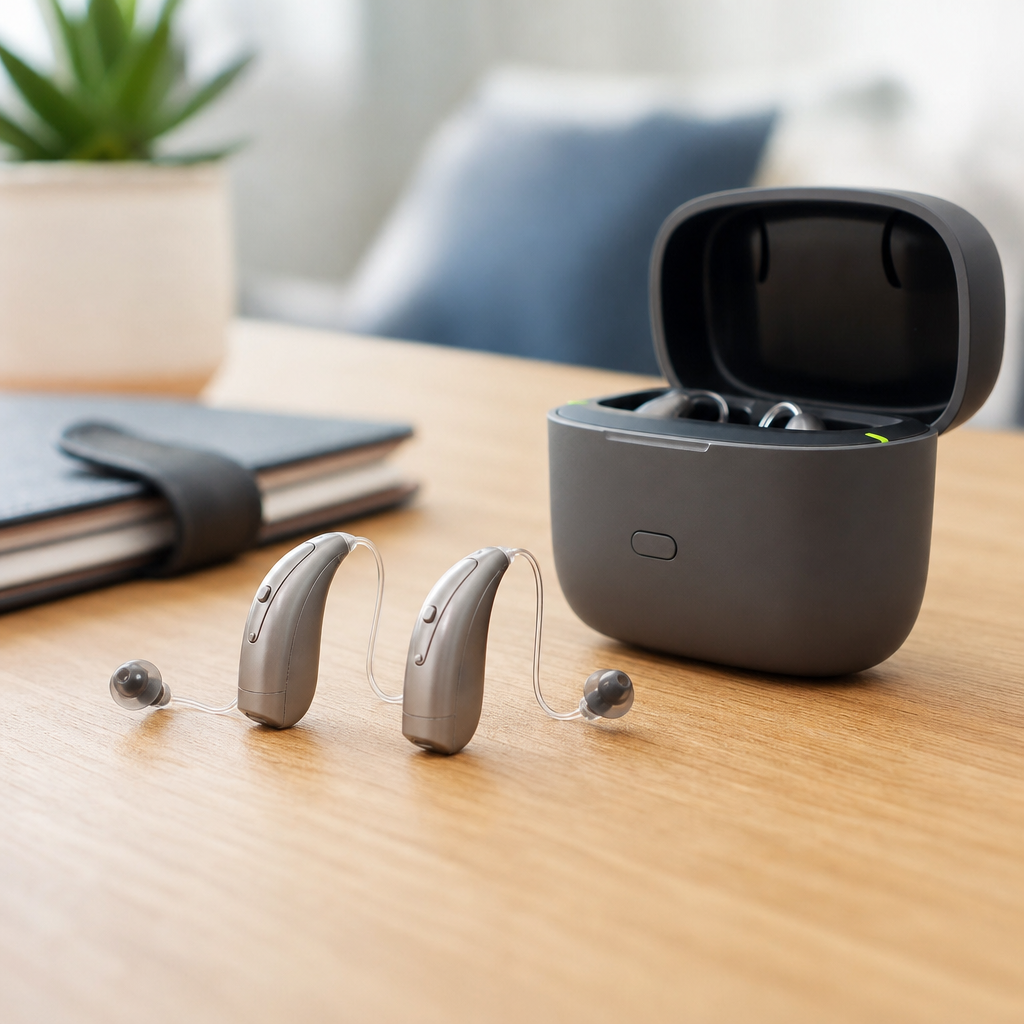
Vivtone hearing aids are over-the-counter hearing devices designed for adults with perceived mild to moderate hearing loss who want a lower-cost alternative to traditional clinic-fitted products. In practice, that means rechargeable, self-fit hearing aids sold directly online, usually with app-based controls, preset listening modes, and a buying process that skips the standard audiology appointment. For many people, that combination is appealing because hearing loss is common, untreated hearing difficulty affects communication and cognitive load, and prescription hearing aids have historically carried high prices and long wait times. A clear guide matters because buyers need to separate useful convenience from marketing shorthand, understand who OTC hearing aids are actually for, and know where Vivtone fits among established options. I have worked with people comparing direct-to-consumer hearing devices against audiologist-fitted systems, and the same questions come up every time: Will they help in restaurants, are they comfortable, what happens if hearing worsens, and are they safe to buy without a hearing test? The answers depend on fit, expectations, and the specific features offered. This guide explains what Vivtone hearing aids generally are, who should consider them, how their technology and support model work, what limitations matter, and how to evaluate them against other hearing aid categories before you spend money.
What Vivtone hearing aids are and who they are for
Vivtone hearing aids are generally positioned as self-fitting hearing aids for adults, not amplifiers for every kind of hearing problem and not a substitute for medical diagnosis. The key distinction is important. A hearing aid is intended to compensate for hearing loss by shaping sound differently across frequencies, reducing feedback, and managing loudness so speech becomes easier to understand. A simple sound amplifier raises volume broadly, which can make background noise louder without improving clarity. Vivtone products are marketed in the hearing aid category and typically emphasize rechargeable batteries, digital signal processing, and user-adjustable settings through onboard controls or a mobile app.
The best candidate is an adult who notices trouble hearing speech in ordinary settings, especially softer voices, television dialogue, or conversation in moderate background noise, and whose hearing difficulty appears mild to moderate. OTC rules in the United States are aimed at that group. They are not intended for children or for adults with severe hearing loss, sudden hearing changes, one-sided loss, ear pain, drainage, persistent tinnitus in one ear, dizziness, or obvious asymmetry between ears. Those are red-flag symptoms that need evaluation by a physician or audiologist before any device purchase.
Real-world expectations matter as much as the spec sheet. If a buyer wants a simple entry point, modest speech support, and lower upfront cost, Vivtone hearing aids may be appropriate. If a buyer needs custom earmolds, advanced directional microphone arrays, tinnitus therapy, telecoil access, Bluetooth LE Audio integration, or in-person fine-tuning with real-ear measurement, prescription hearing aids remain the stronger choice. That does not make OTC devices ineffective; it means the use case is narrower and the margin for error is smaller. Success usually depends on choosing the right hearing-loss range, achieving a stable fit, and wearing the devices consistently long enough for the brain to adapt.
Core features, sound processing, and everyday usability
Most Vivtone hearing aids share the core feature set common in modern OTC devices: digital amplification, multiple listening modes, rechargeable lithium-ion power, and lightweight receiver-style or behind-the-ear form factors. Digital processing is the feature that matters most. Instead of simply making everything louder, digital circuitry analyzes incoming sound and applies gain according to programmed parameters. In practical terms, that usually means speech frequencies receive more help than low-frequency environmental rumble, while loud sounds are constrained so they do not become painfully sharp.
Rechargeability is another major selling point. Traditional disposable zinc-air batteries can be effective, but many first-time users dislike changing tiny cells every few days. Rechargeable hearing aids reduce that friction. A full charge often covers a full waking day, though actual runtime depends on volume, streaming, and ambient sound complexity. Charging convenience affects adherence more than many buyers realize. People are far more likely to wear hearing aids regularly when the routine resembles charging a phone rather than handling battery doors and spare packs.
Listening modes are useful, but they are often misunderstood. A “restaurant” or “noise reduction” setting does not silence a busy room. It usually changes microphone emphasis, compression behavior, and noise-management aggressiveness so speech stands out slightly better against competing sound. In a quiet home, the benefit may be subtle. In a crowded café with reflective surfaces, any hearing aid, including premium prescription models, will still face physical limits. Microphones cannot fully separate the person you want to hear from every other voice around you, especially when speakers are moving or talking over one another.
Comfort and retention are equally practical concerns. Most OTC products rely on open domes, closed domes, or tulip tips in several sizes. A poor seal can reduce low-frequency stability, increase feedback, and make your own voice sound odd. A tip that is too large can create pressure and itchiness. In fittings I have seen go well, users spend time testing dome sizes, insertion depth, and left-right orientation before judging sound quality. Many “bad device” complaints are actually fit problems in disguise.
App control, when available, can improve usability significantly. Adjusting volume independently in each ear, switching programs, checking battery status, and storing preferred settings removes much of the friction that made older entry-level devices frustrating. Still, app quality varies. A stable connection, clear interface labels, and obvious onboarding instructions matter more than flashy graphics. For older adults who are not comfortable with smartphones, physical onboard controls may be just as important as app features.
How Vivtone compares with other hearing aid options
People shopping for Vivtone hearing aids are usually comparing three categories at once: OTC hearing aids, personal sound amplification products, and prescription hearing aids from major brands such as Phonak, Oticon, ReSound, Signia, Starkey, or Widex. The differences are not just about price. They involve fitting process, customization depth, aftercare, and expected performance in difficult listening environments.
| Category | Best for | Main advantages | Main limitations |
|---|---|---|---|
| Vivtone and similar OTC hearing aids | Adults with perceived mild to moderate hearing loss seeking lower cost and faster access | Lower upfront price, direct purchase, rechargeable designs, self-fitting convenience | Less individualized tuning, limited support, weaker performance for complex hearing profiles |
| Personal sound amplifiers | Situational listening when no diagnosed hearing loss treatment is intended | Very low price, simple operation | Not tailored as hearing treatment, poorer speech optimization, greater risk of over-amplification |
| Prescription hearing aids | Moderate to profound loss, asymmetrical loss, or users needing premium support | Professional assessment, real-ear verification, advanced features, clinical follow-up | Higher price, appointments required, more complex buying process |
Vivtone sits in the middle ground. Compared with amplifiers, it should offer more structured sound processing and a better chance of speech improvement. Compared with prescription systems, it is usually less customized and less supported. That tradeoff can be entirely reasonable. Someone with early age-related high-frequency loss who mainly wants television dialogue and family conversations to sound clearer may do well with OTC devices. Someone with steeply sloping loss, poor word recognition, conductive components, or dexterity and vision challenges often benefits more from a clinic pathway.
Price deserves context. Low-cost hearing aids save money at checkout, but value depends on return rights, support responsiveness, charger reliability, and how long the devices remain serviceable. A pair that costs less but fails after a year or cannot be adjusted adequately may not be cheaper in the long run. Look beyond the sticker price to warranty length, trial period, shipping policies, and available replacement parts such as domes, wax guards, and charging accessories.
Buying, fitting, and using Vivtone hearing aids effectively
The smartest way to buy Vivtone hearing aids is to treat the purchase like a health decision rather than an impulse electronics order. Start with a simple self-screen: Do voices sound muffled, do you often ask people to repeat themselves, do you increase TV volume more than others prefer, and is the problem present in both ears? If the answers suggest gradual, bilateral, mild to moderate difficulty, OTC may be worth exploring. If anything feels sudden, painful, one-sided, or medically unusual, stop and get a clinical evaluation first.
Before purchasing, review the return window in writing. A meaningful trial period is essential because hearing aids require adaptation. Many first-time users are surprised by environmental sounds they have been missing, such as paper rustling, turn signals, refrigerator hum, or footsteps. That does not always mean the device is too loud; it often means the brain is relearning what normal audibility feels like. A fair return policy gives you enough time to distinguish adjustment from genuine mismatch.
When the devices arrive, resist the urge to judge them after five minutes. Begin in a quiet room, practice insertion, and confirm that each device sits securely without whistling. Then test structured listening tasks: one-on-one conversation across a table, television at your usual distance, a phone call, a walk outdoors, and finally a noisier setting like a grocery store. Keep notes. If the app allows custom settings, make one small change at a time. Users who change multiple controls at once often end up chasing problems they created unintentionally.
Cleaning and maintenance are straightforward but critical. Wax guards and domes need regular inspection because wax blockage is one of the most common reasons a hearing aid suddenly sounds weak or dead. Wipe devices daily with a dry soft cloth, store them in the charger or case away from humidity, and avoid hairspray or lotions before insertion. Rechargeable hearing aids are convenient, but battery longevity still depends on heat exposure and charging habits. Use the included charger, keep contacts clean, and replace consumables on schedule.
It also helps to involve another listener. Spouses or family members can tell you whether your speaking volume changes, whether television levels normalize, and whether the hearing aids squeal during hugs or hat use. Those observations are useful because hearing improvement is partly subjective and partly behavioral. The goal is not just louder sound. The goal is easier communication with less strain.
Limitations, warning signs, and when to see a professional
No guide to Vivtone hearing aids is complete without discussing their boundaries. OTC hearing aids are not wrong for most people; they are simply not universal solutions. The biggest limitation is self-assessment. Many adults underestimate or misclassify their hearing loss. A person may think the issue is mild because speech is audible in quiet, yet still have poor speech discrimination in noise or a pattern that needs more sophisticated fitting. Without an audiogram, you are making an educated guess about candidacy.
There are also medical limitations. Hearing loss can result from earwax impaction, middle ear disease, noise exposure, ototoxic medications, Ménière’s disease, acoustic neuroma, or sudden sensorineural events. Some causes are treatable and should not be masked by simply wearing amplification. Seek prompt professional care if you have sudden hearing loss within hours or days, hearing that differs sharply between ears, persistent ear fullness, drainage, pain, dizziness, or unilateral tinnitus. Those are not watch-and-wait symptoms.
Another limitation is support depth. Remote customer service can help with basic troubleshooting, but it is not the same as in-clinic verification. The gold standard for hearing aid fitting remains real-ear measurement, where a probe microphone checks whether amplified sound in your ear canal matches a validated target such as NAL-NL2. OTC products usually cannot offer that process directly. Some users do well without it; others never reach optimal clarity because the fit is close but not accurate enough.
Finally, remember that hearing aids do not restore normal hearing. They improve access to sound, reduce listening effort, and support communication, but they cannot erase reverberation, distance, poor diction, or cross-talk in noisy rooms. Buyers who understand that limitation are usually more satisfied than buyers expecting perfect hearing in every environment. Use good communication habits alongside the devices: face the speaker, reduce background noise when possible, choose favorable seating, and ask for clear speech rather than louder shouting.
Vivtone hearing aids can be a practical entry point into better hearing for adults with perceived mild to moderate loss, especially when cost, convenience, and quick access matter. Their appeal is straightforward: digital sound processing, rechargeable use, and self-fitting control without the delays and expense of the traditional clinic route. For the right user, that can be enough to improve television listening, family conversations, and day-to-day confidence. The key is matching the product to the person. OTC hearing aids work best when hearing loss is gradual, roughly similar in both ears, and free of medical red flags. They work less well when the hearing profile is complex, severe, or medically uncertain.
If you are considering Vivtone, focus on the fundamentals rather than the marketing headline. Confirm that you fit the intended hearing-loss range. Check the return period, warranty, charger design, replacement parts, and available support. Expect an adjustment period, test the devices in realistic environments, and make changes methodically. Most important, know when to step out of the self-fit pathway and involve a professional. A hearing test, ear examination, or formal fitting can prevent wasted money and identify problems a product page cannot.
The main benefit of this category is access. More adults can now try hearing help earlier instead of waiting years while communication gets harder. Used wisely, Vivtone hearing aids may lower the barrier to treatment and make daily listening less tiring. Start with a careful self-assessment, compare policies and features, and choose the option that matches your hearing needs today.
Frequently Asked Questions
What are Vivtone hearing aids, and who are they best suited for?
Vivtone hearing aids are over-the-counter hearing devices made for adults who believe they have mild to moderate hearing loss and want a more affordable, more convenient alternative to traditional prescription hearing aids. Instead of going through an in-person hearing clinic, users typically buy them online, charge them at home, and adjust settings themselves through onboard controls or a companion app. This self-fit approach is one of the main reasons they appeal to budget-conscious shoppers and first-time hearing aid users who want help hearing conversations, TV dialogue, phone calls, and everyday sounds without committing to a full clinical process.
They are generally best for adults who notice they struggle in common listening situations, such as hearing speech in restaurants, following group conversations, or understanding people who speak softly, but who do not have severe hearing loss or complex medical ear issues. Because Vivtone devices are intended for perceived mild to moderate hearing loss, they are not the right fit for everyone. People with sudden hearing loss, one-sided hearing loss, ear pain, drainage, persistent ringing that is new or worsening, or significant difficulty hearing even in quiet environments should seek medical evaluation rather than relying on an OTC device alone. In short, Vivtone hearing aids can be a practical entry point for many adults, but the best candidate is someone with manageable hearing challenges, realistic expectations, and comfort using a self-directed setup process.
How do Vivtone hearing aids differ from prescription hearing aids?
The biggest difference is the buying and fitting process. Vivtone hearing aids are sold direct to consumers as OTC devices, which means you typically do not need a hearing test at a clinic, an audiologist fitting appointment, or ongoing in-office programming to get started. Prescription hearing aids, by contrast, are usually selected and customized based on a professional hearing evaluation, and they are programmed to match a person’s specific hearing loss pattern. That clinical support can be extremely valuable for people with more advanced hearing needs, but it also tends to increase the total cost.
Vivtone devices instead focus on accessibility and simplicity. They usually offer rechargeable batteries, app-based controls, preset listening modes, and self-fitting features designed to let users make adjustments on their own. For many buyers, that means lower upfront pricing and a faster, easier purchase experience. However, the trade-off is that OTC devices may provide less individualized tuning than professionally fitted products. That does not mean they cannot work well; for many users with straightforward mild to moderate hearing loss, they may deliver meaningful improvement. It simply means the experience is more user-driven, and success depends more heavily on selecting the right model, following setup instructions carefully, and spending time adjusting settings to fit everyday listening needs.
Are Vivtone hearing aids effective for mild to moderate hearing loss?
For the right user, they can be effective. Vivtone hearing aids are designed to amplify speech and important environmental sounds for adults with perceived mild to moderate hearing loss, which is exactly the group addressed by the OTC hearing aid category. Many people in this range do not need the complexity or cost of clinic-fitted hearing aids to notice improvement. If the device fits comfortably, provides enough clean amplification, and offers useful listening modes for quiet and noisy environments, it can make conversations easier to follow and reduce the strain of everyday listening.
That said, effectiveness depends on several factors. First, the user’s hearing loss has to fall within the range the device is built to support. Second, proper fit matters more than many people realize, because a poor fit can affect comfort, sound quality, and feedback. Third, there is usually an adjustment period. New hearing aid users often need days or weeks to get used to amplified sound, especially sounds they have not heard clearly in a long time, such as refrigerator hums, footsteps, or paper rustling. People who expect instant perfection may be disappointed, while those who gradually increase wear time and fine-tune settings often have a better experience. In practical terms, Vivtone hearing aids can absolutely help many adults hear better, but results are strongest when users have realistic expectations and are willing to personalize the devices over time.
What features should buyers look for when comparing Vivtone hearing aids?
When comparing Vivtone hearing aids, buyers should pay close attention to comfort, battery life, ease of adjustment, and support for different listening environments. Rechargeability is a major convenience feature because it removes the hassle and recurring expense of disposable batteries. App-based controls are also important for many users, since they can make it easier to adjust volume, switch listening modes, and fine-tune sound settings without touching the hearing aids themselves. If you often move between quiet rooms, busy restaurants, outdoor spaces, and TV listening, preset modes can make day-to-day use much simpler.
It is also smart to look at physical design and usability. Some users prefer a more discreet style, while others care more about easier handling and button access. Consider whether the hearing aids come with multiple ear tip sizes, whether the charging case is portable, and whether the controls feel intuitive for someone who may not be highly tech-savvy. Beyond hardware, customer service matters. Because Vivtone products are purchased online and self-fitted, good setup guidance, a clear return policy, warranty coverage, and responsive customer support can make a significant difference. The best choice is not always the one with the longest feature list; it is the one that fits your hearing needs, comfort preferences, and ability to manage the device consistently.
Do you still need a hearing test or medical advice before buying Vivtone hearing aids?
Even though Vivtone hearing aids are sold over the counter, getting some form of hearing evaluation or medical guidance can still be a very smart move. OTC availability means adults can purchase them without a prescription, but it does not mean every hearing problem should be self-managed. A hearing test can help confirm whether your hearing loss is actually mild to moderate and can reveal whether one ear is worse than the other, whether speech understanding is affected, or whether another issue may be involved. This information can help you decide whether an OTC device is a good match or whether professional treatment would serve you better.
Medical advice is especially important if you have warning signs such as sudden hearing changes, dizziness, ear pain, drainage, long-standing ear infections, or hearing loss that seems much worse in one ear. Those symptoms may point to conditions that should be evaluated by a physician or hearing professional before using any amplification device. For adults with gradual, symmetrical, mild to moderate hearing difficulty, Vivtone hearing aids may be a reasonable first step. But the safest approach is to think of OTC hearing aids as a convenient option, not a replacement for professional care when symptoms are unusual, severe, or rapidly changing.