
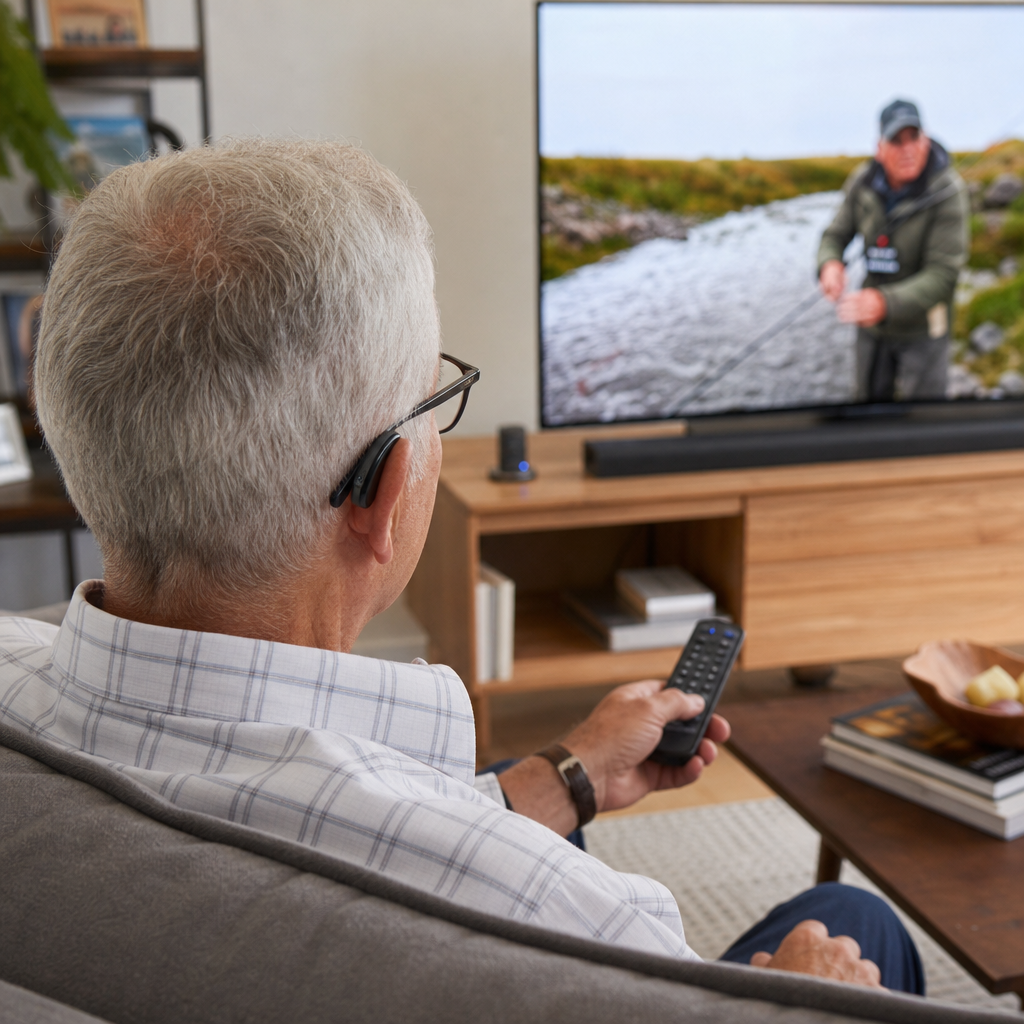
TV hearing aids help people hear television dialogue more clearly by improving speech intelligibility, reducing background noise, and delivering sound at a comfortable personal volume. In practice, the term can mean several things: hearing aids programmed for television listening, wireless TV streamers that send audio directly to hearing aids, assistive listening headsets, or loop-based systems connected to a telecoil. I have helped patients and families set these systems up in living rooms, rehab centers, and retirement communities, and the same pattern appears every time: once speech becomes clear, people stop fighting over the remote and start enjoying programs again. That is why this topic matters. Television is not just entertainment; it is news, social connection, shared family time, and, for many older adults, a daily routine tied closely to quality of life.
The need is larger than many people realize. Age-related hearing loss usually affects high-frequency sounds first, which are exactly where much of speech clarity lives, including consonants like s, f, t, and sh. A television may seem loud enough, yet dialogue still sounds muffled. Room acoustics make the problem worse. Hard floors, large open spaces, and distance from the screen all reduce intelligibility. Modern TV mixes also contribute because streaming services often emphasize cinematic effects, ambient sound, and background music. As a result, many people raise volume to uncomfortable levels without actually improving understanding. A good TV hearing solution fixes the signal path, not just the loudness, by bringing cleaner speech closer to the listener and reducing competing noise.
For a general guide, it helps to define the main categories. Conventional hearing aids amplify sound picked up by microphones. Some users do fine with this alone if their fitting is optimized and the room is quiet. The next step is direct streaming, where audio goes from the television into the hearing aids through a manufacturer-specific transmitter, Bluetooth LE Audio, or another wireless protocol. Another option is a telecoil, a tiny copper coil inside certain hearing aids that receives magnetic signals from an induction loop system. There are also dedicated TV listeners that work like wireless headphones and are useful for people who do not wear hearing aids all day. Each approach has strengths, limitations, compatibility rules, and cost considerations, so choosing well depends on hearing profile, daily habits, and the equipment already in the home.
Understanding these options matters because the wrong setup creates frustration, returns, and underuse. The right setup can transform listening with surprisingly little complexity. A person with mild high-frequency loss may need nothing more than a hearing aid reprogramming session and caption settings. Someone with moderate to severe loss often benefits most from a direct TV streamer because it bypasses room noise and preserves speech cues. A telecoil user in a senior living facility may prefer a loop because it is reliable and simple. Families also need to know how TV hearing aids affect others in the room, whether they can hear the TV speakers at the same time, and how many listeners can connect at once. This guide covers those basics in clear terms so readers can compare solutions, avoid common mistakes, and make informed decisions within the broader hearing aids category.
How TV hearing aids work and who benefits most
TV hearing aids work by improving the signal-to-noise ratio for speech. That phrase simply means making wanted sound, mainly dialogue, stronger and cleaner than competing sound, such as room echo, HVAC noise, clattering dishes, or background music. Traditional hearing aid microphones pick up everything around the listener. If the television is across the room, the signal arrives weaker and reverberant. Direct streaming changes that. The audio is transmitted before it is degraded by distance and acoustics, so speech reaches the ears with better detail. This is why users often say a streamed signal sounds clearer even at a lower volume than the room speakers.
The people who benefit most are not only those with severe hearing loss. I routinely see strong gains in users with mild to moderate sensorineural loss, especially when they report that family members think the TV volume is already excessive. The audiogram matters, but so do word recognition scores, cognitive load, and listening environment. People with asymmetric hearing loss often notice a major benefit because bilateral streaming gives balanced input to both ears. Users with tinnitus may also prefer streaming because a stable, understandable signal reduces the strain and fatigue associated with trying to fill in missing speech sounds.
Direct streaming is usually the best starting point for current hearing aid wearers, but it is not the only route. Telecoil systems remain valuable because they are simple, low latency, and widely used in public venues. In-home loops can connect to a television and send sound to any telecoil-equipped hearing aid switched into the correct program. Wireless TV headsets are useful where hearing aids are not worn consistently, where multiple household members need separate volume levels, or where budget is the main constraint. Captions should be treated as a companion tool, not a failure. Even users with excellent streaming setups often benefit from subtitles on fast, accented, or densely mixed content.
Main types of TV hearing solutions
The biggest mistake shoppers make is assuming every television audio device works with every hearing aid. Compatibility is the first filter. Major hearing aid brands such as Phonak, ReSound, Oticon, Signia, Starkey, and Widex often sell their own TV transmitters, and these usually integrate best with their respective devices. Some newer products support Bluetooth LE Audio and Auracast, which are improving interoperability, but many homes still use proprietary streamers. Before buying anything, confirm the hearing aid model, firmware version, smartphone operating system if relevant, and the television’s available outputs, such as optical, RCA, 3.5 mm, HDMI ARC, or eARC.
| Option | Best for | Main advantage | Main limitation |
|---|---|---|---|
| Direct TV streamer to hearing aids | Daily hearing aid users | Clear speech, private volume control | Brand compatibility required |
| Telecoil with home loop | Users with t-coils or looped rooms | Reliable, low-latency listening | Requires telecoil support and setup |
| Wireless TV headset | Non-hearing-aid users or mixed households | Lower cost, easy shared setup | Does not integrate with hearing aid programming |
| TV speakers plus optimized hearing aid program | Mild loss or occasional viewing | No extra hardware | Limited help in noisy or echoic rooms |
Direct TV streamers usually connect to the television base station through optical or analog outputs and then send stereo audio to the hearing aids. Many allow users to blend streamed audio with surrounding sound, so they can still hear a spouse, a ringing phone, or a doorbell. This mix control is extremely important. If external microphones remain too active, room noise can interfere with dialogue. If they are reduced too much, the user may feel isolated. In clinic fittings, a small adjustment to microphone attenuation often determines whether the user loves the setup or abandons it after a week.
Telecoil systems work differently. The television feeds a loop amplifier, and the amplifier sends current through a wire loop installed around a room or seating area. The hearing aid telecoil picks up the electromagnetic field and converts it into sound. This method is technically older, but not outdated. It remains one of the most robust ways to deliver audio directly without pairing screens, apps, or battery-intensive wireless links. The tradeoff is that not every hearing aid includes a telecoil anymore, especially in very small custom styles. When long-term flexibility matters, I often encourage buyers to ask specifically whether telecoil is available before selecting a hearing aid style.
Choosing the right setup for your hearing, room, and television
Selection should begin with listening goals, not gadgets. Ask what is actually going wrong. Is dialogue unclear only on movies, or also on news and game shows? Is the problem worst at night when fatigue is high? Does one spouse want the room speakers loud while the hearing aid wearer wants private volume? The answers narrow the field quickly. If clarity is poor across most content, direct streaming is usually the strongest solution. If the listener dislikes wearing hearing aids in the evening, a dedicated TV headset may be more realistic. If the home already has a looped den or the user attends many looped venues, a telecoil-based plan provides consistency across settings.
Room acoustics are often underestimated. A large great room with tile floors and high ceilings can destroy speech clarity even for well-fit hearing aids. In those spaces, streaming or loop input becomes much more valuable because it avoids reverberation. Seating distance matters too. Every doubling of distance from the TV reduces direct sound energy while leaving reverberant energy relatively stronger. Simple environmental changes can help: moving seating closer, adding rugs or curtains, and reducing noisy fans. Still, these are support measures. They rarely replace a proper direct audio solution when hearing loss is moderate or greater.
Television hardware also shapes the decision. Newer smart TVs sometimes disable certain outputs when others are active, which can surprise users who want both hearing aid streaming and room speakers. Some sets require audio settings changes such as PCM output instead of Dolby Digital for compatible transmission. HDMI ARC can simplify connections, but optical output remains common and reliable. Lip-sync delay is another practical issue. Poorly matched devices can create latency where speech and mouth movements do not align. Proprietary TV streamers from hearing aid manufacturers generally handle latency better than improvised Bluetooth adapters, which is one reason I discourage generic solutions unless the compatibility path is confirmed.
Setup, troubleshooting, and everyday best practices
Successful setup starts with the hearing aid fitting itself. If the devices are under-amplified, have outdated firmware, or lack a tailored television program, even the best streamer may disappoint. Real-ear measurement remains the gold standard for verifying amplification because it measures what reaches the ear canal rather than guessing from software targets alone. Once the hearing aids are fit properly, add the TV accessory and test with real content, not only clinic speech samples. News, drama, sports commentary, and heavily mixed action scenes reveal different problems. The goal is not just audibility; it is sustained understanding without strain.
When troubleshooting, check the simple points first: power to the streamer, correct TV output selected, cable seating, pairing status, and hearing aid program assignment. If only one ear streams, verify bilateral pairing and look for moisture or wax issues affecting one device. If sound is too soft, confirm whether the user is adjusting TV volume or streamer volume, because these are not always linked. If dialogue sounds thin or metallic, inspect the television’s audio menu for surround processing, volume leveling, or compressed output formats that can interact poorly with assistive devices. Switching to PCM frequently resolves distorted or absent sound.
Daily habits make a measurable difference. Charge hearing aids consistently, place the TV transmitter where airflow prevents overheating, and keep firmware updated through the manufacturer app or provider. Turn on captions for unfamiliar accents, rapid speech, or low-budget streams with weak audio mastering. Create separate listening programs when needed, such as one for solo viewing with maximum streaming emphasis and another for family viewing with more environmental microphone input. Users who wear remote microphones for conversation should learn how those accessories interact with TV streaming priority. In mixed-use homes, labeling inputs and storing a short written instruction card near the television saves repeated confusion and reduces support calls.
Costs, limitations, and how this hub connects to the wider hearing aid journey
Cost varies widely. If a person already owns compatible hearing aids, a brand-specific TV streamer may be the only added purchase, often far less expensive than replacing devices. A home loop installation can range from modest DIY kits to professionally installed systems. Wireless headsets are usually the lowest-cost entry point. The true value, however, comes from use. An accessory that is easy to connect and comfortable to wear will be used nightly. One that requires repeated pairing or compromises family listening will sit in a drawer. This is why return policy, trial period, and provider support matter as much as hardware specifications.
There are also real limitations. TV hearing aids do not restore normal hearing, and they do not eliminate poor source audio. Some streaming systems drain hearing aid batteries faster. Very small in-the-ear models may have fewer connectivity options. Bluetooth standards are evolving, so a solution that works perfectly with one television or phone may need updates later. People with significant dexterity or vision challenges may need a simpler interface with fewer steps. Balanced guidance should acknowledge these tradeoffs while still recognizing the central fact: when matched correctly, TV hearing solutions deliver one of the most immediately noticeable improvements in everyday hearing aid satisfaction.
As a hub within the broader hearing aids topic, this guide points to the questions readers usually ask next: which hearing aid styles include telecoil, how Bluetooth hearing aids differ by platform, whether rechargeables last through evening streaming, how captions compare with assistive listening devices, and what fitting adjustments improve speech in noise. Start by identifying your hearing aids, your television outputs, and your main listening problem. Then choose the simplest solution that directly addresses it. Clearer television sound is achievable, and for many households it becomes the first win that restores confidence in hearing technology. If TV listening is still a struggle, book a hearing aid review and test a dedicated television setup with your own devices and room.
Frequently Asked Questions
What are TV hearing aids, and how do they work?
“TV hearing aids” is a broad, practical term rather than one single product. It can refer to hearing aids that have been specially programmed with a television listening setting, wireless TV streamers that send the television audio directly into compatible hearing aids, assistive listening headphones designed for TV use, or loop systems that work with hearing aids equipped with a telecoil. The goal in every case is the same: make speech on television easier to understand without forcing the listener to turn the volume up for everyone else in the room.
In real-world use, these systems improve listening by bringing the audio signal closer to the ears and reducing the effect of room acoustics, distance, and background noise. Instead of relying only on sound traveling through the air from the TV speakers across a living room, the audio may be transmitted wirelessly or through a loop directly to the listener. That often makes dialogue clearer, especially when modern TV mixing makes voices seem softer than music or sound effects.
For many people, the biggest benefit is speech intelligibility rather than just loudness. A good TV solution can help separate spoken words from background music, crowd noise, or action scenes. That is why the right setup depends on the person’s hearing loss, hearing aid technology, living room layout, and whether more than one person needs to listen at the same time.
Will TV hearing aids make dialogue clearer, or do they just make the television louder?
A well-chosen TV hearing solution should do much more than simply make the television louder. Most people who struggle with TV listening are not only dealing with reduced volume. They are often dealing with reduced clarity, especially for consonants, fast speech, accented voices, or scenes with heavy background sound. Turning the TV up may help a little, but it can also make music, explosions, and ambient noise louder right along with the speech.
That is where hearing aids programmed for TV use or direct audio streaming can make a noticeable difference. When an audiologist adjusts a hearing aid for television listening, they can target speech frequencies more precisely and reduce the impact of competing noise. Direct streaming can also improve clarity because it bypasses many of the problems caused by distance from the TV, room echo, and poor speaker placement. Instead of trying to decode speech after it bounces around the room, the listener receives a cleaner signal.
That said, results depend on the quality of the hearing aid fitting, the source audio, and the listener’s hearing needs. If the television program itself has poor dialogue mixing, even the best setup has limits. Closed captions may still be helpful in some situations. In my experience, the best outcomes happen when the system is matched carefully to the patient and then fine-tuned after trying it in the living room where they actually watch TV.
What types of TV listening systems are available for people with hearing loss?
There are several common options, and each has its own strengths. The first is hearing aids with a dedicated TV program. In this setup, the hearing aids are adjusted so that television listening is more comfortable and speech is easier to follow. This may work well for some people, especially if they sit fairly close to the TV and the room is quiet.
The second option is a wireless TV streamer. This is one of the most effective choices for many hearing aid users. A small accessory connects to the television and sends the audio directly to compatible hearing aids. This usually provides better clarity than listening through speakers alone, and it often allows the user to control their own listening volume independently from the room volume. That can reduce family frustration and make shared TV watching much easier.
A third option is an assistive listening headset. These systems are designed specifically for TV listening and can be a good fit for someone who does not wear hearing aids full time, wants a simpler setup, or needs a strong, adjustable signal. Some headsets amplify sound and offer tone controls to emphasize speech. Others are useful for occasional listeners or visiting family members.
The fourth option is a loop system connected to the television. If the listener’s hearing aids have a telecoil, a room loop or personal loop can transmit the TV sound directly into the hearing aids when switched to the telecoil setting. This can be a very elegant solution because it works seamlessly once installed. The best choice depends on compatibility, budget, convenience, and how many users need access.
How do I know which TV hearing aid setup is best for me or a family member?
The best setup depends on several practical factors: the person’s hearing test results, whether they already wear hearing aids, whether those hearing aids support Bluetooth or telecoil, how difficult television speech is for them, and what kind of room they watch TV in. Someone with mild hearing difficulty in a quiet room may do well with hearing aid programming alone. Someone with greater difficulty understanding dialogue may benefit much more from direct TV streaming or a loop-based system.
Lifestyle matters too. If more than one person watches together, it helps to choose a system that lets one listener hear clearly without making the TV too loud for everyone else. If the person is not comfortable with apps, pairing procedures, or charging accessories, then simplicity becomes a major factor. A solution that is slightly less advanced but easier to use every day is often the better long-term choice.
The most reliable way to choose is to involve a hearing care professional who can evaluate both the hearing needs and the equipment options. In many cases, a patient does best after trying a system at home and then returning for adjustments. Small changes in TV program settings, hearing aid programming, streamer placement, or telecoil setup can make a significant difference. A personalized fitting nearly always works better than guessing based on product descriptions alone.
Can I use TV hearing aids without disturbing other people in the room?
Yes, and that is one of the main reasons these systems are so helpful. Many TV hearing solutions allow the listener to hear television audio at their own preferred level while everyone else keeps the room volume at a comfortable setting. Wireless streamers are particularly useful for this because they can send a personal audio feed directly to the hearing aids. The user may then adjust their streamed volume separately from the television speaker volume, depending on the system.
This can be especially valuable in households where one person needs much more volume than others, or where late-night TV listening is a concern. It often reduces the common cycle of turning the volume up, then down, then back up again as different types of content come on. The listener gets clearer speech without overwhelming everyone else with loud sound effects or music.
Some setups even allow a blended listening experience, where the user hears both the streamed TV audio and the sounds in the room. That means they can still talk with family members, hear a phone ring, or stay aware of their surroundings while watching television. If peaceful shared viewing is the goal, a properly fitted TV hearing aid setup is often one of the most effective and family-friendly solutions available.