
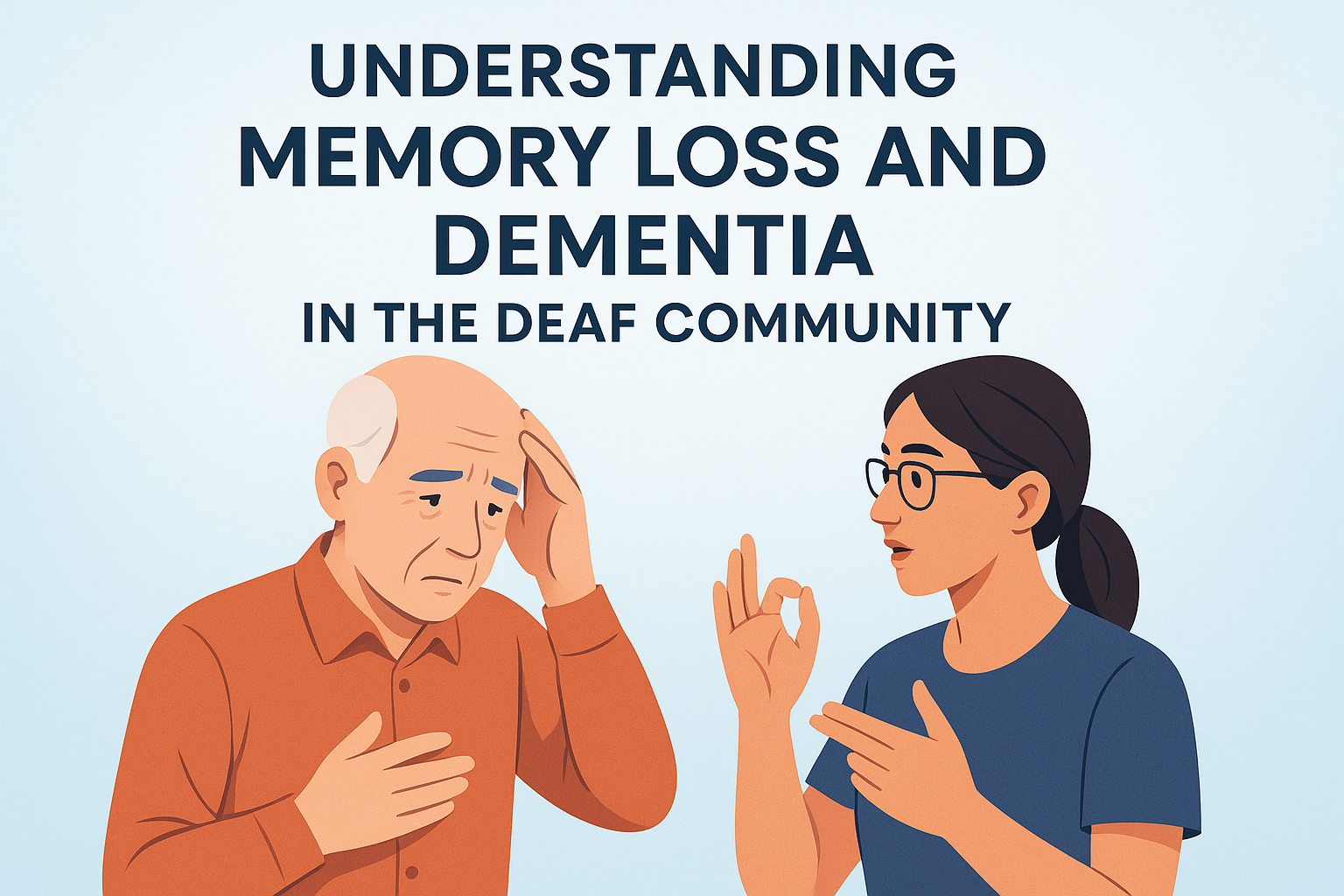
Introduction to Memory Loss and Dementia in the Deaf Community
Memory loss and dementia are pressing concerns that impact millions of individuals globally. These conditions pose unique challenges in the Deaf community, complicating an already multifaceted experience of healthcare and daily living. Dementia, characterized by a decline in cognitive functions such as memory, reasoning, and communication, can deeply affect the quality of life. In the Deaf community, where communication and social interaction are already adjusted for hearing differences, the addition of dementia can create barriers that aren’t always immediately apparent to hearing individuals.
The terms memory loss and dementia are often used interchangeably, but it’s important to distinguish between them. Memory loss refers to forgetting things more frequently than is typical for one’s age, while dementia is an umbrella term for several cognitive impairments, with Alzheimer’s being the most common form. These are not just medical terms but human conditions that impact daily living and interpersonal relationships, especially within the Deaf community.
Understanding memory loss and dementia from the deaf perspective is crucial not just for healthcare professionals but also for family, friends, and caregivers. This awareness allows for tailored care and communication strategies that significantly improve the life quality of those affected. Recognizing the challenges and embracing the unique needs of Deaf individuals experiencing these conditions fosters empathy, patience, and better support systems.
Communication Barriers and Their Impact on Diagnosis
One of the primary challenges faced by Deaf individuals with memory loss or dementia is communication barrier-related complications in the diagnosis process. Standard diagnostic tests for dementia are typically designed with hearing individuals in mind, relying on verbal instructions and auditory cues. Consequently, Deaf patients may not receive accurate assessments due to a lack of appropriate communication tools.
Consider the typical setting of a memory clinic: a patient is asked to repeat words, follow verbal instructions, or engage in verbal reasoning tasks. For a Deaf individual, these tests must be adapted to incorporate sign language and visual instructions. Unfortunately, a shortage of healthcare professionals skilled in sign language or familiar with Deaf culture may lead to misdiagnosis or an oversight of the condition altogether.
For instance, Jane, a 70-year-old Deaf woman, was mistakenly identified with mild cognitive impairment due to communication misalignment during tests. Once assessed with a Deaf-aware toolkit, it became evident that her cognitive skills were normal for her age. This example underscores the importance of adjusted medical procedures to ensure that members of the Deaf community receive accurate diagnoses and appropriate treatment plans.
Social Isolation Exacerbated by Dementia
Social interaction plays a significant role in both the prevention and management of dementia. For Deaf individuals, communication is inherently different due to reliance on sign language and visual cues. When memory loss or dementia enters the equation, these vital forms of communication may be impaired, isolating Deaf individuals further from their communities.
Dementia can affect a Deaf person’s ability to sign accurately, recognize sign language, or remember the signs for certain concepts, leading to frustration and decreased social engagement. This can result in a vicious cycle where reduced interaction accelerates cognitive decline.
A real-world scenario involves Tom, a Deaf man living in a residential care facility. As his dementia progressed, he began signing slower and mixing up signs. His peers, also Deaf, noticed his withdrawal during group activities. To tackle the isolation, caregivers introduced regular sessions with a sign language therapist. This intervention helped Tom regain confidence in signing, boosting his engagement with peers.
Family Dynamics and Caregiving within the Deaf Community
Caring for a family member with dementia is challenging, and these challenges become amplified in the context of the Deaf community. Family members may or may not be fluent in sign language, impacting communication and care quality.
Cultural nuances in Deaf families mean that caregiving roles might fall to the oldest family member fluent in sign language. However, this person might not always be the best-equipped for providing specialized dementia care. There are also instances where hearing family members, who may live further away and aren’t fluent in sign language, need additional support and resources to communicate effectively and provide care.
Take, for instance, the Chen family, where the youngest daughter, Sarah, who is hearing and lives out of state, became the primary decision-maker for her Deaf grandmother, Mei, diagnosed with Alzheimer’s. Sarah took Deaf culture appreciation courses and enrolled in sign language classes to improve communication. By leveraging technology with video calls and visual alert systems, Sarah facilitated smoother interactions and enhanced her grandmother’s care from afar.
Resource Allocation and Advocacy Efforts
Advocating for the proper allocation of resources to support Deaf individuals with memory loss or dementia is critical. Resources include accessible care facilities, trained healthcare providers, and community support initiatives tailored to Deaf individuals’ needs.
Currently, many Deaf people reside in environments that aren’t optimized for their unique communication needs. Advocacy groups are increasingly pushing for the integration of sign language interpreters in healthcare settings, increased funding for research on Deaf-inclusive dementia care, and the development of educational programs for family and professional caregivers.
For example, the initiative by the Deaf Dementia Network is striving to create a blueprint for how care facilities could implement Deaf-friendly practices. Their model includes accessible visual aids throughout facilities, regular training sessions for staff on Deaf culture and sign language, and community events to foster social interaction.
Technological Innovations Supporting Deaf Individuals with Dementia
Technology is playing an increasingly vital role in supporting not only diagnosis but also day-to-day management of dementia in the Deaf community. Devices and applications designed with visual alerts, sign language capabilities, and other Deaf-friendly features can considerably improve life quality.
Through the integration of assistive technology, Deaf individuals can maintain some degree of independence. A groundbreaking advancement is the use of video communication tools that allow for real-time sign language conversations, helping mitigate the social isolation often experienced by those with dementia.
Consider an app that provides reminders via visual cues rather than auditory ones. Mary, who experiences memory issues, benefits from a tablet that flashes vibrantly colored reminders and uses simplistic sign language iconography. These technological solutions enable individuals like Mary to navigate daily life with less dependency on caregivers.
| Assistive Technology | Function |
|---|---|
| Video Communication Tools | Enable real-time sign language conversations, reducing social isolation. |
| Visual Reminder Apps | Provide visual cues for tasks and schedules, aiding memory. |
| Sign Language Translation Devices | Translate spoken words into sign language for better comprehension. |
Conclusion and Next Steps
Memory loss and dementia significantly impact the Deaf community, necessitating a multi-faceted approach that includes improved diagnostic processes, enhanced social support structures, and innovative use of technology. By recognizing and addressing the unique communication and cultural needs of Deaf individuals, we can provide more effective and compassionate care.
The key takeaway for readers is the pressing need to promote inclusivity and understanding in dementia care. Whether you are a healthcare provider, caregiver, or family member, acknowledging these challenges is the first step towards meaningful improvements. Supporting Deaf-centric advocacy groups, encouraging advancements in assistive technology, and fostering an inclusive environment in care facilities can collectively enhance the quality of life for Deaf individuals experiencing dementia.
As a call to action, consider volunteering or supporting organizations working with the Deaf community, advocate for inclusive healthcare practices, or engage in continued education on Deaf culture and sign language. Together, these steps can help bridge the gap between understanding and action, creating a more inclusive future for all.
Frequently Asked Questions
1. What is the relationship between memory loss, dementia, and the Deaf community?
Memory loss and dementia are significant concerns within the general population, but they pose particular challenges for the Deaf community. These conditions are marked by a progressive decline in cognitive abilities such as memory, reasoning, and communication. For the Deaf community, communication already involves reliance on sign language and alternative modalities, which can complicate the identification and management of dementia symptoms. The symptoms may manifest differently or be overlooked, leading to delayed diagnosis and treatment. Additionally, the cultural norms and social interactions specific to the Deaf community may alter the experience and perception of these conditions, necessitating tailored approaches in healthcare to address their unique needs.
2. How do dementia symptoms differ in Deaf individuals compared to hearing individuals?
While dementia presents with similar core symptoms such as memory loss, impaired judgment, and difficulty with communication and daily tasks, the experience of these symptoms can differ for Deaf individuals. Communication barriers mean that cognitive decline might not be immediately apparent; instead, changes might be noticed in the individual’s signing fluency or comprehension. For example, a decline in the ability to understand or produce sign language signs, or a noticeable struggle to follow signed conversations, can be indicative of cognitive impairment. Furthermore, cultural nuances within the Deaf community could influence how symptoms are perceived and reported, emphasizing the need for healthcare professionals with appropriate cultural and linguistic competencies in the diagnosis and care process.
3. Why is early diagnosis of dementia important in the Deaf community?
Early diagnosis of dementia is crucial for every individual, but it holds particular importance in the Deaf community due to the unique communication challenges they face. Identifying dementia early allows for more effective planning and access to appropriate resources, enabling individuals and their families to better manage the condition. It also facilitates the development of communication strategies that can help maintain meaningful interactions for as long as possible. Furthermore, early intervention may offer opportunities to slow the progression of symptoms through medical treatment and lifestyle changes. Without timely diagnosis, Deaf individuals might miss out on crucial support systems, leading to increased isolation and a decline in quality of life.
4. What specific challenges do Deaf individuals face when accessing dementia care?
Deaf individuals often encounter multiple hurdles when accessing dementia care, primarily due to communication barriers. Many healthcare settings lack professionals proficient in sign language, leading to reliance on interpreters, which can be less than ideal for discussing complex medical conditions. There is also a general lack of awareness and understanding of Deaf culture and the specific needs of Deaf individuals within healthcare systems. As a result, there’s a risk of miscommunication and misunderstandings, which may contribute to mistrust and lower quality of care. Furthermore, standard cognitive assessments may be biased toward those who use verbal communication, potentially leading to inaccuracies in diagnosing dementia in Deaf individuals. These challenges highlight the necessity for more inclusive, tailored healthcare practices and policies that ensure equal access to quality dementia care.
5. What strategies can improve dementia care and support for the Deaf community?
Improving dementia care for the Deaf community involves a multifaceted approach that addresses both systemic and individual challenges. Firstly, increasing the availability of healthcare professionals fluent in sign language is crucial. This fluency allows for better communication and understanding, thus improving diagnostic accuracy and patient comfort. Incorporating training around Deaf culture into medical education can enhance clinicians’ cultural competency, fostering a more welcoming environment for Deaf patients. Additionally, adapting standard cognitive assessments to be language-neutral or tailored with sign language considerations can lead to more accurate diagnoses. On a broader scale, public awareness campaigns can help dissipate stigma that may deter individuals from seeking help. Community support structures, including Deaf-led support groups and resources, can provide emotional and practical support to individuals and families affected by dementia. Combining these strategies helps create a more inclusive and equitable healthcare environment for the Deaf community.