
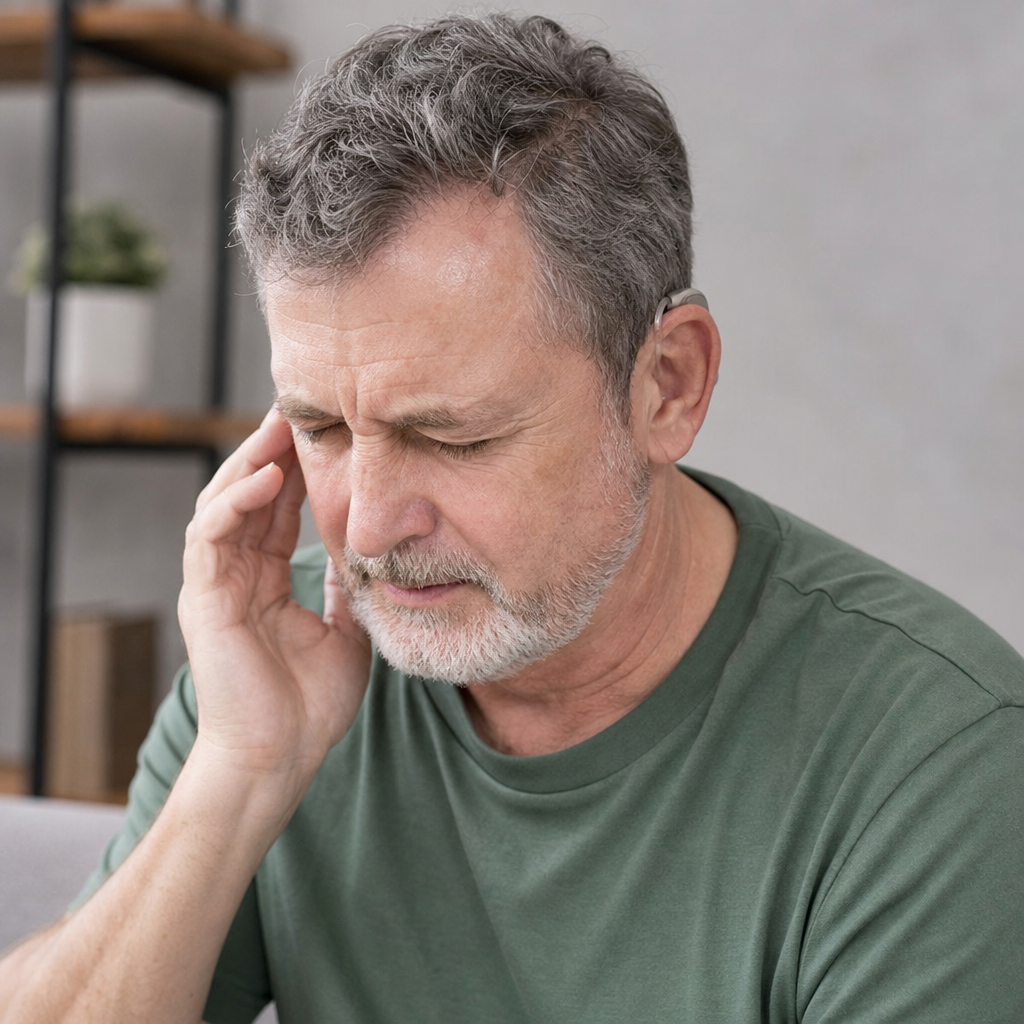
Hearing aid and tinnitus are closely linked because many people who notice persistent ringing, buzzing, or hissing in the ears also have some degree of hearing loss, and modern hearing aids can reduce the burden of both problems when they are selected and fitted correctly. Tinnitus is the perception of sound without an external source. It is a symptom, not a disease, and it can sound tonal, pulsatile, roaring, clicking, or intermittent. A hearing aid is a medical device designed to improve audibility by amplifying speech and environmental sounds according to an individual hearing profile. In practice, I have seen the strongest results when patients understand that hearing aids do not “cure” tinnitus, but they often make it less intrusive by restoring sound input, improving communication, and reducing the contrast between internal noise and the outside world.
This matters because tinnitus is common, distressing, and often misunderstood. Large population studies estimate that roughly 10 to 15 percent of adults experience tinnitus, while a smaller group reports symptoms severe enough to disrupt sleep, concentration, mood, and daily functioning. Hearing loss becomes more common with age, noise exposure, certain medications, and medical conditions such as Ménière’s disease. When hearing loss and tinnitus occur together, the brain may compensate for reduced auditory input by increasing neural gain, a mechanism many clinicians use to explain why tinnitus can become more noticeable in quiet settings. That relationship is the reason hearing aids are frequently part of a tinnitus management plan.
For a hub page on hearing aid and tinnitus, the key questions are straightforward: who benefits, how hearing aids help, what features matter, what limitations exist, and what else should be done alongside amplification. The answers need to be practical. A person searching this topic usually wants to know whether a device will stop ringing, whether special tinnitus programs are necessary, how fittings work, and whether over-the-counter or prescription options are appropriate. The short answer is that hearing aids can help many people with tinnitus, especially when measurable hearing loss is present, but outcomes depend on hearing thresholds, tinnitus characteristics, counseling, and consistent use.
Clinically, the best approach is not to treat tinnitus in isolation. A complete hearing evaluation, medical history, symptom review, and discussion of goals should come first. Red-flag symptoms such as tinnitus in one ear only, pulsatile tinnitus, sudden hearing loss, dizziness, ear pain, ear drainage, or neurological changes require prompt medical assessment. Once serious causes are ruled out, hearing technology can be matched to communication needs and sound tolerance. That combination of diagnosis, device selection, counseling, and follow-up is what turns a hearing aid from a simple amplifier into a useful tool for tinnitus relief and long-term hearing health.
How hearing aids help tinnitus in everyday life
Hearing aids help tinnitus through several mechanisms, and the most important is improved access to external sound. When speech, household noise, and environmental detail become easier to hear, the internal tinnitus signal often fades into the background. Patients describe this as reduced awareness rather than elimination. That distinction matters. If someone expects silence, they may feel disappointed even when the device is clearly helping. If they expect lower annoyance, better focus, and less listening effort, satisfaction is usually higher. In my experience, this expectation-setting conversation is as important as the fitting itself.
Amplification can also reduce auditory deprivation. If the ears are not delivering enough information, the auditory system may become more sensitive to internal neural activity. By restoring sound input, hearing aids may lessen that central overcompensation. Many devices now include tinnitus sound support, sometimes called masking or sound therapy, which adds low-level broadband noise, ocean-like sounds, or customized tones. These features do not suit everyone. Some users benefit from constant soft sound, while others prefer amplification alone. The best results come from personalizing settings after real-world trials rather than assuming one program works for all cases.
Another benefit is communication improvement. Tinnitus becomes more stressful when conversations are difficult, especially in restaurants, family gatherings, meetings, and cars. Hearing aids with directional microphones, noise reduction, feedback management, and remote microphone compatibility improve speech understanding in these situations. Less communication strain often means less emotional focus on tinnitus. This is one reason tinnitus management should include hearing needs, not just symptom suppression. Better hearing changes the broader daily experience: fewer misunderstandings, less fatigue, and more confidence during social interactions.
Evidence supports this practical view. Professional guidance from organizations such as the American Academy of Otolaryngology–Head and Neck Surgery recommends hearing aids for patients with bothersome tinnitus and hearing loss. Research reviews consistently show that many users report reduced tinnitus handicap, lower awareness, and better quality of life after hearing aid use, although the magnitude of benefit varies. Benefit tends to be stronger when the hearing aid is worn regularly, adjusted carefully, and paired with counseling. In other words, the device matters, but the fitting process and the care plan matter just as much.
Who is a good candidate and when to get evaluated
The best candidate for a hearing aid and tinnitus plan is someone with persistent tinnitus and documented hearing loss, even if the loss seems mild. Many adults assume they hear “well enough” because they can follow one-on-one conversation in a quiet room. Then the audiogram shows reduced sensitivity in the high frequencies, exactly where consonants, clarity cues, and many environmental sounds live. That pattern is extremely common among people with tinnitus. Once high-frequency information is restored, the tinnitus may seem softer or less sharp, and speech clarity often improves more than the patient expected.
Not everyone with tinnitus needs a hearing aid. If hearing thresholds are normal across the tested range and communication is not significantly impaired, other options may be more appropriate, including counseling, sound therapy, cognitive behavioral therapy, stress management, and medical workup when indicated. At the same time, normal hearing on a basic audiogram does not always mean the auditory system is functioning perfectly. Hidden hearing difficulties, sound sensitivity, and extended high-frequency loss can still shape the tinnitus experience. That is why a detailed case history is essential.
People should seek evaluation promptly if tinnitus starts suddenly, appears in only one ear, pulses in time with the heartbeat, follows a loud noise event, or occurs with dizziness, ear fullness, facial weakness, or sudden change in hearing. These situations may require ENT assessment, imaging, or urgent treatment. Delayed care can matter, particularly in sudden sensorineural hearing loss, where early steroid treatment may improve outcomes. Routine tinnitus with gradual age-related or noise-related hearing loss is less urgent medically, but it still deserves a structured assessment rather than self-diagnosis.
A thorough appointment usually includes otoscopy, pure-tone audiometry, speech testing, tympanometry when middle ear issues are suspected, and validated questionnaires such as the Tinnitus Handicap Inventory. Some clinics also measure loudness discomfort levels, minimum masking levels, and pitch matching. These tests do not define the entire condition, but they help build a treatment plan. As a hub topic, this is the central point: hearing aid and tinnitus management starts with a hearing exam, symptom triage, and realistic goal setting, not with buying a device based on advertising alone.
What features matter most in a hearing aid for tinnitus
Choosing the right hearing aid for tinnitus involves more than picking a brand. The most important factors are accurate amplification, physical comfort, all-day wearability, and programming flexibility. Open-fit receiver-in-canal devices are often effective for people with mild to moderate high-frequency hearing loss because they preserve natural low-frequency sound while amplifying the frequencies most commonly affected. For greater hearing loss, custom molds or more powerful behind-the-ear models may be necessary to deliver enough gain without distortion. If a device is uncomfortable, occluding, or unstable, the user is less likely to wear it consistently, and tinnitus benefit usually drops.
Many premium and mid-level devices offer tinnitus programs, but these should be evaluated realistically. Built-in sound generators can be useful when a patient wants steady relief in quiet settings or during concentration tasks. Smartphone apps can add further sound options for sleep, relaxation, and temporary masking. However, a fancy sound library is not automatically better than excellent amplification. I have seen patients do very well with standard hearing aid programming and no masker at all. Core performance still comes down to audibility, comfort, feedback control, and fine-tuning across different listening environments.
| Feature | Why it matters for tinnitus | Practical example |
|---|---|---|
| Directional microphones | Improve speech understanding, reducing listening stress | Better conversation in restaurants can make tinnitus less noticeable |
| Open-fit design | Reduces blocked-ear sensation and preserves natural sound | Users with high-frequency loss often tolerate all-day wear better |
| Tinnitus sound support | Adds low-level relief sound when quiet triggers awareness | Soft broadband noise during office work may reduce focus on ringing |
| App control | Lets users adjust programs and volume in real situations | Switching to a quiet-room setting at bedtime can improve comfort |
| Rechargeable batteries | Supports consistent daily use with less handling burden | Older adults are more likely to wear devices every day |
Connectivity can also matter. Bluetooth streaming, TV accessories, and remote microphones do not treat tinnitus directly, but they improve access to sound and reduce communication fatigue. For example, a remote microphone placed on a conference table can sharply improve speech pickup in a noisy meeting. That may lower the end-of-day stress that often amplifies tinnitus perception. Rechargeable models are increasingly preferred because they simplify daily management, especially for people with dexterity issues. The best device is not the one with the longest feature list; it is the one the patient will wear consistently in the places where tinnitus causes the most disruption.
Limits, alternatives, and the role of combined treatment
Hearing aids have limits, and understanding them prevents frustration. They usually do not eliminate tinnitus completely. Benefit may be partial, delayed, or situation-dependent. Some people notice immediate relief when external sounds are restored. Others need several weeks of consistent use before the brain reclassifies tinnitus as less important. A small group gains little tinnitus benefit even though hearing improves. This does not mean the fitting failed; it means tinnitus is influenced by attention, stress, sleep, anxiety, depression, jaw tension, medication effects, and overall sound tolerance, not hearing alone.
Because of that complexity, combined treatment is often the most effective path. Cognitive behavioral therapy has the strongest evidence for reducing tinnitus distress. It does not remove the sound, but it changes the emotional and attentional response to it. Tinnitus retraining therapy, mindfulness-based interventions, sleep treatment, relaxation training, and treatment of coexisting anxiety or depression can also help. If temporomandibular joint dysfunction, neck tension, earwax blockage, middle ear disease, or medication toxicity contributes to symptoms, those issues should be addressed directly. Sound enrichment at night using a bedside sound machine is often useful even for hearing aid users.
There are also practical device considerations. Over-the-counter hearing aids may help some adults with perceived mild to moderate hearing loss, but tinnitus users should be cautious if symptoms are unilateral, pulsatile, medically complex, or accompanied by sound sensitivity. Prescription fittings through an audiologist offer more diagnostic clarity, more programming control, and better follow-up. Real-ear measurement remains the gold standard for verifying that amplification matches prescribed targets such as NAL-NL2 or DSL. Verification is not a luxury. Without it, under-amplification and over-amplification are both common, and either problem can undermine tinnitus outcomes.
Long-term success depends on follow-up. The first fitting is the starting point, not the finish line. Users should expect an adaptation period, scheduled adjustments, counseling on realistic goals, and troubleshooting around comfort, wind noise, streaming balance, and program use. Tinnitus questionnaires can track progress over time more accurately than memory alone. If benefit plateaus, the next step is not always a new device. Sometimes the answer is more consistent wear, a different dome or mold, counseling, sleep support, or adding structured therapy. The strongest hearing aid and tinnitus plans are iterative, personalized, and based on what actually happens in the user’s daily environments.
Hearing aid and tinnitus care works best when it is approached as a complete management strategy rather than a quick fix. The central facts are clear: tinnitus is common, hearing loss is a major contributor, and well-fitted hearing aids often reduce awareness and distress by restoring access to external sound. They also improve communication, lower listening effort, and make other treatments easier to use. For many adults, that combination produces meaningful relief even when the tinnitus signal itself does not disappear.
The most important takeaway is to match the solution to the person, not the marketing claim. A proper hearing evaluation, screening for red-flag symptoms, realistic counseling, and careful device verification provide the foundation. Features such as directional microphones, open-fit comfort, app control, and optional sound support can be valuable, but only when they serve real listening needs. Combined care matters too. If stress, sleep disruption, anxiety, sound sensitivity, or jaw issues are part of the picture, they should be treated alongside hearing loss.
As a hub within the broader hearing aids topic, this page sets the baseline: start with diagnosis, use hearing aids when hearing loss is present, personalize the fitting, and build follow-up into the plan. If you are dealing with ringing in the ears, schedule a comprehensive hearing evaluation and ask specifically how hearing aid options may fit into your tinnitus treatment path.
Frequently Asked Questions
What is the connection between hearing loss, hearing aids, and tinnitus?
Tinnitus and hearing loss often occur together because the brain depends on a steady stream of sound information from the ears. When hearing declines, the auditory system receives less input than it expects. In many people, the brain responds by increasing its internal sensitivity, which can make phantom sounds such as ringing, buzzing, hissing, roaring, or clicking more noticeable. That is why tinnitus is frequently described as a symptom linked to changes somewhere in the hearing system rather than a disease by itself.
Hearing aids can help because they improve audibility and restore access to everyday environmental sounds and speech. When more real sound reaches the brain, tinnitus may become less prominent and less disruptive. Many users report that their tinnitus does not necessarily disappear completely, but it fades into the background and becomes easier to ignore. This effect is especially common when tinnitus is associated with untreated hearing loss. Proper fitting matters a great deal, because amplification that is too weak, too strong, or poorly tailored to the person’s hearing profile may not deliver the same relief. A full hearing evaluation and professional programming are the best ways to determine whether hearing aids are likely to reduce the burden of tinnitus in a meaningful and lasting way.
Can hearing aids actually reduce tinnitus, or do they just help you hear better?
For many people, hearing aids do both. Their primary purpose is to improve hearing, but that improvement often has a secondary benefit: it reduces awareness of tinnitus. By amplifying speech, household sounds, outdoor noise, and other low-level environmental input, hearing aids give the brain more external sound to focus on. This can partially mask tinnitus, decrease listening strain, and reduce the contrast between internal noise and the outside world. As a result, tinnitus may seem softer, less intrusive, or less emotionally draining.
Some modern devices also include dedicated tinnitus management features such as built-in sound generators, customizable masking sounds, or therapy programs that can be adjusted by an audiologist. These features are not a universal cure, but they can be useful for people whose tinnitus is particularly bothersome in quiet settings. It is important to set realistic expectations: hearing aids do not eliminate tinnitus for everyone, and results vary depending on the cause of tinnitus, the degree of hearing loss, daily wear time, stress levels, and the quality of the fitting. Even so, when tinnitus and hearing loss occur together, hearing aids are one of the most common and evidence-based tools used to reduce day-to-day tinnitus burden.
Who is a good candidate for hearing aids for tinnitus relief?
The best candidates are usually people who have both tinnitus and measurable hearing loss, even if the hearing loss is mild. This is an important point because many adults assume their hearing is “mostly fine” when they can still follow conversations in quiet environments, yet testing may reveal difficulty with high frequencies or speech clarity in noise. In those situations, hearing aids may help not only with communication but also with tinnitus perception. People who notice that their tinnitus seems worse in silent rooms, after periods of strain, or when they are trying hard to listen are often especially good candidates for a hearing aid evaluation.
That said, not every tinnitus case is the same. Someone with normal hearing on a standard hearing test may still benefit from other tinnitus treatments, but hearing aids may be less central unless subtle hearing deficits are identified. It is also important to look at red flags. Pulsatile tinnitus, tinnitus in one ear only, sudden hearing changes, dizziness, ear pain, or a rapid worsening of symptoms should be medically evaluated before focusing only on hearing aid treatment. The right starting point is a comprehensive assessment with an audiologist and, when appropriate, an ear, nose, and throat specialist. That evaluation helps determine whether hearing aids are a strong option, whether tinnitus-specific sound therapy should be added, and whether any underlying medical issue needs attention first.
What features should you look for in a hearing aid if you have tinnitus?
If tinnitus is part of the picture, the most important feature is not necessarily a brand-name tool but a hearing aid that is carefully matched to your hearing loss and listening needs. Accurate amplification across the frequencies where hearing is reduced is the foundation. Beyond that, many patients benefit from devices with tinnitus sound support, which may include white noise, pink noise, ocean-like sounds, or other customizable relief signals. These sounds can be adjusted to blend with or soften the perception of tinnitus rather than completely drown it out. Smartphone app controls can also be helpful because they allow users to fine-tune volume, programs, and sound therapy settings in different environments.
Other practical features matter too. Strong performance in background noise, feedback control, comfortable all-day wear, and enough battery life to support consistent use can all influence whether the device actually helps over time. Rechargeable options are convenient for many users, and directional microphones may make speech understanding easier in busy spaces, which reduces listening fatigue and stress that can otherwise make tinnitus feel worse. The most effective hearing aid for tinnitus is usually the one that fits well, sounds natural, and is adjusted over time based on real-world feedback. A follow-up plan with your audiologist is just as important as the device itself, because small programming changes often make a big difference in both hearing clarity and tinnitus relief.
Can hearing aids cure tinnitus permanently?
Hearing aids are not considered a permanent cure for tinnitus, but they can be a highly effective part of long-term management. Tinnitus is complex and can be influenced by hearing loss, noise exposure, stress, sleep quality, jaw tension, medications, circulation issues, and other health factors. Because of that, there is rarely a one-size-fits-all solution. Hearing aids work best when they address a key contributor: reduced auditory input caused by hearing loss. By improving access to sound, they can lower the prominence of tinnitus and make it easier for the brain to treat it as an unimportant background signal.
Many people experience meaningful relief while wearing their devices consistently, and some also notice lasting improvement in how they react to tinnitus over time. However, the degree of benefit varies. Some people get immediate relief, others improve gradually over weeks or months, and some need a broader treatment plan that includes counseling, sound therapy, stress reduction, sleep support, or cognitive behavioral strategies. The best way to think about hearing aids is as a medically grounded management tool rather than a guaranteed cure. When selected correctly, fitted precisely, and used as part of a personalized care plan, they can significantly improve comfort, communication, and quality of life for people dealing with both hearing loss and tinnitus.