
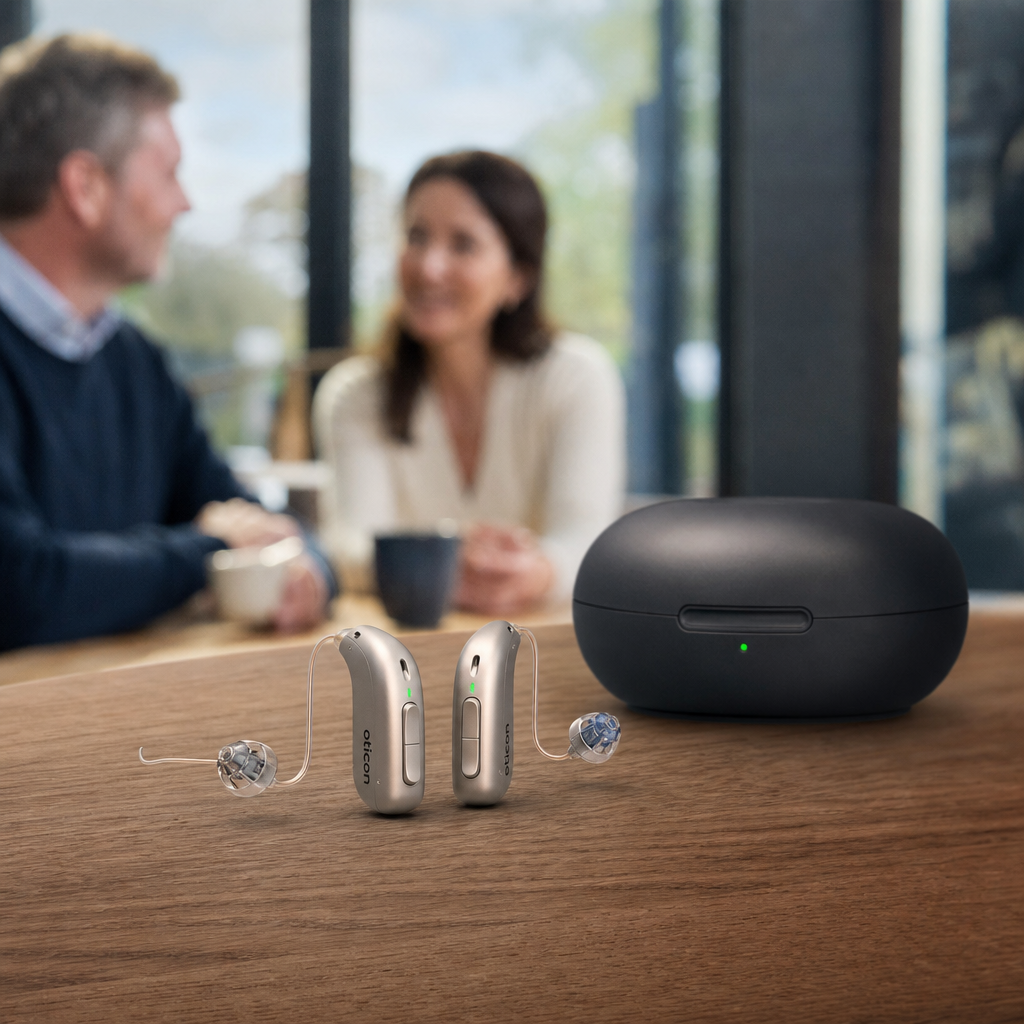
Oticon Intent is a premium hearing aid platform designed to do more than make sounds louder. It uses a new approach to hearing support that interprets the wearer’s listening needs in real time and adjusts amplification, noise management, and speech access accordingly. For people comparing modern hearing aids, understanding what Oticon Intent offers matters because today’s devices are no longer simple amplifiers. They are connected medical devices that combine microphones, motion sensors, machine learning, rechargeable batteries, Bluetooth streaming, and app-based controls into one small instrument worn all day.
In practice, most buyers want clear answers to practical questions. What is Oticon Intent? Who is it for? How is it different from older Oticon models such as Real or More? What features justify its premium price? After fitting many advanced hearing aids, I have seen the same pattern repeatedly: patients do best when they understand how a device behaves in restaurants, cars, meetings, and quiet one-to-one conversations before they buy it. This article covers the general picture so readers can evaluate Oticon Intent with realistic expectations, then explore specific related topics such as pricing, app setup, accessories, and maintenance in more detail.
At its core, Oticon Intent is built around Oticon’s BrainHearing philosophy, which aims to preserve access to relevant sound rather than aggressively stripping the soundscape down. The headline innovation is user-intent sensing, a system that combines data from conversation activity, head and body movement, and the acoustic environment to estimate what the wearer is trying to listen to. That distinction matters. Traditional hearing aid logic often responds only to sound level and direction. Intent attempts to respond to context and behavior, which can improve speech understanding while keeping listening natural.
For adults with mild to severe hearing loss, that promise is significant because hearing loss affects more than volume. It reduces clarity, especially consonant detail, and makes background noise harder to manage. It can also increase listening effort, fatigue, and social withdrawal. A well-fitted hearing aid can reduce those burdens, but success depends on fit, programming, expectations, and follow-up care. Oticon Intent enters this landscape as a flagship option for people who want top-tier processing, discreet design, rechargeability, and modern wireless features in a receiver-in-canal format.
What Oticon Intent Is and Who It Is Designed For
Oticon Intent is a rechargeable receiver-in-canal hearing aid family intended primarily for adults with sensorineural hearing loss, the most common type caused by inner ear or auditory nerve damage. It is typically prescribed for mild, moderate, moderately severe, and many severe losses, depending on the receiver power and ear acoustics. Because it uses interchangeable receivers and domes or custom earmolds, a hearing care professional can configure it for a wide range of audiograms. That flexibility makes it a strong general-purpose choice within the broader hearing aids category.
The device sits behind the ear with a thin wire leading to a speaker in the ear canal. This format balances cosmetic appeal and acoustic performance. Compared with custom in-the-ear devices, receiver-in-canal products often provide more sophisticated directional microphone performance, better venting options, and easier servicing. They also usually support stronger Bluetooth connectivity and larger rechargeable batteries. For many first-time wearers, Intent feels less bulky than expected, especially when fitted with an open dome for sloping high-frequency hearing loss.
Intent is best suited to people who need help in varied listening environments and are willing to wear their devices consistently. The users who appreciate it most are often active adults who move between quiet rooms, family gatherings, outdoor walks, video calls, worship services, and noisy restaurants. In those settings, fixed amplification is not enough. The hearing aid must constantly recalculate gain, directionality, and noise handling without sounding artificial. Intent was built for that daily complexity, not just for quiet home use.
It may be less ideal for someone who wants a battery-door disposable model, since Intent is centered on rechargeability, or for people whose ear anatomy or dexterity makes another style more practical. It is also not a substitute for medical evaluation when hearing loss is sudden, one-sided, fluctuating, accompanied by ear pain, drainage, tinnitus asymmetry, or dizziness. Those symptoms require an ear, nose, and throat assessment before hearing aid fitting. Hearing aids are powerful tools, but they are not the first step in every hearing complaint.
Key Features That Define Oticon Intent
The defining feature is 4D Sensor technology, which combines acoustic input with motion and conversation cues to infer listening intent. In plain terms, the hearing aid does not just detect noise; it evaluates whether the wearer is engaged in conversation, moving through space, or turning toward a speaker. If you are walking with a companion, for example, the system can preserve awareness around you while still supporting speech. If you are seated and focused on someone in front of you, the directional behavior can become more targeted. This is a meaningful advance over systems that react only to decibel changes.
Oticon also includes Deep Neural Network 2.0 processing, trained on millions of sound inputs to help classify and balance speech and environmental signals. Marketing language around artificial intelligence can be exaggerated, but in fitting rooms the practical result is straightforward: many wearers report that speech sounds fuller and less brittle, while background sounds remain present without becoming overwhelming. The goal is not silence. The goal is usable contrast between speech and noise with less listening effort. That distinction is important because over-aggressive noise reduction can remove cues the brain needs.
Connectivity is another major reason buyers consider Intent. The platform supports direct streaming for many iPhone and Android devices, hands-free communication on compatible phones, and app control through Oticon Companion. Features usually include volume adjustment, program changes, device finding, remote care support, and battery status monitoring. Depending on region and phone compatibility, users may also access LE Audio and Auracast readiness as the Bluetooth ecosystem evolves. For people who stream calls, podcasts, navigation, and television audio daily, wireless stability is no longer optional; it is part of the hearing experience.
Rechargeability is well executed. Intent uses lithium-ion charging, typically giving a full day of wear including some streaming, though exact runtime depends on gain requirements and usage patterns. Most users charge overnight, eliminating the handling problems that tiny disposable batteries create for people with arthritis, neuropathy, or poor vision. Oticon’s portable charging options can also matter for travelers. Battery convenience may sound secondary, but long-term adherence often improves when daily maintenance is simple and reliable.
How Oticon Intent Performs in Everyday Listening Situations
Performance in quiet settings is where many people first notice whether a premium hearing aid sounds natural. Oticon Intent generally does well here because it does not over-compress soft environmental detail. In one-to-one conversation at home, wearers often describe voices as more open and less “processed” than older digital aids. That matters because acceptance is built in quiet hours, not only in difficult places. If a hearing aid sounds harsh in the living room, users tend to leave it in the charger. Intent’s sound quality is one of its strongest general advantages.
Restaurants and group settings remain the hardest environments for any hearing aid, and no model eliminates that challenge. Intent can improve speech access through adaptive directionality, noise reduction, and the wearer-intent system, but it cannot fully restore normal hearing in dense background noise. In fittings, I advise patients to expect improvement rather than perfection. Seating choice, room acoustics, distance from the speaker, and visual cues still matter. Users who pair Intent with a remote microphone in especially difficult settings often achieve a much larger benefit than hearing aid processing alone can deliver.
In cars, motion-aware hearing aids often struggle because road noise and changing speaker positions confuse traditional directional systems. Intent’s added motion and conversation data can help it behave more intelligently, especially when a passenger is speaking from the side. Outdoors, the platform also needs to manage wind without shutting down useful ambient sound. Results depend on dome fit, microphone exposure, and individual sensitivity, but the balance is generally thoughtful. Users who walk, shop, and socialize in dynamic environments are the clearest target audience for this platform.
| Situation | What Intent Typically Does Well | Common Limitation | Helpful Add-On Strategy |
|---|---|---|---|
| Quiet conversation | Natural voice clarity and low listening effort | Adjustment period for new wearers | Consistent daily wear |
| Restaurant meal | Better speech focus than basic aids | Cannot remove all background noise | Choose quieter seating and face the speaker |
| Car travel | Improved adaptation to movement and side speech | Road noise still reduces clarity | Use car settings and reduce cabin noise |
| TV and streaming | Clear direct audio to both ears | Phone and TV compatibility varies | Use Oticon TV Adapter when needed |
Telephone use is another practical test. With compatible smartphones, direct streaming can make calls easier by routing sound straight to both ears. For users with asymmetrical hearing loss, that bilateral routing can be a substantial upgrade over holding a phone to one ear. Television listening also improves when paired with an accessory such as the Oticon TV Adapter, which sends clean audio without raising room volume for everyone else. These connected use cases are where premium hearing aids often justify their cost, because benefit extends beyond amplification into daily convenience and reduced communication friction.
Fitting, Customization, and Why Professional Care Matters
No flagship hearing aid performs at its best without precise fitting. Oticon Intent should be programmed to prescriptive targets such as NAL-NL2 or DSL, then verified with real-ear measurement. Real-ear verification uses probe microphones in the ear canal to confirm that soft, average, and loud speech are amplified appropriately. This is not a luxury step. Research and clinical experience both show that manufacturer first-fit settings alone often miss target, especially in the high frequencies where speech clarity lives. If you want the real benefit of Intent, ask whether real-ear measurement is included.
Physical fit matters just as much as software. Receiver strength, venting, dome type, insertion depth, and retention locks all affect sound quality, feedback control, comfort, and occlusion. A wearer who complains that their own voice sounds boomy may need a more open fitting, different low-frequency gain, or a custom mold with adjusted venting. A user who struggles in noise may benefit from a more closed acoustic setup that allows stronger directional processing. These are not minor details. They are central to whether the hearing aid feels helpful or annoying after the novelty wears off.
Follow-up care is where many successful Intent fittings are won. New users need counseling on adaptation because amplified sound often seems strange at first. Keyboard clicks, dishes, footsteps, and refrigerator hum were always present; the brain had simply stopped receiving them clearly. Over several weeks of steady wear, those sounds usually normalize. During that period, a clinician can fine-tune loudness comfort, speech-in-noise settings, streaming balance, tinnitus support, and manual programs for specific situations. Remote care can help, but hands-on visits remain valuable when physical fit or verification is involved.
Oticon Intent Versus Other Hearing Aid Options
Compared with previous Oticon flagships, Intent’s main distinction is its expanded sensing of wearer behavior, not a complete reinvention of Oticon sound. Users who liked Oticon More or Real often recognize the same open, balanced sound philosophy, but Intent aims to make switching behavior more context-aware. That can be especially relevant for active wearers who move frequently while listening. If your life is mostly quiet home conversation, the upgrade may feel incremental. If you transition constantly between environments, the difference can be more noticeable.
Against competitors such as Phonak Infinio, ReSound Nexia, Signia IX, Starkey Genesis AI, and Widex SmartRIC or Moment families, Oticon Intent stands out for natural sound quality, strong speech access, and its approach to preserving environmental detail. Competitors may lead in other areas such as custom form factors, universal Bluetooth implementation, tinnitus features, or accessory ecosystems. There is no single best hearing aid for every person. The best choice depends on hearing loss pattern, ear anatomy, phone type, dexterity, cosmetic priorities, and the skill of the provider fitting the device.
Cost is part of the comparison. Premium hearing aids typically include not only hardware but also bundled professional services, warranty terms, loss-and-damage coverage, follow-up visits, and sometimes chargers or accessories. A lower-priced online option can look attractive until the buyer needs dome changes, receiver replacement, feedback troubleshooting, or speech-in-noise fine-tuning. With Intent, the long-term value is highest when purchased through a clinic that provides evidence-based fitting and support. Before buying, ask what is included for three years, how repairs are handled, and whether trial periods and return policies are clearly documented.
Should You Choose Oticon Intent?
Oticon Intent is a strong choice for adults who want a premium rechargeable hearing aid that sounds natural, adapts intelligently, and integrates smoothly with connected devices. Its biggest strengths are sound quality in everyday listening, context-sensitive behavior in dynamic environments, and a flexible receiver-in-canal design that suits many common hearing losses. Its limitations are the same realities that apply to all hearing aids: background noise remains difficult, correct fitting is essential, and premium performance usually comes with premium pricing. If you are evaluating hearing aids, use this page as your general starting point, then compare models, ask about real-ear verification, and schedule a professional hearing assessment before making a decision.
Frequently Asked Questions
What is the Oticon Intent hearing aid, and how is it different from traditional hearing aids?
Oticon Intent is a premium hearing aid platform built to support hearing in a more intelligent and personalized way than traditional devices. Instead of simply making all sounds louder, it is designed to evaluate what the wearer may be trying to hear in the moment and then adapt its processing to improve access to speech while managing background noise. This is an important shift because modern listening environments are rarely simple. Restaurants, family gatherings, work meetings, outdoor conversations, and even time spent in the car all create different hearing demands, and a one-size-fits-all amplification approach often falls short.
What makes Oticon Intent stand out is its use of multiple input signals to help guide how the hearing aid responds in real time. In addition to microphones, the platform incorporates motion sensors and other contextual data to estimate listening intent more effectively. That means the device is not only analyzing sound around the wearer, but also considering whether the wearer is engaged, moving, or likely focusing on speech in a particular direction. The result is a hearing aid that aims to provide clearer, more relevant support in dynamic settings rather than relying on static sound processing alone.
For someone comparing hearing technology today, the key difference is that Oticon Intent is part of a newer generation of connected medical devices. It blends advanced sound processing, real-time environmental analysis, and wireless features into a system intended to make listening feel more natural and less effortful. Rather than just boosting volume, it is designed to improve how meaningful sounds are prioritized.
How does Oticon Intent adjust to different listening environments?
Oticon Intent adjusts to changing environments by continuously analyzing sound and user-related cues, then modifying amplification and noise management to fit the situation. In a quiet one-on-one conversation, the hearing aid may emphasize clarity and naturalness so speech sounds clean and easy to follow. In a noisier setting, such as a restaurant or social event, it can shift its strategy to reduce the impact of background noise while helping important speech remain more accessible. This kind of responsiveness matters because hearing needs can change from minute to minute, not just from place to place.
A major feature of the platform is its ability to make these changes based on more than microphones alone. Oticon Intent is designed to interpret listening needs in real time, which may include factoring in body and head movement along with the surrounding acoustic scene. For example, if the wearer is actively engaging with people nearby, the hearing aid may apply a different balance of speech enhancement and environmental awareness than it would if the wearer were walking through a busy area and needed broader situational awareness. This approach is intended to make hearing support feel more aligned with what the person is actually trying to do.
In practical terms, this means users may experience fewer manual adjustments throughout the day. While hearing care professionals can still fine-tune settings based on personal preferences and hearing test results, the device itself is built to handle a wide variety of listening challenges automatically. That can translate to easier transitions between environments, better comfort in noise, and less listening fatigue over time.
Who is a good candidate for Oticon Intent hearing aids?
Oticon Intent may be a strong option for adults who want advanced hearing technology that does more than basic amplification. It can be especially appealing to people who spend time in complex listening environments and want help hearing speech more clearly without constantly adjusting settings. If someone regularly moves between quiet conversations, group settings, work environments, outdoor activities, and streaming from phones or other devices, a platform like Oticon Intent may offer meaningful advantages because it is designed to adapt dynamically.
It is also a good fit for people who value premium features and a more personalized hearing experience. Many wearers are not just looking to hear louder sounds; they want to hear with less effort, better speech understanding, and more comfort in real-world situations. Oticon Intent is aimed at that kind of user. Because it is part of the premium category, it may be especially relevant for people who are willing to invest in technology that prioritizes automation, connectivity, and advanced sound processing.
That said, the best candidate is ultimately determined through a professional hearing evaluation. A hearing care provider will consider the degree and type of hearing loss, ear anatomy, lifestyle demands, dexterity, budget, and communication goals. Even if a device has excellent technology, it still needs to be properly fitted and programmed to the individual. For that reason, anyone interested in Oticon Intent should view it as part of a broader hearing care plan rather than a stand-alone consumer gadget.
What features and technology does Oticon Intent include?
Oticon Intent includes a range of advanced technologies designed to support speech understanding, comfort, and ease of use in daily life. At its core, the platform focuses on interpreting the wearer’s listening needs in real time and adjusting hearing support accordingly. This involves combining information from microphones with motion-related input and processing logic that helps determine how to prioritize speech, reduce unnecessary noise, and preserve awareness of the surrounding environment. The goal is not to isolate the user from the world, but to help deliver more relevant sound in the moment.
Beyond core sound processing, Oticon Intent also fits into the broader category of connected hearing technology. Premium hearing aids in this class often support wireless connectivity for phone calls, media streaming, and communication with compatible accessories. They may also work with mobile apps that allow users to adjust volume, switch programs, monitor battery status, and access remote support features. These tools can make hearing aids more convenient and easier to manage as part of everyday life.
Another important feature area is fitting and personalization. A hearing aid platform like Oticon Intent is typically programmed by a hearing care professional using the wearer’s hearing test results and feedback about listening preferences. That means the technology is not generic out of the box. It is tailored to the individual, and follow-up visits can further refine performance over time. When evaluating features, it is helpful to think beyond a checklist and consider how the system works together to improve speech access, comfort, connectivity, and long-term usability.
Is Oticon Intent worth it, and what should you consider before buying?
For many people, Oticon Intent may be worth it if they want top-tier hearing support and expect their devices to perform well in a wide range of real-world listening situations. Premium hearing aids are often most valuable for users who notice the biggest challenges in background noise, group conversations, and fast-changing environments. If hearing loss is affecting communication, confidence, work performance, or social participation, a more advanced platform can offer benefits that go beyond simple loudness. Better speech access, more automatic adaptation, and smoother integration with modern digital life can all add meaningful everyday value.
However, whether it is “worth it” depends on more than the technology itself. Cost, lifestyle, hearing loss severity, and expectations all matter. A person who spends most of their time in quiet settings may not need every premium feature, while someone with an active social or professional life may benefit greatly from the extra intelligence and automation. It is also important to consider the full purchase package, including professional fitting, follow-up care, warranty coverage, trial periods, cleanings, adjustments, and ongoing service. In hearing care, expert support is a major part of the value.
Before buying, it is smart to ask a hearing care provider how Oticon Intent compares with other premium options for your specific hearing profile. You should also ask about rechargeability or battery options, connectivity with your phone, comfort, maintenance, and what level of improvement is realistic in noise. The best decision usually comes from matching the technology to your hearing needs and daily routines, not just choosing the newest model. When properly selected and fitted, Oticon Intent can be a strong choice for people who want a sophisticated, modern hearing solution.