
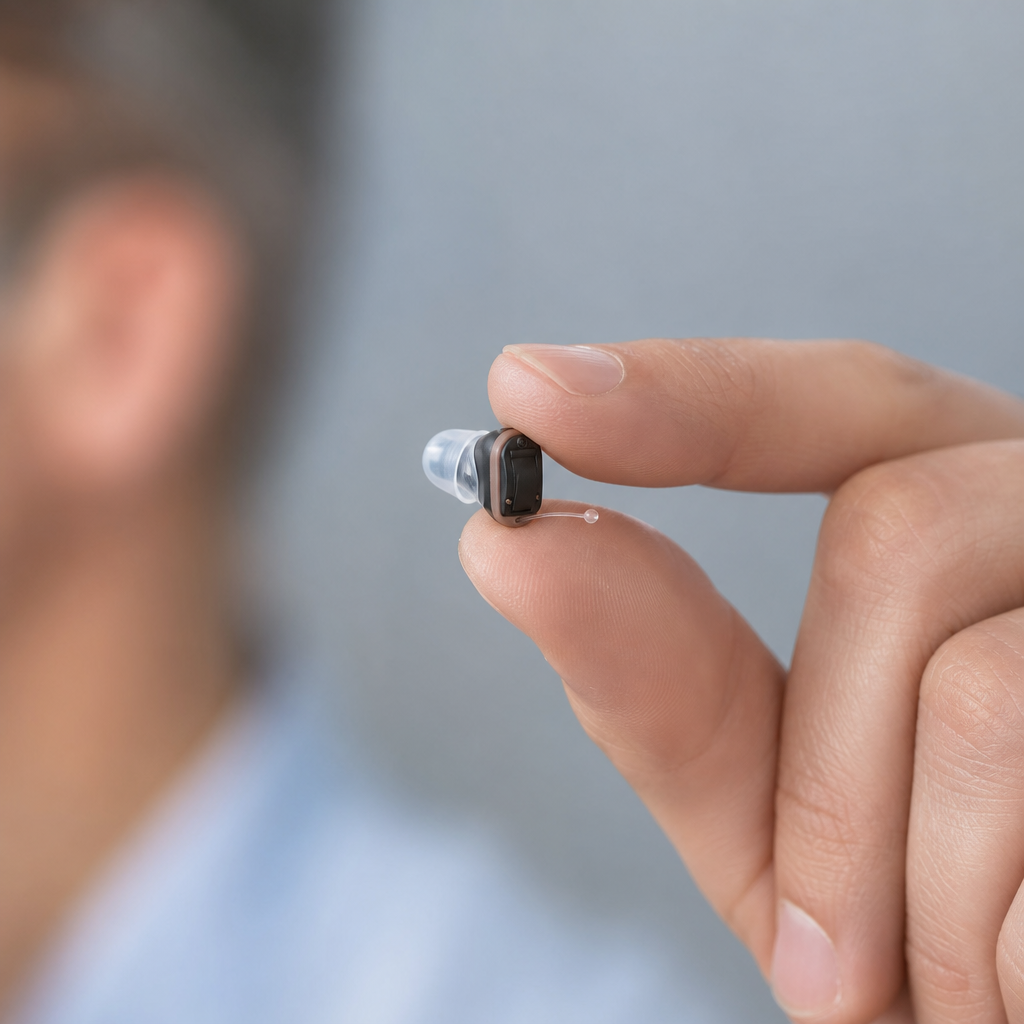
A nano hearing aid is a very small hearing device designed to amplify sound while sitting discreetly inside or behind the ear, and understanding how these devices work is essential for anyone comparing modern hearing support options. In hearing care, “nano” usually refers to size and form factor rather than a separate category of hearing technology. Some products are tiny in-the-canal devices, some are nearly invisible completely-in-canal models, and some brands use “Nano” as a company name rather than a clinical classification. That distinction matters because buyers often assume all nano hearing aids deliver the same performance, fitting method, and medical suitability when they do not. I have worked with patients and product comparison projects where that misunderstanding led to poor purchases, unrealistic expectations, and delays in getting proper treatment for hearing loss.
Hearing aids matter because untreated hearing loss affects far more than volume. It can reduce speech clarity, increase listening fatigue, strain relationships, and make work, driving, and social settings harder to navigate. Research consistently links unmanaged hearing loss with social withdrawal, higher cognitive load, and reduced quality of life. A tiny device can therefore have an outsized impact, but only when it matches the user’s hearing profile, ear anatomy, dexterity, and daily listening environments. This hub article explains what a nano hearing aid is, who it may help, what features matter, how pricing works, what limits exist, and how to evaluate options safely. If you are researching hearing aids for yourself or a family member, this guide gives you the foundational context needed before narrowing down styles, brands, and professional services.
What a Nano Hearing Aid Actually Means
Nano hearing aid is a consumer-friendly term, not a strict audiology standard. In practice, it usually describes a small, discreet hearing aid intended to be less visible than traditional behind-the-ear models. The smallest versions are completely-in-canal or invisible-in-canal designs that fit deep in the ear canal. Others may be receiver-in-canal devices with slim tubing that remain small but are not truly hidden. Because the term is used loosely in advertising, buyers should always look past the label and confirm the exact style, fitting range, battery or charging method, directional microphone setup, and return policy.
The most important point is that size alone does not determine quality. A nano hearing aid still depends on core components: microphones to capture sound, a digital signal processor to shape amplification, a receiver or speaker to deliver sound into the ear, and controls that manage gain, noise reduction, and feedback suppression. Better devices also use multichannel processing, frequency-specific amplification, and adaptive features that change settings based on environment. In real use, these technical differences matter more than whether a device looks nearly invisible in a product photo.
Small size does create tradeoffs. The tinier the shell, the less room there is for larger batteries, stronger receivers, manual controls, directional microphone arrays, and wireless antennas. That is why very small hearing aids may be ideal for mild to moderate hearing loss but less suitable for severe hearing loss, heavy earwax production, poor finger dexterity, or users who want easy volume adjustments. Discreet design is valuable, but usability and sound performance should come first.
Who Nano Hearing Aids Are Best For
Nano hearing aids can work well for adults who want subtle devices, have relatively healthy ear canals, and can handle insertion, cleaning, and battery or charging tasks. They are commonly chosen by first-time wearers who worry about appearance, professionals who want minimal visibility during meetings, and users with mild to moderate hearing loss who mainly need support for conversation, television, restaurants, or group settings. When fitted appropriately, small devices can provide excellent day-to-day benefit.
They are not ideal for everyone. People with severe or profound hearing loss often need more amplification headroom than the smallest shells can comfortably deliver. Users with arthritis, tremor, neuropathy, or vision limitations may struggle with insertion and maintenance. Frequent earwax buildup can clog small microphone ports and receivers faster than larger devices. Very active users who sweat heavily may need stronger moisture protection and easier servicing. I have also seen deep-fitting devices become frustrating for people who want frequent program changes, because tiny devices usually have fewer onboard controls.
If the goal is speech understanding rather than invisibility alone, the best candidate is someone whose hearing evaluation, ear canal size, and lifestyle align with the device’s engineering limits. A good purchase starts with that match.
Features That Matter More Than Size
When comparing nano hearing aids, focus on signal processing before cosmetics. The first essential feature is frequency shaping, which amplifies only the pitch ranges where hearing loss exists. This is what separates a true hearing aid from a simple sound amplifier. Next is channel count. More channels allow finer adjustment across frequencies, helping audiologists or app-based fitting systems improve comfort and speech clarity. Noise reduction is also important, especially in restaurants, cars, and open offices where background sound competes with voices.
Directional microphones deserve close attention. They help prioritize sound coming from in front of the listener, which can improve conversation in noise. Feedback cancellation reduces whistling, a common issue when devices fit poorly or are turned up too aggressively. Some nano hearing aids also offer telecoil support, Bluetooth streaming, tinnitus masking programs, app control, and rechargeability. However, the smallest in-canal devices often cannot include every premium feature because of space and battery constraints.
Another key factor is fitting personalization. Devices programmed from a real hearing test generally outperform self-selected defaults. Best practice in hearing care uses prescriptive targets such as NAL-NL2 or DSL to match amplification to the audiogram. Real-ear measurement, when available through a clinic, verifies that sound delivered in the ear canal matches those targets. Even excellent hardware can disappoint if programming is generic. For that reason, service quality is part of the product.
Comparing Common Nano Hearing Aid Options
Shoppers often compare prescription hearing aids, over-the-counter hearing aids, and personal sound amplification products because all may appear small and discreet. These categories are not interchangeable. Prescription hearing aids are intended for diagnosed hearing loss and are professionally selected and programmed. Over-the-counter hearing aids, regulated in the United States for adults with perceived mild to moderate hearing loss, can be purchased without a medical exam or fitting appointment, though hearing testing is still strongly recommended. Personal sound amplifiers are not hearing aids and simply make sound louder across frequencies.
| Option | Best For | Main Advantage | Main Limitation |
|---|---|---|---|
| Prescription nano hearing aid | Users needing customized fitting and follow-up care | Most precise programming and clinical support | Higher total cost |
| OTC nano-style hearing aid | Adults with perceived mild to moderate hearing loss | Lower entry price and easier access | Less individualized support |
| Personal sound amplifier | Situational listening, not diagnosed hearing loss | Simple and inexpensive | Poor match for hearing-loss treatment |
Brand marketing can blur these distinctions. If a company highlights low price and invisibility but avoids explaining audiograms, programming, return windows, and support, look carefully. A true hearing solution should clearly state candidacy, limits, and service structure.
Benefits, Limitations, and Real-World Performance
The main benefit of a nano hearing aid is discretion. Many users are more willing to wear a device consistently when it is less noticeable, and consistent use is what drives adaptation and benefit. Small hearing aids can also feel natural under glasses, masks, or hats. In quiet or moderately noisy settings, well-fitted nano devices can improve speech access, reduce the need for repetition, and make everyday activities less mentally tiring.
But no hearing aid restores normal hearing. Background noise remains the biggest complaint across all form factors, especially in reverberant rooms and crowded restaurants. Small devices may have weaker battery life, fewer microphones, and less room for advanced wireless hardware. Deep ear-canal placement can also increase occlusion for some users, creating a plugged sensation or making their own voice sound boomy until settings are adjusted. Wind noise, moisture, and wax are common practical issues.
Performance depends heavily on expectations. A nano hearing aid can make speech more audible and often clearer, but it will not perfectly separate one talker from ten others in a loud bar. It can improve television listening, but room acoustics and captioning still matter. The best outcomes happen when users understand both the benefits and the limits, then pair their devices with good communication strategies such as facing the speaker, reducing background noise when possible, and using accessories if needed.
Cost, Fitting, and Ongoing Maintenance
Prices vary widely. OTC nano hearing aids may start in the low hundreds of dollars per pair, while prescription devices from established manufacturers can cost several thousand dollars depending on technology level and bundled care. The purchase price often includes more than hardware. In clinic-based models, it may cover diagnostic testing, fitting appointments, real-ear verification, counseling, follow-up adjustments, warranty support, and clean-and-check visits. Those services are not extras; they directly influence satisfaction and long-term use.
Buyers should ask practical questions before ordering. Is there a trial period, and how long is it? Are returns full or subject to restocking fees? What is the warranty length? Are lost or damaged devices covered once? How are repairs handled? For rechargeable models, what is expected battery lifespan before capacity drops? For disposable-battery devices, how often will replacements be needed? These questions reveal the true ownership cost.
Maintenance is simple but nonnegotiable. Small hearing aids should be wiped daily, stored dry, and checked for wax blockage. Wax guards and domes or sleeves need regular replacement. Moisture management matters, especially in humid climates. Users who skip cleaning often mistake clogged ports for device failure. In my experience, basic maintenance education prevents many unnecessary returns.
How to Choose the Right Nano Hearing Aid
Start with a hearing evaluation, even if you plan to buy OTC. A current audiogram tells you whether the hearing loss is mild, moderate, asymmetric, sudden, or medically suspicious. Red-flag symptoms such as one-sided hearing loss, ear pain, drainage, tinnitus in one ear, dizziness, or sudden decline require medical assessment before shopping. Once candidacy is clear, match the device to the user, not the advertisement.
Consider five decision points. First, hearing profile: do you need simple amplification or precise frequency shaping with room to adjust over time? Second, ear and hand usability: can you insert and remove a tiny device comfortably? Third, listening environments: do you spend more time in quiet homes or noisy restaurants and meetings? Fourth, connectivity: do you want Bluetooth streaming, app control, or tinnitus features? Fifth, support model: are you comfortable self-managing, or do you want professional fitting and follow-up?
Read independent reviews carefully. Prioritize comments about comfort, speech clarity, return handling, and customer support over vague claims about loudness. If possible, compare at least two styles before deciding. Many people who begin by insisting on the smallest possible device ultimately choose a slightly larger model because it is easier to handle and sounds better in noise. The right nano hearing aid is the one you will wear every day, maintain properly, and trust in the situations that matter most.
A nano hearing aid can be an excellent solution when its small size aligns with the user’s hearing needs, physical comfort, and daily routine. The term sounds simple, but the category includes important differences in style, fitting method, sound processing, and service level. The smartest way to evaluate these devices is to look beyond invisibility and focus on what actually predicts success: accurate assessment, appropriate amplification, usable controls, realistic expectations, and reliable support. Those factors determine whether a device helps in the moments people care about most, from family conversations to work calls to dinner out.
For most buyers, the central lesson is clear. Small hearing aids are not automatically better, cheaper models are not automatically good value, and premium features are not automatically necessary. The best option is the one that matches the hearing loss, fits the ear well, and can be adjusted as listening needs change. If you are choosing between prescription and OTC models, compare not only the hardware but also the fitting pathway, warranty, and follow-up access. That broader view prevents costly mistakes and leads to better long-term outcomes.
Use this hub as your starting point for the broader hearing aids category, then narrow your search by style, technology, and level of care. If hearing difficulties are already affecting conversation, work, or confidence, book a hearing test or review a trusted hearing aid provider today. Acting early usually makes adaptation easier and results better.
Frequently Asked Questions
What is a nano hearing aid, and does “nano” refer to a specific type of hearing technology?
A nano hearing aid is generally understood to be an extremely small hearing device designed to fit discreetly inside the ear canal or sit unobtrusively behind the ear. In most cases, the word “nano” describes the size, styling, or marketing of the device rather than a separate class of hearing technology. That distinction is important, because many people assume a nano hearing aid uses a unique sound-processing system that other hearing aids do not have. In reality, a device labeled “nano” may use many of the same core features found in other modern hearing aids, including microphones, amplifiers, digital sound processing, noise reduction, and feedback control.
In hearing care, small devices are often categorized by how and where they fit. For example, some nano-style products resemble tiny in-the-canal models, while others are nearly invisible completely-in-canal designs. There are also behind-the-ear devices that are very compact and may be marketed as miniature or nano-sized because of their low-profile appearance. On top of that, some products use “Nano” as a brand name, which can create additional confusion for shoppers trying to compare device type versus manufacturer.
The key takeaway is that “nano hearing aid” usually refers to form factor, not a special hearing science breakthrough on its own. When comparing options, it is smarter to look beyond the label and evaluate the actual specifications: the degree of hearing support offered, comfort, fit, battery type, programmability, background noise handling, durability, and whether the product is a regulated hearing aid or a more basic sound amplifier. Understanding that difference helps consumers make a more informed decision and avoid choosing a device based only on its tiny size or branding.
How do nano hearing aids work, and are they different from standard hearing aids in performance?
Nano hearing aids work by collecting sound through a microphone, processing that sound electronically, and then delivering amplified audio into the ear through a miniature speaker, often called a receiver. In digital models, incoming sound is analyzed and adjusted to make speech clearer and listening more comfortable. Depending on the device, this processing may include volume management, frequency shaping, feedback suppression, and limited background noise reduction. The smaller size does not change the basic purpose of the device, which is to help the wearer hear more effectively in everyday situations.
Where nano-style devices can differ from larger hearing aids is not necessarily in their fundamental operating principle, but in how much technology can realistically fit inside a very small shell. Because miniaturization comes with design trade-offs, some ultra-small devices may have shorter battery life, fewer onboard controls, less powerful amplification, or fewer advanced features such as directional microphones and Bluetooth streaming. This does not mean nano hearing aids are ineffective. For many users, especially those who value cosmetic discretion, a compact device can be a very appealing and practical choice. However, performance depends heavily on the specific model and the wearer’s hearing needs.
Standard-sized hearing aids sometimes offer more flexibility for people with more complex or severe hearing loss because they can accommodate stronger power output, larger batteries, easier adjustments, and additional connectivity features. By contrast, very small devices may be ideal for mild to moderate hearing loss, provided they fit well and are properly selected. So while nano hearing aids can absolutely perform well, they are not automatically better simply because they are smaller. The right comparison is always between feature set, fit, hearing profile, and real-world usability, rather than size alone.
Are nano hearing aids the same as invisible hearing aids or hearing amplifiers?
Not necessarily. These terms are often used interchangeably in advertising, but they do not always mean the same thing. A nano hearing aid may be an invisible or nearly invisible device, especially if it is designed to fit deep inside the ear canal. However, not every small hearing device qualifies as “invisible,” and not every invisible device is marketed as nano. “Invisible,” “mini,” “micro,” and “nano” are often style-related descriptions rather than precise clinical categories.
It is also important to distinguish true hearing aids from hearing amplifiers, which are sometimes called personal sound amplification products. A regulated hearing aid is intended to address hearing loss by processing and amplifying sound in a more tailored way. A basic amplifier, on the other hand, generally makes many sounds louder across the board without the same level of individualized tuning. That can be a meaningful difference for users who need help understanding speech, especially in places with background noise. A small amplifier may look like a nano hearing aid, but appearance alone does not tell you how sophisticated or appropriate it is for hearing support.
When evaluating a product, look for clear information about what it is designed to do, who it is intended for, and what features it includes. Does it offer digital processing? Can settings be adjusted for different listening environments? Is it appropriate for the degree of hearing loss you are trying to address? Is it sold as a hearing aid or a general sound amplifier? Asking these questions will help you avoid confusion and focus on whether the device matches your hearing needs. In short, nano hearing aids can overlap with invisible models, but they are not automatically the same thing, and they are definitely not always equivalent to simple amplifiers.
Who is a good candidate for a nano hearing aid, and what are the main pros and cons?
A good candidate for a nano hearing aid is typically someone who wants a discreet hearing solution and has hearing needs that are compatible with a small device design. These products often appeal to first-time users, adults with mild to moderate hearing loss, and people who place a high value on cosmetics, comfort, and low visibility. They may also suit individuals who prefer a device that does not interfere much with eyeglasses, hairstyles, or daily appearance. That said, candidacy depends on much more than personal preference. Ear canal shape, dexterity, severity of hearing loss, wax production, and the need for advanced controls all matter when deciding whether a compact hearing aid is practical.
The main advantage of a nano hearing aid is discretion. Many people feel more confident wearing a device that is difficult for others to notice. Small hearing aids can also feel less obtrusive once properly fitted, and some users appreciate their streamlined design for daily wear. Depending on the model, they may still provide effective amplification for routine conversations, television listening, and general environmental awareness. For people who have avoided hearing support because they worry about appearance, nano-style devices can be a meaningful step toward better hearing engagement.
The drawbacks are just as important to understand. Smaller devices can be harder to insert, remove, clean, and adjust, especially for people with arthritis, reduced vision, or limited hand coordination. They may also be more susceptible to earwax and moisture issues because of their placement in or near the ear canal. Some very small devices have limited room for larger batteries or advanced components, which can affect battery life, connectivity, or listening flexibility. In some cases, users with more significant hearing loss may need a larger, more powerful device. The best candidate is someone whose hearing profile, lifestyle, and comfort level align with the strengths of a compact hearing aid, not simply someone who wants the smallest option available.
What should you look for before buying a nano hearing aid?
Before buying a nano hearing aid, start by understanding exactly what kind of product you are considering. Because “nano” can describe size, style, or even a brand name, it is essential to verify whether the device is a true hearing aid or a general sound amplifier. Then review the intended use: Is it designed for mild, moderate, or more substantial hearing loss? Does it provide digital sound processing? Are there multiple listening programs, volume options, or noise management features? Clear product specifications matter far more than the marketing label.
You should also pay close attention to fit, comfort, and ease of handling. A device that is extremely small may look appealing online but may not be practical if it is difficult to place correctly in the ear or remove safely. Consider battery type, rechargeability, cleaning requirements, and how the device will perform in real-world settings such as restaurants, family gatherings, outdoor environments, and phone conversations. If connectivity matters to you, check whether the device supports app controls or wireless features, because not all small hearing aids include them.
Finally, look at the buying experience as a whole. Review the return policy, warranty coverage, customer support, and any trial period offered. Reliable after-purchase support can be just as important as the device itself, particularly if adjustments are needed. It is also wise to compare expectations with actual hearing goals. The smallest device is not always the best long-term solution if it sacrifices comfort, convenience, or hearing clarity. A smart purchase decision comes from balancing discretion with performance, usability, and support, so you end up with a nano hearing aid that truly fits your daily life rather than one that only sounds impressive in marketing.